Kinabatangan River, Sukau 15-17 September 2025 Callyn Yorke
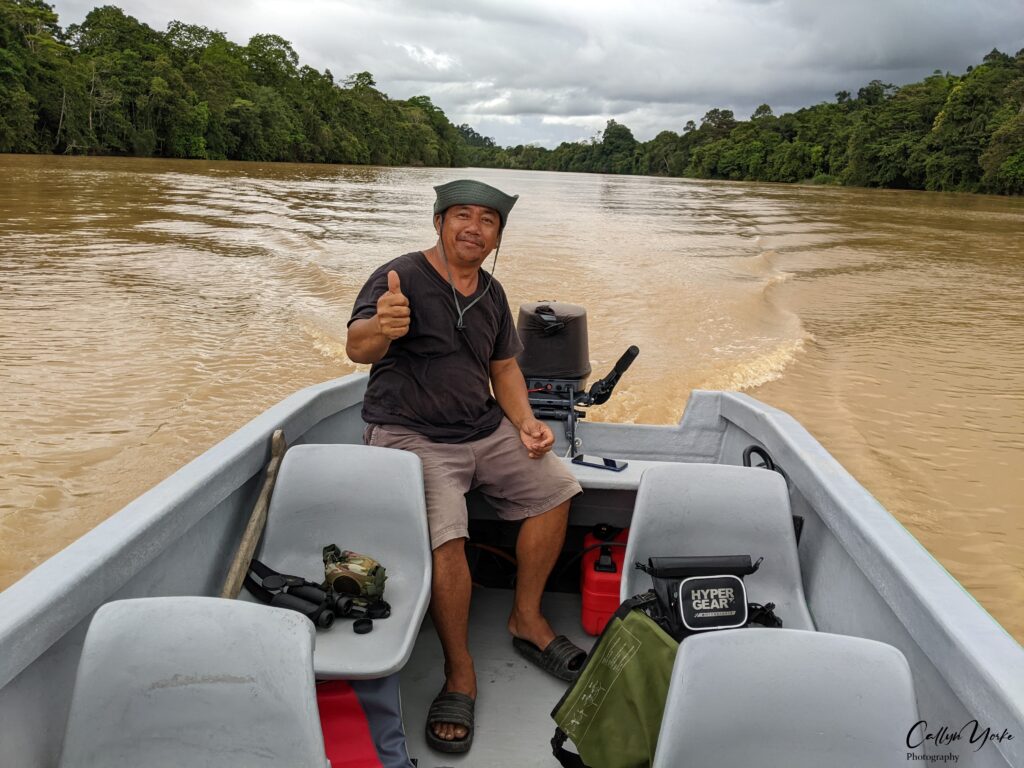
In terms of its massive popularity and safari style tourism, the Kinabatangan River is the Bornean equivalent of the Brazilian Pantanal or East African Masai Mara. Multiple tour agencies in Kota Kinabalu had been diligently searching for last minute reservations since my arrival in early August. Absolutely nothing was available in any price range. If not for information incidentally obtained from two American biologists I met in Danum Valley, Matt Baumann and Evan Fahey, a Kinabatangan River experience probably would not have happened for me. Matt and Evan kindly provided the phone number of their guide, Romzi, who set up logistics for my visit.
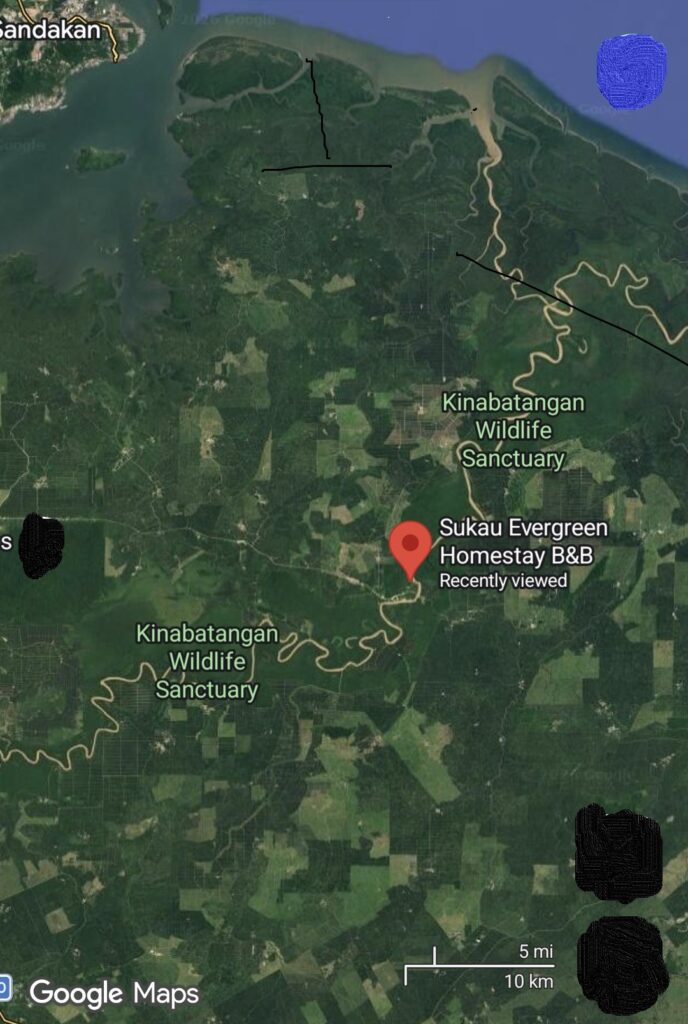
Romzi’s son, Rozi, would meet me in Sandakan and drive me to the Sukau Evergreen Homestay on the Kinabatangan River. Evergreen Homestay (0.5 star) was evidently the only lodge with a vacancy and would be my refuge for three nights.
Rozi ‘s dad would meet me later that afternoon for the first of a series of afternoon and morning boat trips. The guide fee was $122 US per day; $60 for a half day. That price seemed a bit steep, even for the tourist high season. I reflected on the praise given by Matt and Evan, who had assured me that Romzi was one of the best bird guides on the river. In any case, I intended to make the most of the unexpected opportunity.
Rozi and I arrived at the Evergreen Homestay around 1 pm on September 15 – a warm, humid day. My room (#1) had the atmosphere of a sauna and the size of a walk-in closet. No fan or A/C due to a multi-day regional power outage. Without electricity, I would also be faced with a battery charging issue. And there were concerns about unrefrigerated food. Essentially, I would be camping out indoors.
I inquired with the owners and other guests. No one at the homestay had any information regarding the cause or duration of the power outage. Nor would there be any discount given to guests to compensate for the inconvenience. The owner’s polite demeanor seemed to suggest, “Seriously, folks, what did you expect for full room and board at $20 US per night?”
That afternoon I met Romzi on the Evergreen dock at the prearranged time. We drifted about 10 km downriver in his topless fiberglass boat. When a heavy thunderstorm broke, we were in fading daylight beneath a large tree overhanging the riverbank. My camera was in a North Face dry bag but moisture was entering through the seams. When the rains subsided, we went a little further downriver then into a small tributary. After another bout of light rain we reversed direction and headed back upriver to the Evergreen homestay. My bird list for our afternoon river safari was eight species, notably including Green Imperial Pigeon, Blue-eared Kingfisher and Oriental Pied Hornbill. Romzi smiled and said we should do better tommorow.
Back at Evergreen a buffet dinner of white rice, fried eggs, veggies, assorted fruit and lemonade had been set out on a table on the front porch. A dozen tattooed guests, wearing shorts and tank tops, eagerly helped themselves to the food. They chatted as though it was a fairly cohesive group. English, Swiss and Italian were spoken. I eavesdropped hoping to obtain tips regarding their experiences on the river and how they were coping with the lack of electricity.
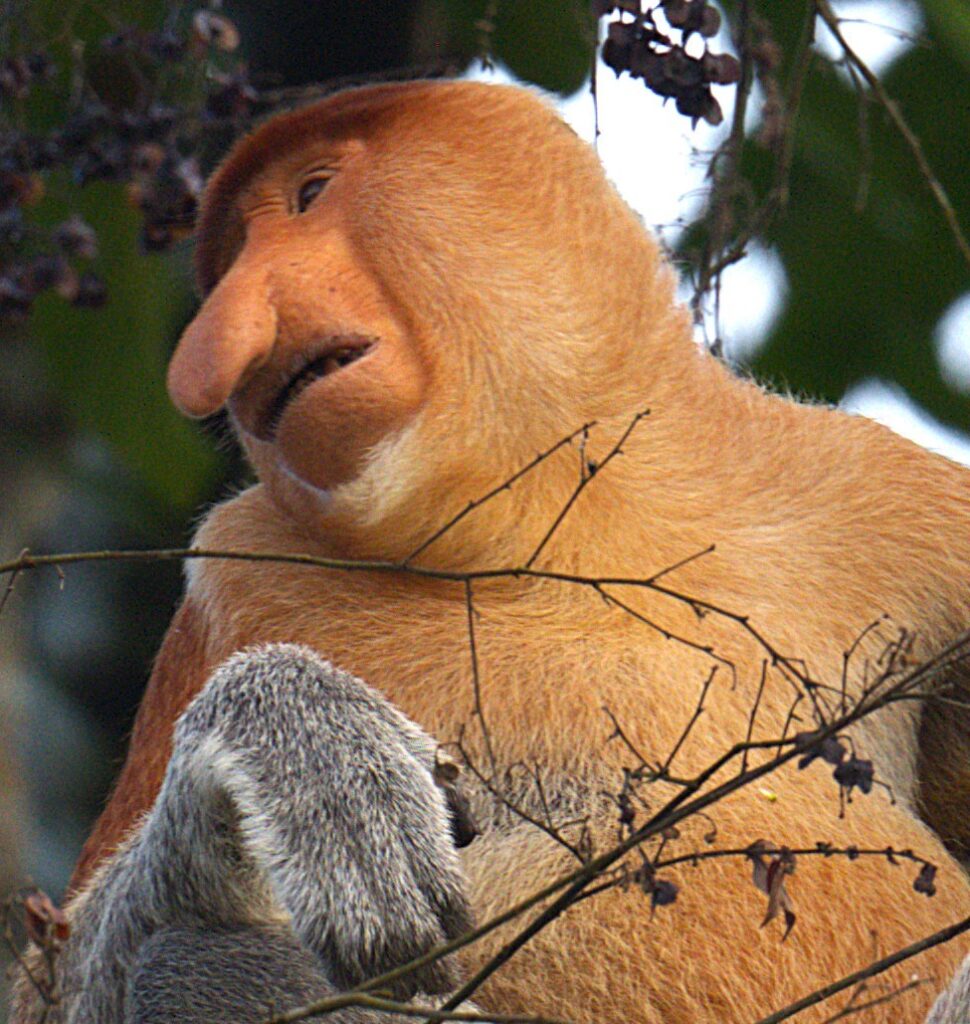
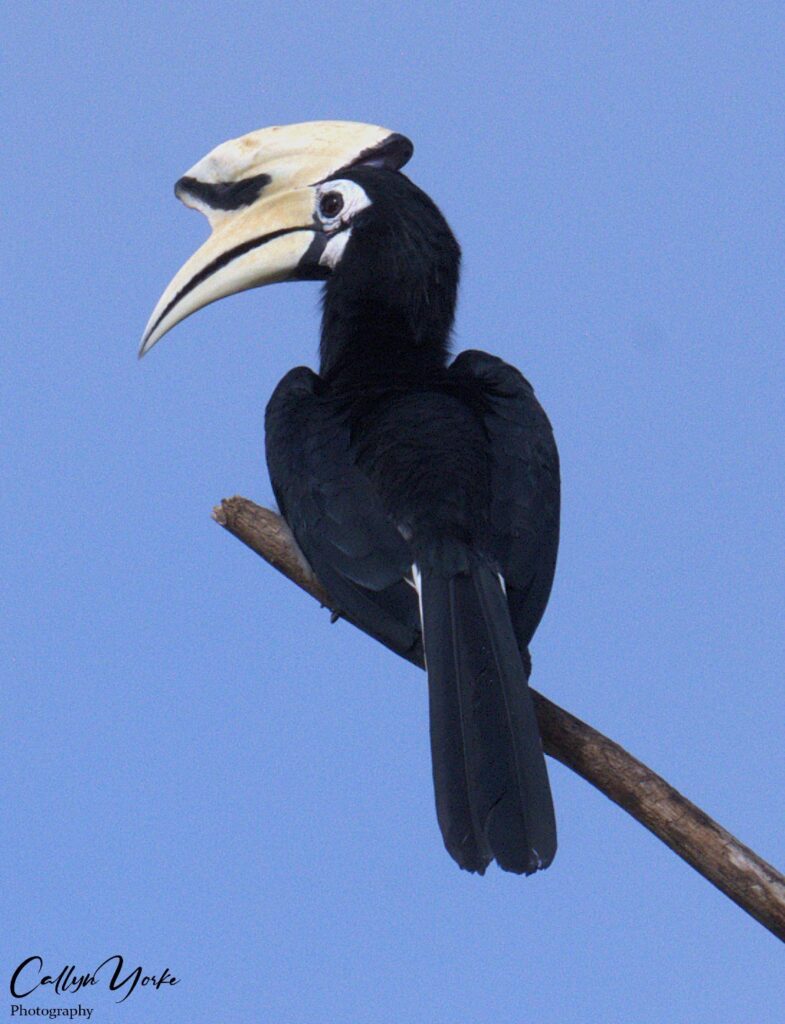
From the excitement in their voices, it was clear that the riverboat safaris were very productive, e.g. Silvered Leaf Monkey and Proboscis Monkey were mentioned. None of the folks appeared particularly keen on birds, except for their fondness of a pair of relatively tame Oriental Pied Hornbills in the front yard.
There was casual reference to a riverside restaurant down the road with a generator. It was the only nearby place to recharge cell phones. I was impressed by their optimism and resilience. This was a cheery group of young backpackers, accustomed to rock bottom accommodations – the sorts of places I had long since tried to avoid.
The following morning at 0640 hrs., I met Romzi at the Evergreen landing. The boat had been thoroughly cleaned and the portable gas tank refueled. The weather had improved – now partly cloudy with sunrays penetrating a mist clinging like cotton to the forest canopy. The murky brown river was up and silt laden water swirled around the dock pilings and half submerged tree limbs. No rain was expected until the evening. We shoved off and headed downriver.
Romzi understood that I was interested in obtaining good quality photos of uncommon species. He kept the boat as close to the embankment and forest edge as possible, skillfully avoiding drifting limbs and wildly gyrating snags. The vocalizations of several bird species could occasionally be heard and Romzi called out the their common names – White-chested Babbler, Sooty-capped Babbler, Bold-striped Tit-babbler and White-crowned Shama. When relatively secretive bird species vocalized, Romzi used playback recordings to attract them. Most of the birds ignored the auditory bait. Notable exceptions were, Hooded Pitta and Malaysian Blue Flycatcher, both of which appeared very briefly at the riverbank forest edge. I was too slow to capture images of them.
Periodically, Romzi played amplified cooing vocalizations of a Bornean Ground Cuckoo – repeatedly when he thought he had heard one calling somewhere in the forest. My limited auditory band width did not pick up the ground cuckoo’s actual sounds.This endemic, IUCN Threatened species was a “must see” for visiting birders. Romzi instinctively knew it would be high on my list of birds most wanted. The challenge would be to coax one to a forest edge or clearing where it could be photographed.
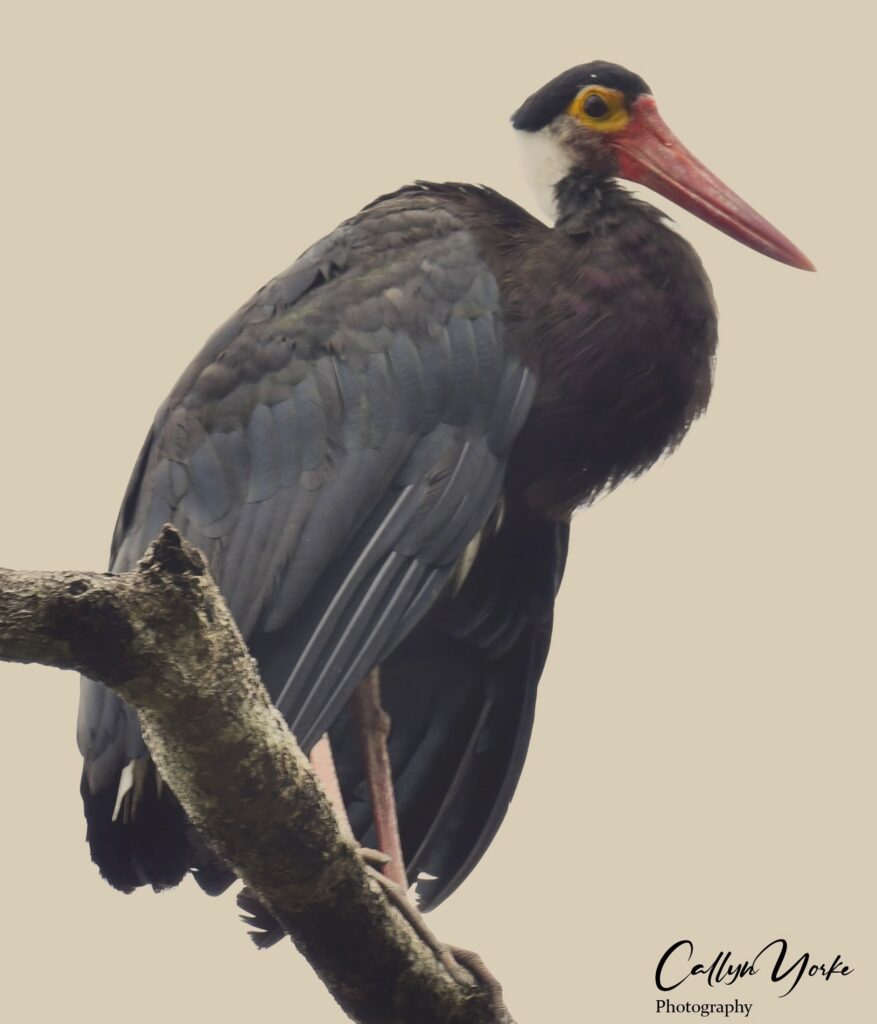
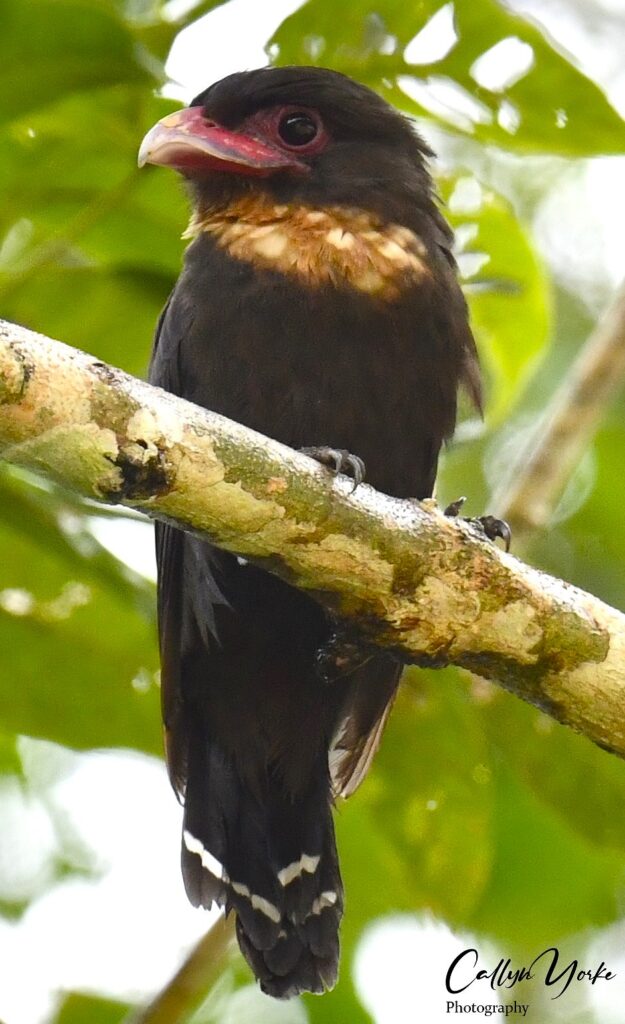
We continued downriver and angled into a maze of narrow tributaries, sometimes having to duck beneath overhanging limbs and raise the outboard motor to untangle the propeller. Quiet backwaters could be productive for relatively shy species, e.g. Storm’s Stork, Dusky Broadbill and possibly a Bornean Ground Cuckoo. We made several more futile playback attempts to wake up the latter species that Romzi expected to be present.
By mid morning, multiple safari boats had sped by with 5-10 passengers, each group color-coded with bright orange, blue or yellow life jackets. Their boat motors and wakes sometimes disrupted our attempts to observe and photograph forest birds at the river’s edge, The boatmen always kept an eye on other tour boats, especially ones that had pulled up to the riverbank in an effort to point out something of interest. When a popular animal was found, e.g. Proboscis Monkey, large bird of prey, or rarely, a herd of elephant, there would be the inevitable log jam of a dozen or more boats, some in audible radio contact with one another, in an aquatic version of Land Rovers facing a pride of lions.
Near the end of our first afternoon and without a single sighting of a Bornean Ground Cuckoo, we reflected on possible reasons for the negative results. The most likely explanation invoked the issue of repeated disturbances. Romzi described several instances where boatloads of determined birders had gone ashore in search of a ground cuckoo, pushing the bird deeper into the forest and reinforcing its shyness. After suffering such dogged pursuits, Bornean Ground Cuckoos in the Kinabatangan had probably learned to make themselves scarce at the first sound of an approaching motorboat.
Romzi and I considered various methods for photographing the Borneo Ground Cuckoo. An approach I have used for secretive birds in the rainforest of Vietnam, one that is generally familiar to wildlife photographers, is to first locate a bird’s home territory, then set up a small camouflage tent and leave it unoccupied for a few days. The birds might then habituate to the new piece of furniture in their living room. The “money shot” phase would come after entering the tent hide in darkness and spending the next day or two quietly awaiting the celebrity bird’s appearance.
Romzi shook his head and said simply that, what I described was a reasonable plan, but it probably wouldn’t work in the Kinabatangan. Sharp eyed tour boat operators would discover the place of interest and crash the party. He maintained that regular riverboat patrols and listening for the bird’s vocalizations was the best way to find and photograph Bornean Ground Cuckoo. I pretty much had to trust his judgement because we had only one more day together on the river to find the bird.
That evening, I skipped the Evergreen buffet and walked about a kilometer down the levee road to a restaurant with lights on. Dozens of customers began arriving and soon all five electrical outlets were occupied with cell phone chargers. Early birds had the charging advantage and got fairly quick meal service.
A young waitress was taking orders, delivering meals and bussing tables by herself. Her older brother was the cook. A group of Russians stumbled through the doorway. We gathered they were just off a safari boat, exhausted, sunburned and judging by the impressive girths, probably famished. They noticed no electrical outlets were available. We noticed that they noticed. Battery charge levels were dutifully monitored and phones were unplugged as soon as possible. One less concern on my part – a backup camera battery remained fully charged and made it through the rest of the Kinabatangan journey.
The regional power outage reportedly continued for several more days. In retrospect, it may have been a contributing factor to the room vacancy at the Evergreen homestay and ultimately a memorable Kinabatangan adventure.
For our final day on the river, Romzi decided that we should reverse the course heading and visit a new location 10-15 km upriver. We were accompanied by more than twenty safari boats along this popular route.
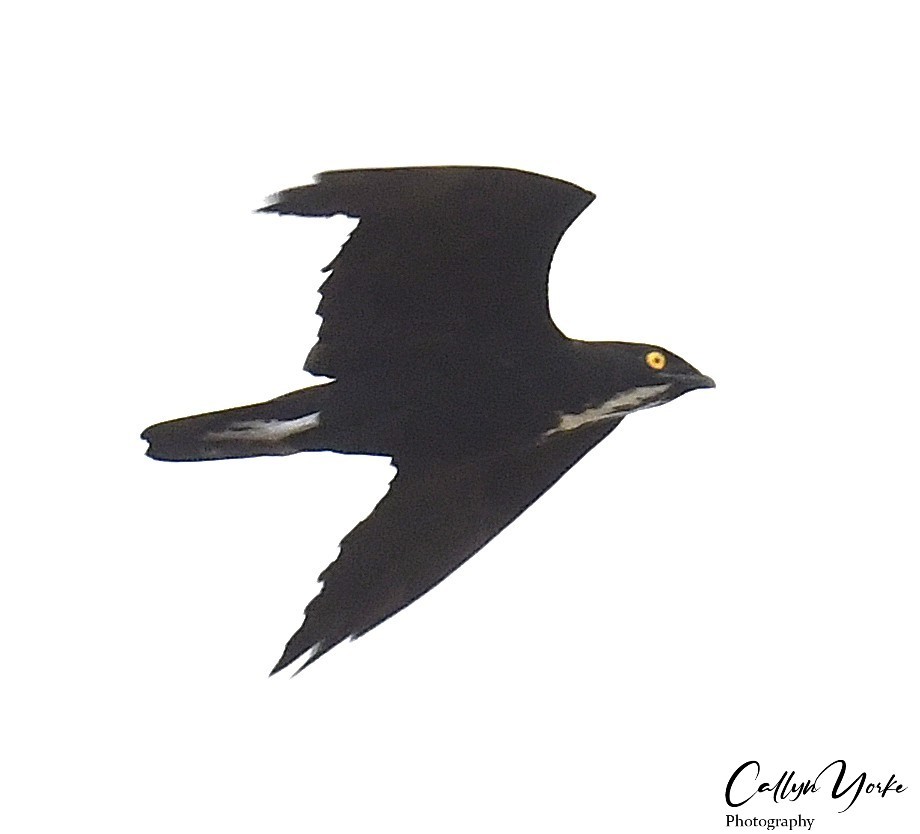
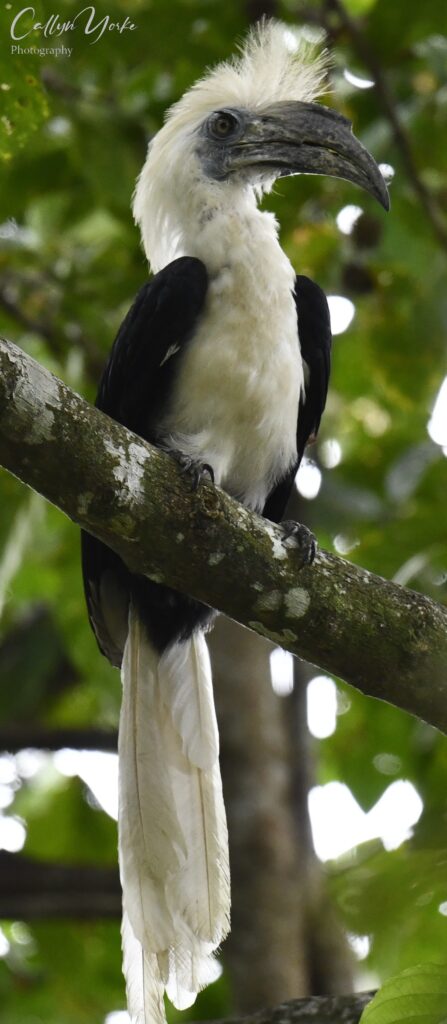
We explored a hidden oxbow lake accessed by a narrow, winding slough. The overgrown waterway and lakeside forest were teeming with birds and other animals. Several new birds were added to my trip list, including Bat Hawk, White-crowned Hornbill (a lifer), Fiery Minivet and Black-winged Flycatcher Shrike. Among mammals encountered was an incredibly large assemblage of at least fifty Proboscis Monkey; Long-tailed Macaque, Silvered Leaf-Monkey, Least Pygmy Squirrel and, stretching the pygmy adjective to its absolute taxonomic limit, a herd of Bornean Pygmy Elephant moving swiftly through the forest.
Returning to our previous downriver locations in the afternoon, Romzi reckoned that revisiting a couple of sites might produce a Bornean Ground Cuckoo. In any event, it would be the last opportunity on this journey to add that bird to my life list.
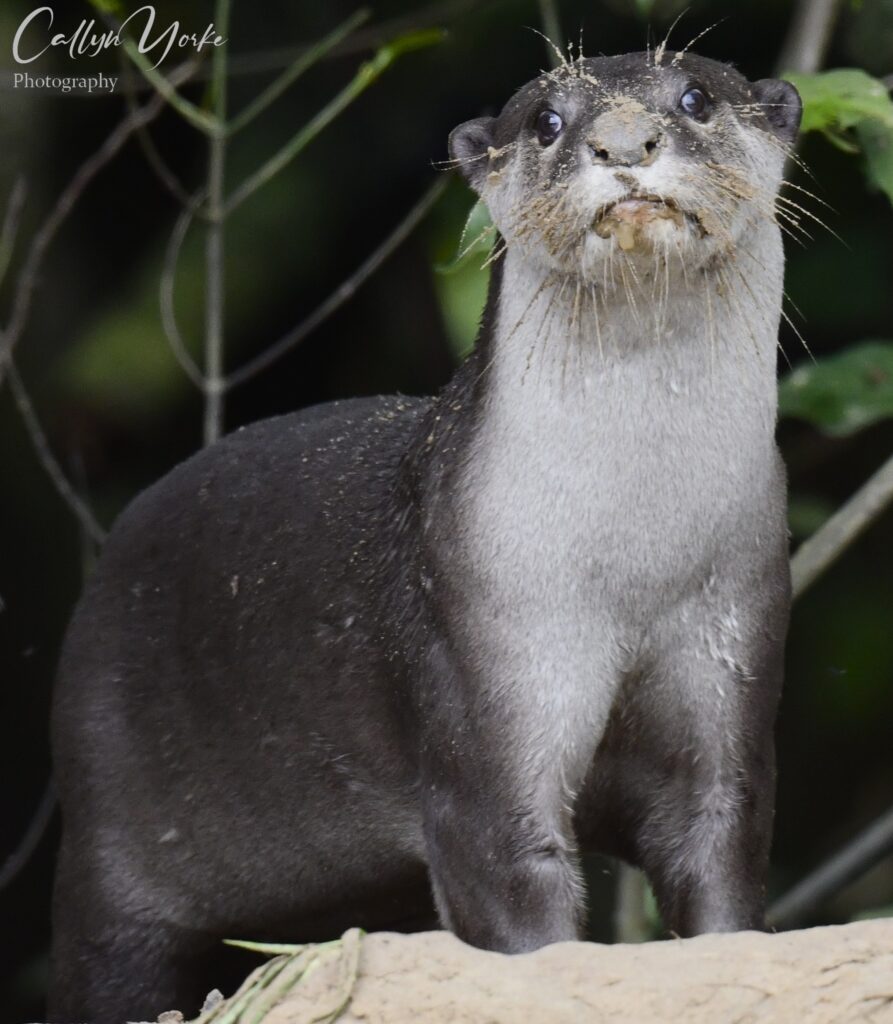
On the opposite side of the river, Romzi spotted something of interest and turned the boat in that direction. A family of about a dozen Asian Small-clawed Otter stood on the riverbank in plain view, monitoring our approach with curiosity. This was a life-mammal for me. The smallest member of the otter family, it is a rare, IUCN Threatened species in Southeast Asia, and one that I had seen only in the Saigon Zoo. I snapped a series of individual and group photos as Romzi struggled to hold the boat steady against the current.
Motoring cross-current back to the other side of the river, Romzi heard the cooing sounds of a Bornean Ground Cuckoo. He pulled the boat up against the riverbank and secured the bow to a tree limb. Almost predictably, playback of ground cuckoo vocalizations failed to obtain a response.
I drifted off into a state of pleasant indifference. The silence of the forest and gentle yaw of the boat in the current had a profoundly calming effect. I was thoroughly enjoying the river experience with or without a Bornean Ground Cuckoo.
A passing safari tour boat slowed down to see what we were up to. The motor gurgled loudly and a series of boat wakes slammed the stern of our boat against the embankment. Evidently satisfied that we had found nothing of great significance, the tour group continued downriver. Suddenly, Romzi silenced the monotonous playback and spoke softly, “The bird is here.” I scanned the forest understory. ” It is in front of you,” he said.
Yes! Incredible! An adult ground cuckoo with electric purple wings and jet black head contrasting with a large spectacle-like patch of bluish white skin around the eye. There was nothing undignified about this bird’s presence. It was far more showy and robust than I would have expected. Although only a few meters from my kneeling position in the boat, the wary bird was in nearly constant motion and keeping understory foliage between itself and my camera lens.
This was a do or die photo opportunity. I fired off a rapid series of ‘Hail Mary’ shots, hoping for something – anything identifiable. Within a few more seconds the bird disappeared into the forest and was not seen again. “Holy shit, we got it!” – summed up the results.
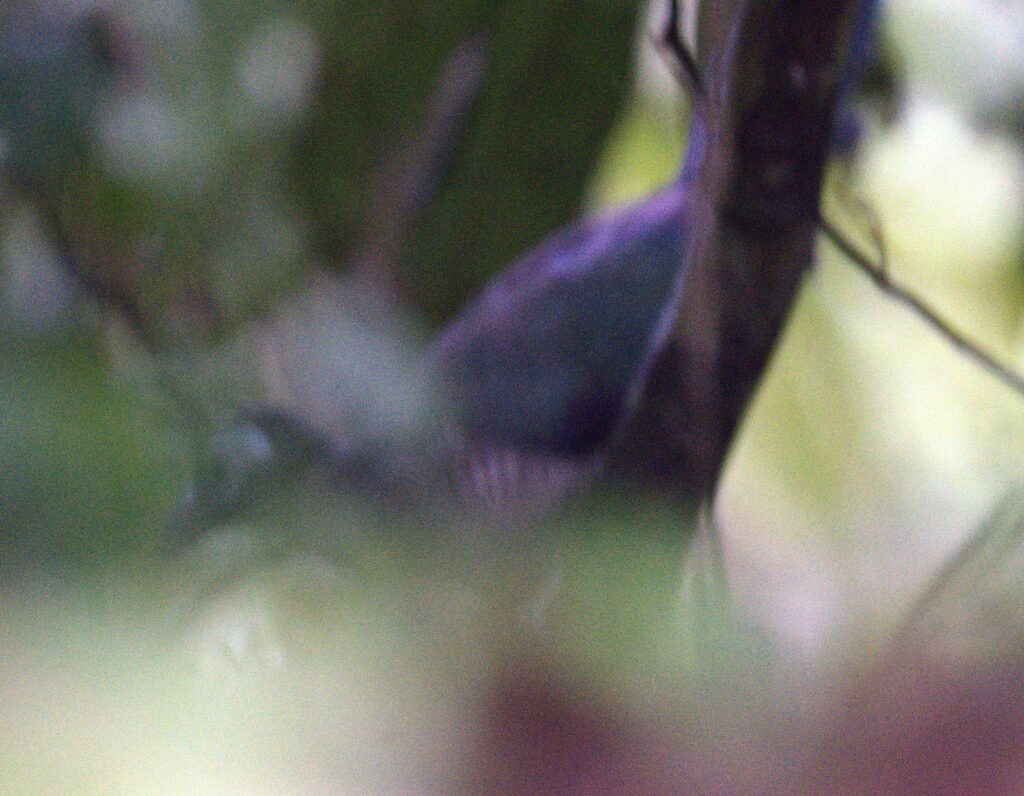
Having obtained a brief but clear view and blurry yet identifiable image of a Bornean Ground Cuckoo, was a notable achievement and a highly satisfying conclusion to the Kinabatangan River trip. In fact, it would be my final life bird in Sabah, joining the other celebrated additions, e.g. Great Argus, Bulwer’s Pheasant and Bornean Bristlehead. Romzi and I high-fived and headed back to Evergreen. As Matt and Evan had assured me, Romzi was indeed an outstanding Kinabatangan bird guide.
Annotated Bird List for Kinabatangan River, 15-17 September 2025 (53 Species ) Callyn Yorke
KEY
Abundance: Numbers following each species entry are the highest count for a single survey, when multiple surveys were made.
Age, sex and molt (when known): ad = adult; imm = immature; m = male; f = female; bsc plmg = basic (non-breeding plumage; alt plmg = alternate (breeding) plumage; trans = transitional plumage, i.e. alternate into basic plumage.
Ecology and Behavior: Aerial insect hawking (ah); taking fruit, berries or parts of flowers (fr); gleaning insects from foliage (ig); probing into surface (pr); estimated height (m) above ground (agl); gregarious (greg); mixed-species flock (msf).
Systematics and Nomenclature used herein, is an amalgam of Avibase, International Ornithological Congress (IOC) and current (2025) online resources, i.e. Birds of the World, Cornell University, USA. Species acronyms (banding codes) derived from the first letters of the single or hyphenated common name, e.g. DUBR = Dusky Broadbill; BWFS = Black-winged Flycatcher-Shrike; FIMI = Fiery Minivet, etc..
Borneo endemics and near-endemics are listed in Bold Face lettering.
BIRDS NOTED
- Storm’s Stork Ciconia stormi 1 perched at 25m agl in canopy of forest tree at edge of a small tributary (photo – see above).
- Black-crowned Night Heron Nycticorax nycticorax 2 (ad.) individuals in riverbank second-growth.
- Purple Heron Ardea purpurea 1 riverbank forest edge.
- Great Egret Ardea alba 2 riverbank clearings.
- Oriental Darter Anhinga melanogaster 3 on tributary snags.
- Crested Goshawk Accipiter trivirgatus 1 on riverside snag at 15m agl.
- Bat Hawk Machieramphus alcinus 1 in flight over oxbow lake (photo – see above); then alighting on forest edge canopy snag.
- Crested Serpent Eagle Spilornis cheela 2 (ad) individuals atop riverbank forest canopy.
- Wallace’s Hawk Eagle Nisaetus nanus 2 (ad.) individuals atop riverbank forest canopy.
- White-bellied Sea Eagle Haliaeetus leucogaster 1 swooping low to river surface.
- White-breasted Waterhen Amaurornis phoenicurus 1 grassy riverbank and swampy lawn at Evergreen boat dock.
- Common Sandpiper Actitis hypoleucos 1 on bare riverbank.
- Whiskered Tern Chlidonias hybrida 2 flying low, back and forth over river.
- Little Green Pigeon Treron olax 2 in forest canopy of riverbank.
- Green Imperial Pigeon Ducula aenea 4 greg. in flight over riverbank forest canopy.
- Bornean Ground Cuckoo Carpococcyx radiceus 1 (possibly 2) riverside forest understory; very shy; briefly approached playback recordings of its vocalizations, perched for a few seconds on a snag at 1m agl, then disappeared back into the forest (photo – see above); other individuals vocalizing – heard by Romzi in forest edge along the river.
- Greater Coucal Centropus sinensis 2 riverbank, exposed perch 8m agl, forest edge.
- Violet Cuckoo Chrysococcyx xanthorhynchus 1 repeatedly vocal (unseen), tributary forest.
- Plume-toed Swiftlet Collocalia affinis 3 flying low, back and forth over riverbank.
- Asian Palm Swift Cypsiurus balasiensis 2 flying 10-15m agl over tributary.
- Oriental Dollarbird Eurystomus orientalis 1 perched at 15m agl on a riverbank snag.
- Common Kingfisher Alcedo atthis 1 perched on a low snag in backwater tributary.
- Stork-billed Kingfisher Pelargopsis capensis 1 flushed from a shaded tributary snag.
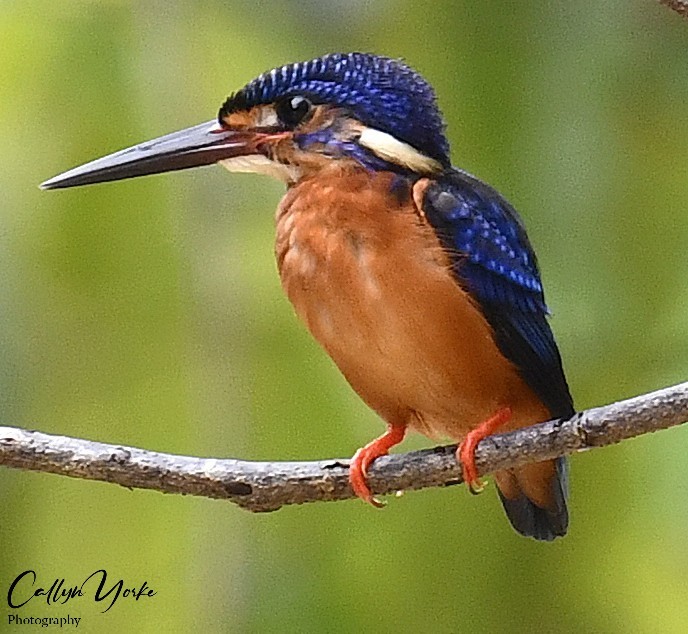
- Blue-eared Kingfisher Alcedo meninting 2 on low limbs over riverbank and tributaries (photo – see above).
- Blue-throated Bee-eater Merops viridis 5 greg. sallying from riverbank canopy and tall snags.
- White-crowned Hornbill Berenicornis comatus 1 perched in subcanopy of tributary forest tree (photo – see above).
- Rhinoceros Hornbill Buceros rhinoceros 2 in flight and in canopies of riverside forest.
- Helmeted Hornbill Rhinoplax vigil 1 in canopy and flight over riverside forest.
- Oriental Pied Hornbill Anthracoceros albirostris 4 in riverside forest canopy and on high dead limbs (photo – see above); a habituated pair in Evergreen homestay front yard.
- Black Hornbill Anthracoceros malayanus 4 in riverside forest canopy and in flight over river.
- Bushy-crested Hornbill Annorhinus galeritus 1 riverside forest subcanopy.
- Wrinkled Hornbill Rhabdotorrhinus corrugatus 4 greg. in flight over tributary forest canopy.
- Black-eared Barbet Psilopogon duvaucelii 1 tributary forest subcanopy.
- Rufous Piculet Sasia abnormis 1 low to mid-level of riverbank forest edge.
- Dusky Broadbill Corydon sumatranus brunnescens 1 in subcanopy of oxbow lake forest edge (photo – see above).
- Hooded Pitta Pitta sordida 1 vocal on riverbank forest edge.
- Black-winged Flycatcher-Shrike Hemipus hirundinaceus 1 in msf with FIMI and DUBR, oxbow lake forest subcanopy.
- White-breasted Woodswallow Artamus leucorynchus 2 greg. in riverbank tree canopy.
- Fiery Minivet Pericrocotus igneus 2 (m,f) in msf with BWFS and DUBR, oxbow lake forest subcanopy.
- Sunda Pied Fantail Rhipidura javanica 1 low to mid-level at edge of forest in backwater tributary.
- Slender-billed Crow Corvus enca 2 greg. a pair in flight over riverbank forest.
- Yellow-vented Bulbul Pycnonotus goiavier 2 in second growth and gardens around the Evergreen homestay.
- Pacific Swallow Hirundo tahitica 5 greg. pairs flying low over riverbanks and clearings.
- Rufous-tailed Tailorbird Orthotomus sericeus 3 vocal in second-growth and gardens.
- Ashy Tailorbird Orthotomus ruficeps 3 vocal, active at forest edge and in second-growth with adjacent clearings.
- Bold-striped Tit-Babbler Mixornis bornensis 4 vocal, forest edge and second-growth next to clearings.
- Sooty-capped Babbler Malacopteron affine 1 vocal, riverbank forest edge.
- White-chested Babbler Trichastoma rostratum macropterum 2 vocal, riverbank forest edge.
- Javan Myna Acridotheres javanicus 6 greg. pairs and trios in flight over riverbank and open areas.
- Magpie Robin Copsychus saularis adamsi 2 vocal, second-growth and gardens.
- White-crowned Shama Copsychus stricklandii 3 vocal, riverbank forest edge.
- Malaysian Blue Flycatcher Cyornis turcosus 1 active at mid-to lower levels of riverside forest edge.
- Eurasian Tree Sparrow Passer montanus 3 (m,f) greg. Evergreen yard and adjacent second-growth.
_________________________________