Danum Valley Study Center, Sabah 30 August – 2 September 2025 Callyn Yorke
Danum Valley was a high priority destination for me years before arriving in Sabah. It had a reputation as being one of the best places in Southeast Asia for wildlife photography. In particular, the place where one might catch a fleeting glimpse of the Great Argus.
That possibility alone captured my imagination. Great Argus was a nemesis bird of the highest order. Despite having spent many hours in the rainforests of Peninsular Malaysia, intermittently over a period of three years, I failed to find that stunningly oversized, notoriously secretive member of the pheasant family.
A travel agency in Kota Kinabalu was assisting me in an effort to secure a single-person reservation at Danum Valley Study Center (DVC). They were trying their best to find an opening for me. For three weeks, the messages received indicated that the DVC research facility was fully booked into the early part of the next year. Since the only way to visit was to obtain lodging on the property, it appeared I was simply out of luck. The travel agency dutifully stayed in contact. If DVC didn’t pan out, I would need options to visit other locations.
On August 29, the day before my scheduled flight from Sandakan to Kota Kinabalu, there was news that a three-night stay at DVC was available beginning on 30 August. That was trimming it pretty close. A flight from Sandakan was quickly booked; I would be met at the Lahad Datu airport and driven to DVC.
Everything went surprisingly well and I arrived at Danum Valley Study Center in the late afternoon of August 30. Basic lodging was provided (1- star) in room #3 near the main office and dining hall (a three-night package @ $150 per night, meals included). The receptionist said that a freelance guide would be available later to discuss an itinerary.
There was about an hour of daylight remaining and an opportunity for a stroll around the research facility. Older and newer wood-framed buildings were clustered together in forest clearings. Stairways and walkways were fringed by huge, epiphyte bearing trees and patches of second growth. DVC management had endeavored to keep the developed area in more or less a natural state. Birdlife was all around.
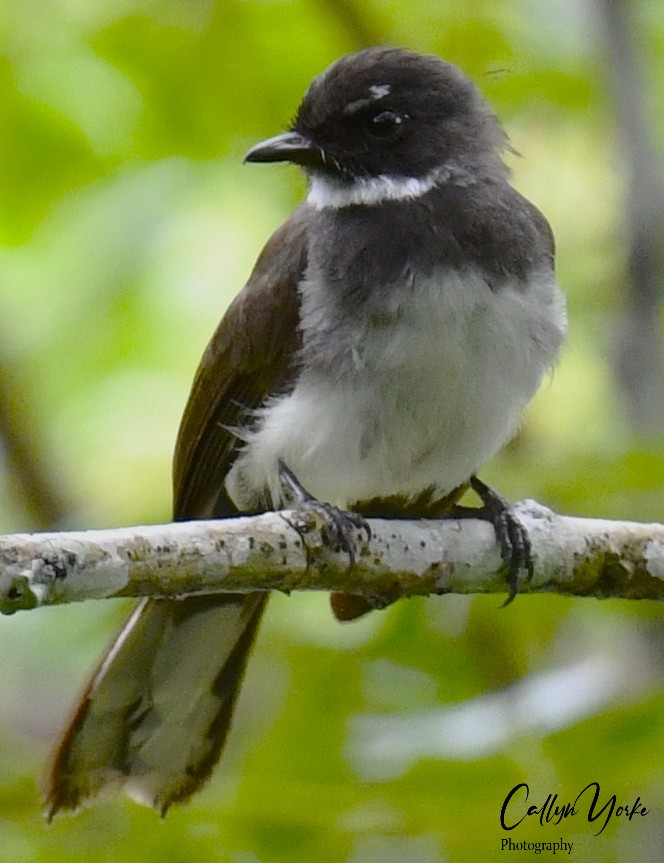
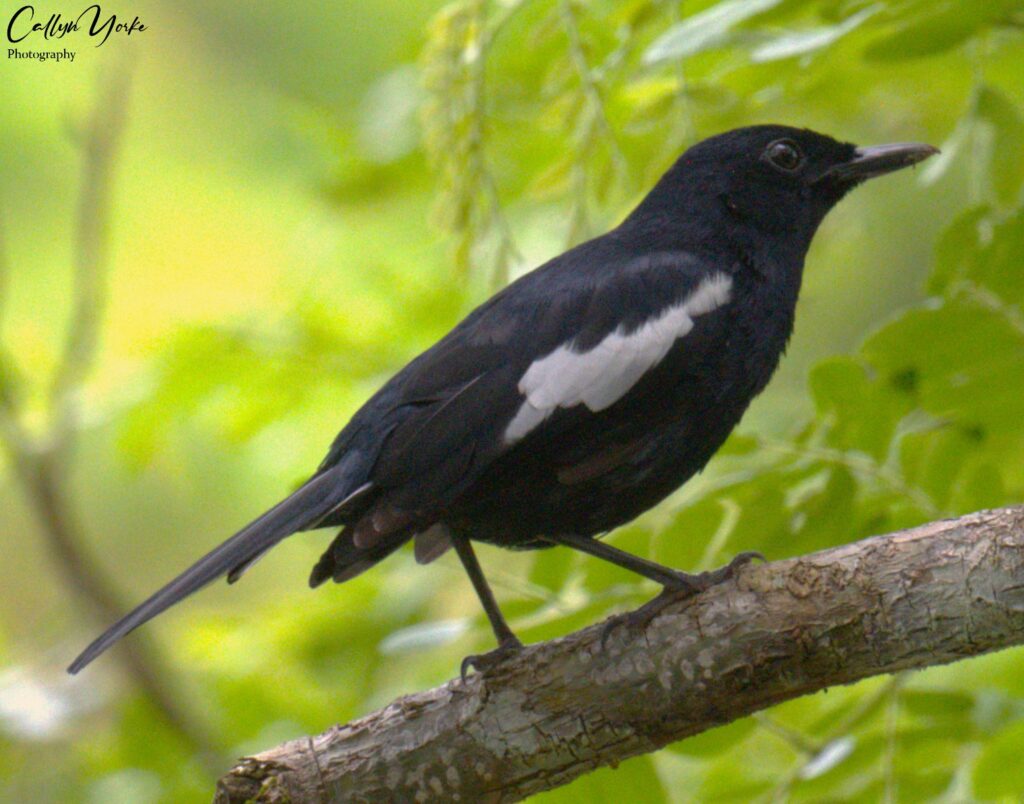
A few birds and their vocalizations were familiar, e.g. Pied Fantail, Magpie Robin and Rufous-tailed Tailorbird. Some bird sounds were entirely new to me.
One thing was clear – DVC had birds — plenty of them. Reptiles and mammals were also fairly common. In fact, over the next three days, a fair number of interesting new species would be added to the trip report, including several life-birds and mammals.
Shafik, an ethnic tribesman from the Kinabalu coast, met me at the dining hall for the evening buffet meal. He was soft spoken, genuinely friendly, very knowledgeable and prepared to show me the birds and other wildlife. We would begin at sunrise the following day. Night drives were optional, weather permitting . The last remaining space had been reserved for that evening ($20 US).
When I arrived for the night drive with my camera gear about a dozen guests were already seated on the upholstered benches of an open flatbed truck. Shafik, who wouldn’t be joining us, had saved a seat for me in front, next to the cab. In that forward position there would be an unobstructed view for photography. A naturalist guide would be handling a powerful spotlight connected to the truck battery. We were instructed to remain seated and avoid following the movement of the light beam when in transit. Dizziness, loss of balance and falling off the truck might be the result. When a creature of interest was found, the vehicle would be stopped but remain idling to power the spotlight. Sighting pauses could be extended when necessary. Passenger safety was a primary concern, suggesting previous mishaps.
Darkness came quickly to a windless, leaden sky, still without a drop of rain. Based on my experience in the tropics, I predicted the evening weather to be fairly stable, confidently leaving a dry bag and umbrella in the room.
That certainly wasn’t the first time I blew a tropical weather forecast. Fifteen minutes into the drive we were pummeled by a cloudburst. I handed my camera through the window to the driver, who, fighting for control on a slick road with low visibility, kept it next to him on the front seat. Not only was I unable to see more than a short distance in front of my dripping wet face, there was no chance to obtain quality images of any wildlife we encountered.
There wasn’t much animal activity to be seen in the heavy weather. The spotter gave up and dove back into the cab. Among the few identifiable creatures caught in the headlights, was a rather sad looking Sambar Deer and a large katydid near the forest edge, clinging to a dripping, fluttering leaf.
A vote was taken and we were on our way back to the visitor center. The night drive was officially rained out. We received credit for the trip cancellation and almost everyone on board signed up for the drive the next evening. Back in my room clothing was draped over every elevated object. Without electricity to run the fan (DVC generators were turned off at night) the wet laundry stubbornly refused to dry out.
There was good news. The D850 and pf 500 mm lens were damp yet fully functional. The same camera gear had spent several months in an authorized Nikon repair shop after being severely damaged in Laos. That incident involved a sudden downpour of umbrella-collapsing intensity. So heavy was the Laos deluge, that the camera gear didn’t make it into the bag before water intrusion rendered the electronics completely useless. This time I was lucky.
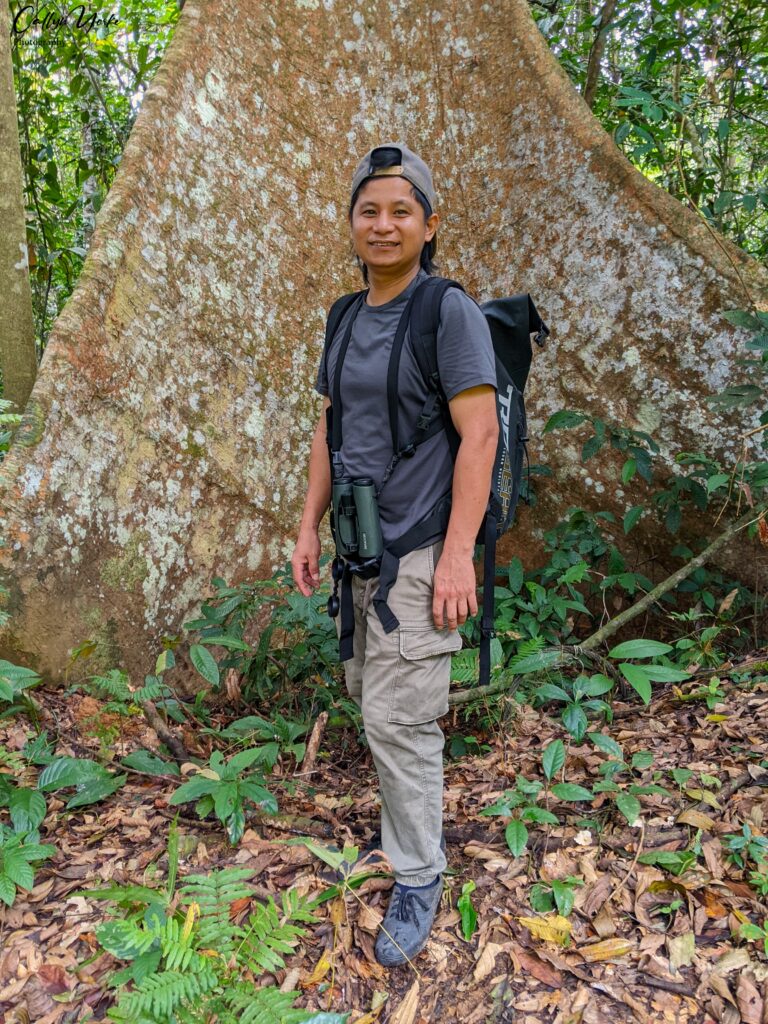
Shafik and I began our bird survey the following morning at dawn. The plan was to cover the visitor center area for an hour or so then return to the dining hall for breakfast.
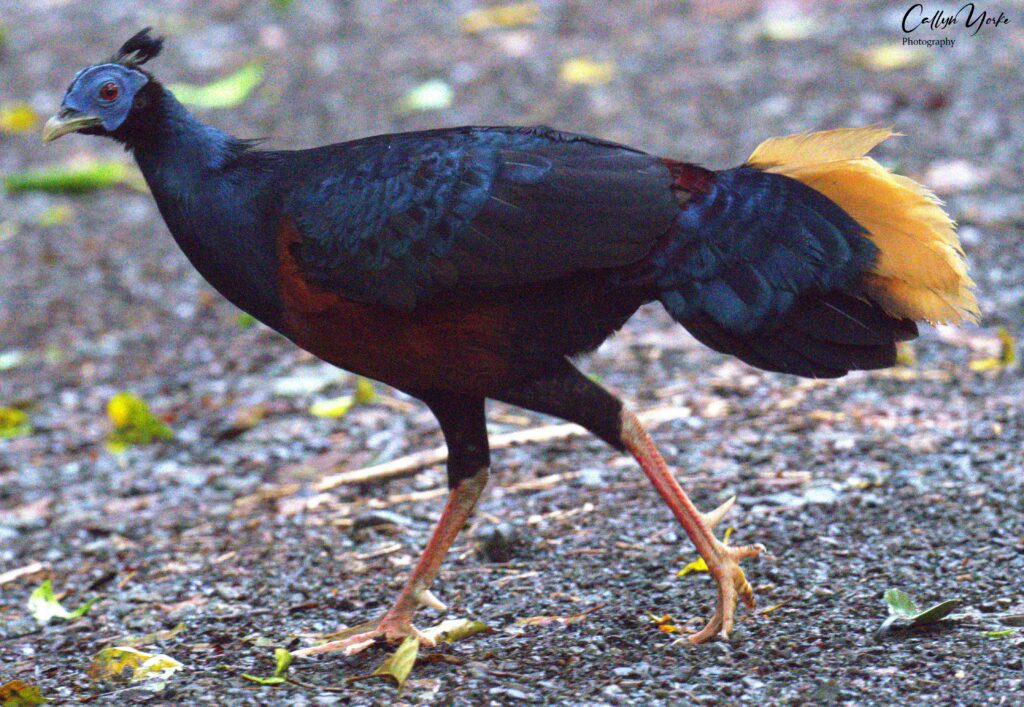
Nearby, someone had reportedly found a pair of Bornean Crested Fireback. We arrived there in time to see two large, dark birds crossing the roadway then disappearing into the forest. Shafik said we should wait because the birds might come back out to the road again and be in full view. He was spot on with that call. A few minutes later, the firebacks, both males, cautiously reappeared at the roadside then moved swiftly across. We crept in a little closer.
Next came a series of snapshots using appropriate camera setting to compensate for low light (ISO 6400, 1/250 sec.). Yes! This was another of Borneo’s most wanted, colorfully ornate member of the pheasant family – an unforgettable lifer that jumpstarted our first day at DVC.
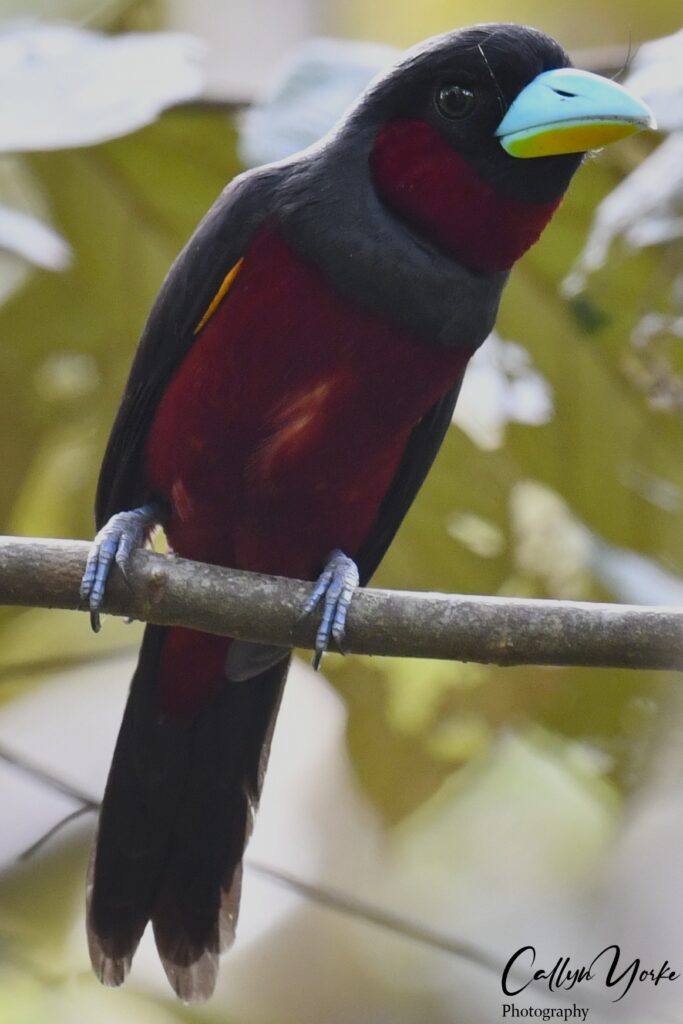
After breakfast, we walked up a side road leading to an overgrown playing field next to a dormitory. The clearing and bordering second growth had attracted a few birds. There, we found Blue-crowned Hanging Parrot, Bushy-crested Hornbill and Black & Red Broadbill. Those were new additions to the Sabah trip report. By siesta time our tally was thirty-two bird species.
The previous night drive had been rained out and there was a second chance this evening, August 31. Again, Shafik had reserved a forward seat for me. The weather appeared nearly the same as before – overcast but windless and dry. Paranoid about being twice fooled, I brought an umbrella and dry bag. Of course, this time both were unnecessary.
We rumbled out to the main road in the fully loaded flatbed truck. The growling diesel engine and exhaust fumes eliminated any opportunity for auditory or olfactory nature appreciation. Our primary vision belonged to the spotter. Standing opposite me on the passenger side bench seat, he swept a 360° arc with a handheld spotlight that could have illuminated a jumbo jet runway.
This evening there was abundant animal activity. Making several stops, we were treated to fleeting views of both species of Giant Flying Squirrel (Black and Red), two species of civet (Malayan and Palm), and a dozing Black-crowned Pitta.
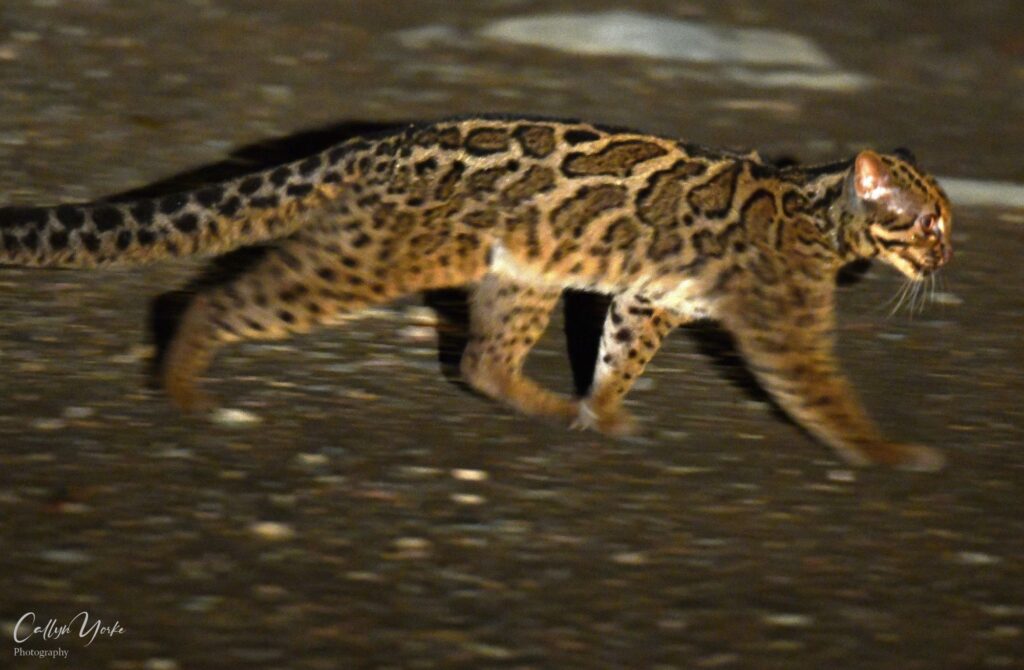
The highlight of the night drive came during our return to the visitor center – an adult Marbled Cat. This is a rare, IUCN Threatened species. It was only in view for a few seconds, running along the roadside and disappearing before the truck came to a full stop. Several people in our group missed it.
Although its historical range includes most of Southeast Asia, the Marbled Cat’s natural history is incompletely known. Judging from the build, i.e., relatively small size (3-5 kg.) and extraordinarily long, robust tail, this agile felid is probably best adapted for an arboreal lifestyle in lowland rainforest – one of the world’s most rapidly vanishing ecosystems.
The spectacle of a Marbled Cat running along the roadside momentarily baffled the driver and spotter, our two most experienced naturalists. Perhaps it was hunting small prey there, e.g. frogs and mice. Hard to say. One disturbingly obvious thing we do know: Deforestation is threatening the continued existence of this beautiful animal.
For two consecutive days, August 31 and September 1, Shafik and I completed morning and afternoon walking surveys on the main road and side trails along the river. We often stopped to listen for bird sounds in the surrounding forest. Sparingly, Shafik used recordings of birds hidden from view but vocalizing nearby. Sometimes, birds would approach in response to the playback. Usually they went incognito. Shyness could be attributed to: a) time of year, i.e. late August is generally outside the breeding season and, b) habituation. The latter behavior could predictably result from frequent use of playback recordings. Most birds remember the false alarm and like the neighbor’s dog, eventually ignore familiar sounds next door.
Shafik’s eyesight was as sharp as his hearing and he was pointing out birds, literally left, right and center. I fumbled with my binocular, camera and notebook, while listening to Shafik call out a series of birds by their English common names. My camera had priority for birds in close proximity. But if the bird was entirely new to me, an effort was made to obtain an identifiable image regardless of distance.
By late morning of September 1, my final day at DVC, we had observed a respectable number of species. Most were the same bird species we found on the previous day, e.g. Chestnut-bellied Malkoha, Golden-whiskered Barbet, Helmeted Hornbill, White-chested Babbler, Horsefield’s Babbler and Whiskered Treeswift.
Repetitive species sightings were lulling me into complacency. Then Shafik spoke quietly, saying that he thought he had heard the sound of a Bornean Bristlehead in the distance. That possibility sparked a brush fire under my hat. Trees across the river were intensely scanned.
Like a dove released from a handkerchief, a Bristlehead appeared in the canopy of a distant tree. The camera and 500 mm lens needed to be held at a slight upward angle, maintaining as much steadiness as possible. With elevated blood pressure and about a kilometer of atmospheric diffraction between us and the bird, obtaining a razor sharp, raw digital image, was highly unlikely. A rapid series of shutter-mirror slaps shattered the silence. And again. Mediocre images would be about the best to be hoped for.
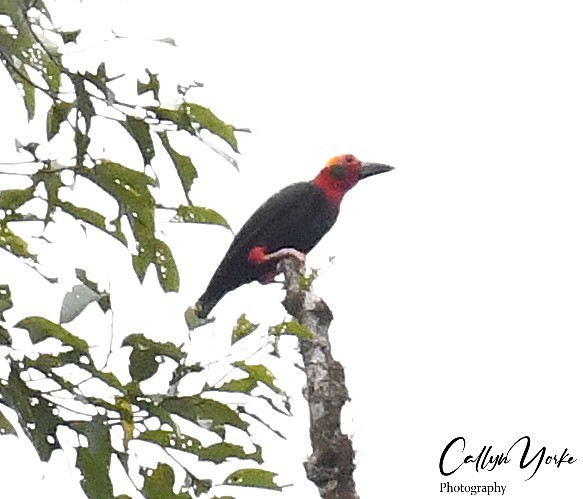
The results weren’t all that bad. A couple of the digital images of my Bornean ‘Pixelhead’ were a bit on the bristly side but keepers nonetheless. This was a life-bird I had almost given up on. Shafik, the Sabah bird whisperer, had worked his magic.
I had missed the elusive Bornean Bristlehead at RDC Sepilok, where it was most likely to be seen. Elsewhere in Borneo, this endemic species is scarce or completely absent, even in what appears to be perfectly suitable habitat. It is arguably Borneo’s most mysterious bird. Lim Kim Seng wrote a haltingly succinct description of the Bornean Bristlehead:
“Strange looking, red-and-black bird with massive hooked bill; with no known close relatives…Nest is unknown.” (Lim Kim Seng et. al. 2024. A Field Guide to the Birds of Malaysia Including Sabah and Sarawak, p. 226).
IUCN lists the Bornean Bristlehead as “Vulnerable.” Hmm. That may incidentally be an appropriate adjective for Sabah bird tour leaders who’s clients are expecting to add Bornean Bristlehead to their life-bird list. Best of luck to them!
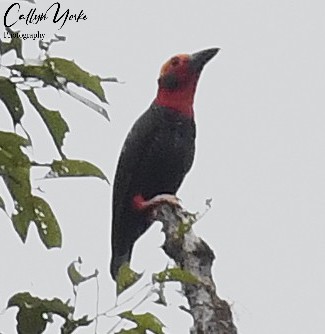
We weren’t quite finished. Further down the road, near the DVC entrance sign, another stunning life-bird , Jambu Fruit Dove, patiently awaited us – in a fruiting tree, naturally. This one, a male, was in handsome breeding plumage and in range for a few crisp images.
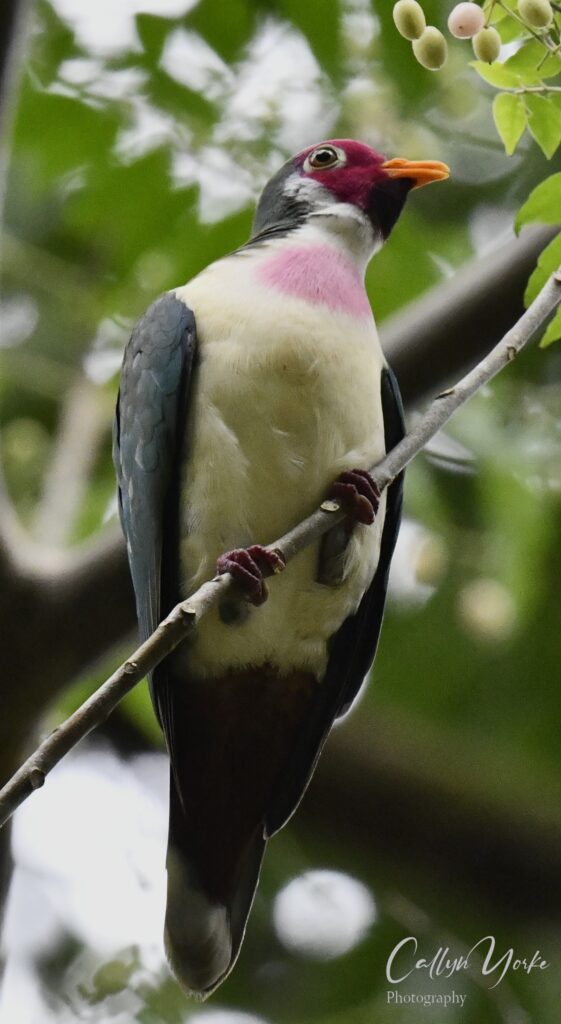
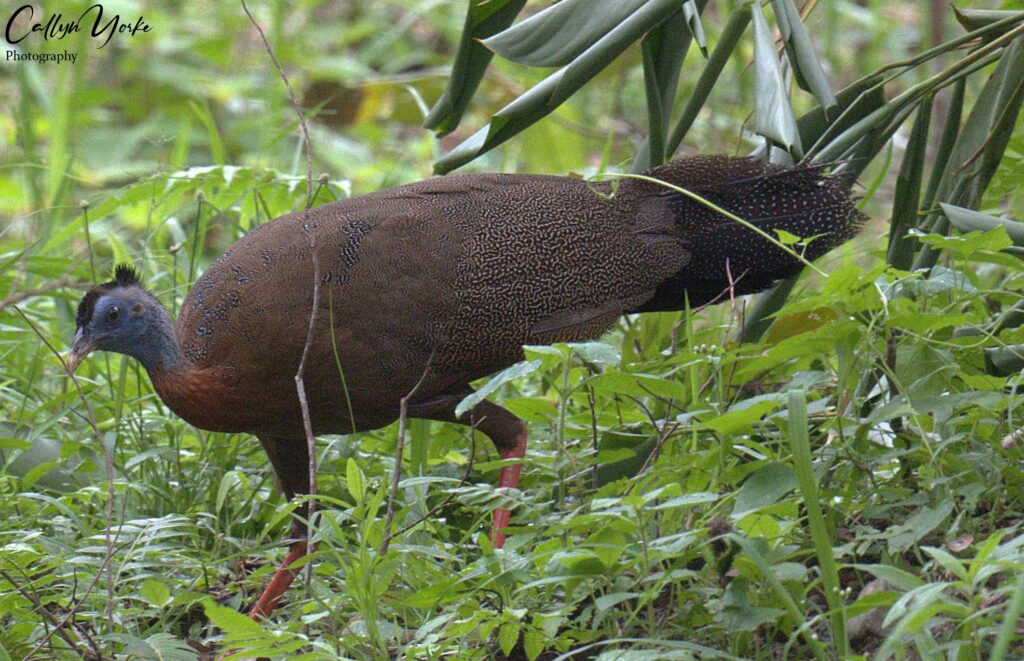
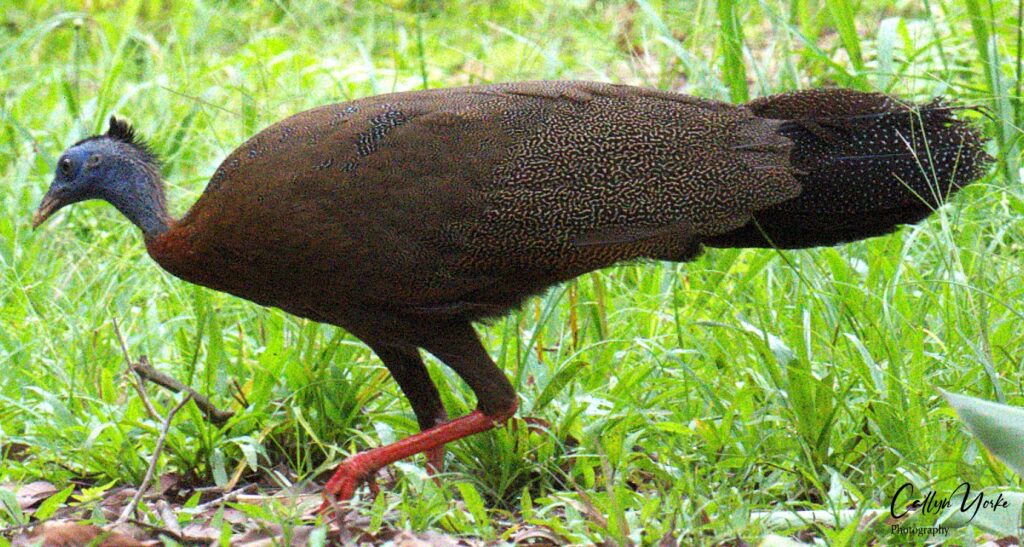
As we reversed direction on the main road, a very large bird, partly obscured by tall grass and second-growth, snagged our attention. Shafik turned and whispered emphatically, “Great Argus!”
The stately bird was a subadult male that was well aware of our presence. He continued moving away, weaving through tall herbaceous growth. There was no use in trying to be sneaky. I walked swiftly toward it, straight down the middle of the road. Stopping abruptly two or three times, a series of hasty snap shots was obtained.
Oops! Camera settings, camera settings! Too late. The bird was gone! OMG. I checked the camera -no worries. The auto focus, vibration reduction and exposure functions were dialed in and the image quality was fine. That was a close one.
Finally, after all these years, the nemesis bird had been found, identified, digitized and duly noted. Outstanding! Shafik added, by the way, a Great Argus family had been seen daily in this area and the birds were almost as tame as chickens.
As we approached the visitor center, additional noteworthy sightings were made along the main road and in the adjacent riverine forest. A Sunda Gliding Lizard was contemplating its flight plan on the trunk of a roadside tree. Nearby, an arboreal Green-crested Lizard was warming up at eye level, and posed for a series of glamour photos.
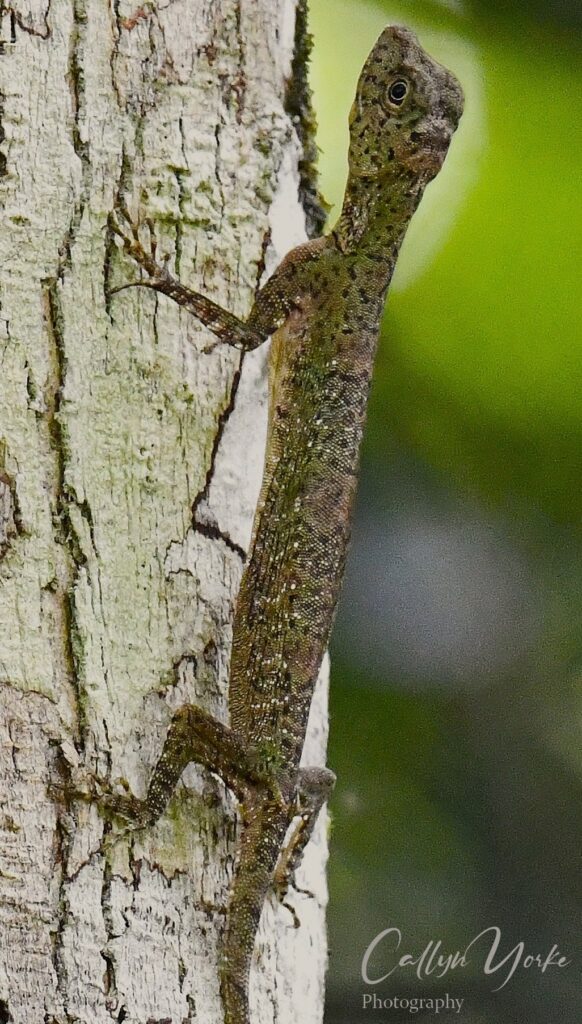
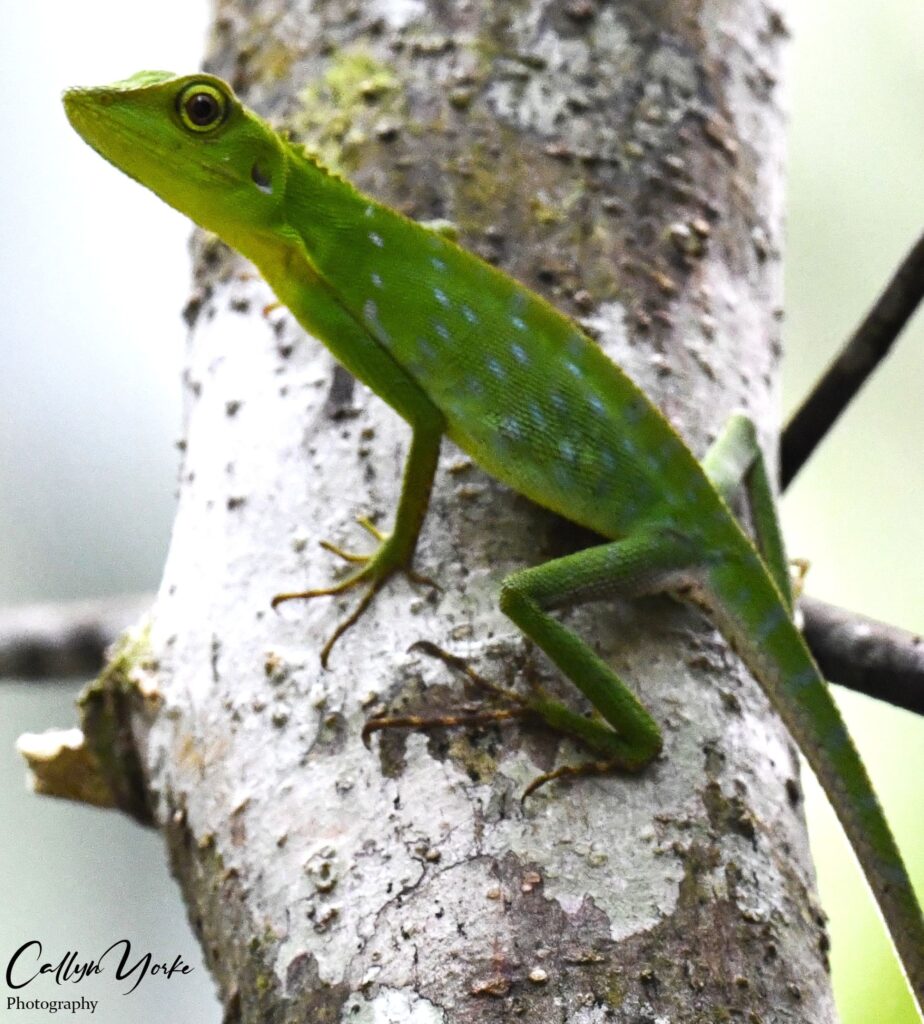
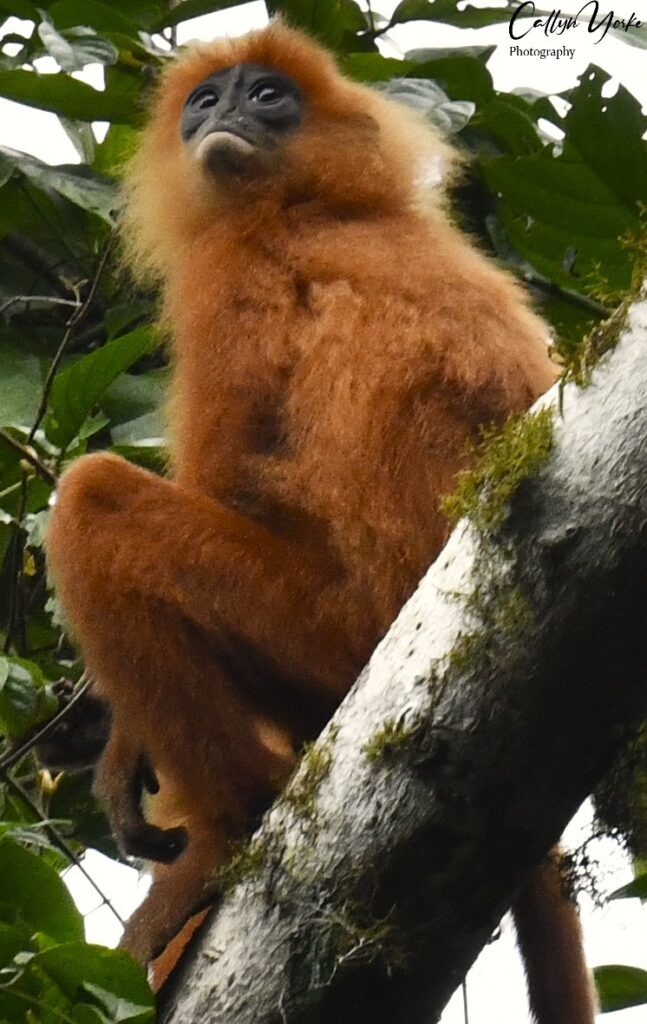
Taking a side trail into a riverine forest, we came upon a sedentary troupe of Red Leaf Monkey. Individuals were spaced several meters apart, some scratching mosquito bites, some reaching for a leafy snack. Nothing particularly unusual or un-leaf monkey like was seen in their behavior. Yet there was something quite obvious about them that seemed peculiar.
Their dark facial skin and ‘Irish setter’ pelage, suggested a small orangutan. Was that due simply to an accidental convergence in two distantly related primates? Might there be an explanation for the similarity in terms of natural selection?
Since neither Bornean Orangutan nor Red Leaf Monkey, as far as we know, is toxic, distasteful, or otherwise dangerous, Batesian mimicry can probably be ruled out. Across the animal kingdom, contrasting color combinations of orange and black, red and black, or yellow and black, signify danger, as in, if you mess with this creature, you may die. Harmless species may gain a selective advantage by resembling a toxic neighbor. How exactly would this type of mimicry (i.e., Batesian) apply to these two primate species?
Biologists have proposed various explanations for the convergent coat color in these two primates. Much of that speculation also falls short of convincing. For example, it has been postulated that the orangish coat color, when seen against the dappled light in the tree canopy provides camouflage protection from predators.
The camouflage hypothesis seems unlikely for at least two reasons. Most arboreal predators in Southeast Asia, e.g. pythons and cats, are primarily nocturnal hunters and would be colorblind at night. Secondly, Bornean Orangutans and Red Leaf Monkeys are large to medium-sized primates with a conspicuous orangish pelage that in daylight is relatively easy to see from a distance. Furthermore, young Red Leaf Monkeys have white or cream colored fur that is even more in contrast with green foliage than the orangish fur of the adults.
Deep diving into the convergence question, genetic comparisons have been made between orangutans and other primates (including humans) with reddish-orange hair. Nothing seems to match up there either. The molecular mechanism responsible for hair color in orangutans is apparently unique among primates.
In summary, the striking convergence in appearance of these two sympatric, arboreal vegetarians, may exemplify something conceptually new to science, possibly on multiple levels. This would certainly be a challenging and exciting subject for further study. I am open for a discussion on this topic, should anyone care to reach out.
Something moving in a tree across the river gave us pause. Shafik had first glass on it – a young adult Bornean Orangutan. At a distance of perhaps 300 m, the orangutan form could be seen with an unaided eye. In typical style, this one was casually dangling by an arm about twenty meters above the riverbank. Whether it was a former captive or born-in-the-wild resident, was unknown. Nowadays, the latter possibility is vanishingly remote.
In any case, this was my second and final encounter with a free- ranging orangutan in Sabah. It was a satisfying conclusion to a brief yet infinitely rewarding introduction to the Danum Valley.
During dinner on my last evening at DVC, I chatted with Fabian, a Swiss university student I had met at RDC Sepilok. He had chosen a different hiking itinerary and DVC guide, along with two lovely young Austrian physicians, Johanna and Victoria. By coincidence, the four of us were checking out the following morning and heading to Lahad Datu. That meant we could use the same DVC shuttle and share the expense. Perfect. Afterwards, we would be going our separate ways and they would soon to be returning home.
Also present at the DVC dinner table, were two government contract biologists, Matt and Evan, from New Mexico, USA. Sociable and informative, they described their recent adventure on the Kinabatangan River. I tuned in with interest.
Kinabatangan River had been on my list of possible sites to visit. However, as for nearly everywhere else on the Sabah target map, Kinabatangan lodges were fully booked months in advance. Matt and Evan understood, having faced similar logistical problems. They were happy to give me the contact information for a local guide named Romzi, who was an expert at finding rare birds, such as the endemic Bornean Ground Cuckoo. Romzi, they added, might also be able to arrange for my lodging.
The ten-minute dinnertime conversation with Matt and Evan renewed my hope for visiting the Kinabatangan River. As it turned out, their helpful advice materialized into one of the high points of my Sabah journey.
Annotated Bird List for Danum Valley Study Center August 30 – September 2, 2025 (55 Species )
KEY
Abundance: Numbers following each species entry are the highest count for a single survey, when multiple surveys were made.
Age, sex and molt (when known): ad = adult; imm = immature; m = male; f = female; bsc plmg = basic (non-breeding plumage; alt plmg = alternate (breeding) plumage; trans = transitional plumage, i.e. alternate into basic plumage.
Ecology and Behavior: Aerial insect hawking (ah); taking fruit, berries or parts of flowers (fr); gleaning insects from foliage (ig); probing into surface (pr); estimated height (m) above ground (agl); gregarious (greg); mixed-species flock (msf).
Systematics and Nomenclature used herein, is an amalgam of Avibase, International Ornithological Congress (IOC) and current (2025) online resources, i.e. Birds of the World, Cornell University, USA. Species acronyms (banding codes) derived from the first letters of the single or hyphenated common name, e.g. JFDO = Jambu Fruit Dove; RTTA = Rufous-tailed Tailorbird; AREB = Asian Red-eyed Bulbul , etc..
Borneo endemics and near-endemics are listed in Bold Face lettering.
BIRDS NOTED
- Bornean Crested Fireback Lophura rufa 2 (m) greg. a pair on the roadside and in adjacent second-growth at the forest edge around the DVC buildings (photo -see above).
- Great Argus Argusianus argus 1 (m imm.) walking in roadside second-growth (photo).
- Crested Serpent Eagle Spilornis cheela 1 (ad.) on fence post, DVC exit road (photo).
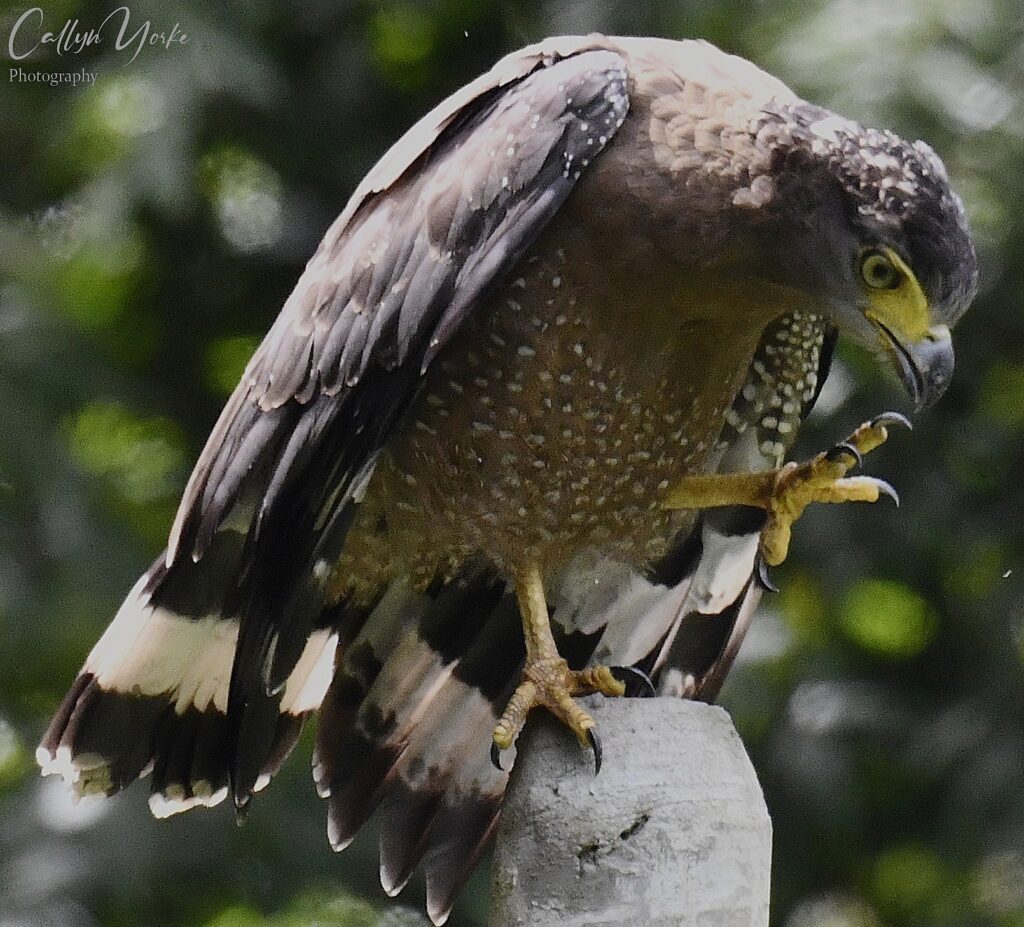
- Changeable Hawk-Eagle Nisaetus cirrhatus 1 perched in subcanopy across the river.
- Jambu Fruit Dove Ptilinopus jambu 1 (m) in a fruiting tree next to the main road (photo – see above).
- Raffle’s Rhinortha (Malkoha) Rhinortha chlorophaea 1 in heavy second- growth at the edge of a clearing.
- Chestnut-bellied Malkoha Phaenicophaeus sumatranus 1 mid-level, roadside forest edge.
- Little Bronze Cuckoo Chrysococcyx minutillus 1 (fem) subcanopy perch in large tree with epiphytes next to the central parking area (photo).
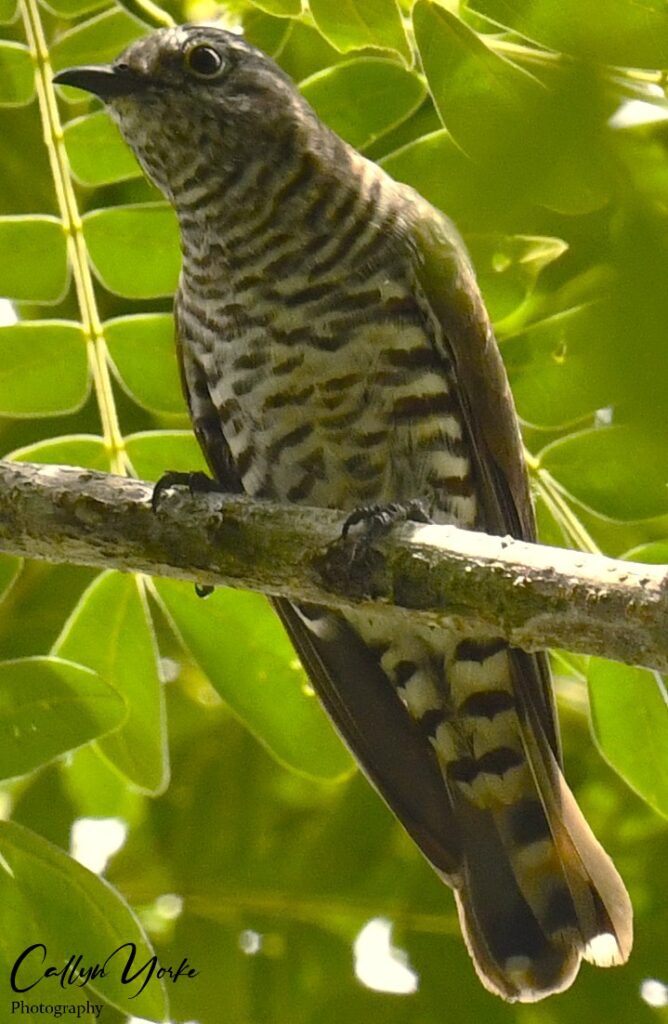
- Malaysian Hawk-Cuckoo Hierococcyx fugax 1 vocal (unseen – Sifak).
- Buffy Fish Owl Ketupa ketupu 1 in large, epiphyte laden tree next to the central parking area (photo).
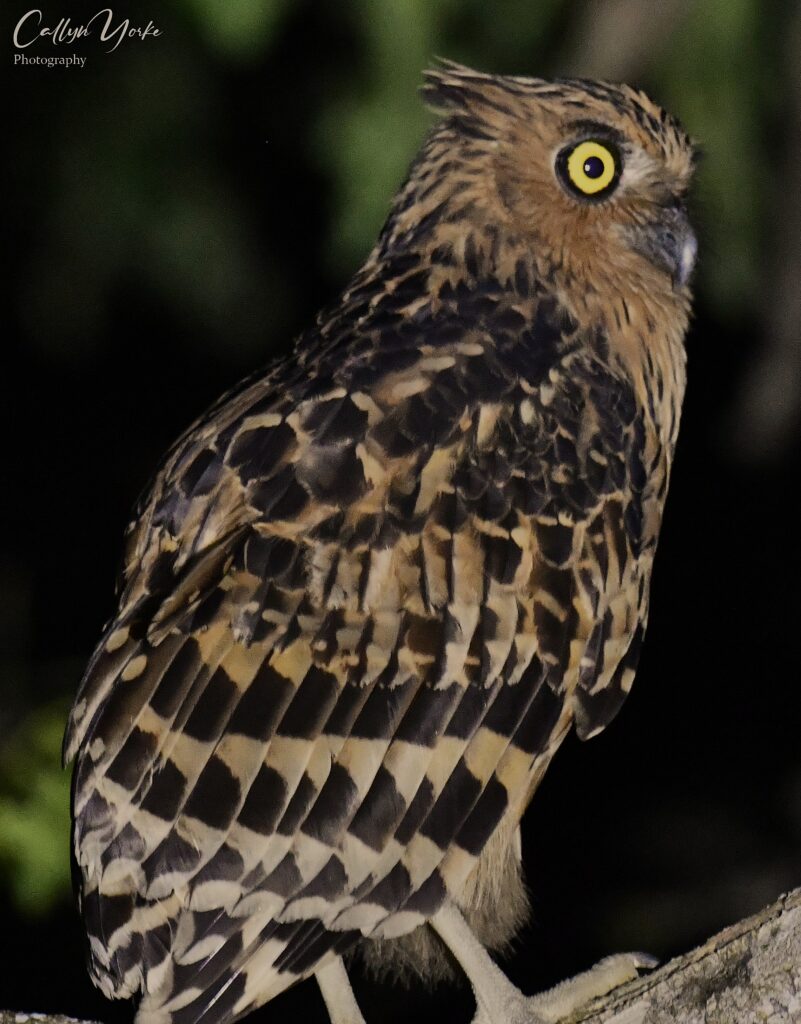
- Gray-rumped Treeswift Hemiprocne longipennis 1 flying 20m agl over clearing.
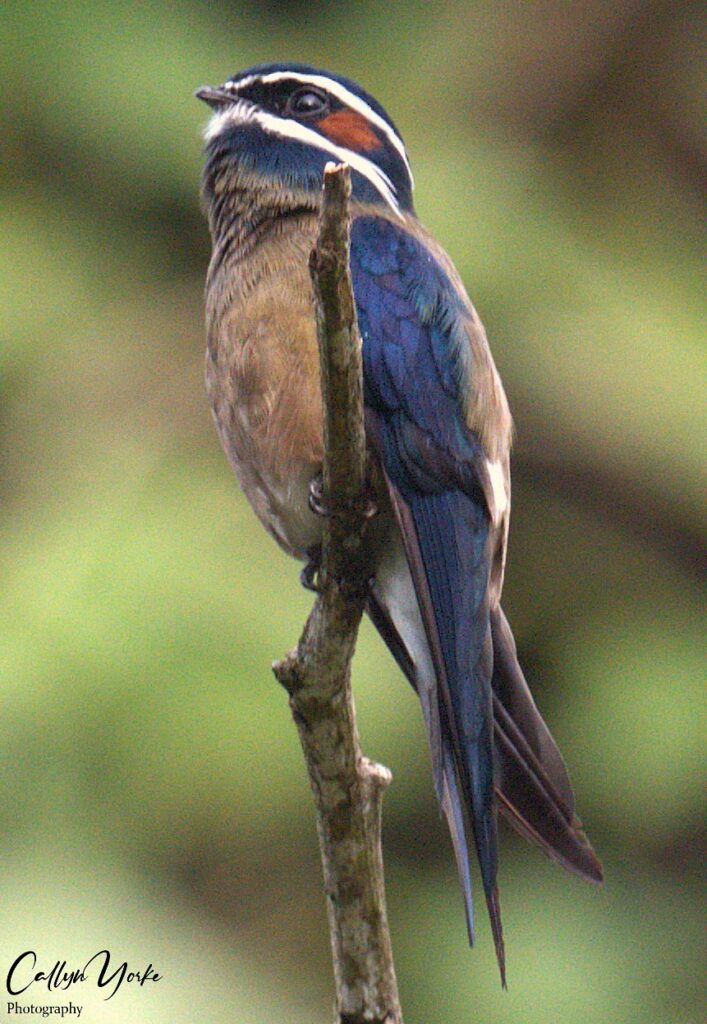
- Whiskered Treeswift Hemiprocne comata 5 perched on snag; soaring 3-10m agl around playing field (photo -see above).
- Plume-toed Swiftlet Collocalia affinis 6 greg. highly variable heights (1 – 20m agl) in flight around clearings.
- Oriental Dwarf Kingfisher Ceyx erithaca motleyi 1 in low flight across a forest clearing.
- Red-bearded Bee-eater Nyctyornis amictus 1 (m) in isolated tree at edge of playing field (photo).
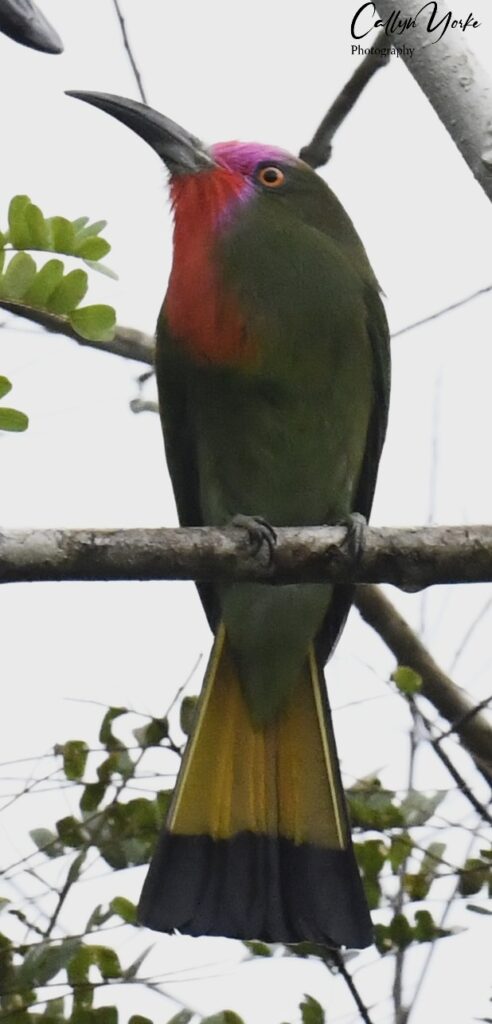
- Rhinocerous Hornbill Buceros rhinoceros 1 in flight over the Center.
- Helmeted Hornbill Rhinoplax vigil 1 vocal (unseen) across the river.
- Oriental Pied Hornbill Anthracoceros albirostris 1 taking small fruits from tree at visitor center.
- Bushy-crested Hornbill Anorrhinus galeritus 2 greg. a pair perched in a fruiting tree.
- Wrinkled Hornbill Rhabdotorrhinus corrugatus 4 (m,f) greg . in flight and perched in subcanopy of an emergent tree.
- Wreathed Hornbill Rhyticeros undulatus 2 greg. in flight over forest.
- Golden-faced Barbet Psilopogon chrysopis 2 vocal (unseen).
- Red-throated Barbet Psilopogon mystacophanos 1 in fruiting tree with JFDO (photo).
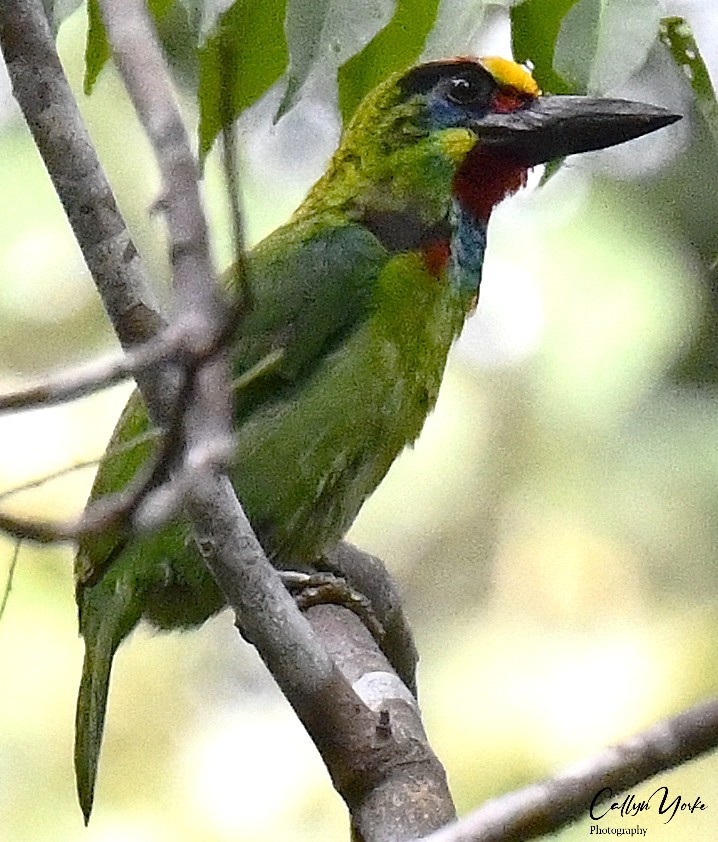
- Black-eared Barbet Psilopogon duvaucelii 2 vocal (unseen).
- Rufous Piculet Sasia abnormis 1 in forest understory; approach response to playback recording.
- Great Slaty Woodpecker Mulleripicus pulverulentus 3 greg. in emergent tree at edge of forest.
- Blue-crowned Hanging Parrot Loriculus galgulus 2 foraging on spherical clustered flowers of a tree at the edge of DVC parking area (photo).
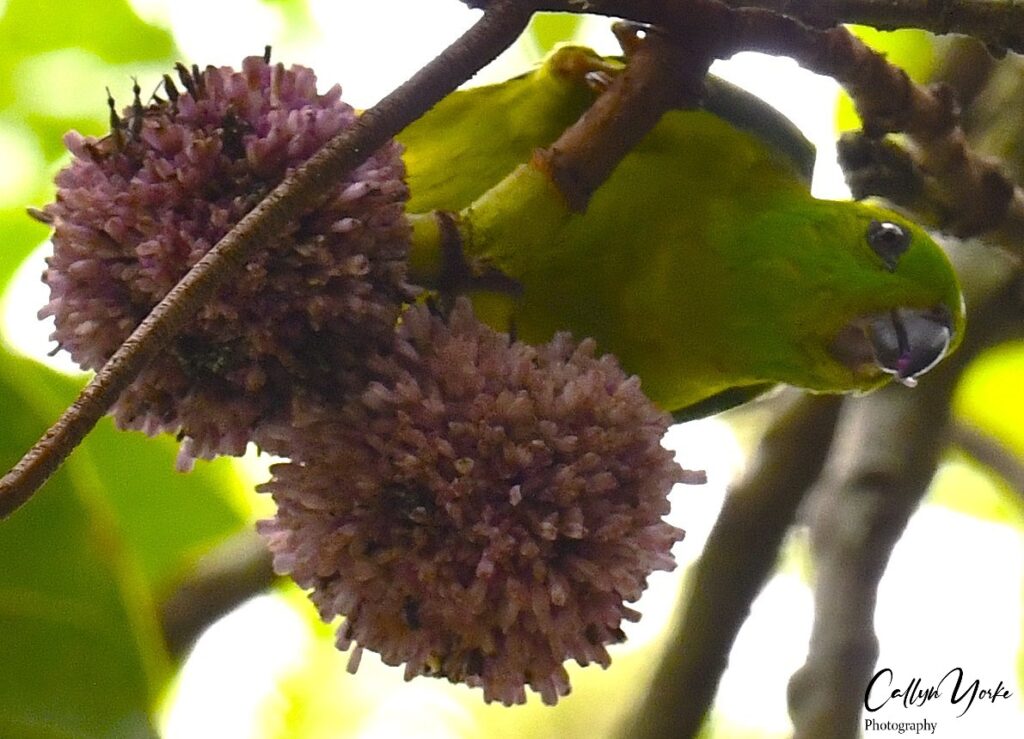
- Green Broadbill Calyptomena viridis 1 seen briefly flying across the main road near the visitor’s center.
- Black and Red Broadbill Cymbirhynchus macrorhynchos 1 perched in a tree at the edge of a clearing (photo – see above).
- Black-crowned Pitta Erythropitta ussheri 1 seen while night driving on the main road, resting on a low branch in second-growth.
- Bornean Bristlehead Pityriasis gymnocephala 1 (vocal) alighted in a distant tree canopy across the river (photos – see above).
- Dark-throated Oriole Oriolus xanthonotus 1 forest edge.
- Greater Racket-tailed Drongo Dicrurus paradiseus 1 roadside forest edge.
- Malaysian Pied Fantail Rhipidura javanica 2 sallying low to grass and second-growth; ih, igl (photo – see above).
- Sunda Crow Corvus enca 4 vocal, greg. in tall tree canopy.
- Asian Red-eyed Bulbul Pycnonotus brunneus 4 in msf with other bulbuls, SPBU, YBBU, GCBU, in a roadside fruiting tree.
- Spectacled Bulbul Pycnonotus erythropthalmus 1 in msf with other bulbuls, AREB, YBBU, GCBU, in a roadside fruiting tree.
- Gray-cheeked Bulbul Alophoixus bres 2 in msf with other bulbuls, AREB, YBBU, SPBU, in a roadside fruiting tree.
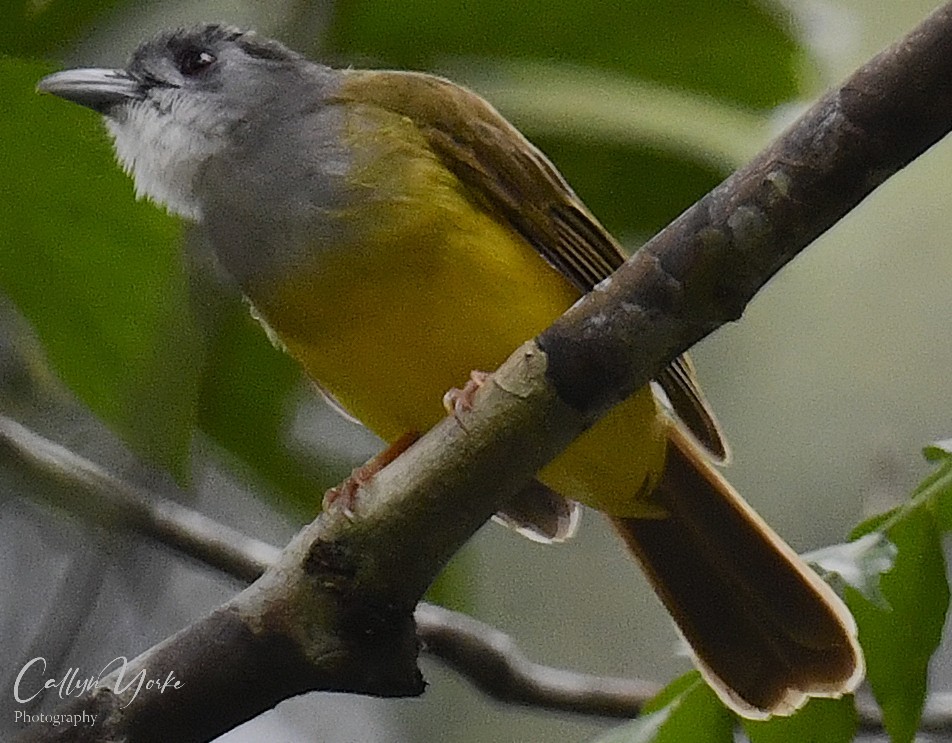
- Yellow-bellied Bulbul Alophoixus phaeocephalus 1 in msf with other bulbuls, AREB, SPBU, GCBU, in a roadside fruiting tree (photo – see above).
- Streaked Bulbul Ixos malaccensis 1 (imm) with AREB in roadside second-growth.
- Pacific Swallow Hirundo tahitica 4 greg. nesting under eaves of a DVC building.
- Yellow-bellied Prinia Prinia flaviventris 1 spotlighted at night in roadside second-growth.
- Rufous-tailed Tailorbird Orthotomus sericeus 3 vocal in second-growth.
- Bold-striped Tit-Babbler Mixornis bornensis 2 (repeated song, early am) vocal in second-growth.
- Horsefield’s Babbler Malacocincla sepiaria 2 vocal, roadside second-growth and forest edge.
- Rufous-crowned Babbler Malacopteron magnum 1 vocal and responding to playback, roadside second-growth.
- White-chested Babbler Trichastoma rostratum 1 vocal (unseen), roadside herbaceous and taller second-growth.
- Asian Fairy Bluebird Irena puella 2 (m,f) greg. in subcanopy of secondary forest edge.
- Hill Myna Gracula religiosa 5 greg. in flight, 30m agl.
- Sabah Magpie Robin Copsychus saularis adamsi 2 vocal in roadside second-growth (photo – see above).
- White-crowned Forktail Enicurus leschenaultii 2 on road and in roadside second-growth.
- Lesser Green Leafbird Chloropsis cyanopogon 4 (m,f) greg. pairs in roadside fruiting trees, outer canopy of secondary forest edge.
- Orange-bellied Flowerpecker Dicaeum trigonostigma 2 (m,f) forest edge and second-growth with flowers and fruit.
- Yellow-rumped Flowerpecker Prionochilus xanthopygius 1 (m) roadside second-growth.
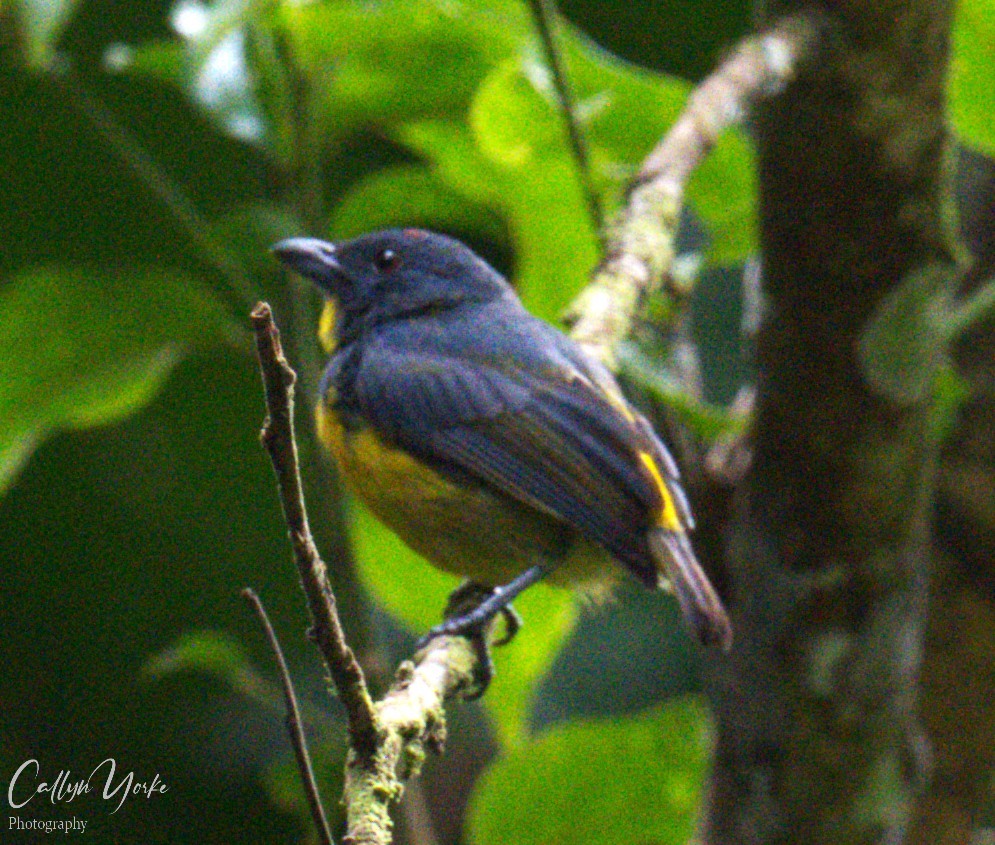
- Plain Sunbird Anthreptes simplex 1 active in roadside second-growth.
_____________________________