Mantanani Island, Sabah 9-13 September 2025 Callyn Yorke
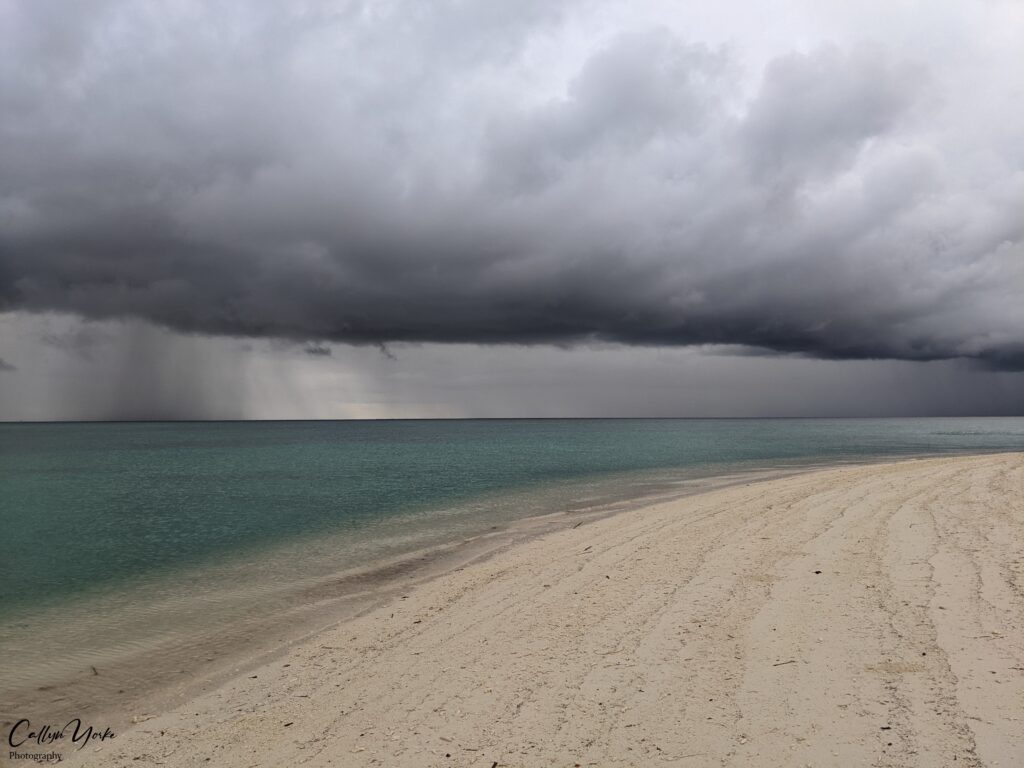
Three days were spent recuperating in Tanjung Aru , Kota Kinabalu. The tenacious gut parasites that persuaded me to leave Meliau Basin early, finally released their grip. My appetite and energy level gradually reached equilibrium. At the comfortable C’Haya Hotel in Tanjung Aru, there was time for catching up on notes and researching destinations for the remaining two weeks of the Sabah journey.
Mantanani Island, well known to sport divers and birders, appeared tangential to the popular ecotour routes in Sabah. In addition to being a famous vagrant trap during migration, Mantanani Island was the home of two special bird species. One, the Philippine Megagode, is the only representative of that peculiar family of birds to marginally reach northwest Sabah. The second species, favoring small islands and also extralimital in northwest Sabah, is the Mantanani Scops Owl. Both of those birds and possibly others (e.g. Gray Imperial Pigeon and Nicobar Pigeon) would be lifers for me.
The Sutera Resort on Mantanani Island had an updated website showing multiple vacancies. I booked a room for four nights, including breakfast, and a forty-five minute speedboat trip to/from the island. The total cost was about $800 US -Visa accepted. Additional meals, services and dive trips could go on the tab.
The next task was to get to the Sutera mainland jetty on the outskirts of Kota Belud, about 70 km north of Kota Kinabalu. That turned out to be easy and convenient. One of the friendly receptionists at Hotel C’Haya contacted Ah Yeh, a long-distance driver who was willing to provide round-trip transport to the jetty ($100 US). Ah Yeh was punctual and an excellent driver. Transportation to and from the Sutera jetty went precisely as planned.
A 32-seat, fiberglass speedboat, powered by twin Yamaha 300’s, punched through the choppy seas and glided up to the Sutera Mantanani Resort dock on the northeast side of the island. Five of us (myself and two couples) climbed out with our gear and headed for shade beneath a grove of casuarinas sheltering the resort. We were greeted at the reception desk with a cool drink and given room keys. Accounting details would be sorted out later.
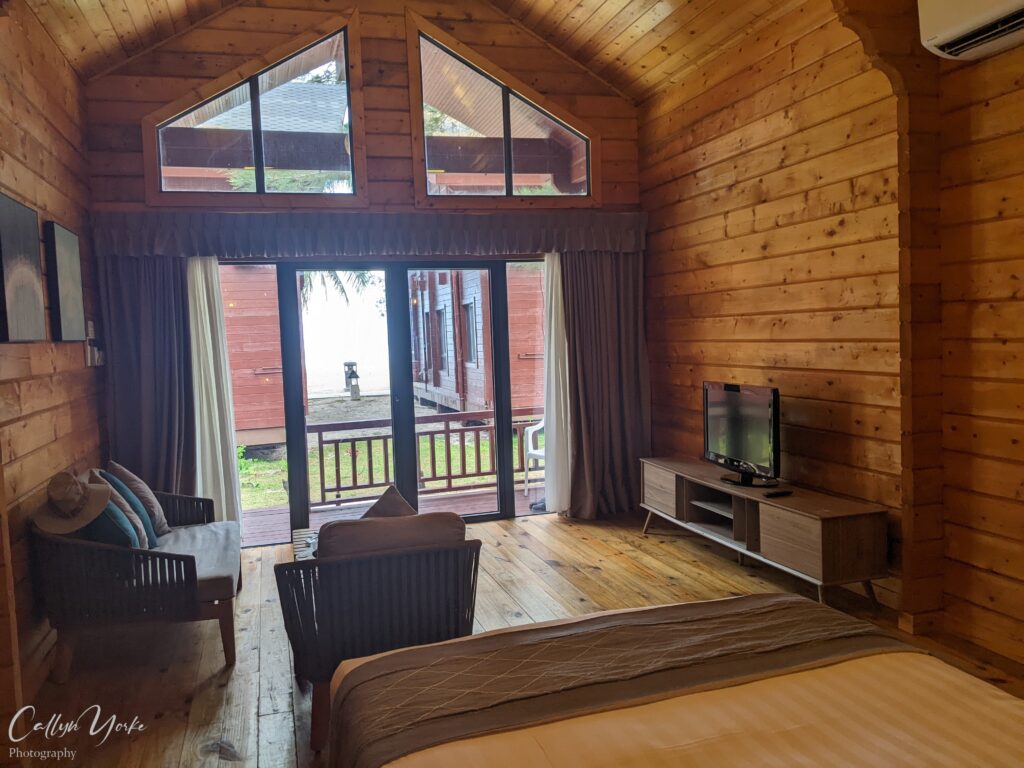
Chalet #56 was comfortably furnished, including ample closet storage, multiple wall outlets, functional WiFi and a much appreciated drinking water dispenser. The dining area and visitor center were a short stroll away. Island trails intersected the walkway between two rows of chalets. It was an ideal location for initiating bird surveys.
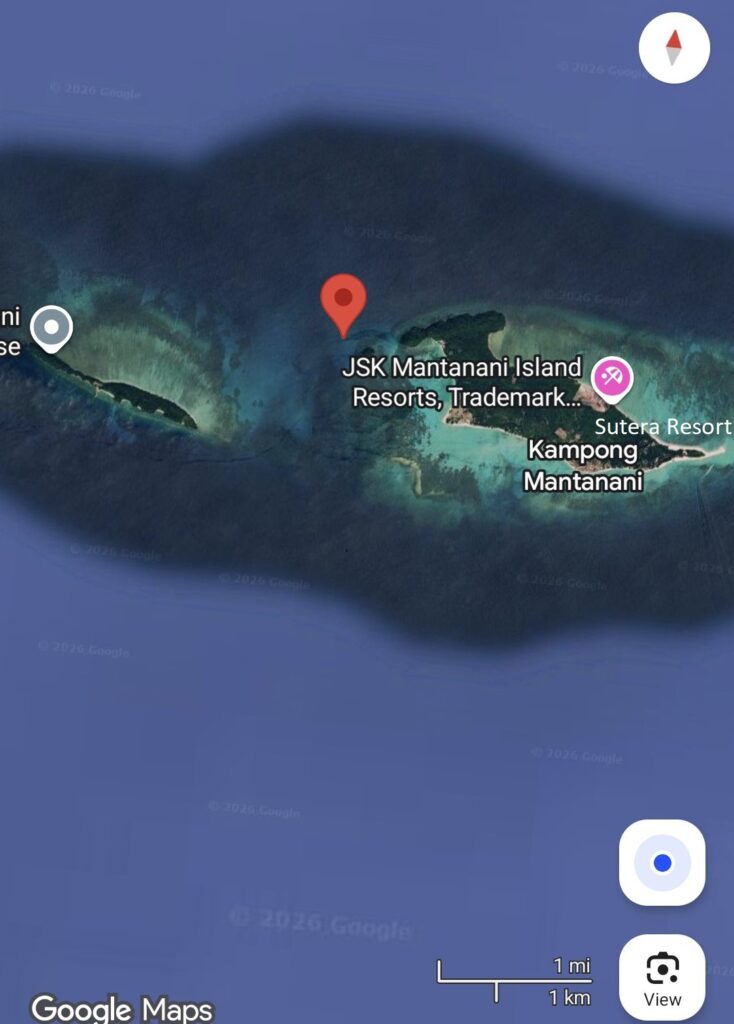
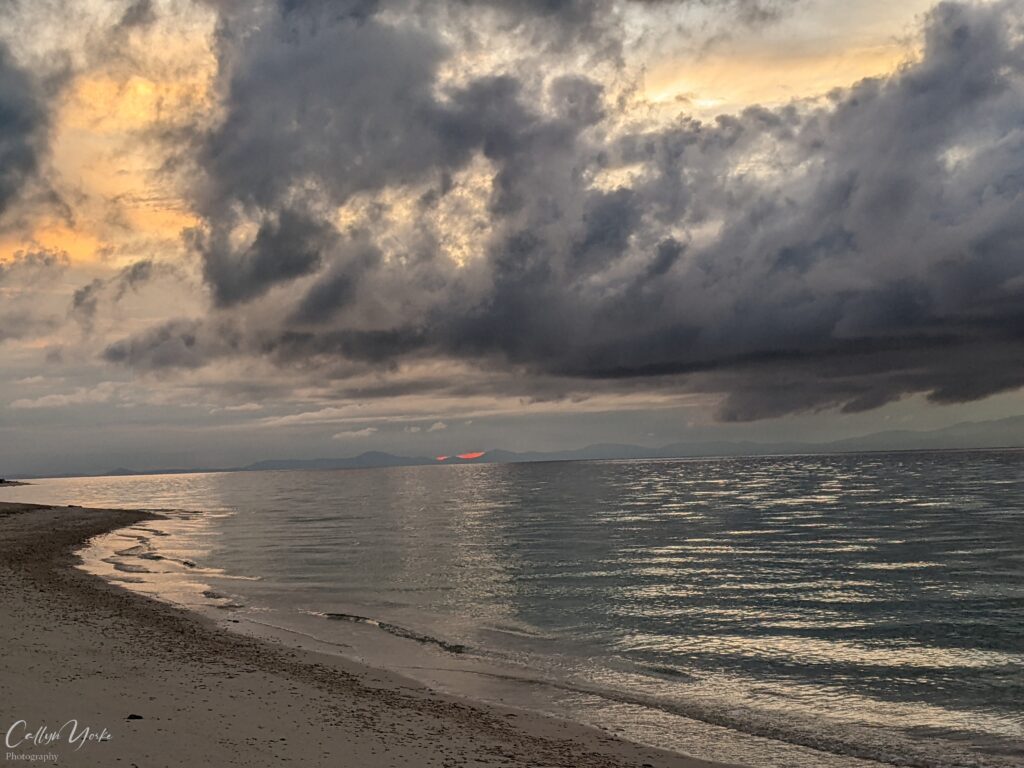
A network of island footpaths invited exploration. These passed through a mosaic of casuarina groves, scrubby second-growth and clearings. The outer shores were stunningly picturesque, surrounded by reefs and seas that turned subtle hues of blue, green and gray with the time of day and angle of view. Postcard worthy shorelines on the leeward side were lined with beached fishing boats tethered to leaning palms and makeshift wooden shelters.
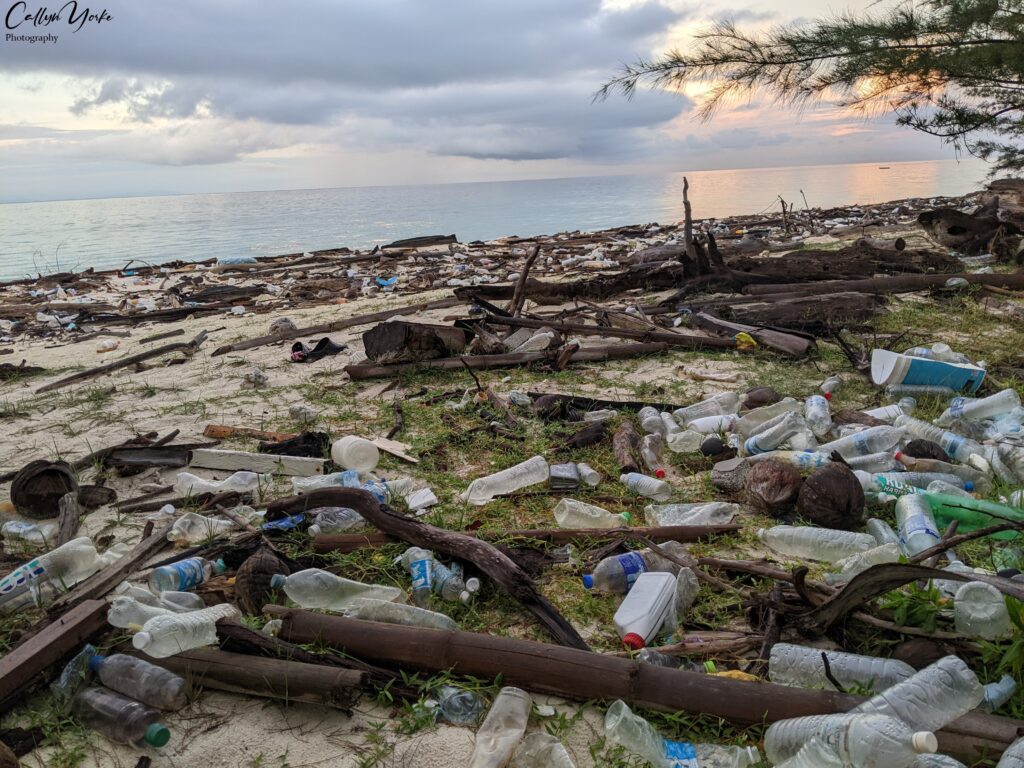
By contrast, high tide lines and inner shores were littered with piles of plastic bottles, coconut husks, driftwood and discarded building materials. I probably wasn’t the first visitor to be appalled by the unsightly pollution.
Spotty efforts had been made around the island to clean up the mess. At first glance, Sutera Resort had one of the cleanest beaches and inner shorelines. However, that was achieved by resort workers setting fire in the evening to huge piles of driftwood, plastic bottles and other toxic debris. A Sutera worker mentioned that, up until recently, plastic trash on the island was hauled away weekly by a mainland recycling company. Unfortunately, the service was discontinued due to a payment dispute. Taking the Mantanani Island example as an ominous micro-metaphor for the entire planet, one could appreciate the immediate need for a globally sustainable conservation plan.
Sandy bicycle paths led to island landmarks, including the main village, Kampong Mantanani , identified at a distance by its cell tower. Nearby were cemetery plots, some hauntingly adorned with personal furnishings, e.g. a queen-sized bed frame and wooden headboard. It was soon clear that none of the paths completed a circuit around the island. That was likely due to security fencing around resorts and a rocky precipice on the north side.
Kampong Mantanani, the original settlement on the south side of the island, had a new elementary school, a mosque and brightly painted wooden homes with occupants enjoying siestas. There, I met Mohadir, an unemployed fisherman who was willing to take me on a boat tour around two nearby islands ($40 US). Flipping through illustrations in my field guide, he pointed to recognizable birds, including the spectacularly dapper Nicobar Pigeon. That bird, he indicated, might be found on the nearby islands but was uncommon. It was a species I had searched for unsuccessfully on Con Dau island off the coast of South Vietnam.
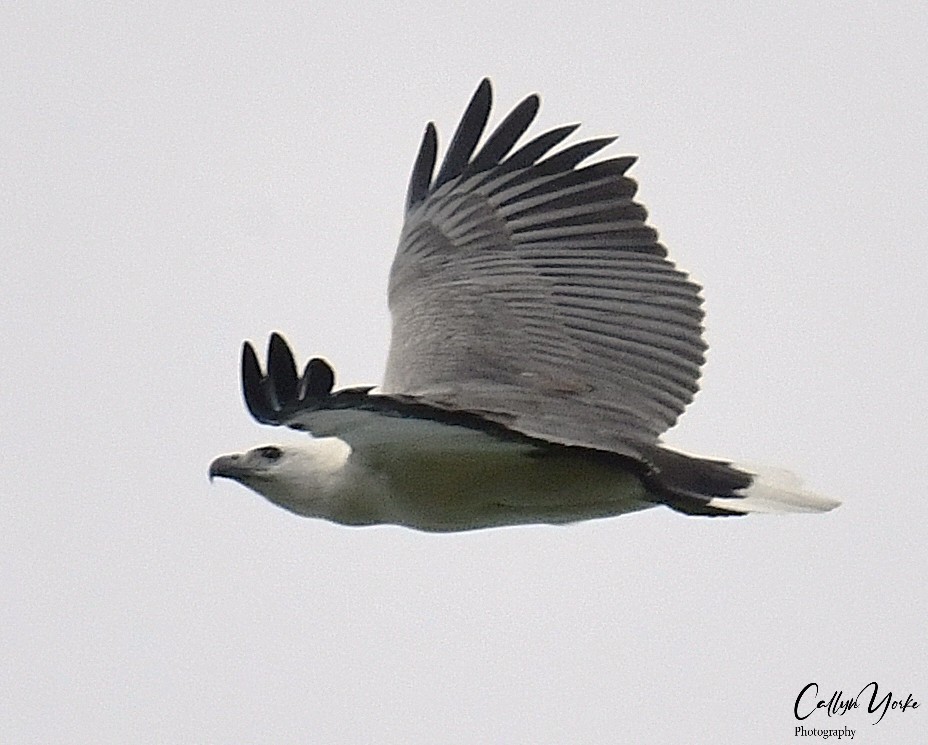
Early one morning, several village men laboriously pushed Mohadir’s heavy wooden prahu down the shore and into the water, using logs placed sequentially under the hull. Once launched from shore, Captain Mohadir pull-started the rusty outboard motor and for the next hour and a half, we cruised slowly around Pulau Mantanani Kecil (Little Mantanani), an island with a lighthouse that was visible from Kampong Mantanani. With the boat pitching and rolling, I searched for birds on the forested slopes and rock ledges. Except for a White-bellied Sea Eagle and small flock of Black-naped Tern, there wasn’t much of note and unsurprisingly, no sign of a Nicobar Pigeon.
I spoke with the resort dive master regarding outgoing trips around the island. But due to the low number of resort guests, there were no trips scheduled. That was unfortunate because Mantanani Island was one of the best dive locations in Sabah, and where Dugongs had been sighted in years past.
Ridzal, a Sutera Resort maintenance supervisor, had caught wind of the fact that I was looking for birds. He knew the whereabouts of a Mantanani Scops Owl and suggested we could find it soon after dark that evening.
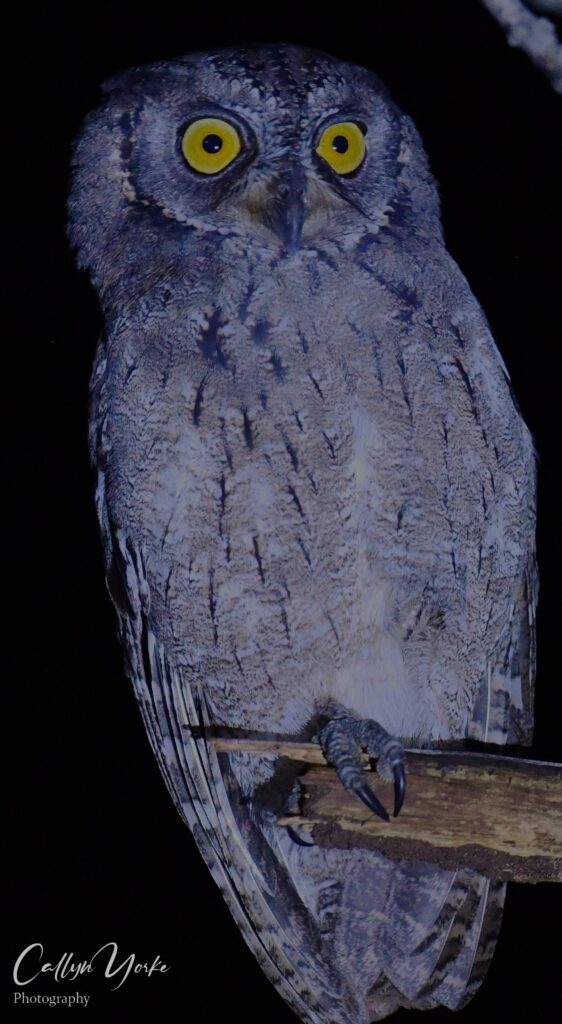
With flashlights in hand, we scanned the lower limbs in a grove of casuarinas behind Chalets #60 & 65. Sure enough, an adult scops owl was perched in full view staring back at us. Since I was unlikely to visit Mantanani Island again, this was a once-in-a-lifetime-life-bird, though admittedly almost too easily obtained. Ridzal mentioned that he had shown the owl to several groups of visiting birders in years past. He also said that the owls preyed on large insects attracted to the resort lights. A search of adjacent casuarina groves the following two evenings failed to produce another owl sighting. Hopefully, we had not been looking at the last one on the island.
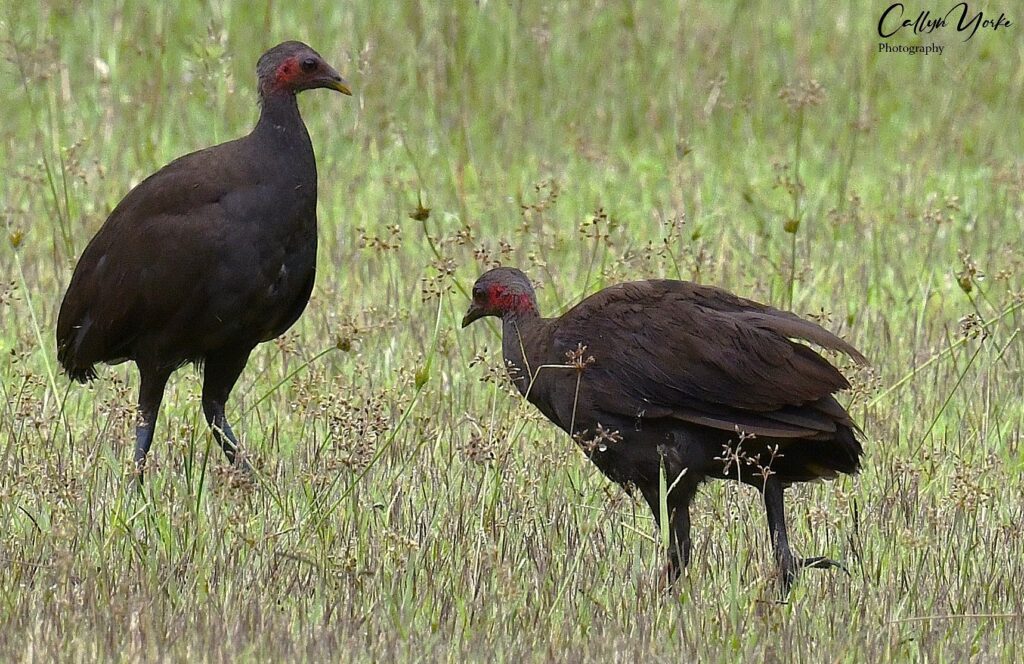
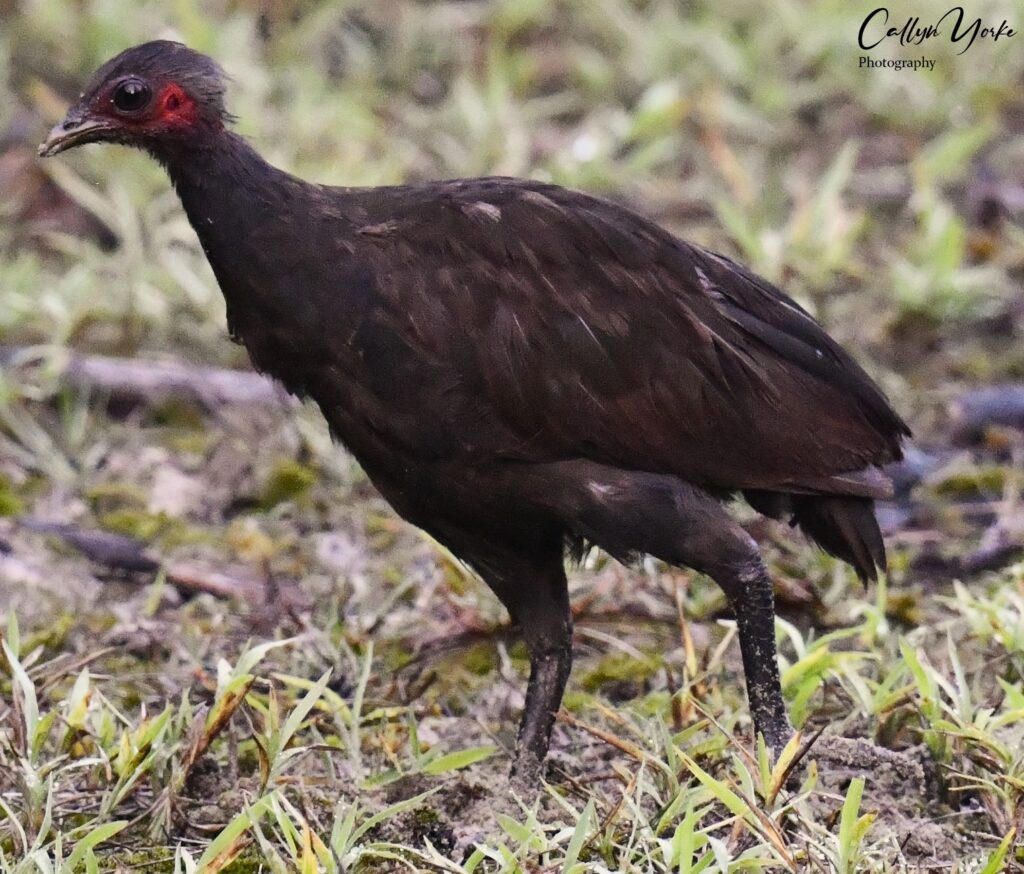
Daily surveys on the island resulted in obtaining a reasonably comprehensive list of resident birds, including several Philippine Megapode. Pairs and trios were skittish, yet seen often in the dense second-growth and edges of grassy clearings. I did not find any of the incubation nest mounds that this group of birds is known for constructing. Obtaining decent photos of the rather ugly chicken-like bird was challenging enough to qualify it as a proud addition to my life list.
Autumn migration along the Austro-Asian Pacific flyway was underway. Each day, there was at least one new arrival on the island, including Whimbrel, Common Sandpiper, Barn Swallow and Gray Wagtail. Had I remained on the island for another week or so, there most certainly would have been additional migratory birds on the Mantanani trip list.
Annotated Bird List for Mantanani Island September 9-13, 2025 (28 Species )
Weather: 23 to 33 C; Mostly clear with occasional squalls bringing mist and light rain; wind ENE, ESE, 5 -15 kph. Humidity averaging about 70%.
Time: 0630 – 1930 hrs.
Areas Covered: Island trails throughout; principal habitats were coastal scrub with deciduous second-growth and ornamental trees; ruderal fields, casuarina groves; scattered coconut palms in villages, resorts and sandy beaches; sandy and rocky shorelines; nearshore waters and, viewed from a boat, two adjacent islands (Pulau Lungisan and Pulau Mantanani Kecil) with forested slopes, rocky ledges, surrounded by comparatively deep waters.
KEY
Abundance: Numbers following each species entry are the highest count for a single survey, when multiple surveys were made.
Age, sex and molt (when known): ad = adult; imm = immature; m = male; f = female; bsc plmg = basic (non-breeding plumage; alt plmg = alternate (breeding) plumage; trans = transitional plumage, i.e. alternate into basic plumage.
Ecology and Behavior: Aerial insect hawking (ah); taking fruit, berries or parts of flowers (fr); gleaning insects from foliage (ig); probing into surface (pr); estimated height (m) above ground (agl); gregarious (greg); mixed-species flock (msf).
Systematics and Nomenclature used herein, is an amalgam of Avibase, International Ornithological Congress (IOC) and current (2025) online resources, i.e. Birds of the World, Cornell University, USA.
BIRDS NOTED
- Philippine Megapode Megapodius cumingii 8 greg., pairs and trios on the ground in and near dense second-growth; shy and running for cover when approached. Birds often seen scratching the ground surface when foraging (photo).
- Red Jungle Fowl Gallus gallus (domestic) 10 (m,f) wandering around the village and adjacent shoreline.
- Eastern Cattle Egret Bubulcus coromandus 1 on shore, Pulau Mantanani Kecil.
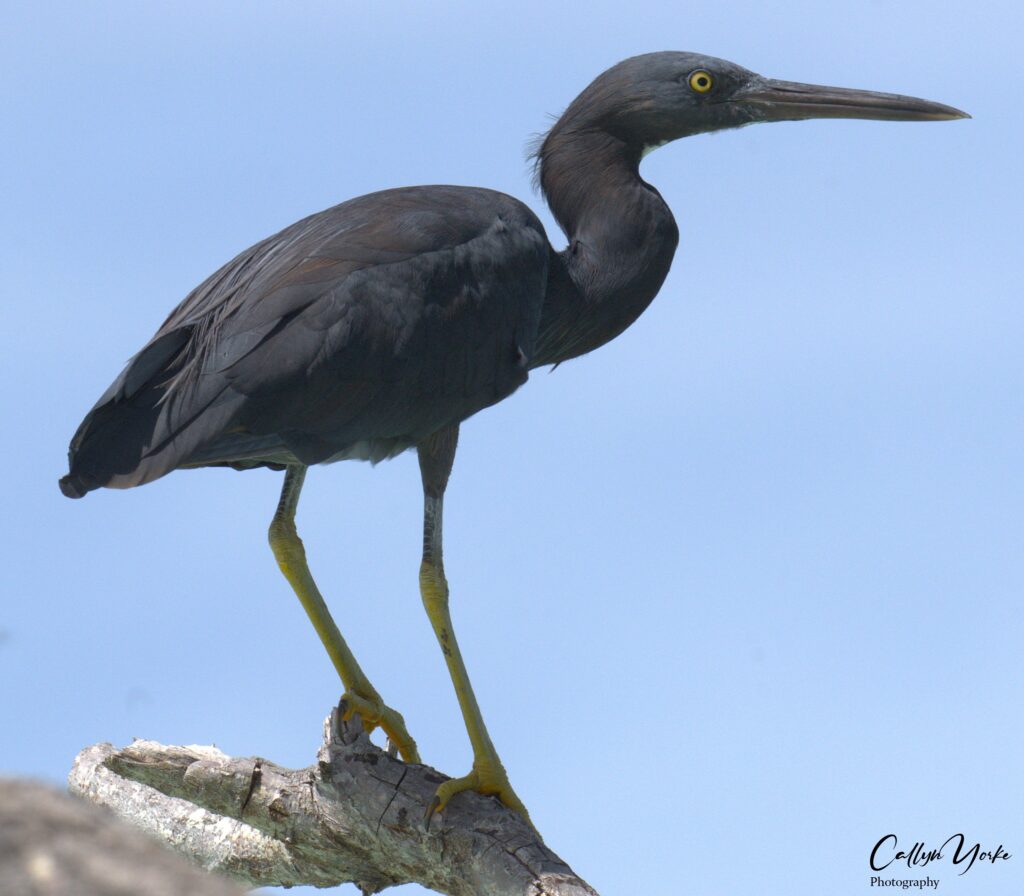
- Pacific Reef Heron Egretta sacra 2 on rocky shore, Pulau Mantanani Kecil; in flight and on Mantanani village shore (photo).
- Little Egret Egretta garzetta 1 flew to trash pile on inner beach.
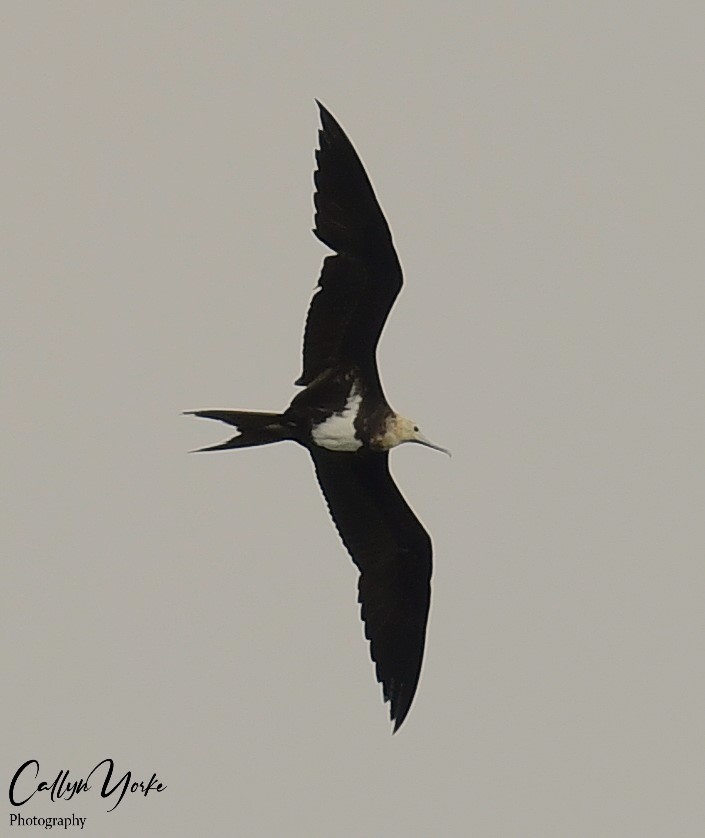
- Lesser Frigatebird Frigata ariel 3 (ad., imm.) loosely greg. in flight 70-100m agl over Mantanani Island (photo).
- White-bellied Sea Eagle Haliaeetus leucogaster 1 perched on a cliffside tree; taking flight over adjacent waters, Pulau Mantanani Kecil (photo – see above).
- White-breasted Waterhen Amaurornis phoenicurus 1 on the ground at edge of weedy playing field.
- Whimbrel Numenius phaeopus 6 greg. a cohesive, migratory flock in low flight southward, 30m offshore.
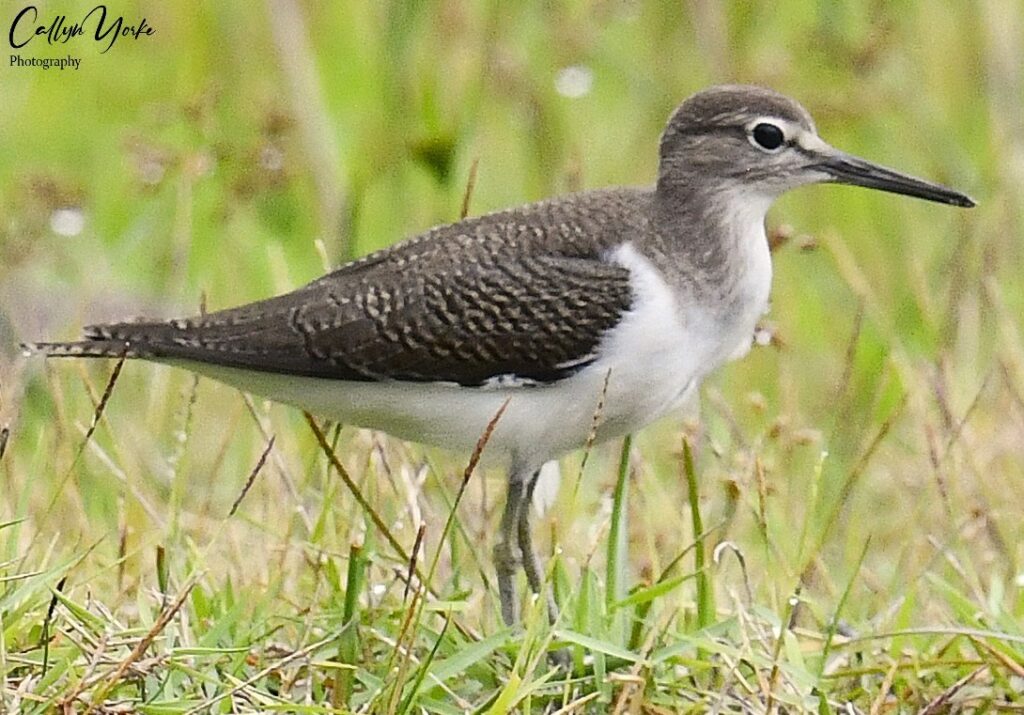
- Common Sandpiper Actitis hypoleucos 1 on weedy playing field (photo).
- Black-naped Tern Sterna sumatrana 5 loosely greg., low flight over shore and nearshore waters, Pulau Mantanani Kecil.
- Feral Rock Pigeon Columba livia 5 greg. ion the ground and in flight around the village.
- Metallic Pigeon Columba vitiensis 2 greg. a pair in a fruiting tree behind the resort.
- Pink-necked Green Pigeon Treron vernans 1 in a village fruiting tree.
- Gray Imperial Pigeon Ducula pickeringii 3 greg. in fruiting tree behind the resort; one bird with rather scruffy plumage during light rains in a village fruiting tree.
- Mantanani Scops Owl Otus mantananensis 1 on a low casuarina limb behind Sutera resort chalets.
- Germain’s Swiftlet Aerodramus germani 5 greg. in low flight over north shore with incoming squall.
- Collared Kingfisher Todiramphus chloris 2 vocal, at edge of casuarina grove, ubiq..
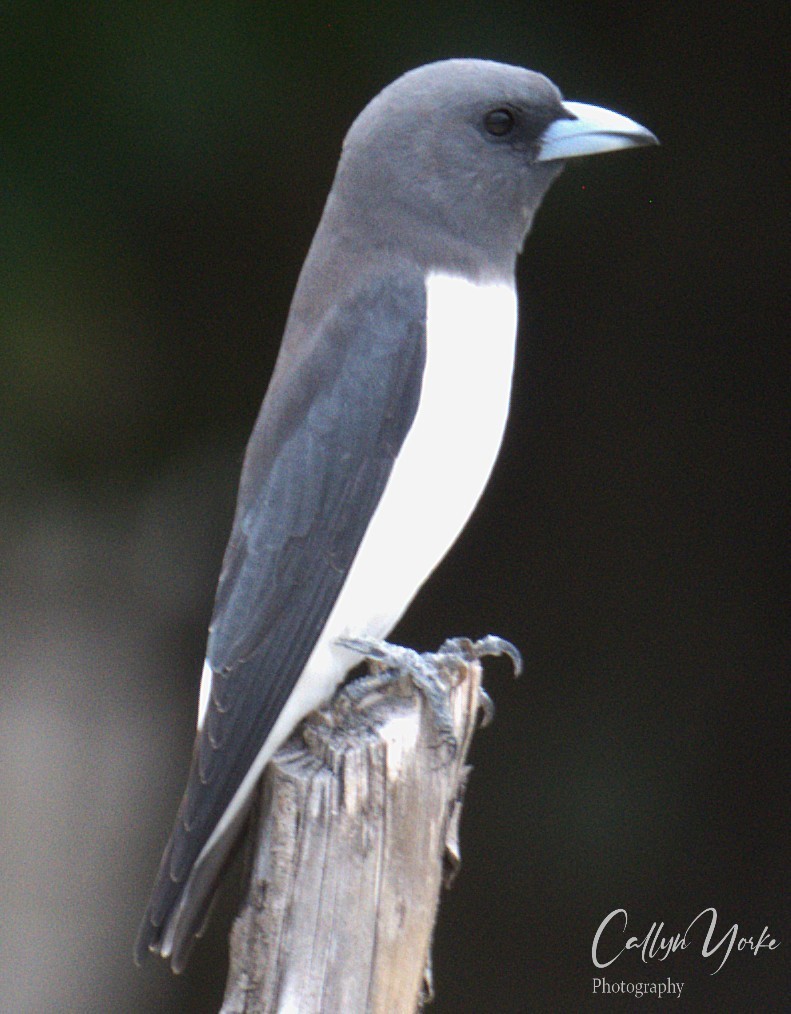
- White-breasted Woodswallow Artamus leucorynchus 5 greg. perched on casuarina snag over inner beach (photo).
- Pied Triller Lalge nigra 5 (ad.,imm) greg. possibly a family group, actively foraging by ig., sg. ah. in small trees and second-growth at edge of clearings.
- Barn Swallow Hirundo rustica 3 greg., individuals and pairs flying low over village and outer shore.
- Pacific Swallow Hirundo tahitica 4 greg. pairs flying low over trash piles with swarms of insects on inner shore.
- Asian Glossy Starling Aplonis panayensis 10 greg. vocal, roosting in casuarinas and in flight around the resort.
- Yellow-breasted Flowerpecker Prionochilus maculatus 1 (possibly a pair) in casuarina at resort with Philippine Glossy Starlings.
- Ornate Sunbird Cinnyris ornatus 3 (m,f) in ornamental shrubs and Casuarinas, ubiq..
- Brown-throated Sunbird Anthreptes malacensis 1 (m) in coconut palm crown.
- Eurasian Tree Sparrow Passer montanus 10 (m,f) greg. around lodge dining area and in casuarinas.
- Gray Wagtail Motacilla cinerea 3 greg. presumably a small, migratory flock; active on the ground in a weedy playing field.
___________________________________