Tambunan – Trusmadi Hide, Crocker Range, Sabah 16-17 August 2025
Following our visit to Poring Hot Springs, Z negotiated the slow mountain roads to Tambunan in the Crocker Range. We arrived at “The 7” lodge just after 3 pm with overcast skies. My altimeter registered 600 m.
The lodge was a pleasant upgrade from the Dreamcatcher in Kundasang. Our rooms, in separate buildings, were clean and well maintained. The receptionist was friendly and helpful. On the outskirts of Tambunan, the setting was semi-rural with small farms and scattered homesteads. Z had made a good choice for an overnight stay.
After a shower and brief rest, we walked the grounds, which had garden pathways and a pond bordering a patch of mature secondary forest. A total of about eight bird species was obtained in twenty minutes of casual observations. Black-headed Bulbul was the only species new for the Sabah trip list. A misty breeze nudged us back indoors. We would take our evening meal at one of the roadside cafes in Tambunan.
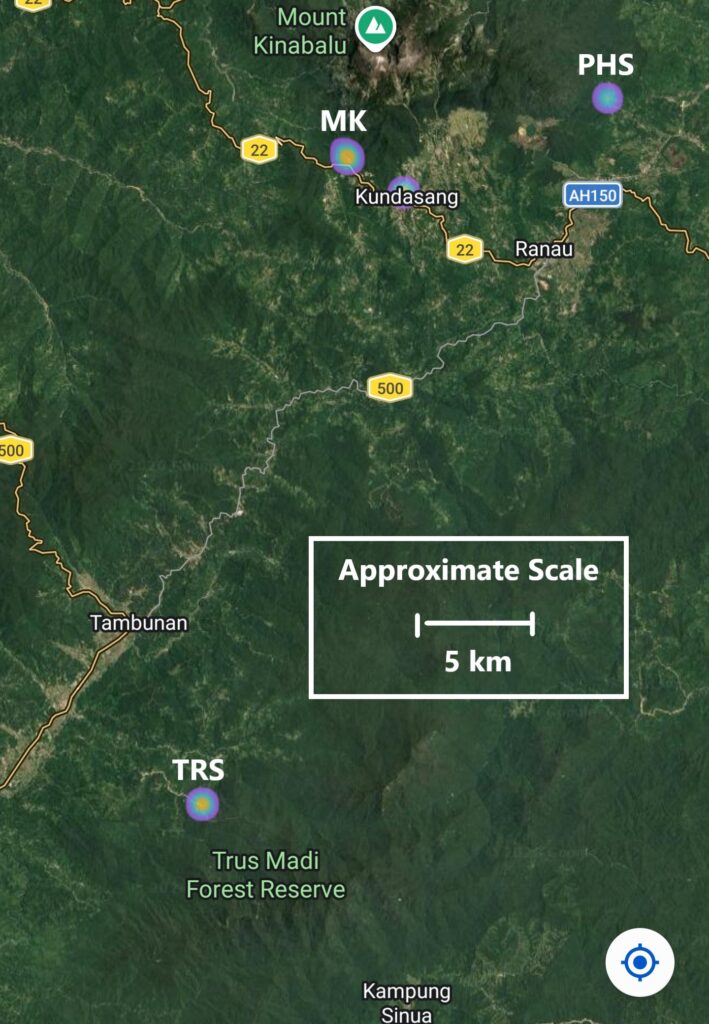
Early the following morning Z and I set out for the Trusmadi photo hide (elevation 1,200m), on good paved roads about 15 km from the lodge. At daybreak, we arrived at the signed entrance. The owner, Mr. K.K. Lee, greeted us and led us down a series of staircases to the main hide. We were the only guests scheduled for that day and would have full use of the services and facilities, including coffee, bottled water and a simple nasi ikan meal (rice and fish). The fee was $125 US per person/day (prepaid by bank transfer).
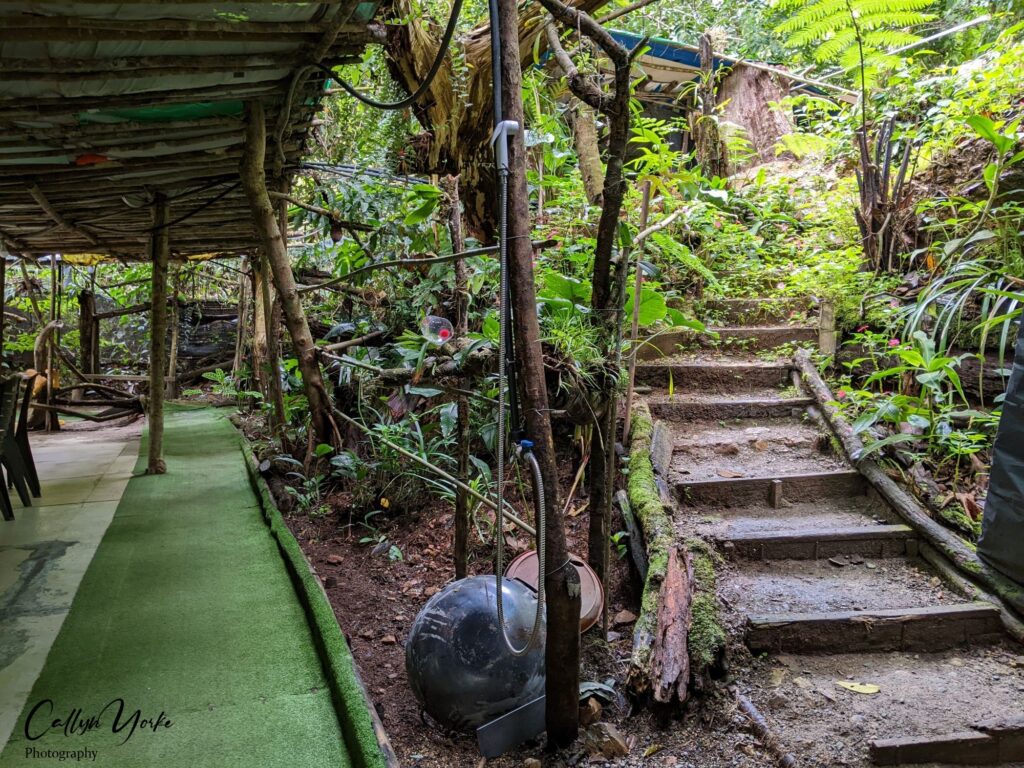
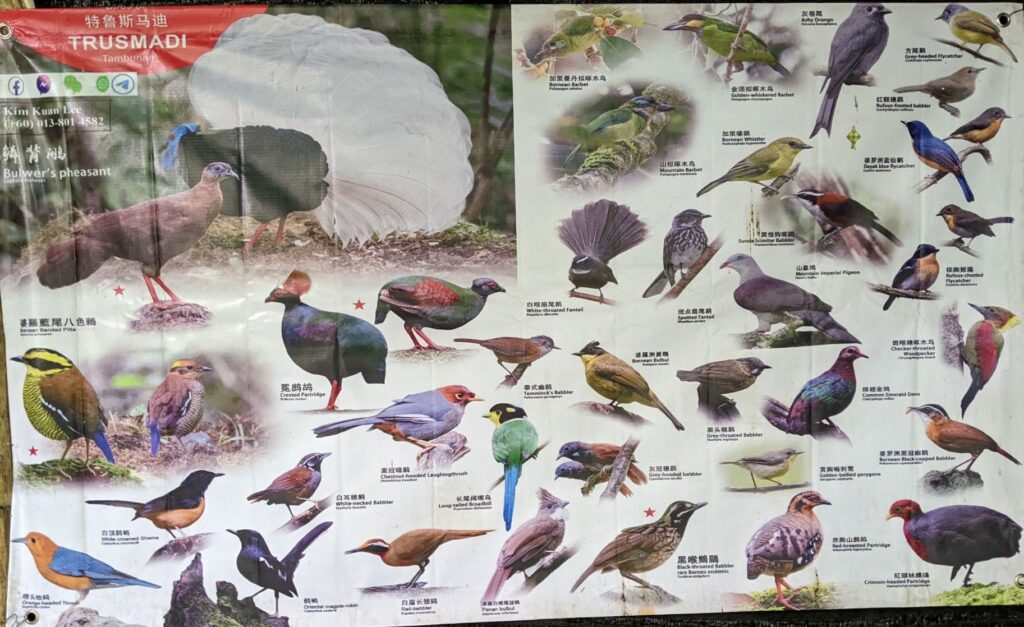
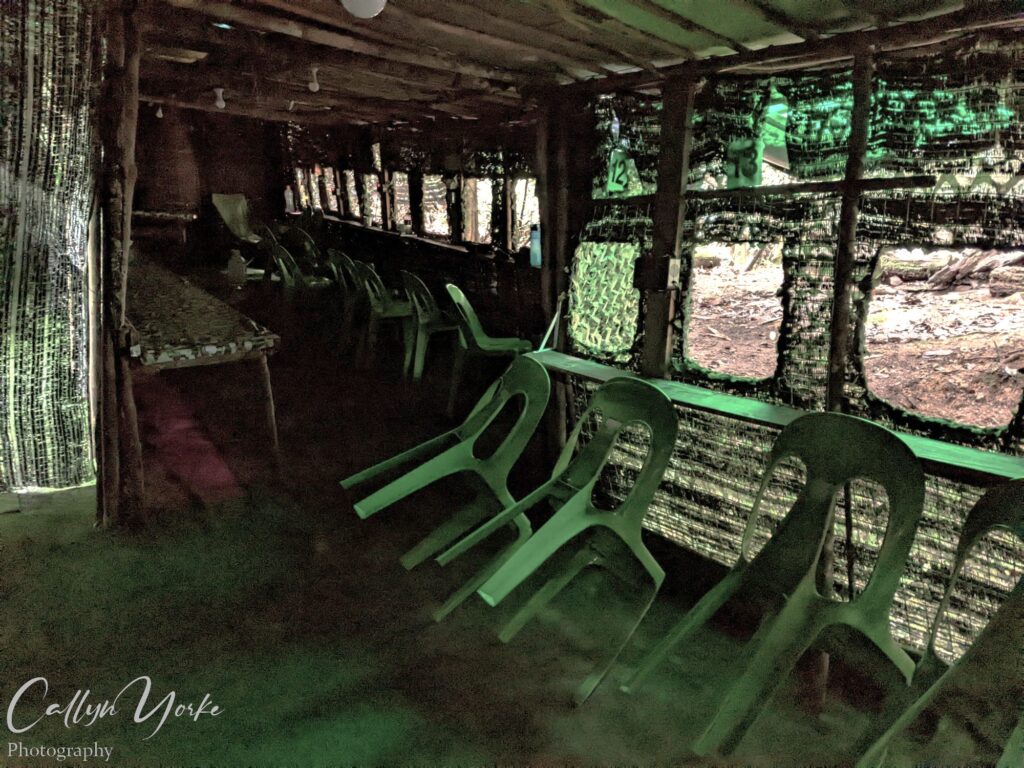
The hide facility had been thoughtfully designed. It was surprisingly well appointed, such as one might find in an exclusive waterfowl hunting club. The main, upper hide had at least twenty observation stations, cushioned plastic chairs, plenty of shelf space, electrical outlets and functional WiFi. Darkened viewing portals provided a camouflaged, eye-level view of the feeding area. Live mealworms, ground corn and water dishes were periodically replenished in a natural setting. Birds, more so than mammals, were habituated to Lee’s presence in the feeding area.
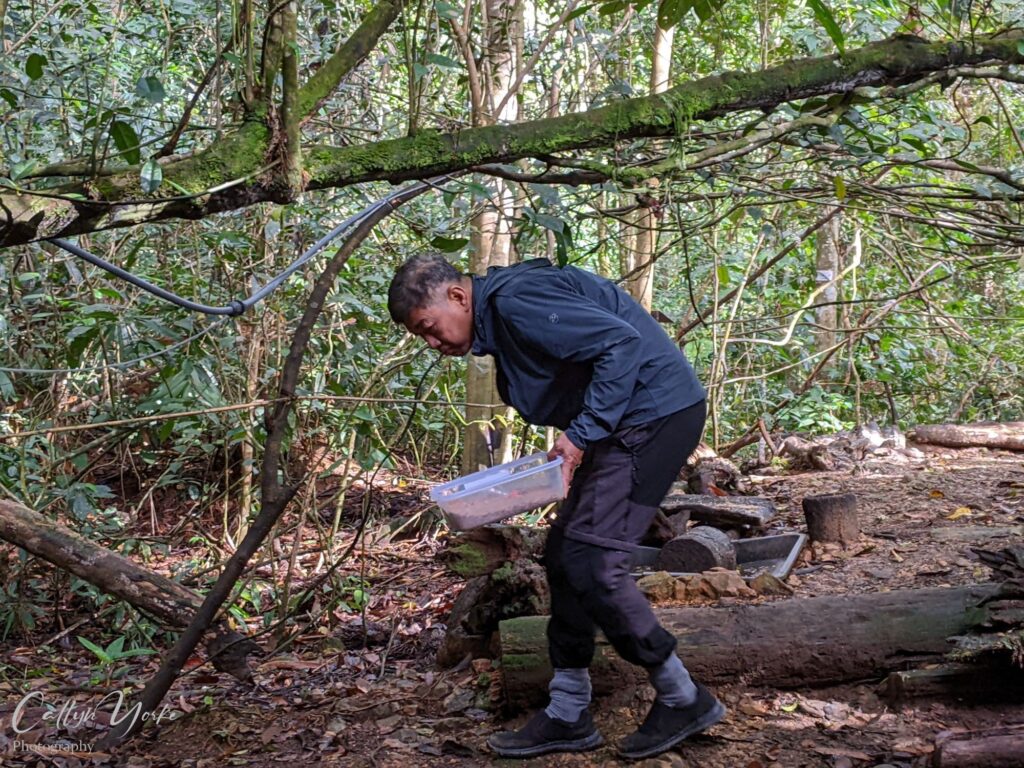
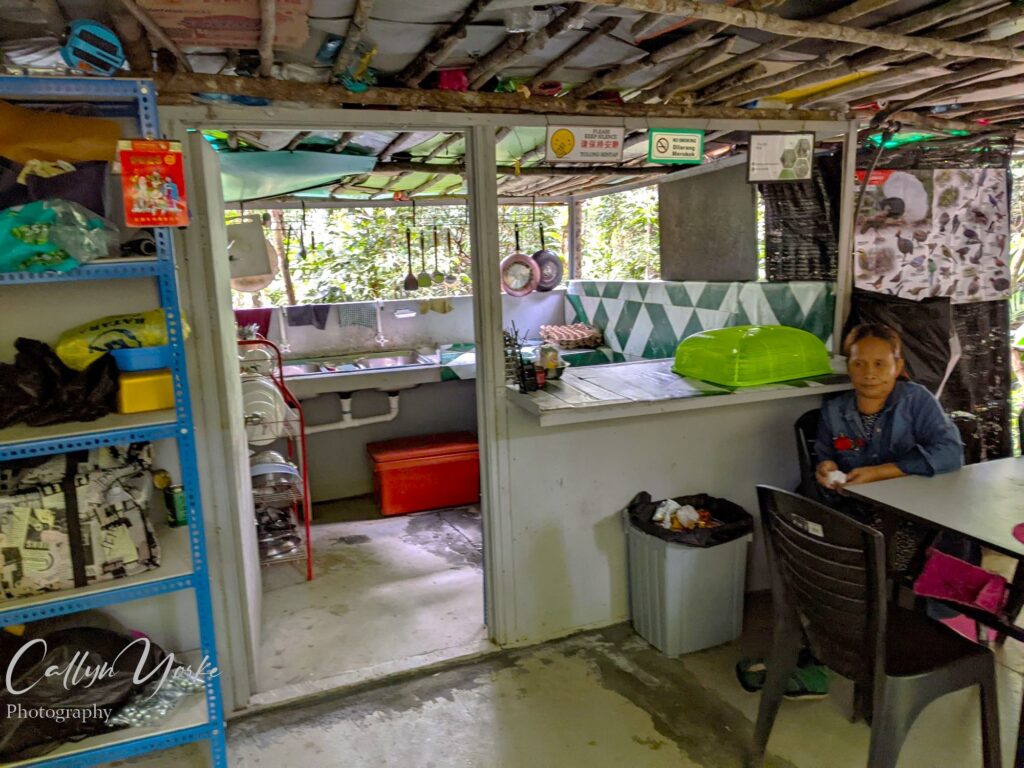
A nylon mesh ceiling created subdued lighting over the feeding grounds. For photographers planning an extended stay, there was a clean restroom with indoor plumbing. The cook, a quiet, devout looking woman, sat at a small dining table next to the kitchen and pantry. Another worker kept watch on the lower hide and was in constant cell phone contact. The lower section, about 100 m below the main hide, was in a comparatively dry section of dipterocarp rainforest with abundant leaf litter.
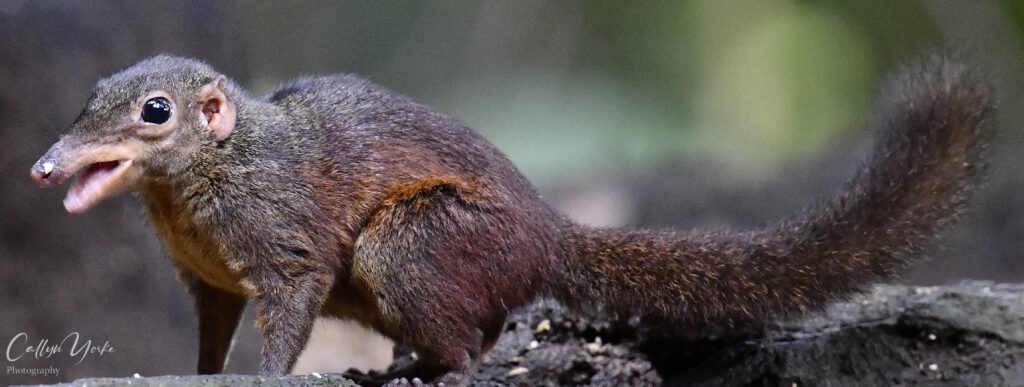
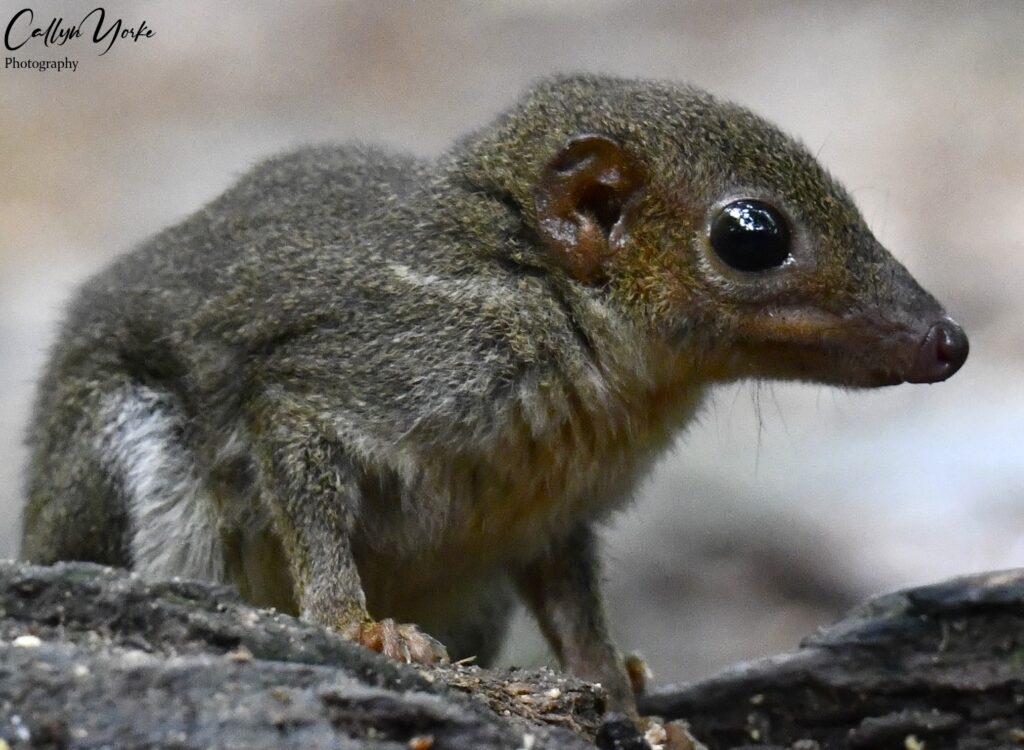
Stairs and concrete walkways connected the two observation areas. When Lee informed us that the lower hide had attracted some unusual wildlife, we hurried down there with our camera gear. In the dim light, we observed a family of shy and vigilant Yellow-throated Marten. Lee indicated that it was a rare visitor at Trusmadi.
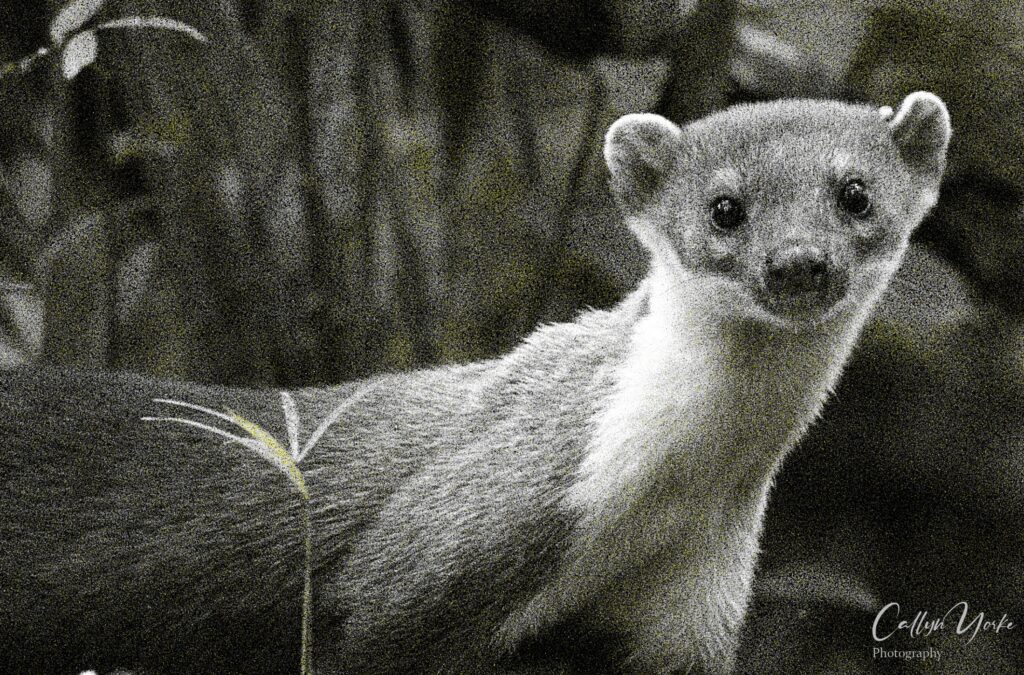
While observing the playful behavior of the martens, another message came in – Bulwer’s Pheasant was at the upper hide. Because it is one of the most sought after endemic birds of Sabah, and a Trusmadi specialty, we were compelled to make an aorta-busting dash upstairs.
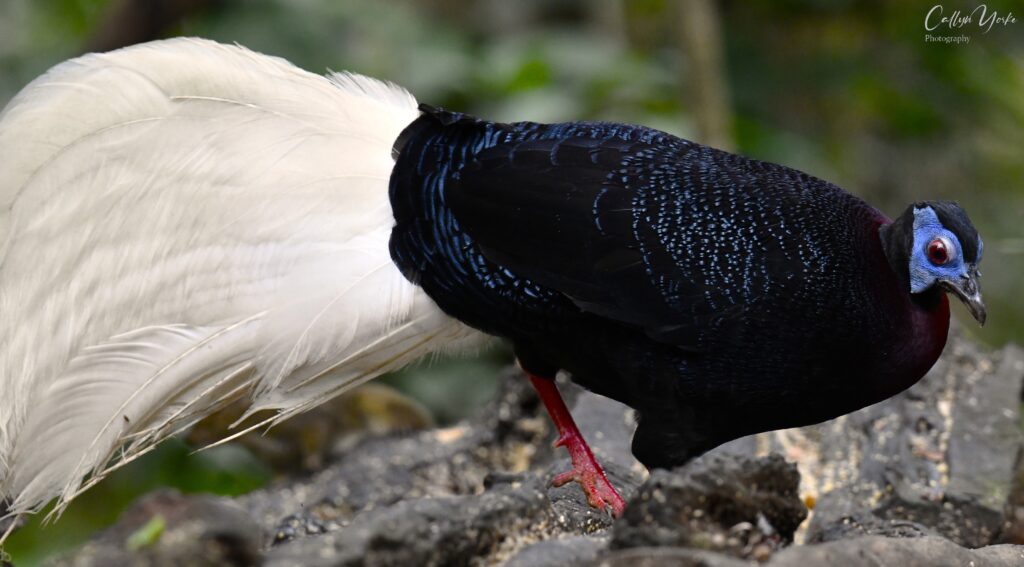
Winded from the rapid ascent, I struggled to hold the camera steady, unsure how long this cautious rarity would stay. As it happened, an adult and two immature Bulwer’s Pheasant made three separate visits to the upper main hide.
Accordingly, the majority of our the time was spent in the main hide, comfortably seated in view of the feeding grounds. Throughout the morning, delicious eye candy was served – a photographic buffet of Bornean birds and small mammals.
Across the roadway from the Trusmadi entrance, Lee had established a small forest hide. There, he said, it was possible to see the endemic Bornean Banded Pitta. Three of us sat together in the hide for about forty-five minutes, until Lee signaled we should leave. He had been broadcasting the bird’s vocalizations on external speakers at the main hide nearly the entire time of our visit. Inexplicably, the pitta was a no show.
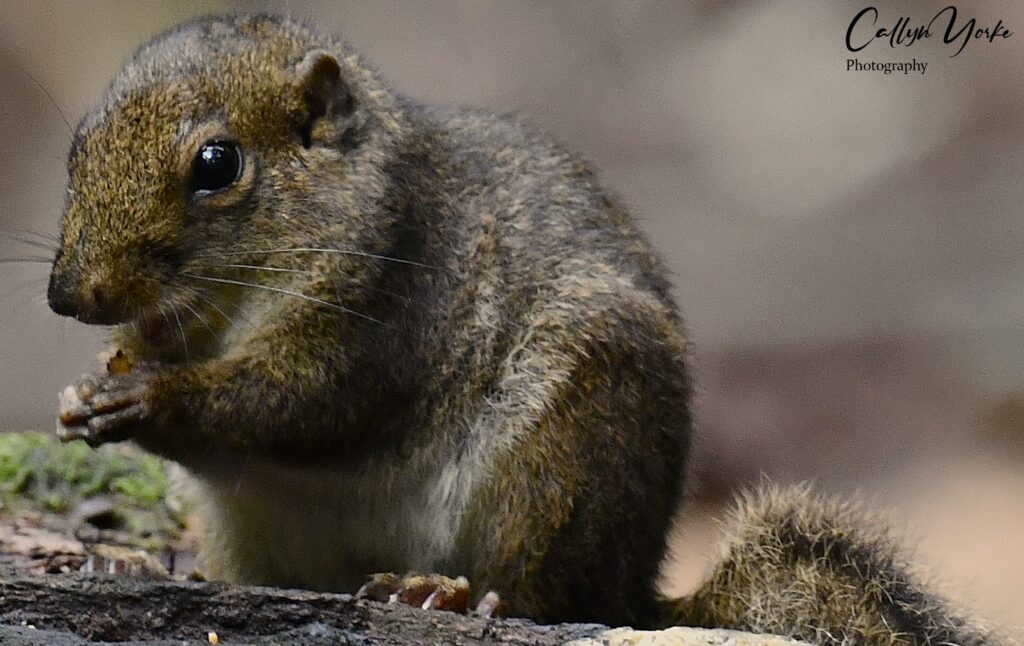
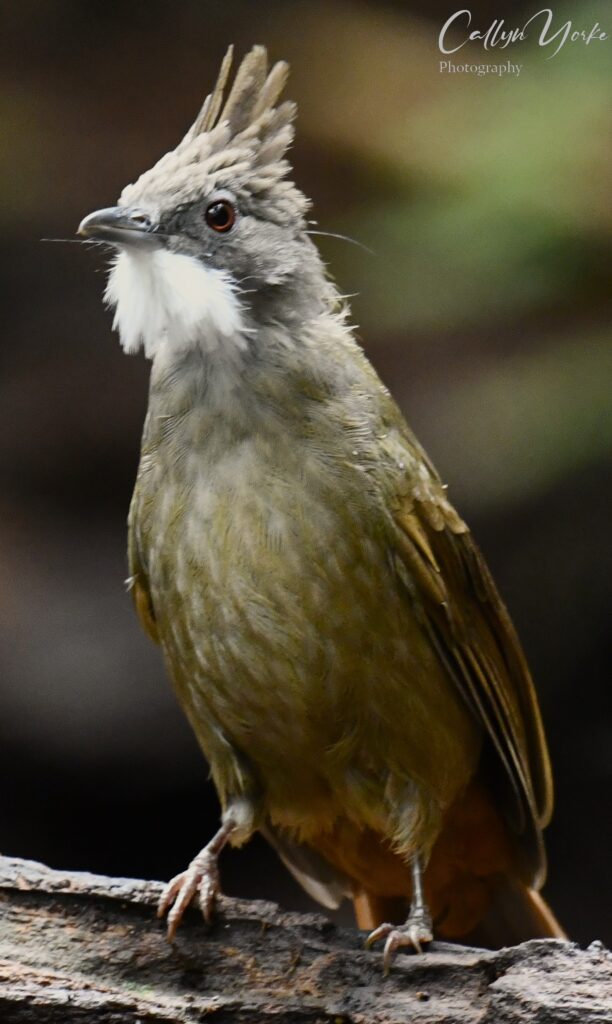
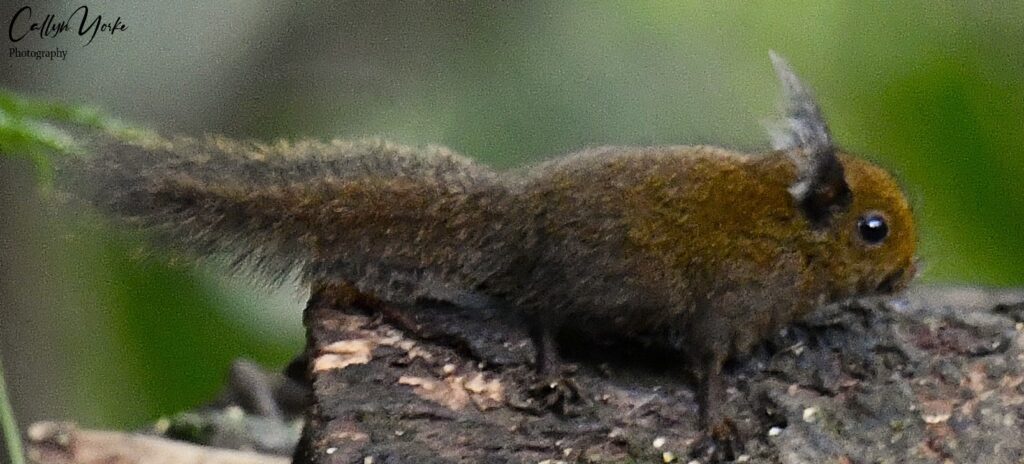
Meanwhile, the forest hide produced photo opportunities for two endemics, Bornean Mountain Ground Squirrel and Penan Bulbul. Trusmadi was a place with nonstop action. As we crossed the roadway, Lee pointed out a new species for the Trusmadi report, Spectacled Spiderhunter. Nearby, in the roadside forest, there were close up views of Bornean Bulbul, a lifer I had been unable to photograph at Mt. Kinabalu.
Our time spent at Trusmadi (0600-1500 hrs.) provided an extraordinary opportunity to observe and photograph bird and mammal species at close range. In fact, a person could spend weeks exploring the surrounding hill forest and be quite fortunate to obtain merely a fleeting glimpse the birds and mammals commonly seen and easily photographed at the Trusmadi hides.
Lee mentioned that after several months of fieldwork in the area and confirming the presence of Bulwer’s Pheasant (initially by its vocalizations), he had chosen this particular location for constructing a permanent hide. During the following years, he developed the Trusmadi hide facilities for maximum appeal to bird photographers. His hard work had clearly paid off.
Trusmadi nowadays is well known and arguably the best bird photography hide in Sabah. Impressive indeed were the facilities, services, maintenance routines and educational agenda. Although the hide facility is somewhat remote and certainly not cheap, from a visiting naturalist’s perspective and especially for those who enjoy wildlife photography, the Trusmadi experience was unique and definitely worth the effort and expense.
Annotated Bird List for Tambunan and the Trusmadi Photography Hide August 16-17, 2025 (26 Species) Callyn Yorke
KEY
Abundance: Numbers following each species entry are the highest count when multiple sightings were obtained. The location (see below) with the highest numerical abundance is listed first in the species accounts.
Age, sex and molt (when known): ad = adult; imm = immature; m = male; f = female; bsc plmg = basic (non-breeding plumage; alt plmg = alternate (breeding) plumage; trans = transitional plumage, i.e. alternate into basic plumage.
Survey Location Abbreviations: Tambunan 7 Lodge, TSL = Tambunan 7 Lodge; TPH = Trusmadi Photo Hides – upper, lower and forest hides.
Ecology and Behavior: Aerial insect hawking (ah); taking fruit, berries or parts of flowers (fr); gleaning insects from foliage (ig); probing into surface (pr); estimated height (m) above ground (agl); gregarious (greg); mixed-species flock (msf).
Systematics and Nomenclature used herein, is an amalgam of Avibase, International Ornithological Congress (IOC) and current (2025) online resources, i.e. Birds of the World, Cornell University, USA.
Species acronyms (banding codes)are derived from the first letters of the single or hyphenated common name, CRPA = Crested Partridge, etc..
Borneo endemics and near-endemics are listed in Bold Face lettering.
BIRDS NOTED
- Bornean Partridge Arborophila hyperythra 1 (ad.) seen once, briefly with a large flock of CRPA, TPH (photo).
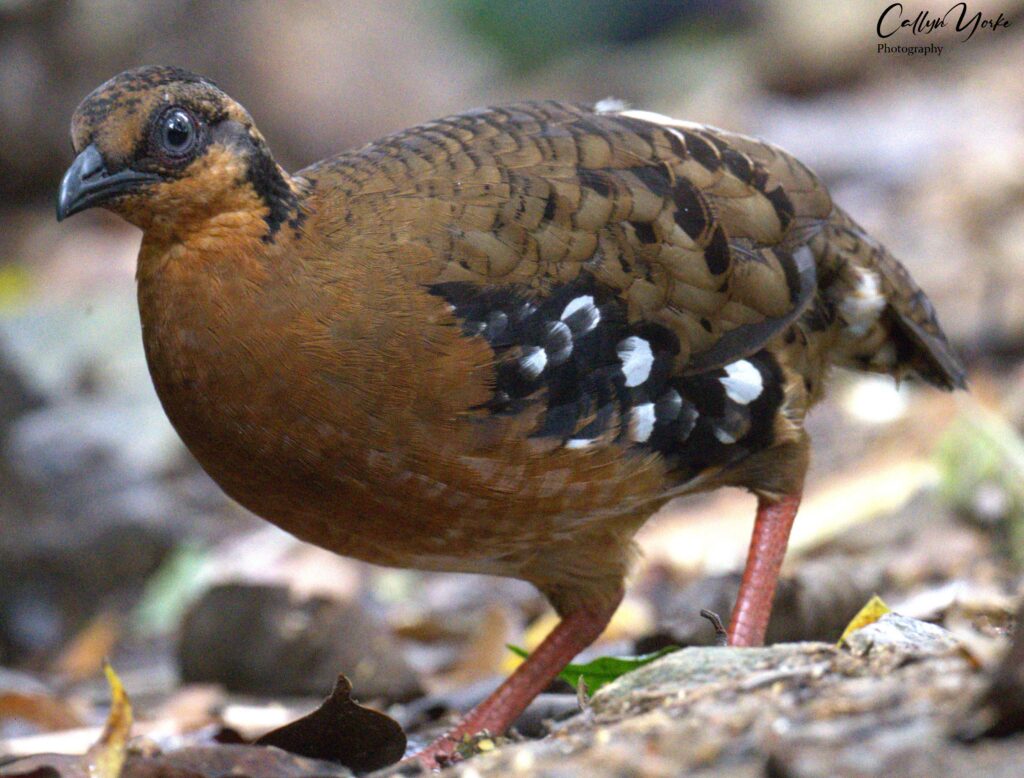
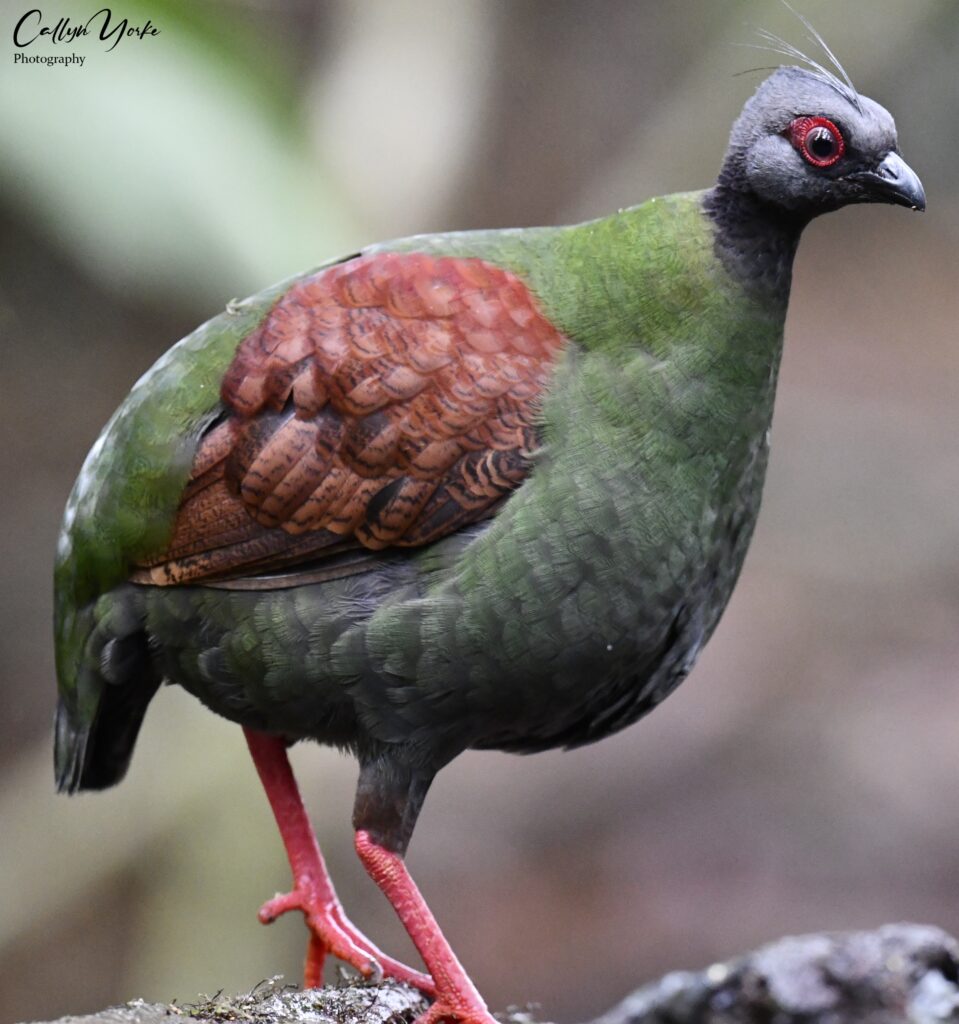
- Crested Partridge Rollulus rouloul 25 (m,f) greg. frequent visits, spending long periods of time on the feeding grounds; habituated to human presence, TPH (photo).
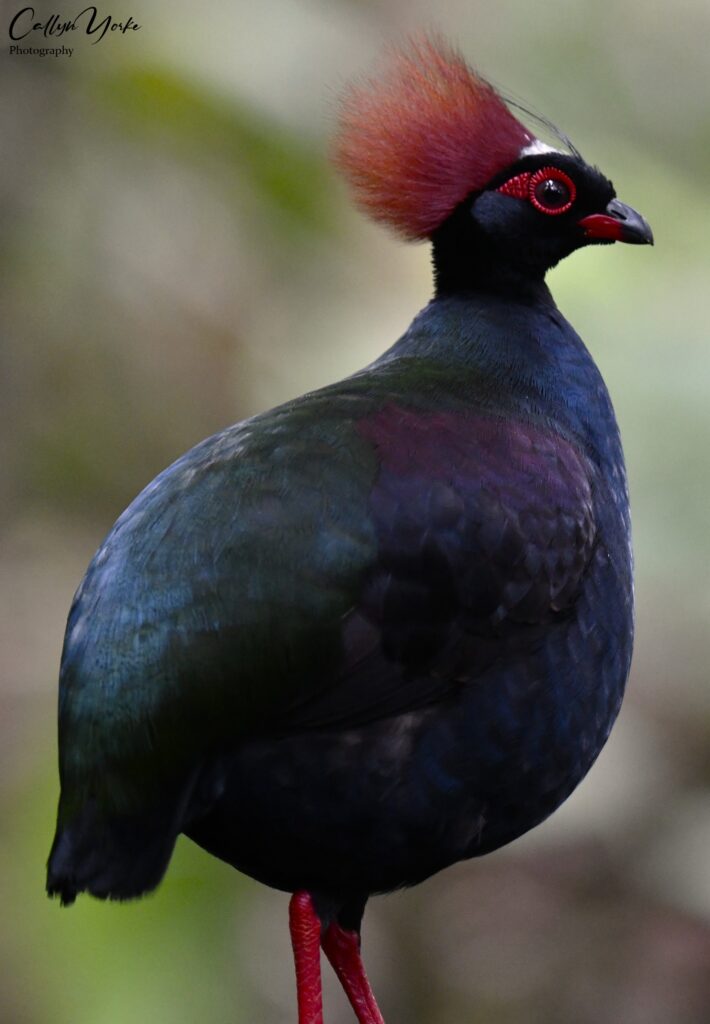
- Bulwer’s Pheasant Lophura bulweri 3 (1 ad. m, 2 imm.) greg. making three separate visits to the upper feeding grounds, TPH (photo- see above).
- White-breasted Waterhen Amaurornis phoenicurus 1 walking in an adjacent ruderal field, TSL.
- Spotted Dove Spilopelia chinensis 5 roadside, in transit, TSL.
- Emerald Dove Chalcophaps indica 2 greg. at main feeding ground, TPH.
- Zebra Dove Geopelia striata 2 greg. a pair walking on driveway, TSL
- Plume-toed Swiftlet Collocalia affinis 2 greg. in low flight over open areas and around buildings, TSL.
- Bornean Whistler Pachycephala hypoxantha 1 TPH.
- White-throated Fantail Rhipidura albicollis 1 TPH.
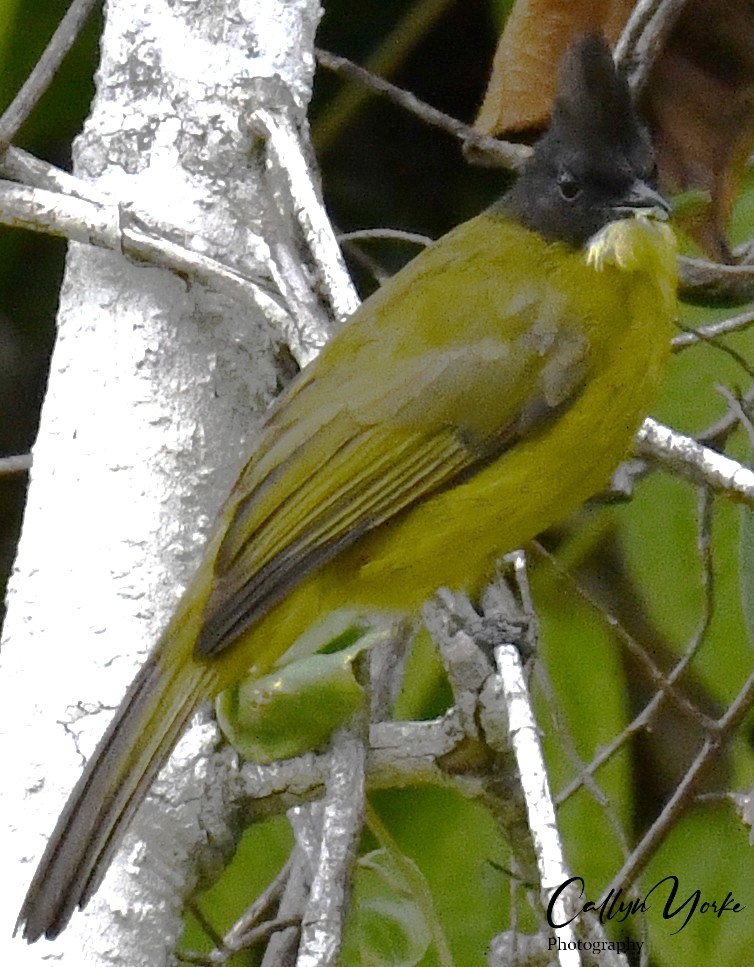
- Black-headed Bulbul Pycnonotus atriceps 1 forest edge at the pond, TSL.
- Red-eyed Bulbul Pycnonotus brunneus 4 greg. in garden trees, TSL.
- Penan Bulbul Alophoixus ruficrissus 5 greg. at main and forest hides, TPH (photo – see above).
- Bornean Bulbul Rubigula montis 1 roadside forest edge, TPH (photo).
- Pacific Swallow Hirundo tahitica 1 in low flight over open areas, TSL.
- Tailorbird Orthotomus sp. 1 vocal (unseen), garden trees, TSL.
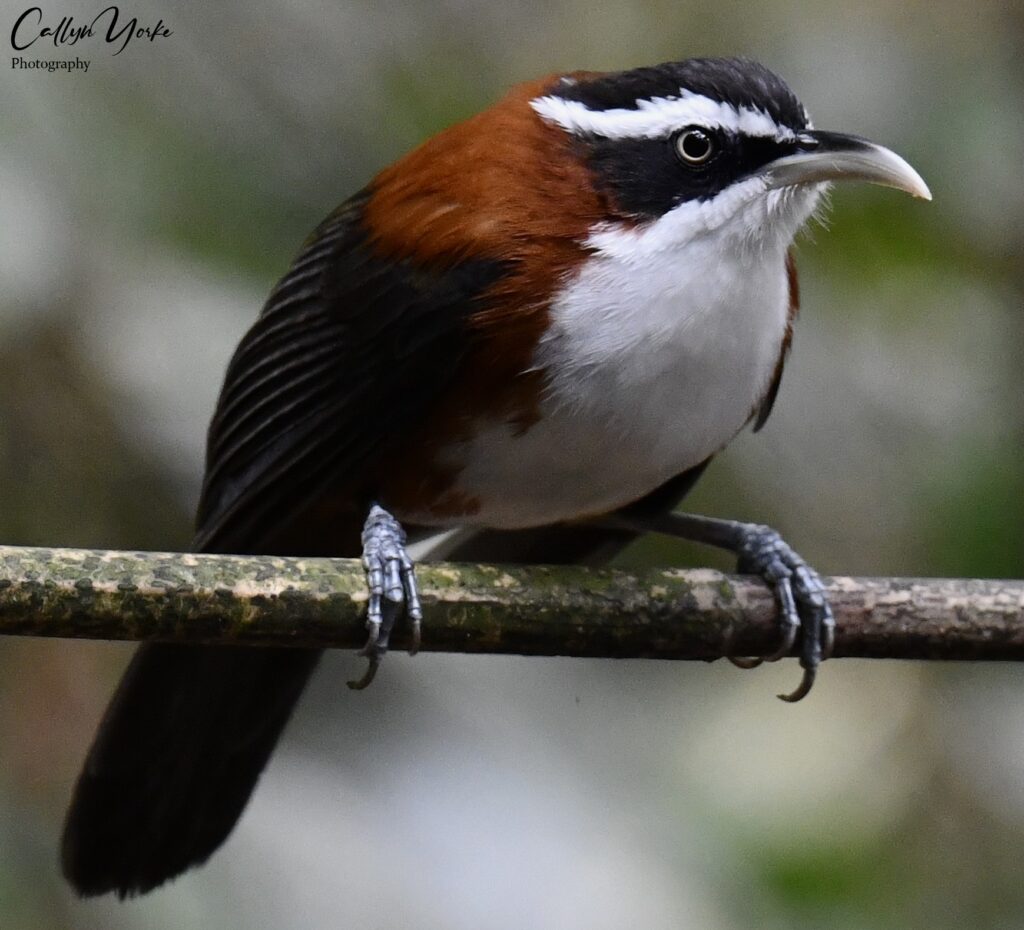
- Sunda Scimitar-Babbler Pomatorhinus bornensis 1 main hide, TPH (photo – see above).
- Gray-throated Babbler Stachyris nigriceps borneensis 5 greg. main hide, TPH (photo).
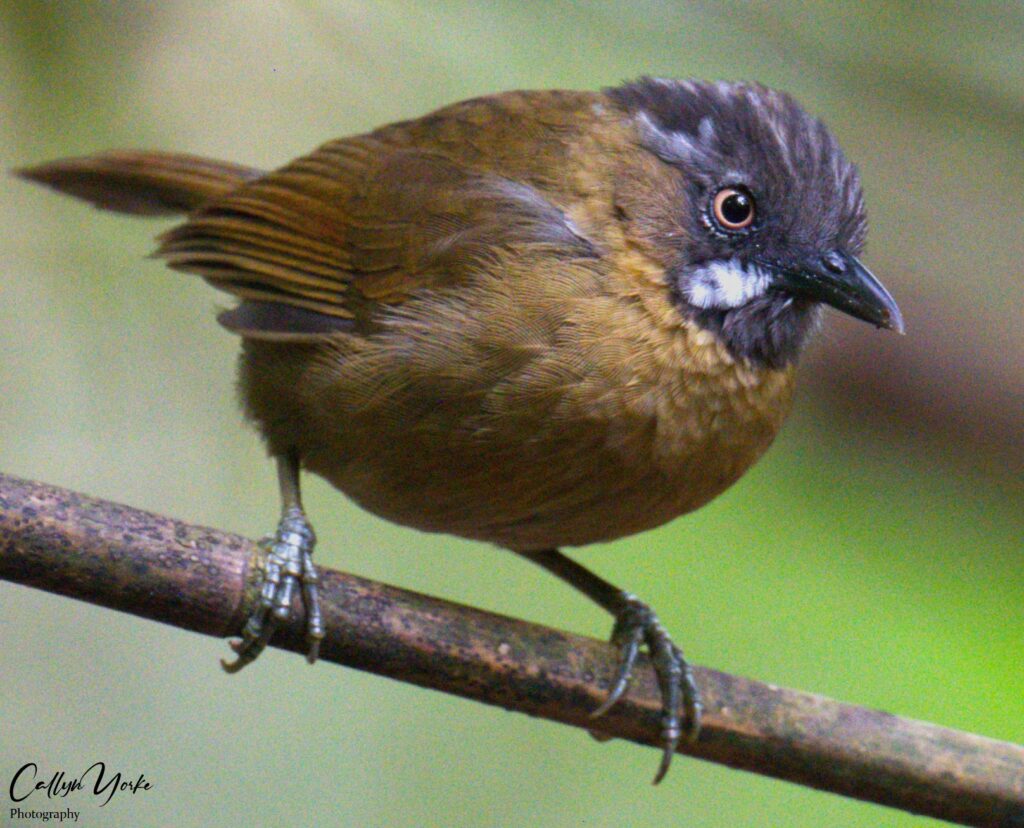
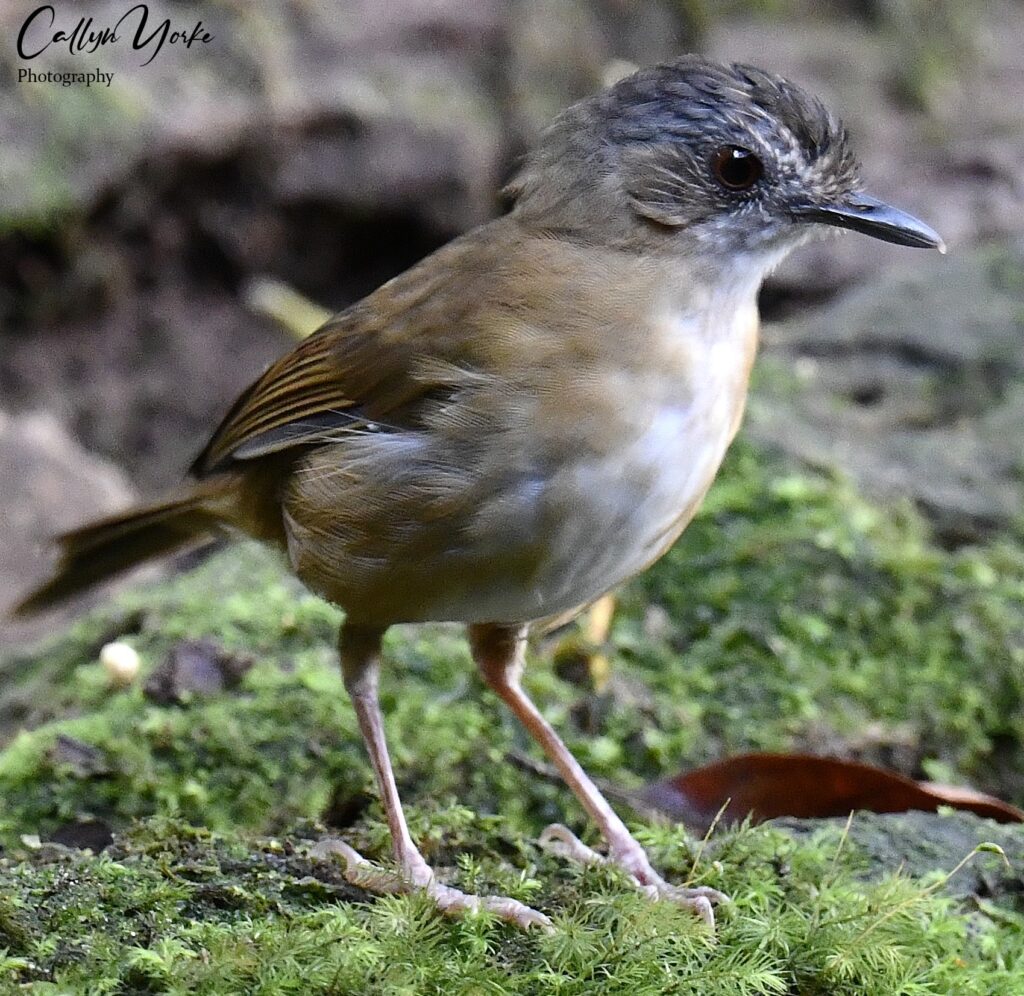
- Temmincks Babbler Pellorneum pyrrogenes cannicapillus 3 greg. main hide, TPH (photo).
- Chestnut-hooded Laughingthrush Garrulax treacheri 6 greg. vocal, main hide, TPH.
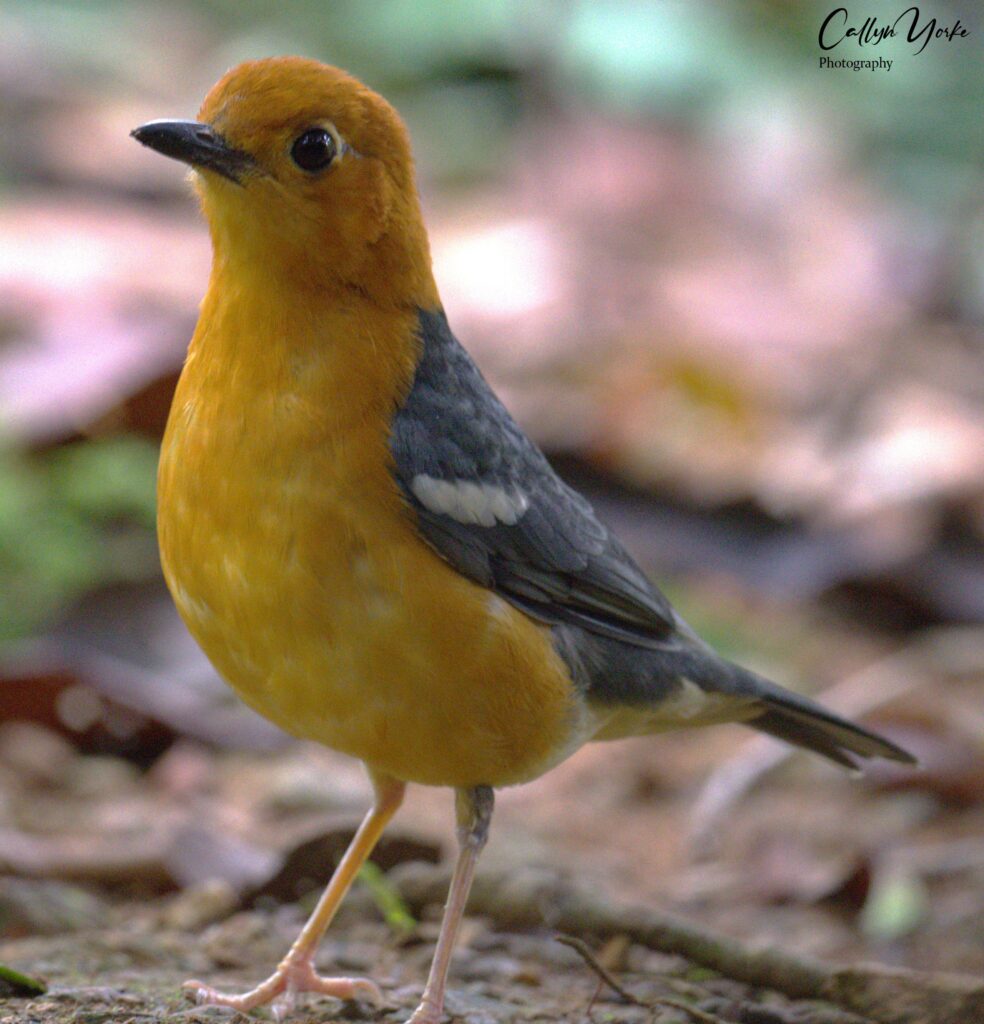
- Orange-headed Thrush Geokichla citrina 1 main hide, TPH (photo).
- Oriental Magpie Robin Copsychus saularis 2 (m,f), vocal, TPH,TSL.
- Crocker Jungle Flycatcher Cyornis ruficrissa 1 main hide, TPH.
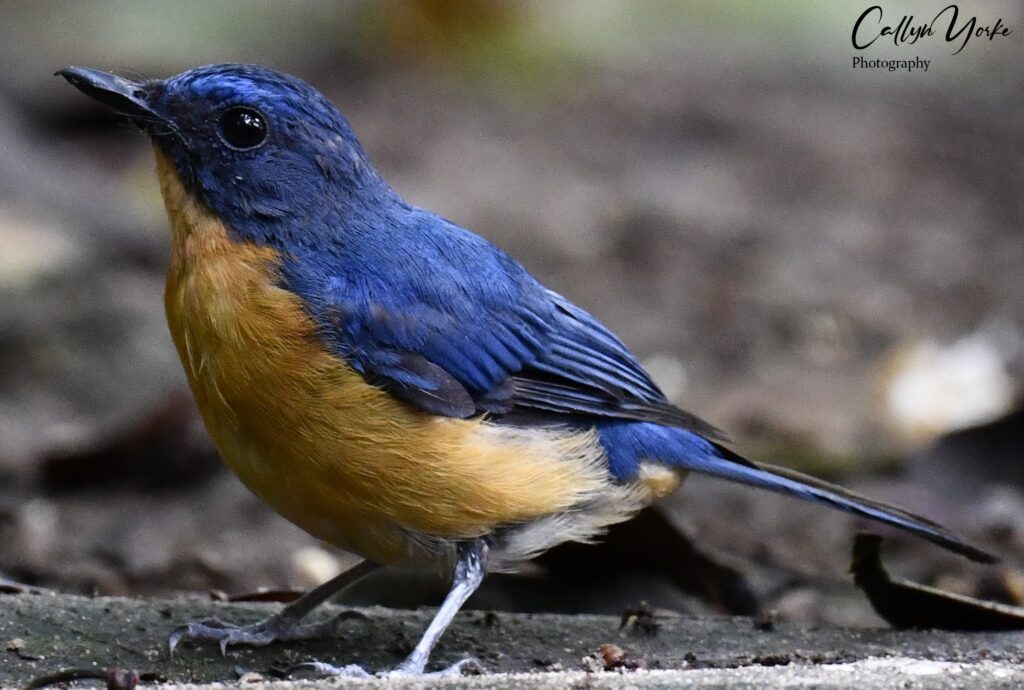
- Dyak Blue Flycatcher Cyornis montanus 2 (m,f) main hide, TPH (photo).
- Spectacled Spiderhunter Arachnothera flavigastra 1 forest edge canopy, TPH.
- Tree Sparrow Passer montanus 10 (m,f) greg. in garden trees and ground, TSL.
_________________________________