Kota Kinabalu, Sabah (August 3-5;12, 2025) Callyn Yorke
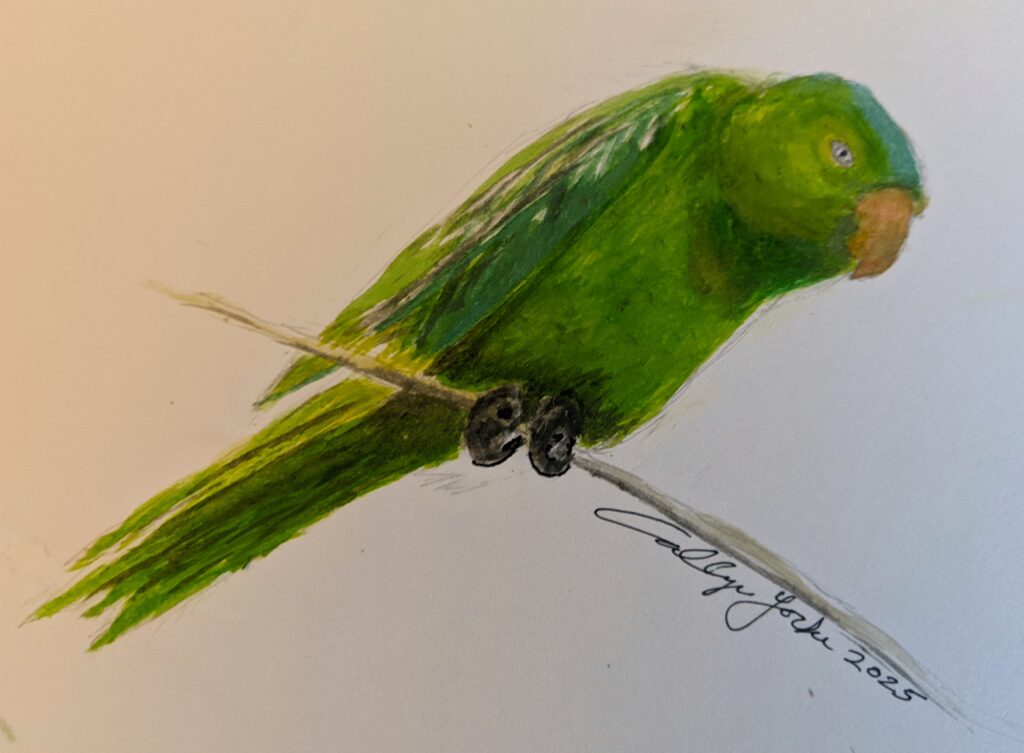
Four main areas were visited in Kota Kinabalu: Tanjung Aru, Ramsar Wetland, Likas Beach and Lagoon, and the University of Malaysia Sabah campus. There I made walking bird surveys (0630-1100 hrs.). The online Grab Taxi service was used for transport to and from the C’Haya Hotel in Tanjung Aru. Birds found in the vicinity of the hotel and in transit through KK were noted. Due to increasing traffic congestion, high ambient temperatures and frequent afternoon thundershowers, bird surveys were best done within two to three hours after sunrise.
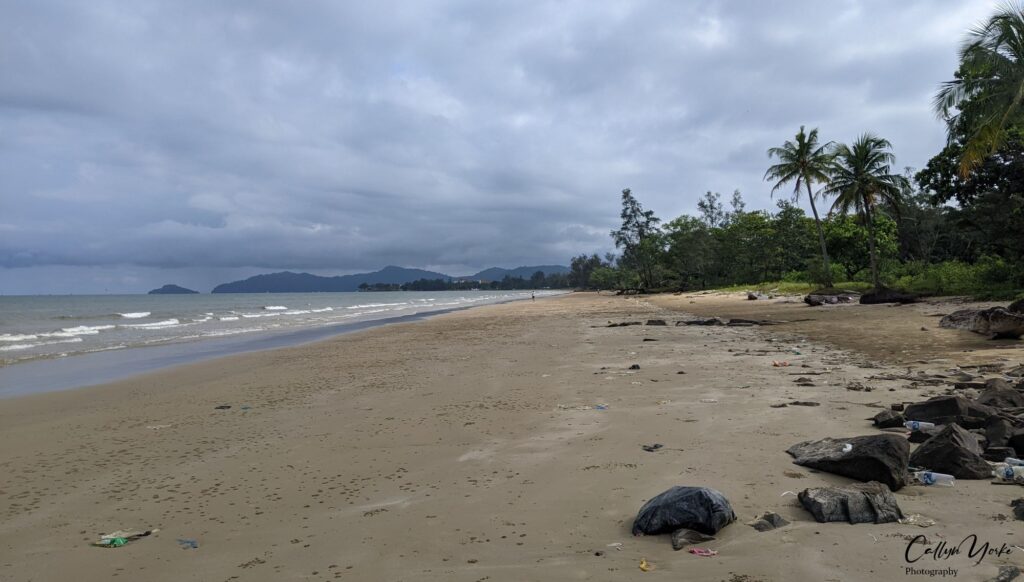
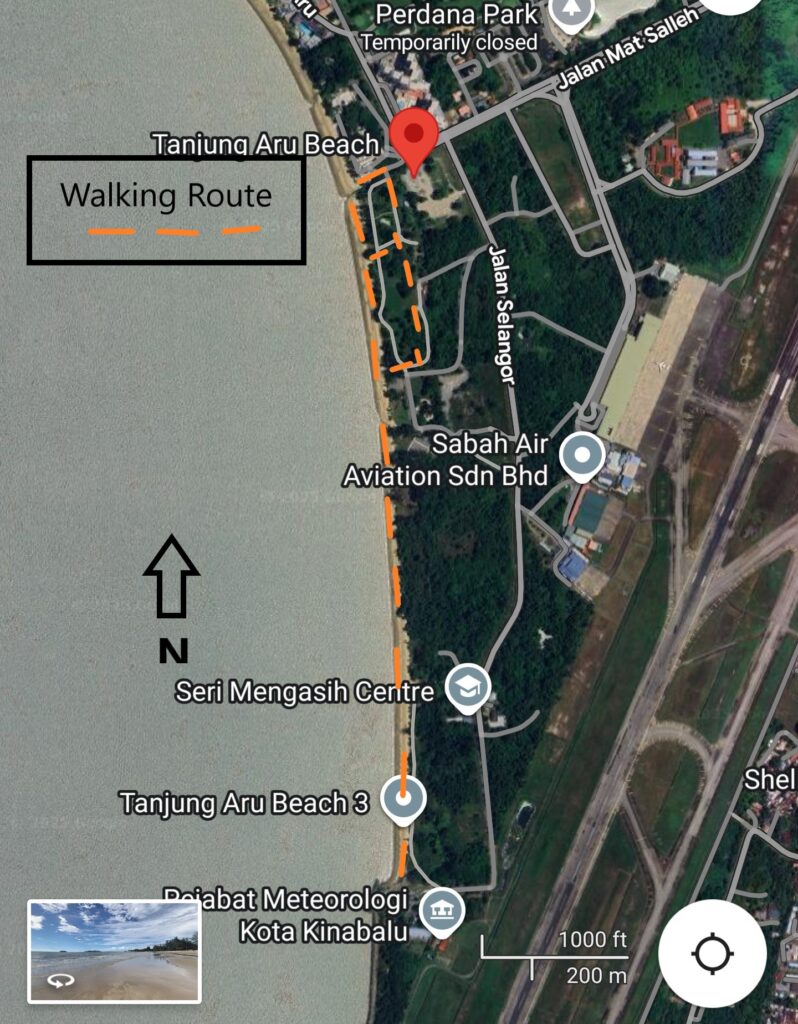
Tanjung Aru (TA, August 3; 12, 2025: 0800-1000 hrs.; 0624- 0810 hrs. Overcast skies; 78F to 80F, wind SSW 2-10 mph.) – I walked the beach at low tide, surveying the shoreline (bird-less) and offshore waters (a distant, unidentified tern). Birdlife was found near the entrance to the beach in coastal scrub and parkland habitat with an assortment of exotic trees and shrubs. Tall casuarinas and palms lined the beach; patches of coastal scrub occurred toward the south end of the shoreline. The walk terminated at a fenced facility behind a breakwater (see the following satellite map image).
A few joggers and other visitors were present in the area during my surveys. I met briefly with a group of students from China who were quite keen on finding birds. This delightfully enthusiastic study group turned up again at Mt. Kinabalu National Park.
Rasmar Wetland (RW, 4 August 2025: 0725- 1040 hrs. Partly cloudy, 80F to 85F; wind SSW 2-5 mph). Initially, I walked around the parking area and entrance to the ecological reserve facility. The entrance featured a manicured garden with lawns, mature trees and shrubs, some of which were flowering. The interior of the reserve was accessed by a network of boardwalks through a mature, closed canopy mangrove forest dissected by tidal channels.
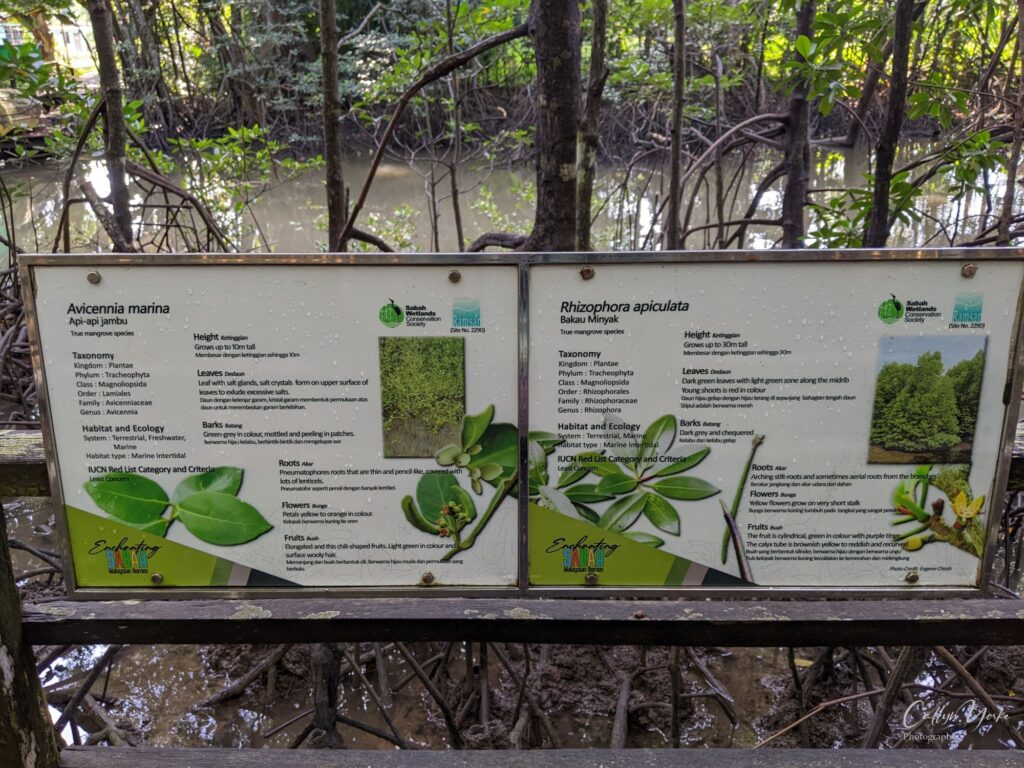
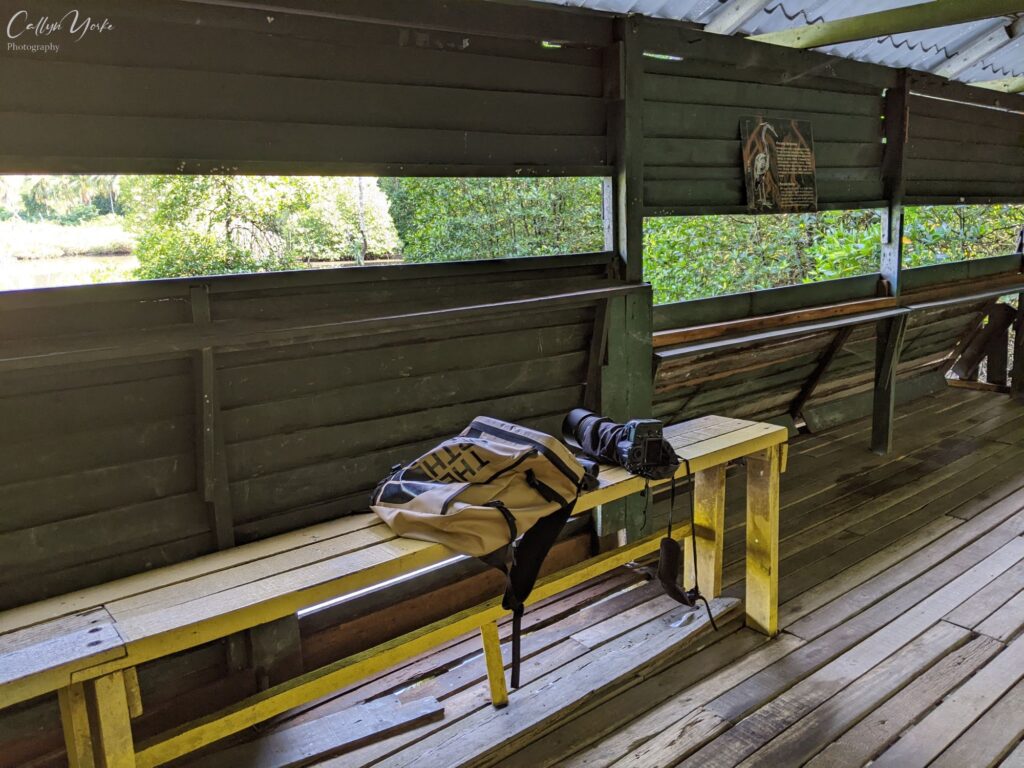
Visibility in the mangrove was good from the elevated boardwalk. An observation tower and bird hide, each at opposite ends of the mangrove, connected with the boardwalks. I spent a total of about one-hour, divided equally between the observation tower and bird hide. Except for a maintenance worker on the boardwalk, there was no one else in the reserve. The facility was normally closed to the public that day (Monday). Luckily, the main gate to the reserve was open and there were no objections to my unscheduled visit.
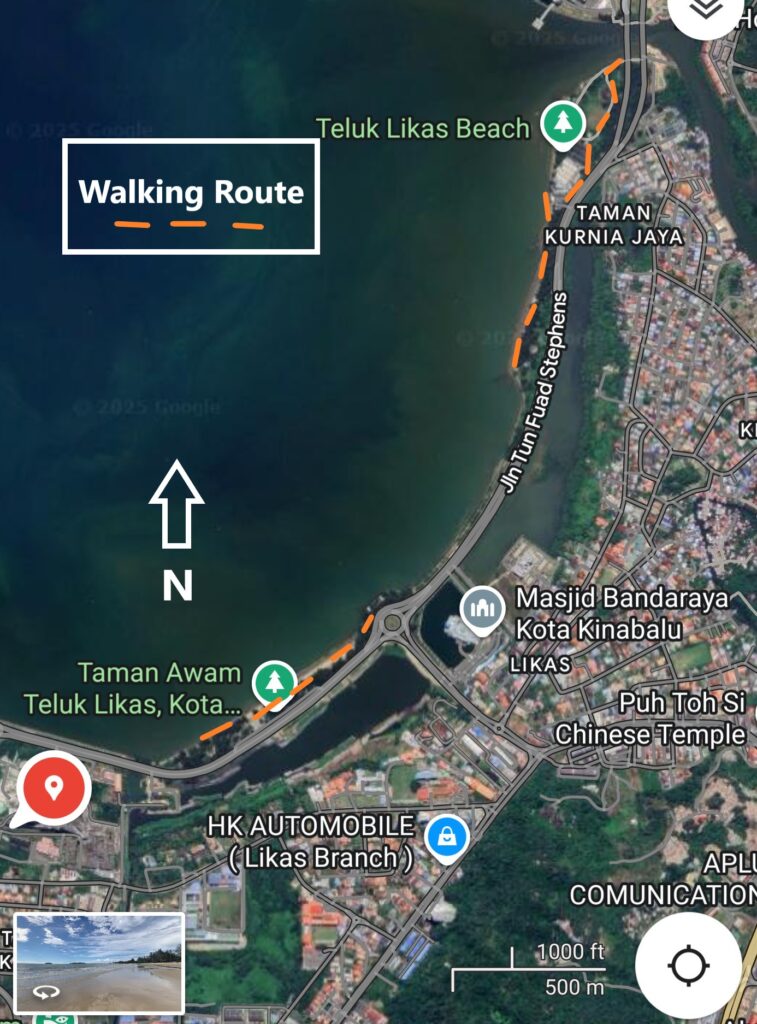
Likas Beach and Lagoon (LBL, 5 August, 2025: 0740-0835 hrs.; partly cloudy, 78F to 84F, wind SSW 2-5 mph). I walked a paved bike path and part of the shoreline between the parking areas adjacent to the shoreline highway. This area connected with the park entrance and north channel inlet (see following satellite image). A narrow, coastal strip included a nearly closed canopy casuarina grove, assorted ornamental shrubs and picnic areas. Offshore bay waters were scanned for birdlife.
Birds on the east embankment of Likas Lagoon were partly visible from the beach, and identifiable using a 10 x 42 binocular (a spotting scope would have been useful). Due to heavy traffic on the coastal boulevard and absence of pedestrian crossings, I remained on the Likas Beach side for observations of birds in the lagoon. Some of the lagoon birds were probably overlooked.
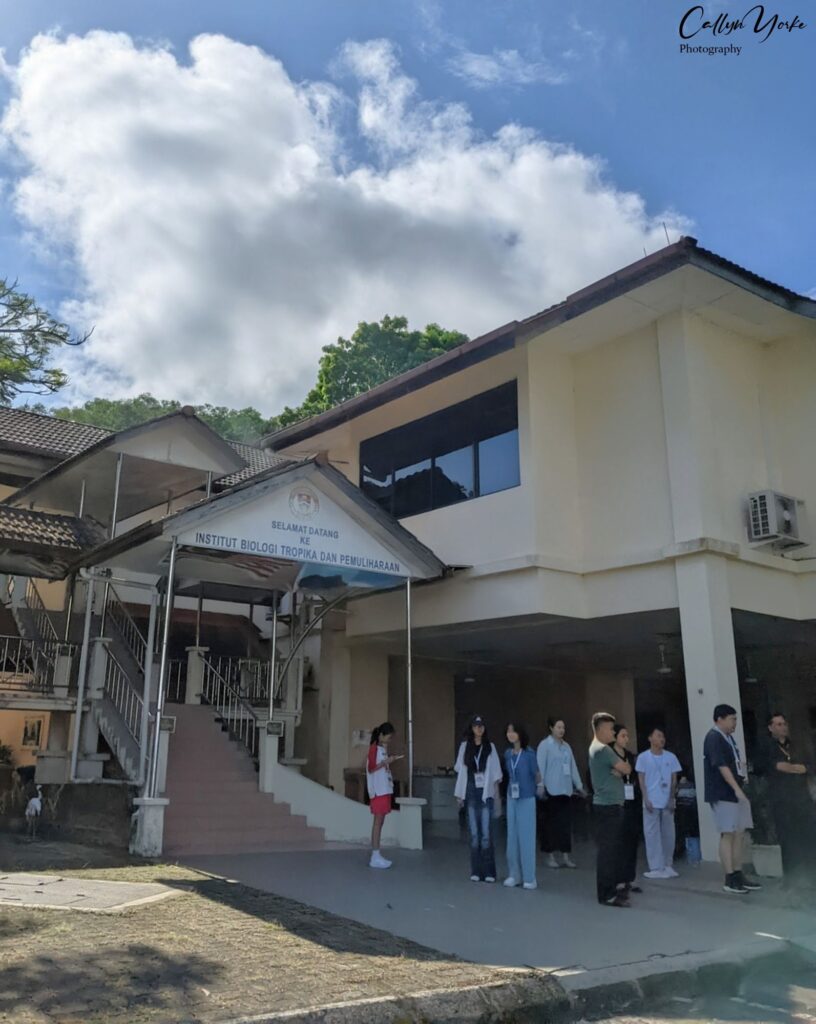
University of Malaysia Sabah Campus (UMS, 5 August 2025 – continued: 0850-1020 hrs. weather – as in the previous entry with dark nimbus-cumulus drifting in. A Grab taxi took me from Likas Beach to the Institute of Tropical Biology (ITB) atop a hill in the northwest corner of the UMS campus (photo). A cursory bird survey was made from the surrounding paved roadways bordering a mature secondary rainforest overlooking the seacoast of Kota Kinabalu. Landscaping featured gardens with ornamental and native flowering trees.
The ITB complex included a Natural History Museum, with labeled invertebrate and vertebrate collections, some displayed in rather drab dioramas. A small fee ($5 US) was collected for entry; no other people were present during my visit. Returning to the main university gate was problematic since there was no regular taxi service to this fairly remote section of the campus. An ITB evolutionary biologist specializing in isolated populations of land snails, kindly gave me a lift along with a synopsis of his interesting line of research. From the main gate, a Grab taxi was readily available for the return trip to the C’haya Hotel in Tanjung Aru.
Annotated Bird List for Kota Kinabalu, Sabah (August 3-5; 12, 2025) (39 Species) Callyn Yorke
KEY
Abundance: Numbers following each species entry are the highest count for a single survey, when multiple surveys were made. The location (see below) with the highest numerical abundance is listed first in the species accounts.
Age, sex and molt (when known): ad = adult; imm = immature; m = male; f = female; bsc plmg = basic (non-breeding plumage; alt plmg = alternate (breeding) plumage; trans = transitional plumage, i.e. alternate into basic plumage.
Survey Location Abbreviations: LBL = Likas beach and lagoon; RW = Ramsar Wetland; TA = Tanjung Aru; UMS = University Malaysia Sabah campus; T = In transit through Kota Kinabalu.
Ecology and Behavior: Aerial insect hawking (ah); taking fruit, berries or parts of flowers (fr); gleaning insects from foliage (ig); probing into surface (pr); estimated height (m) above ground (agl); gregarious (greg); mixed-species flock (msf).
Systematics and Nomenclature used herein, is an amalgam of Avibase, International Ornithological Congress (IOC) and current (2025) online resources, i.e. Birds of the World, Cornell University, USA. Species acronyms (banding codes) derived from the first letters of the single or hyphenated common name, e.g. GREG = Great Egret; YVBU = Yellow-vented Bulbul, etc..
Borneo endemics and near-endemics are listed in Bold Face lettering.
BIRDS NOTED
- Striated Heron Butorides striata 10 individuals perched motionless, low in the mangrove forest, usually over small pools of water, RW.
- Eastern Cattle Egret Bulbucus coromandus 1 on east embankment of lagoon with GREG and LIEG, LBL.
- Gray Heron Ardea cinerea 1 in low flight over lagoon, LBL.
- Purple Heron Ardea purpurea 1 in low flight over lagoon, LBL.
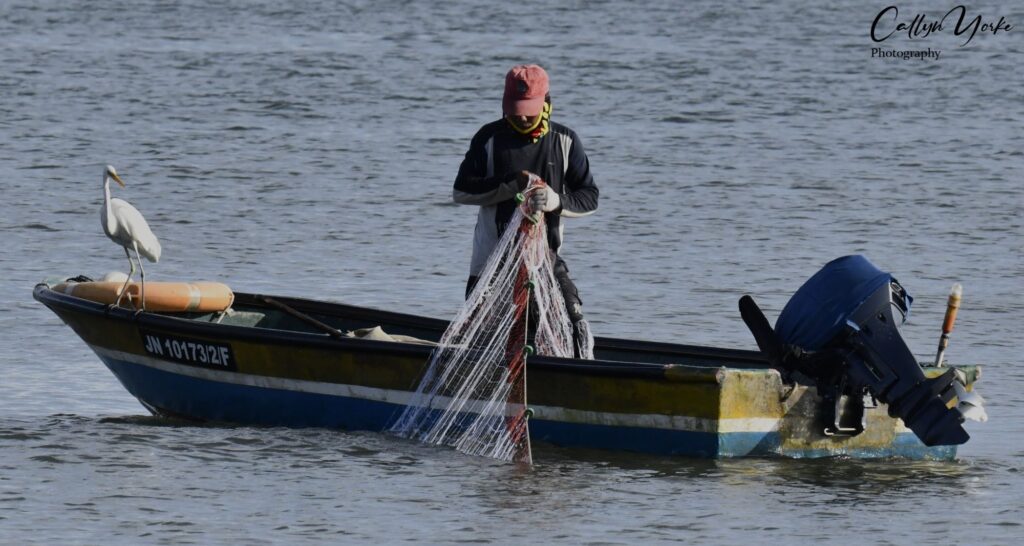
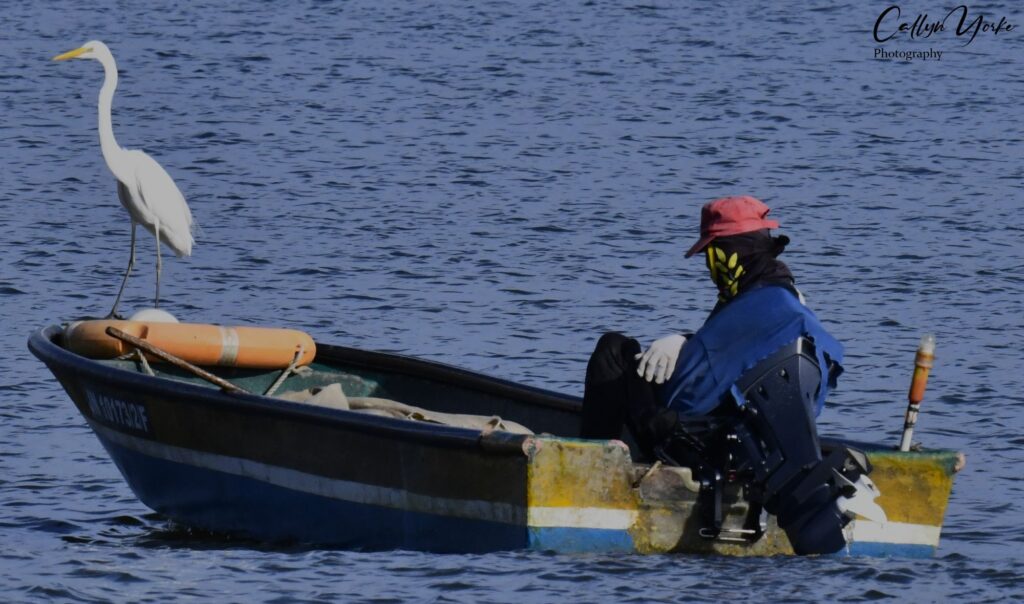
- Great Egret Ardea alba 30 greg. on east embankment of lagoon with LIEG; 10 greg. individuals and a small flock at edges of mangrove clearings and perched on snags in large lagoon next to the bird hide, RW; on shore and breakwater. In the bay, individual birds riding on small boats operated by fishermen with nets, LBL. The latter case appeared to be an unusual example of symbiosis. The egret may be taking fish from the fisherman’s catch (kleptoparasitism) and/ or taking only fish that would ordinarily be thrown back (commensalism). In at least this instance, it was clear that the fisherman and his Great Egret mascot, tolerated each other’s close proximity, indicating a rather stable symbiotic relationship (photos).
- Intermediate Egret Egretta intermedia 2 greg. on east embankment of lagoon with GREG and ORDA, LBL.
- Little Egret Egretta garzetta 1 standing on emergent limb at edge of mangrove lagoon, RW; 2 greg. on east embankment of lagoon, LBL.
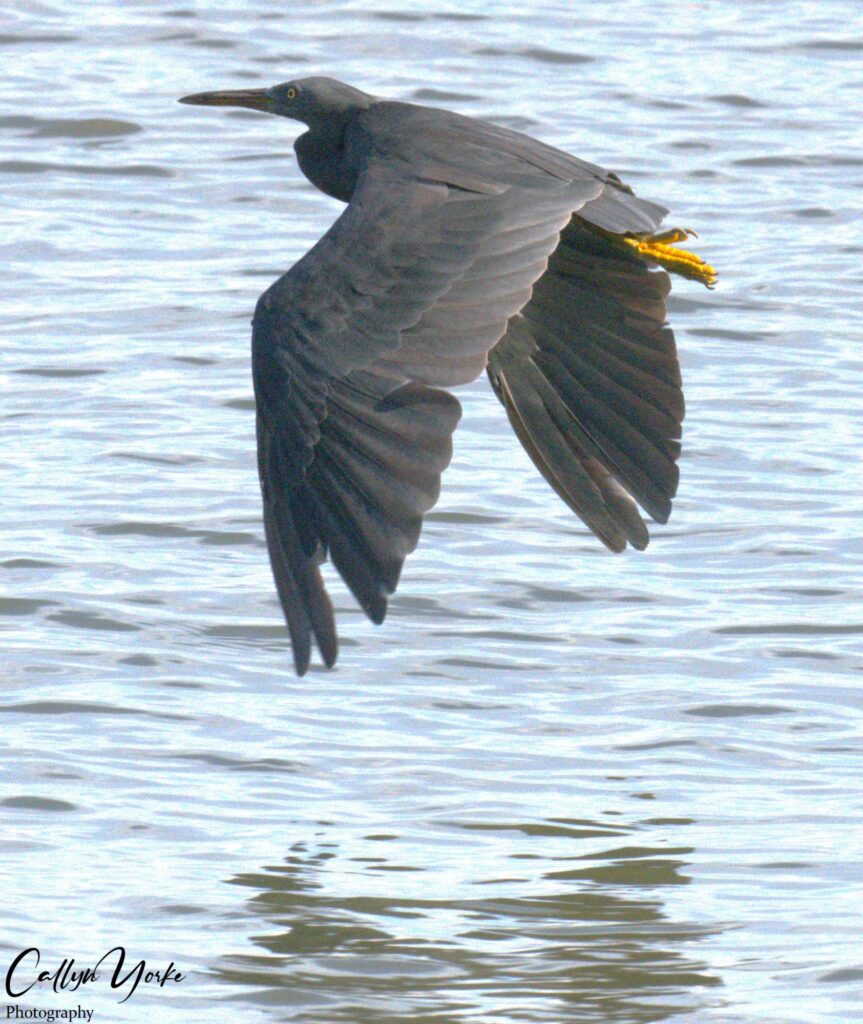
- Pacific Reef Heron Egretta sacra 1 initially seen standing on breakwater at water’s edge, then taking flight, low across inner bay, LBL (photo).
- Oriental Darter Anhinga melanogaster 5 greg. standing on east embankment of lagoon, LBL.
- Brahminy Kite Haliastur indus 1 circling at about 30m agl over entrance, RW.
- White-breasted Waterhen Amaurornis phoenicurus 1 walking quickly across lawn and garden, TA.
- Sterna sp. c.f. sumatrana 1 seen at a distance of >2.0 km hovering around docks of Pulau Gaya, TA.
- Feral Rock Pigeon Columba livia 5 circling adjacent suburb, RW.
- Spotted Dove Spilopelia chinensis 3 greg. vocal, in picnic area near beach entrance, TA.
- Zebra Dove Geopelia striata 3 greg. vocal, pairs and trios foraging on pavement, ruderal patches, bare ground and lawns, ubiq..
- Pink-necked Green Pigeon Treron vernans 2 greg. wary and readily flushed; perched in canopy of ornamental fruiting trees, RW.
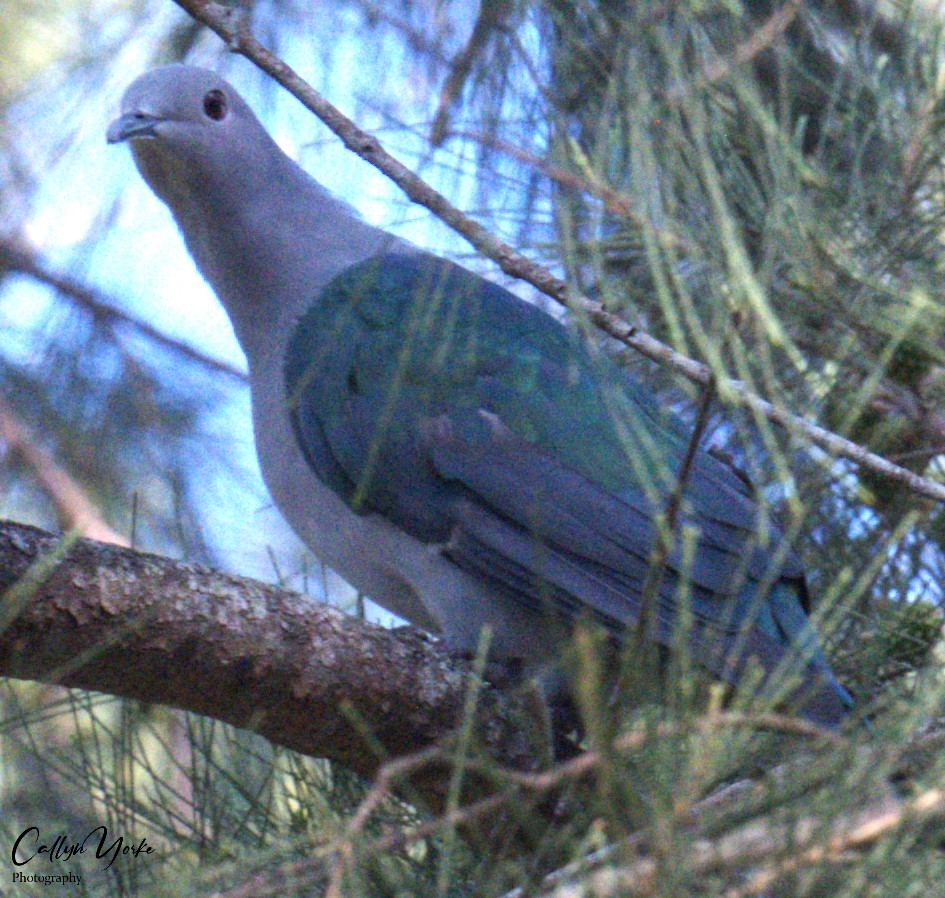
- Green Imperial Pigeon Ducula aenea 5 greg. wary, though relatively habituated to human presence. Preferring the dense cover in a casuarina grove, LBL (photo); 1 in casuarina canopy, TA.
- Greater Coucal Centropus sinensis 1 vocal (unseen) garden-mangrove edge area near entrance, RW.
- Plume-toed Swiftlet Collocalia affinis 3 loosely greg. flying 10-20m agl over ruderal fields and open areas , TA (photo); LBL.
- Germain’s Swiftlet Aerodramus germani 6 loosely greg. flying 5 – 80m agl over shore and parkland areas, LBL (photo).
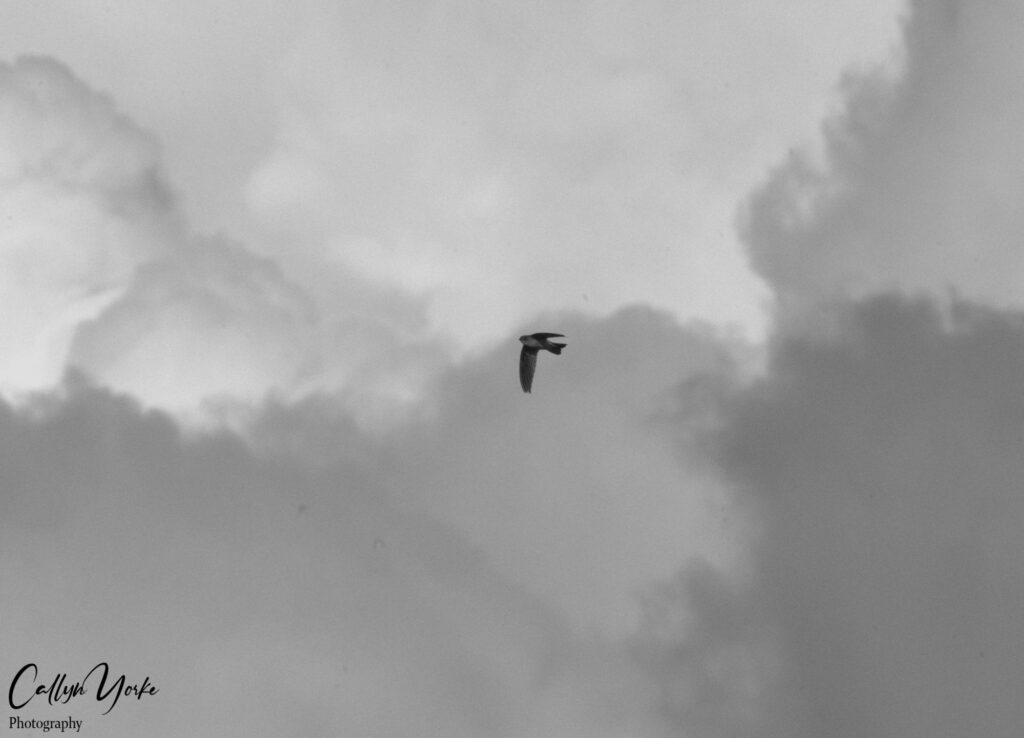
- Asian Palm Swift Cypsiurus balasiensis 1 flying fast, low, through suburban area with palms and ornamental trees, KK.
- Collared Kingfisher Todiramphus chloris 6 vocal; individuals perched at low and medium heights in mangrove, in deep shade and near clearings or tidal channels, RW; 4 individuals in coastal scrub palm and casuarina groves, TA.
- Common Kingfisher Alcedo atthis 1 perched at mid-level in mangrove at edge of a channel, RW.
- Blue-eared Kingfisher Alcedo meninting 1 perched at mid-level in mangrove bord ering a channel, RW
- Common Flameback Dinopium javanense 1 (m) ascending trunk of a large managrove tree inside forest, RW.
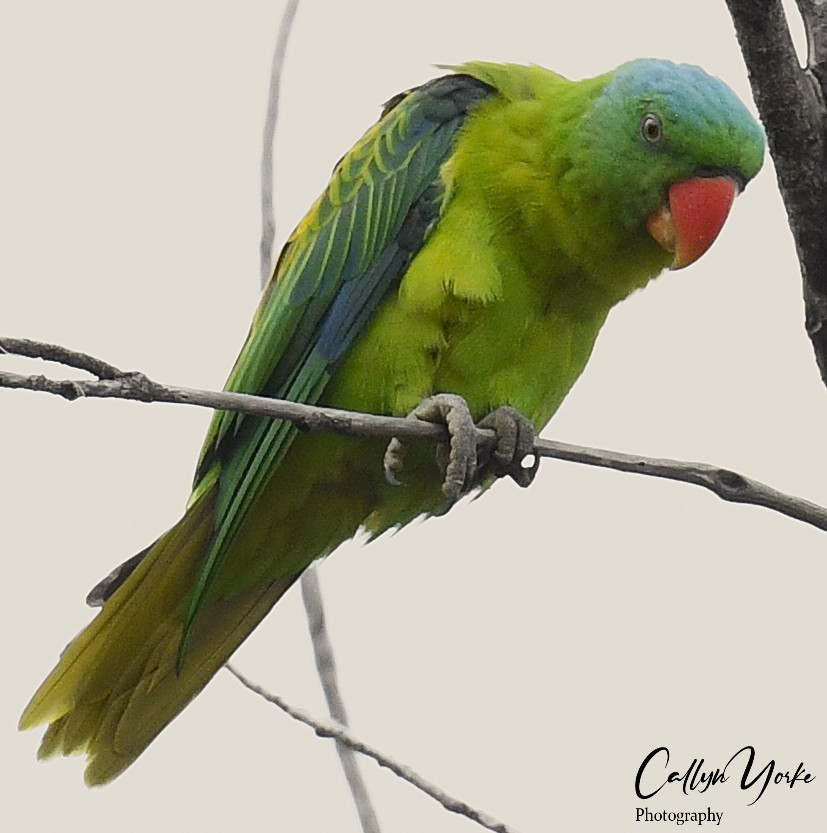
- Blue-naped Parrot Tanygnathus lucionensis 1 in casuarina tree near beach entrance, at about 8m agl, TA (photo). Evidently, a lone individual from a small, introduced population of BNPA in this area.
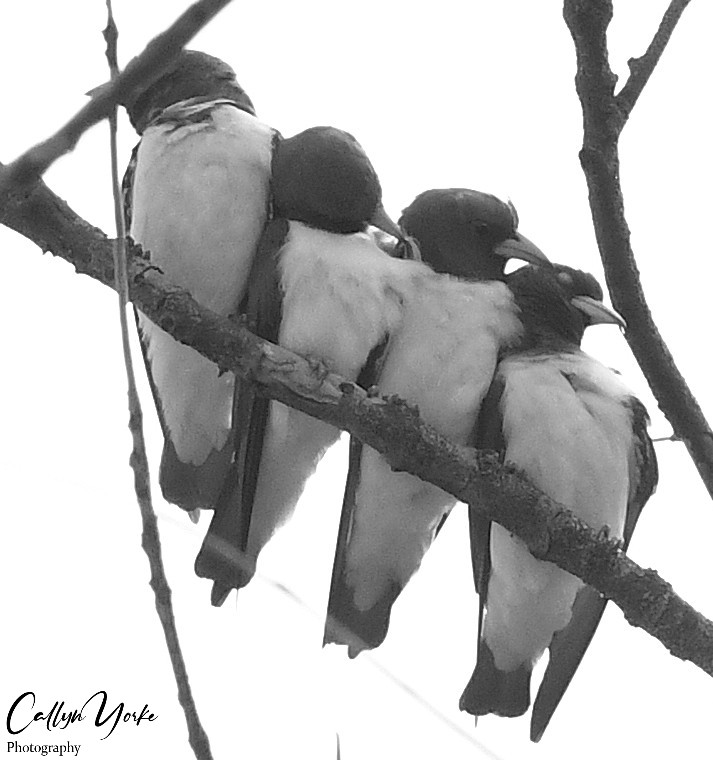
- White-breasted Woodswallow Artamus leucorynchus 10 greg. small flocks perched on exposed canopy limbs of casuarinas; individuals and pairs circling 10-40m agl over a wide area, TA (photo).
- Common Iora Aegthina tiphia aequanimis 2 (m,f) with a PITR, active late mornings in flowering/fruiting shrubs and small garden trees, TA.
- Pied Triller Lalage nigra 1 active in a variety of ornamental shrubs and trees; msf with ONSU, COIO; edge of mangrove, TA, RW.
- Malaysian Pied Fantail Rhipidura javanica 5 vocal, in msf with AGST and ONSU, ornamental trees, edge of mangrove RW; TA; UM.
- Yellow-vented Bulbul Pycnonotus goiavier 4 greg. vocal, garden shrubs and ornamental fruiting trees, ubiq..
- Olive-winged Bulbul Pycnonotus plumosus 6 greg. vocal, garden shrubs and trees around entrance, and edge of mangrove, RW.
- Pacific Swallow Hirundo tahitica 8 greg. flying low over roadway puddles in the food stalls entrance area, TA.
- Ashy Tailorbird Orthotomus ruficeps 5 vocal (calls and song) low to mid-level; edge and interior of the mangrove forest, RW.
- Asian Glossy Starling Aplonis panayensis 10 greg. in fruiting garden trees; flocks in flight around the city, TA, KK.
- Brown-throated Sunbird Antreptes malacensis 3 (m,f) in ornamental shrubs and trees, RW; TA.
- Ornate Sunbird Cinnyris ornatus 2 (m) in ornamental fruiting trees, TA.
- Eurasian Tree Sparrow Passer montanus 20 (m,f) greg. vocal, urban and other modified habitats; on pavement and beach, TA; LB.
- Chestnut Munia Lonchura atricapilla 6 (m,f) greg. overgrown grass in picnic-garden area and adjacent coastal scrub, TA.
___________________________