Bird Surveys of the AVC Lancaster Campus 2026 –
Callyn D. Yorke, Ph.D.
2 November 2026 (17 Species)
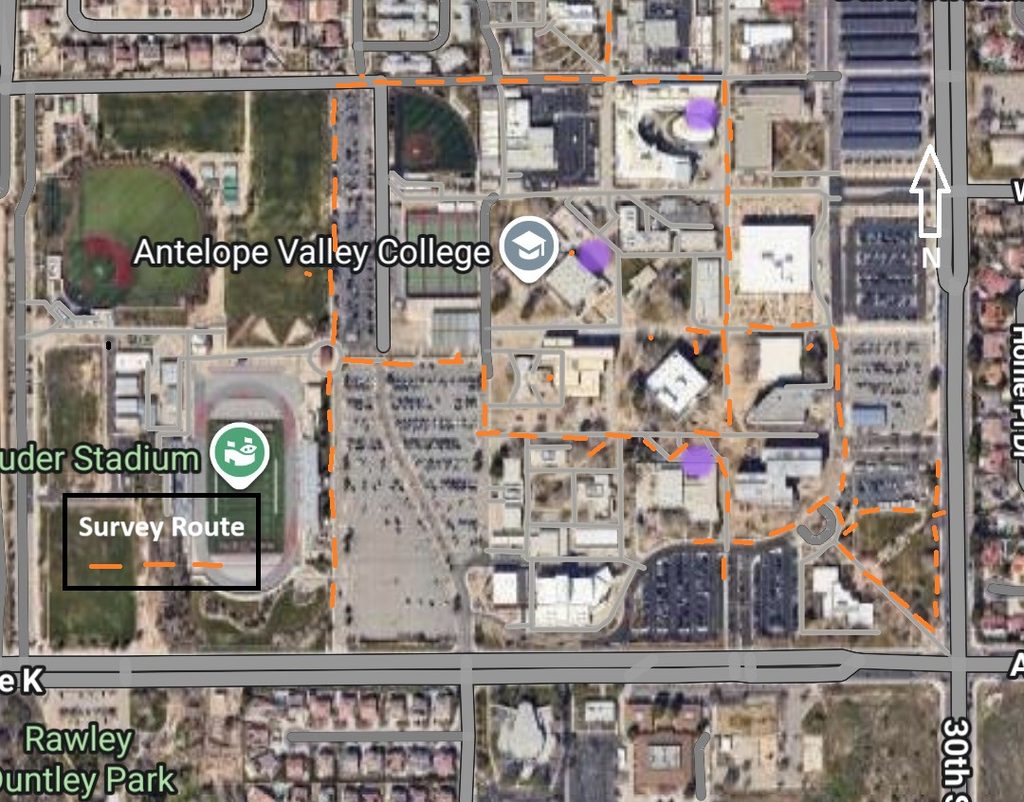
Weather: Fair; intermittent light rain during the past two days; 53°F to 68°F; wind ENE 2 -5 mph.
Time: (PST) 0900-1109 hrs.
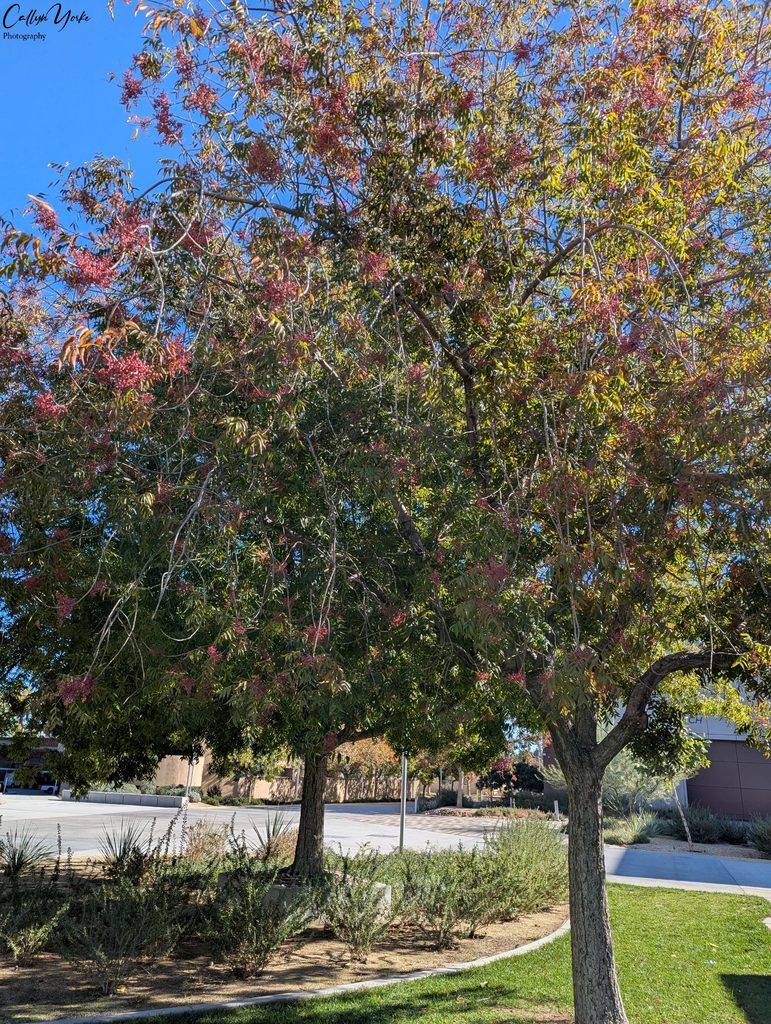
Area Covered: Beginning at the administration building parking lot, I used the sidewalks in the southeast corner of the campus, then crossed a mowed lawn leading to an angled walkway from 30th St. West and Avenue K. This area had a mature, fruiting olive tree and two rows of Chinese Pistache trees with abundant clusters of berries (photo); both of these fruiting ornamental trees(the pistache tree is throughout the southeast section of the campus) were highly attractive to birds.
I continued walking north then westward to the edge of the playing fields, where a row of cedar trees was checked for birds. From there I proceeded north to Champion Way and eastward, passing the abandoned garden of the horticulture center, where a dead Joshua Tree remains standing – evidently the last remnant of Western Mojave Desert native vegetation on the AVC campus.
This was my first comprehensive campus bird survey since most of the construction and landscaping was completed. It was gratifying to see that the campus is once again an attractive educational environment and that bird diversity is beginning to return to previous levels. Significantly more shelter and foraging opportunities are now available to birds than during the many years of demolition and construction. If water features are added to the campus landscaping and native Mojave Desert vegetation is planted in the horticultural yard, bird diversity and abundance levels could reach or exceed what they have been in years past (see AVC Lancaster Campus Bird List).
BIRDS NOTED
- Feral Rock Pigeon 18 small flocks on the east and west side of campus; often perched on light poles; one foraging on ground beneath fruiting pistache trees.
- Mourning Dove 1 on utility line, east.
- Anna’s Hummingbird 1 (fem.) foraging on flowering ornamental willows, east.
- Killdeer 2 a pair, sitting and standing in the playing field grass, nw.
- Red-tailed Hawk 2 one light phase bird circled by ravens at 200 ft. agl over campus; another adult bird on stadium light, west.
- Great Horned Owl 1 (adult) about 15 ft. agl on an interior limb of a large Aleppo Pine on the east side of the library. Pellet castings on the ground beneath the tree.
- Northern (Red-shafted) Flicker 1 flying between cedars, west.
- Black Phoebe 3 individuals sallying to the lawn from low perches; one flying to a roof top, east and west.
- Common (Northern) Raven 16 greg. vocal, small flocks consisting of pairs and trios soaring at 100-200 ft. agl over the campus; a few perched on light poles, west and east.
- Ruby-crowned Kinglet 2 individuals foraging in shrubs and small trees, east.
- European Starling 20 greg. small flocks on lawns and stadium lights; vocal – issuing a variety of calls, including recognizable imitations of other birds, e.g. Northern Flicker and Red-breasted Nuthatch, east and west.
- Northern Mockingbird 1 on fence line next to fruiting pyracantha hedgerow, west.
- House Finch 1 (m) with YRWA and WCSP on ground beneath fruiting olive tree, east.
- White-crowned Sparrow (WCSP) 10 pairs and trios on ground beneath fruiting olive and pistache trees; associated with YRWA; one pair on lawn next to stadium entrance, west and east.
- Brewer’s Blackbird 2 (m,f) on sidewalk inside stadium, west.
- Orange-crowned Warbler 1 foraging in shrubs beneath pistache trees; WCSP also in same area, east.
- Yellow-rumped (Audubon’s) Warbler (YRWA) 25 (m,f) greg. small flocks foraging in fruiting pistache trees, including on fallen fruit; WCSP often in same area, east and west. The numerically dominant passerine found on campus today.
________________________