Iguazu Falls, Paraná Brazil 21-25 March 2025 Callyn Yorke
INTRODUCTION
Scarcely in need of additional glorification, Iguazu Falls (Foz do Iguaҫu) is another top tourist destination in Brazil that brings in crowds and revenues rivaling those of the world’s great theme parks. I would wager that, for the majority of new passengers arriving at the Iguazu Airport, experiencing the falls was their primary reason for visiting the State of Paraná. My agenda in Iguazu Falls was slightly unorthodox; I would be focused primarily on birding and natural history. Additionally, seeing the falls for the first time from the Brazil side, gave the trip a bucket-list sense of completion.
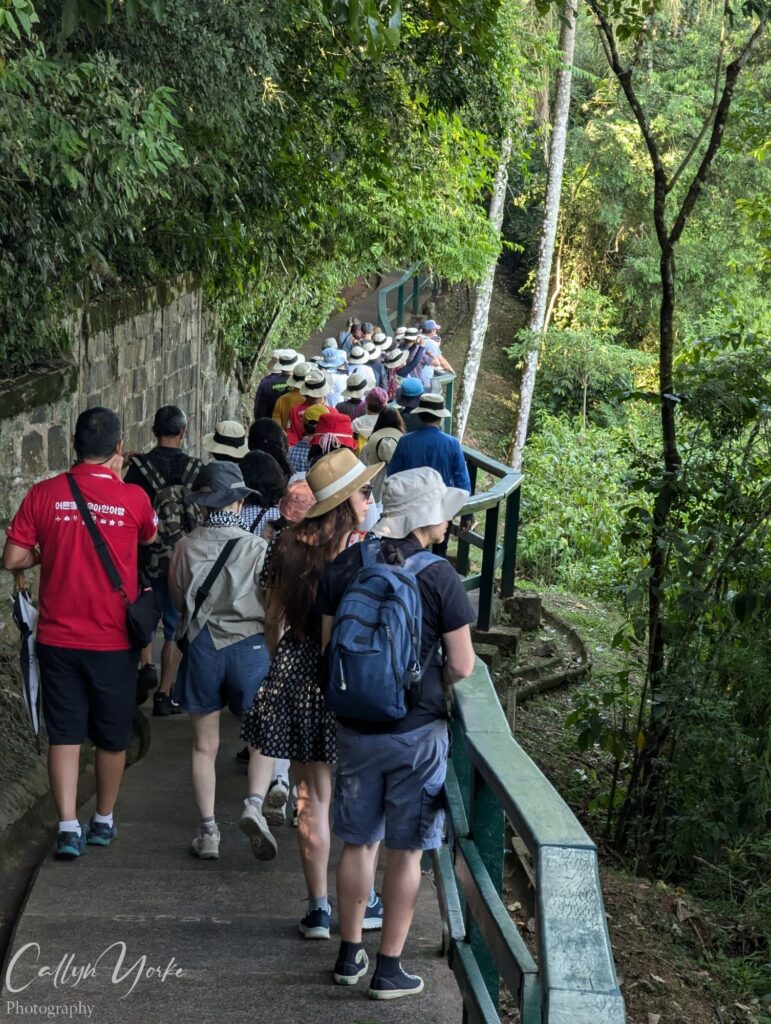
I wanted to have that item checked off on Friday morning before the weekend rush. A taxi from the hotel brought me to the park entrance early, before the ticket booths had opened. Hundreds of other visitors must have had the same plan. According to a line attendant, there was little difference between a weekday, weekend or holiday at Iguazu Falls National Park. He inspected my regular fare ticket (US $20) and informed me that the next double-decker shuttle to the falls would be in about an hour.
Twenty years earlier, I visited Iguazu Falls on the Argentina side. It was something to behold. From that vantage point, on an upstream walkway along the top tier of the falls, there was, initially, an almost silent stream of water, millions of gallons per second to be siphoned over the edge of an eighty-meter cliff. Together with innumerable organisms, if not already deceased – soon to be so – the river vaporized thunderously below. Enveloping, misty updrafts, generated a kaleidoscope of rainbows. The Argentine view of Iguazu Falls witnessed both the sublime, accelerating flow of the river and its sudden, tumultuous transformation. Who, among the multitudes of onlookers, would not be profoundly impressed?
On that occasion, my first sight of Iguazu Falls, I had made the visit brief so as to avoid flooding my binocular and camera equipment. The Argentina trip was primarily a zoological survey and I was preoccupied with finding new birds in the adjoining wilderness. Likewise, I was expecting the same brief rush of awesome, immersive scenery from the Brazil side of the falls, then to be separating myself from the crowds and diving into the wonders of the South Atlantic rainforest.
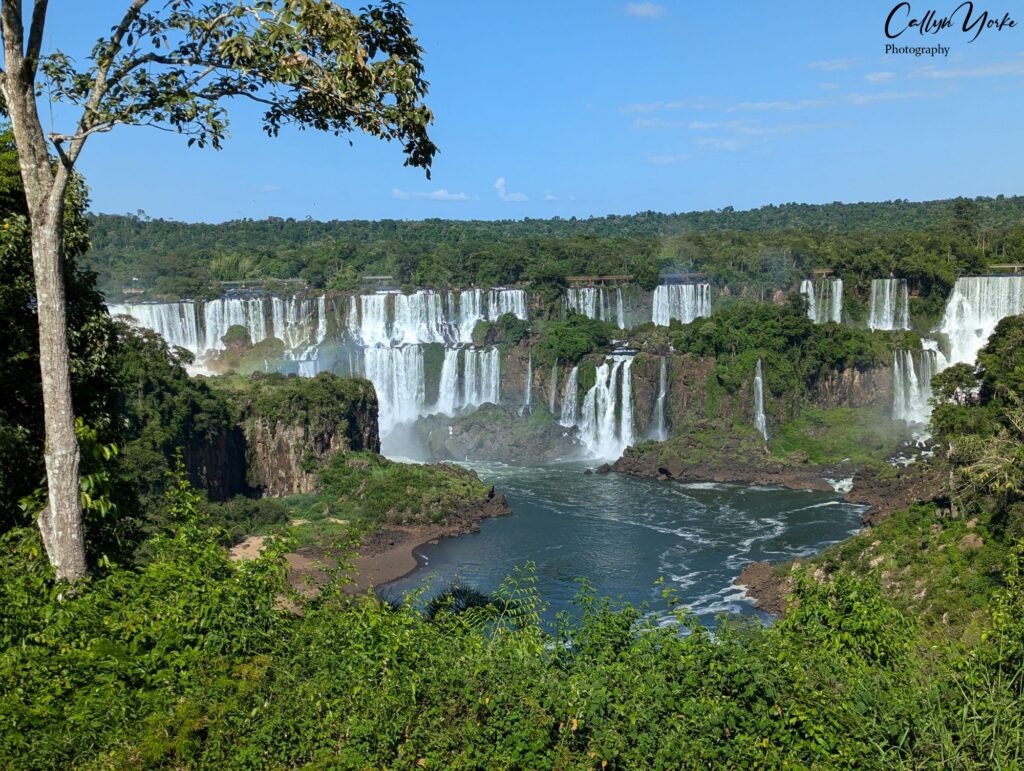
That plan didn’t quite work out. When I saw what Brazilians had on their side of the Iguazu River, it was indescribably captivating. There really was no contest. From all points of view, Brazil had the biggest and best parts of Iguazu Falls. As if the walkway vistas weren’t quite enough, hundreds were queued up for showery boat trips and noisy helicopter tours. I ended up spending nearly the entire day there, weaving in and out of the long lines of visitors. Like most people seeing all of this for the first time, I couldn’t get enough of the grandeur.
Throughout the day at the falls, I searched for other natural wonders. Few animals were visible in the forest along the walkways, presumably due to a combination of increasing daytime temperatures and crowd noise. A couple of notable exceptions caught my attention. In the distance, perched in trees at the tops of the falls, were flocks of Black Vullture numbering in the hundreds. This species is the commonest of scavenging birds in the American tropics, often found in large flocks at garbage dumps and wherever human refuse accumulates. Seeing so many of them at Iguazu Falls was intriguing.
Presumably, the vultures were attracted to, in addition to local landfills, an abundance of dead and moribund material accumulating downstream of the falls. I would imagine that any creature weighing more than a few grams going over the falls, would likely be pulverized into an organic smoothie. Side pools below the falls should therefore contain a rich supply of nutrients, attracting a variety of aquatic and terrestrial scavengers.
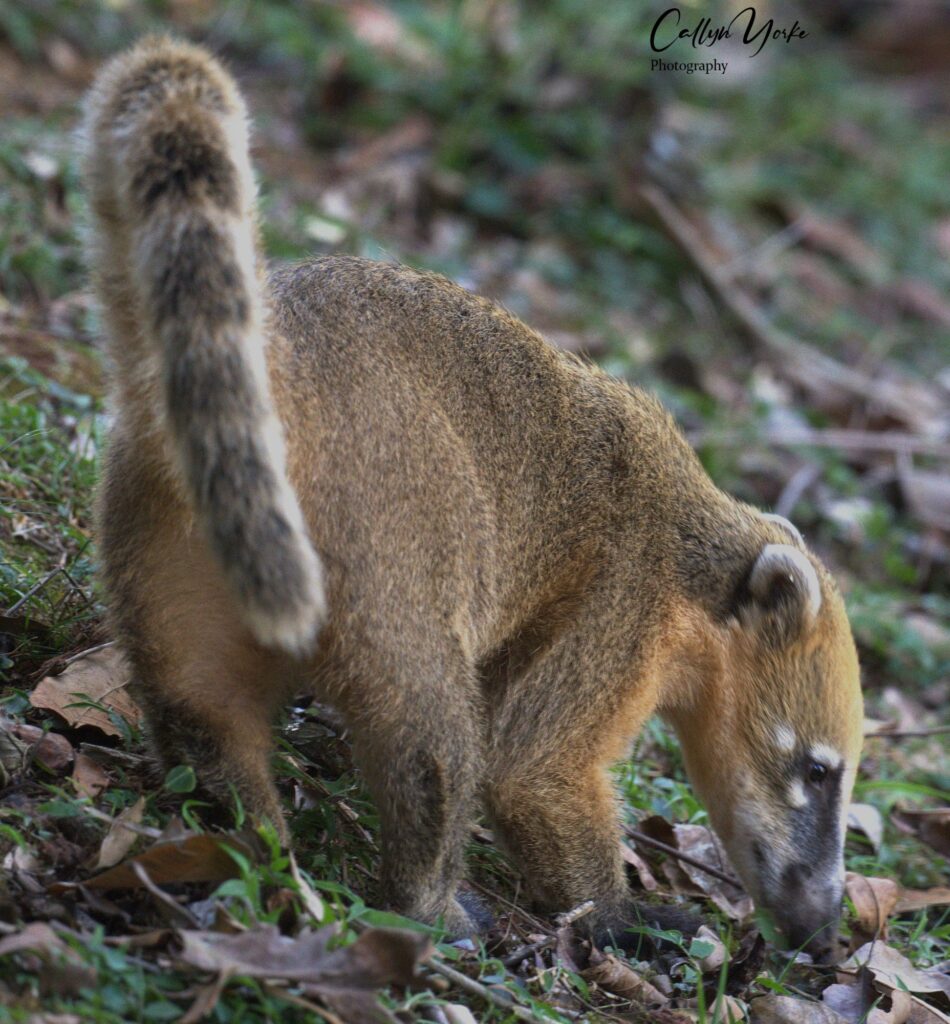
Another example of a voluntary sanitation worker at Iguazu Falls, was the Ring-tailed Coati. There were droves of those animals commuting with visitors on the congested walkways. As a member of the adaptable raccoon family, coatis quickly habituate to human presence and find foraging opportunities in fast-food leftovers. Consequently, the local population of coatis is probably many times larger than it was before the area was commercialized. This is now a wildlife management problem. Although the park service has posted warning signs, the cuteness factor is apparently irresistible to some folks, who reach out to feed and pet the animals.
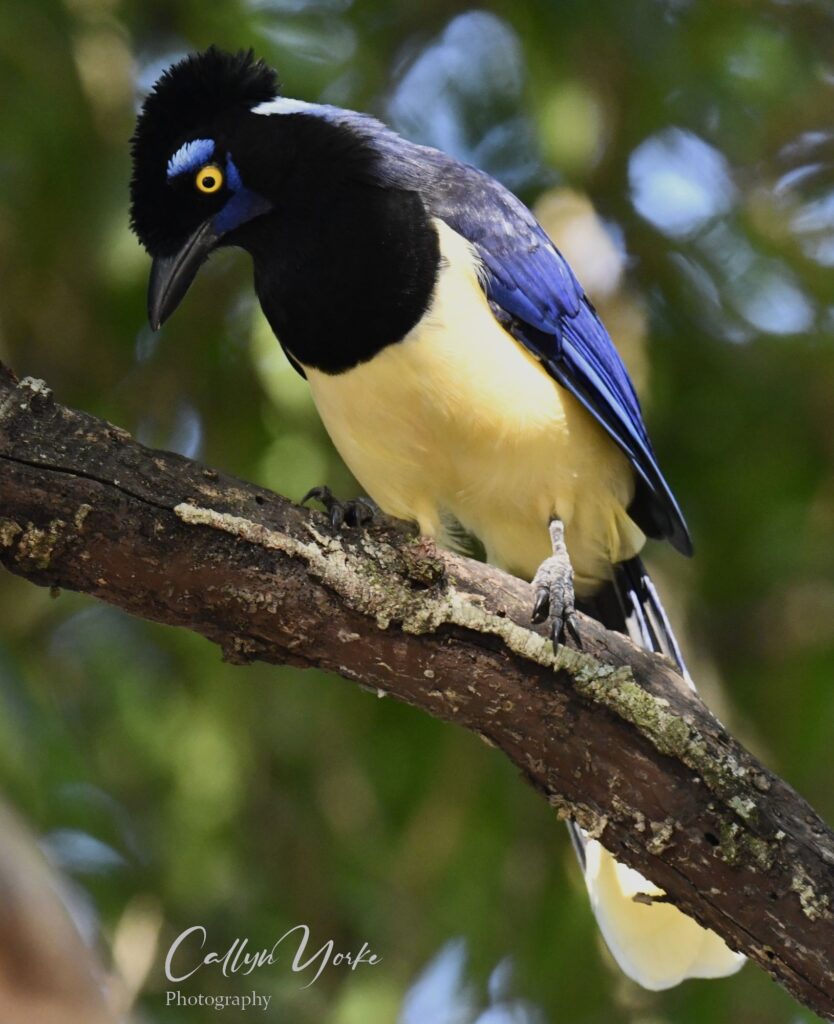
A few bird species also tolerated human presence and were easily observed at close range. Among those was the elegantly adorned, Plush-crested Jay, a show-stopper any place other than Iguazu Falls. It was a species I had seen on the Argentina side long ago. Once again, it was delightfully photogenic.
Hotel Das Cataratas, with a majestic view of the falls, seemed like a preferable alternative to where I was staying outside the park, at the aging Hotel Colonial. I should have known better than to bother making an inquiry.
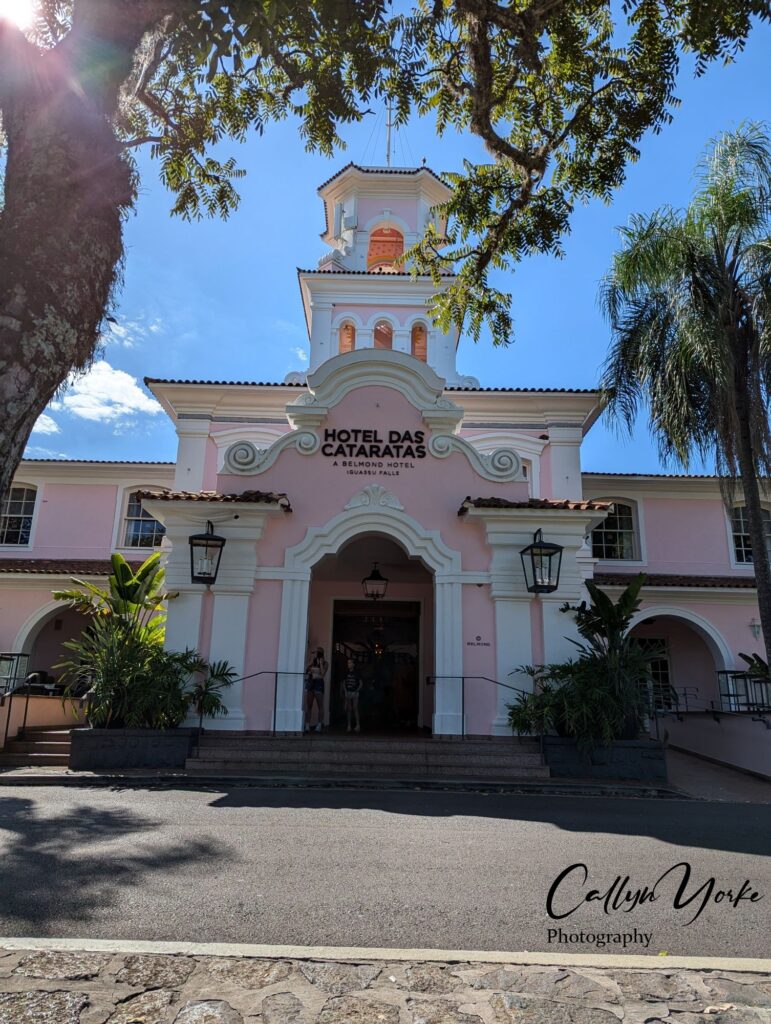
A well dressed man at the Hotel Cataratas reception desk just smiled, as if expecting my astonished reaction. His response to my lodging inquiry was well rehearsed. The basic (cheapest) room was $US 840 per night. Suddenly, the unpretentious Hotel Colonial next to a major highway construction project, was a brilliant choice ($60 per night for a deluxe room, including breakfast). I settled for a lunch reservation by the pool and garden. Cha-ching, $US 75.

The following day, I visited another phenomenally popular tourist attraction in Iguazu Falls, Parque das Aves. Although it was in plain view from the main highway and only about 2 km from the Hotel Colonial, an Uber taxi driver took me several kilometers in the opposite direction to a chocolate factory. After a lively, arm-waving exchange in Español, directional details largely lost in translation, he reluctantly made a U-turn and hastened to offload his dumbfounded customer at the Parque das Aves. There was more of my feather ruffling to follow.
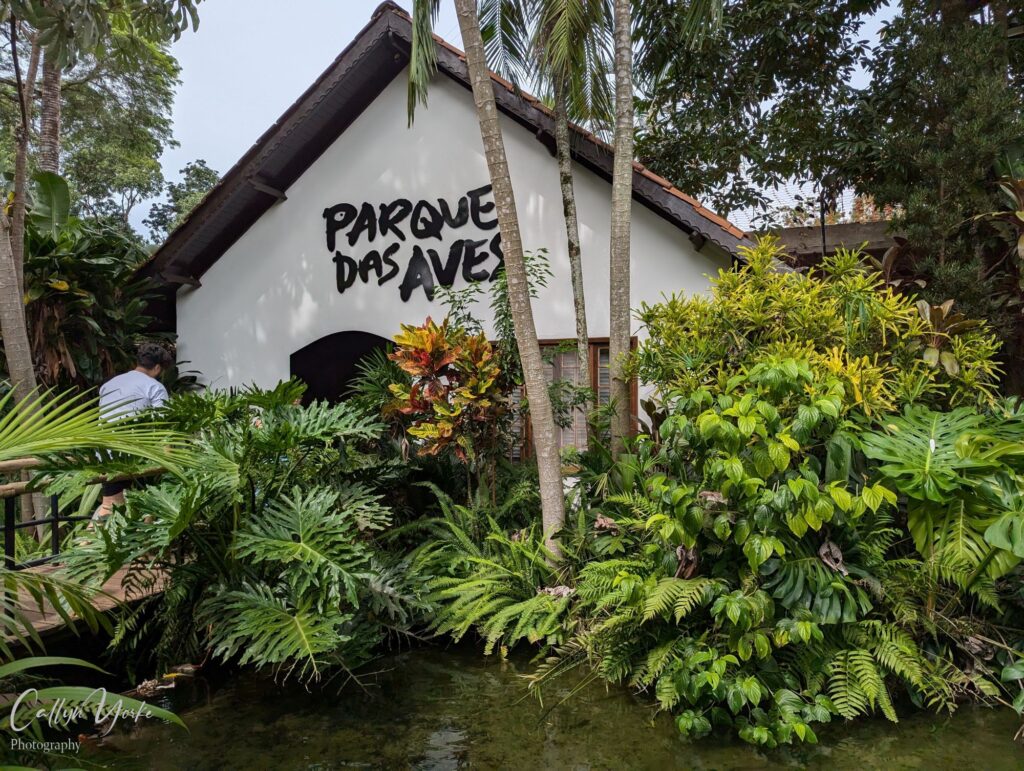
A comprehensive bird list for Parque das Aves had been compiled by multiple birders through the years, who contributed to the eBird media platform, managed by Cornell Laboratory of Ornithology, USA. One-hundred sixty-three bird species is the current (2025) tally for the park. Based on that information, I expected to see perhaps twenty or so bird species while walking the trails through the park. A mature rainforest was an attractive setting and numerous bird vocalizations could be heard from outside the entrance. The place looked and sounded to be a birder’s paradise. But my initial appraisal would soon be revised.
After purchasing an entry ticket ($US 22), I was lock-stepped in a marching formation with other visitors, moving through a network of pathways going in and out of large aviaries, each with a double set of security doors. The shady jungle interiors held a crowded collection of Brazilian tropical birds, common and rare. There were also endangered non-native species in the menagerie, e.g. Australian Cassowary and Bali Myna.
Outside the aviaries was another network of paved pathways into the forested section of the park; each path entrance with a bilingual sign prohibiting public entry. When I asked one of the guards if it was possible to arrange access to those areas, he just shook his head. The same response was given by officials in the park administration building. If I wanted to bird Parque des Aves, it could be done only inside the aviaries or from outside the fenced and guarded facility. Evidently, eBirders didn’t care to distinguish captive from non-captive birds, when reporting their results from Parque das Aves.
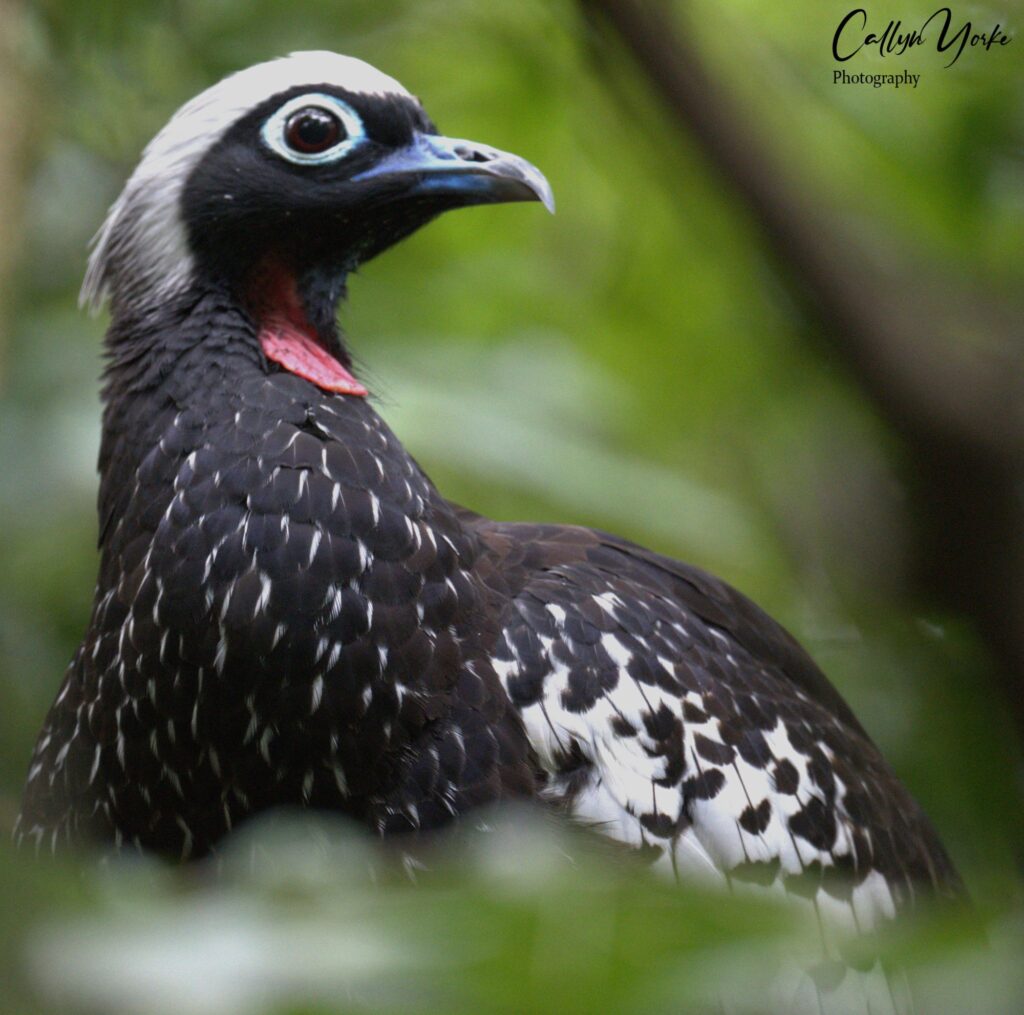
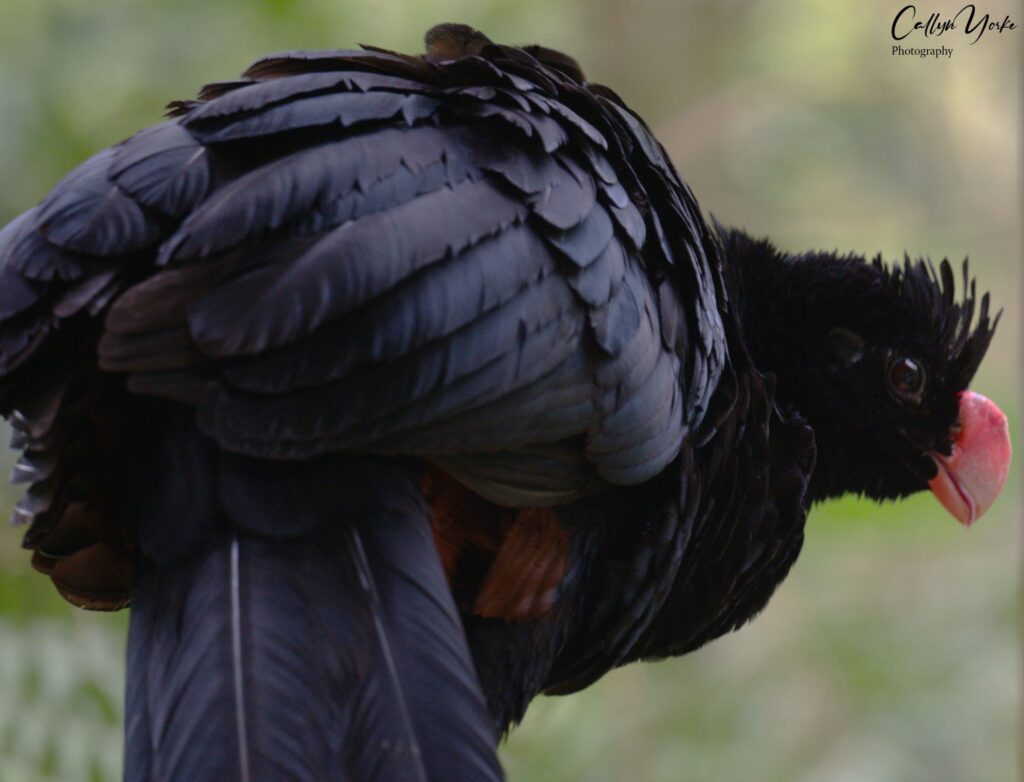
Prior to entering the facility, I had seen a few common bird species in the trees around the entrance. Those were later noted as ‘free-ranging’, with the caveat that some could be escapees. I also noted incarcerated birds, particularly those that were rare, endangered or otherwise difficult to find in Brazil, e.g. Black-fronted Piping Guan (photo).
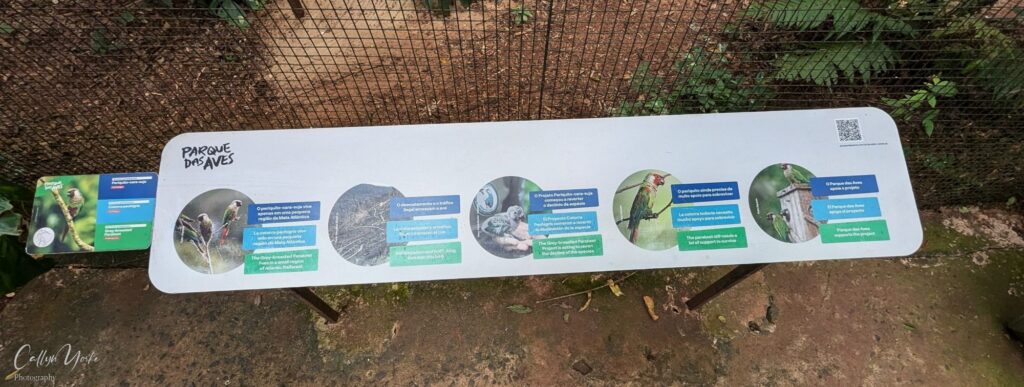
Concerning endangered species, Parque das Aves had abundant educational signage, especially for advertising their ongoing contributions to avian research and conservation, e.g. for the endemic Gray-breasted Parakeet of Ceará, Brazil. Wonderful. At least an undisclosed portion of annual revenue was going toward independent, non-profit education, research and conservation. I was afraid to ask where of the rest of the millions went.
As a minor consolation for having been duped by Parque das Aves – a clever euphemism for ostensibly a lucrative tourist trap, I obtained a few close-up photos of birds that most of us would probably never see in a Brazilian forest. Aside from plumage details, there wasn’t much biology I could learn from the captive birds and certainly none that could be legitimately added to my life-bird list.
Following the experience at Parque das Aves, and finding limited birding opportunities within walking distance of Hotel Colonial, I was motivated to contact a local bird guide. Jeanne Martin from Jamacá das Araras Lodge, Mato Grosso, put me in contact with Marcelo da Rocha – a competent, polylingual, professional guide, who lived in Iguazu Falls. Since it was ‘off season’ for bird tours in Brazil, he had time to show me around the Iguazu Falls area. Marcelo enriched the last two days of my visit with his birding expertise at multiple locations – each with its own diverse community of birds.
24 March, 2025 Suburbs of Iguazu Falls; Trilha Quilombo Apepú, Iguazu Falls National Park
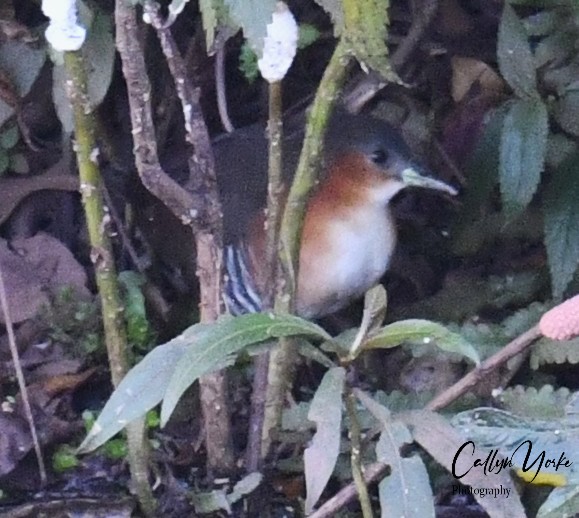
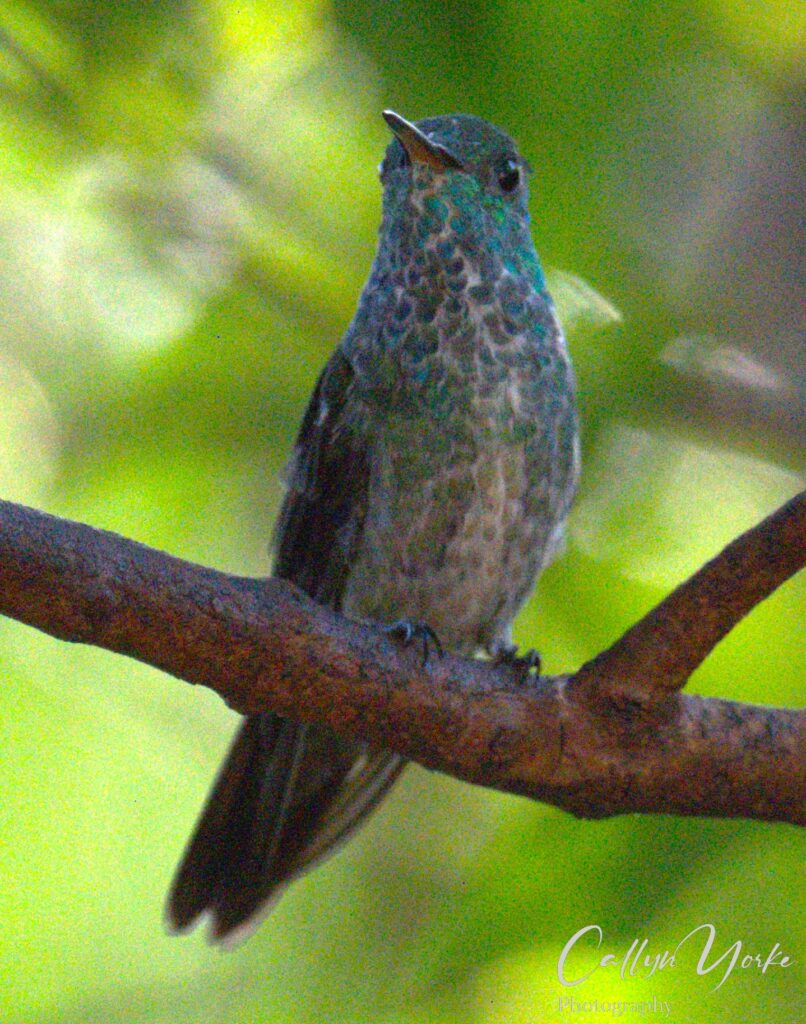
Beginning just after sunrise, Marcelo and I drove from the Hotel Colonial to a middle-class neighborhood in the city of Iguazu Falls (FI). There, we walked through an urban park with a lake and small island of shrubs and trees. Most of the birdlife was in the vicinity of the lake and in an adjacent ruderal field. Taken together with the surrounding neighborhood (e.g. Marcelo’s back yard), we observed nearly fifty bird species, including six more for my Brazil trip list – Versicolored Emerald, Gilded Hummingbird, Black-throated Mango, Chestnut-eared Aracari, Rufous-sided Crake, and a nesting colony of Monk Parakeet. It was a good start for a productive day of birding in Paraná Brazil.
Next, we drove for about 1.5 hrs. to a remote section of the Iguazu Falls National Park (Trilha Quilombo Apepú – TA). We completed a 6.8 km, roundtrip hike through lowland rainforest, merging with riverine forest along the banks of Rio Iguaҫu, about 20 km downstream from the main falls. Birdlife was diverse, though difficult to see. Marcelo frequently called out the names of well concealed birds that he heard. However, most of the birds were unresponsive to playback recordings of their vocalizations. We managed to obtain fairly clear views four new species for my Brazil trip list: Atlantic Black-throated Trogon, Southern Bristle-Tyrant, Ochre-breasted Foliage-gleaner, and Magpie Tanager. By the end of our first day birding, our tally was eighty-four species.
25 March 2025 Iguazu Falls National Park, Ceu Azul County; Linha Cozar Agricultural Fields
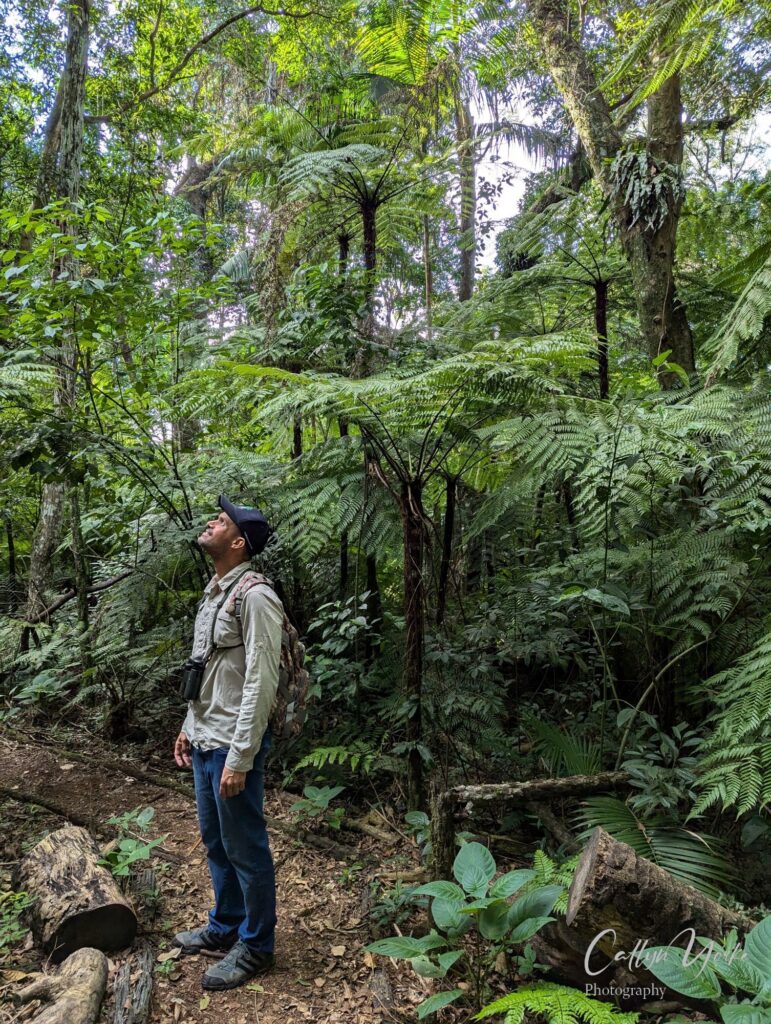
For our next and final day birding together, we drove to Ceu Azul County – about two hours northeast of the city of Iguazu Falls. We were headed to another relatively remote section of Iguazu National Park (ICA). Marcelo stopped at the park visitor center to chat with a friendly park ranger, who had recently found two viper species (Crotalus sp. and Bothrops sp.) near where we stood. I made a brief survey of the trailhead area but found no sign of any reptile, venomous or otherwise. Again, we would be hiking on a lengthy trail through a lowland Atlantic forest; this one with noticeably more tree ferns and epiphytes than Trilha do Apepú.
We proceeded down a poorly maintained trail with overgrowth and fallen tree limbs. The trail appeared to be little used. That was potentially good news for us. Relatively undisturbed habitat is usually supportive of a large variety of forest birds. Marcelo recognized a sequence of different birds vocalizing and began using playback recordings to attract them into view. But the birds in this forest were even more reluctant to show themselves than in Trilha Quilombo Apepú. We were many kilometers from the city of Iguazu Falls and It was quite possible poachers were active in this area.
We had to work at getting clear views of the birds, which was somewhat frustrating for me because a number of the species were new for my Brazil trip list and potential lifers, e.g. Greenish Schiffornis and Ochre-faced Tody-flycatcher. I had only partial, fleeting views of those species. Including them in the day’s tally was acceptable, since Marcelo was certain of the identifications. However, qualifying them as life-birds was problematic, unless I subsequently encountered the species elsewhere.
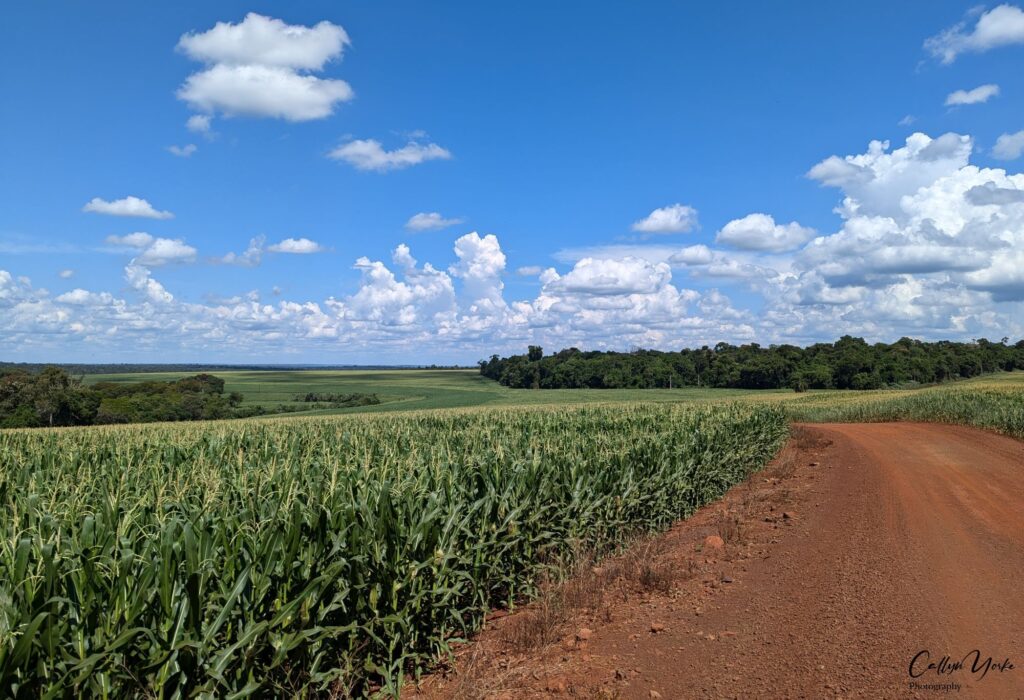
Due to multiple fallen tree limbs on steep portions of the trail, we abbreviated the forest hike and chose to continue driving through Ceu Azul County (CAF). We took backroads through the Linha Cozar cornfields and wetlands – almost an Iowa twin landscape – except for scattered remnants of South Atlantic rainforest. We stopped when birds were heard or seen, adding about forty more species to our day-trip bird list.
A Riverbank Warbler gave us good views this time and I confidently added it to my life-list. We heard but failed to obtain a visual on a Red-breasted Toucan. Otherwise, our drive-by birding in Ceu Azul County, while productive, yielded no new bird species for my Brazil trip list. Our day’s tally was a respectable, sixty-six bird species.
I was satisfied with our two birding trips, yet Marcelo seemed a little uneasy. He suggested that if I returned to the area during the winter or spring season (June-October) many bird species would be active and easily observed. That may well have been true, though my travel itinerary in Brazil was nearing completion and I would be returning home to the States. Should I plan a return trip to Iguazu, I would definitely choose a favorable season for birding and welcome an opportunity to retain Marcelo’s guide services.
________________________________________________
ANNOTATED BIRD LIST – Iguazu Falls, Paraná 21-25 March 2025 Callyn Yorke
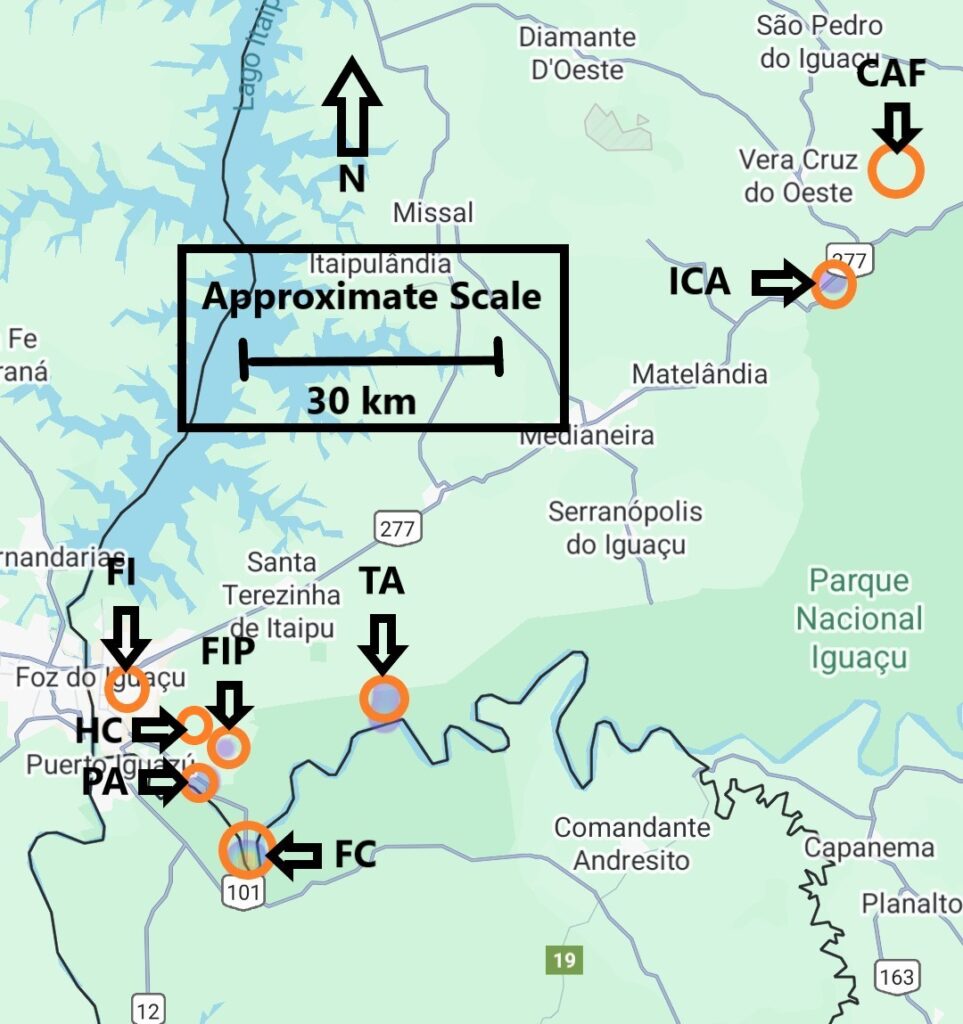
KEY to additional abbreviations and numerical abundance:
Observer (when heard or seen by only them): MR = Marcelo da Rocha; HO = heard only and/or seen briefly; identified primarily by specific vocalizations;
Behavior and distribution: greg. = gregarious; voc. = vocalizations (calls and/or song) msf = mixed species flock; ubiq. = ubiquitous in appropriate habitat.
Location abbreviations are given in the annotated map above. See text for further details.
Numbers for each species account represent actual counts (1- 20 individuals) or estimates (> 20 individuals); Note: the location with the highest numerical count is given first. Count data may be missing for additional locations in a species account.
Species acronyms: The first four letters of English common names, e.g. Southern Lapwing = SOLA; Black-throated Mango = BTMA.
Systematics and taxonomy is an amalgam of AVIBASE Bird Checklist for PARANÁ; IOC, AOS and Birds of the World, Cornell University 2025.
___________________________
BIRDS
ANSERIFORMES: Anatidae
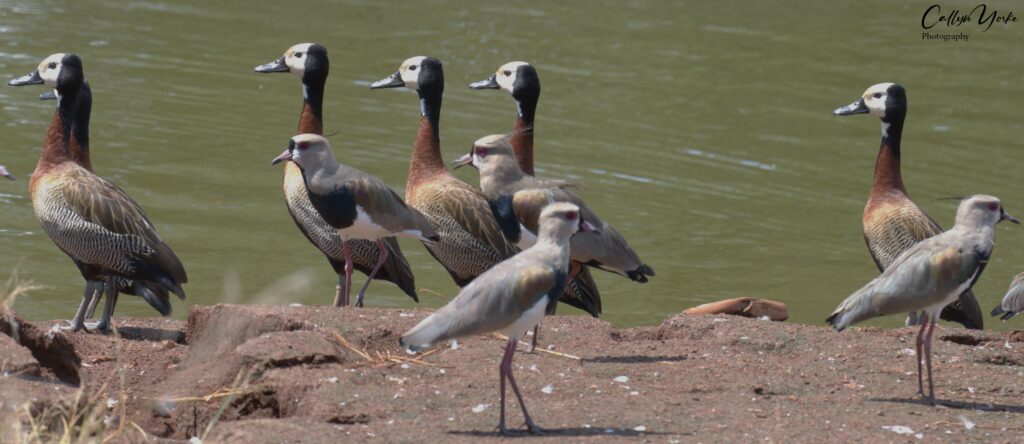
- White-faced Whistling Duck Dendrocygna viduata 6 greg. on the edge of a farm pond with SOLA, CAF (photo).
COLUMBIFORMES: Columbidae
- Feral Rock Pigeon Columba livia 20 greg. in and around towns and settlements, ubiq..
- Picazuro Pigeon Patagioenas picazuro 10 greg. usually seen in flight, ubiq..
- Eared Dove Zenaida auriculata 20 greg. ubiq. (photo).
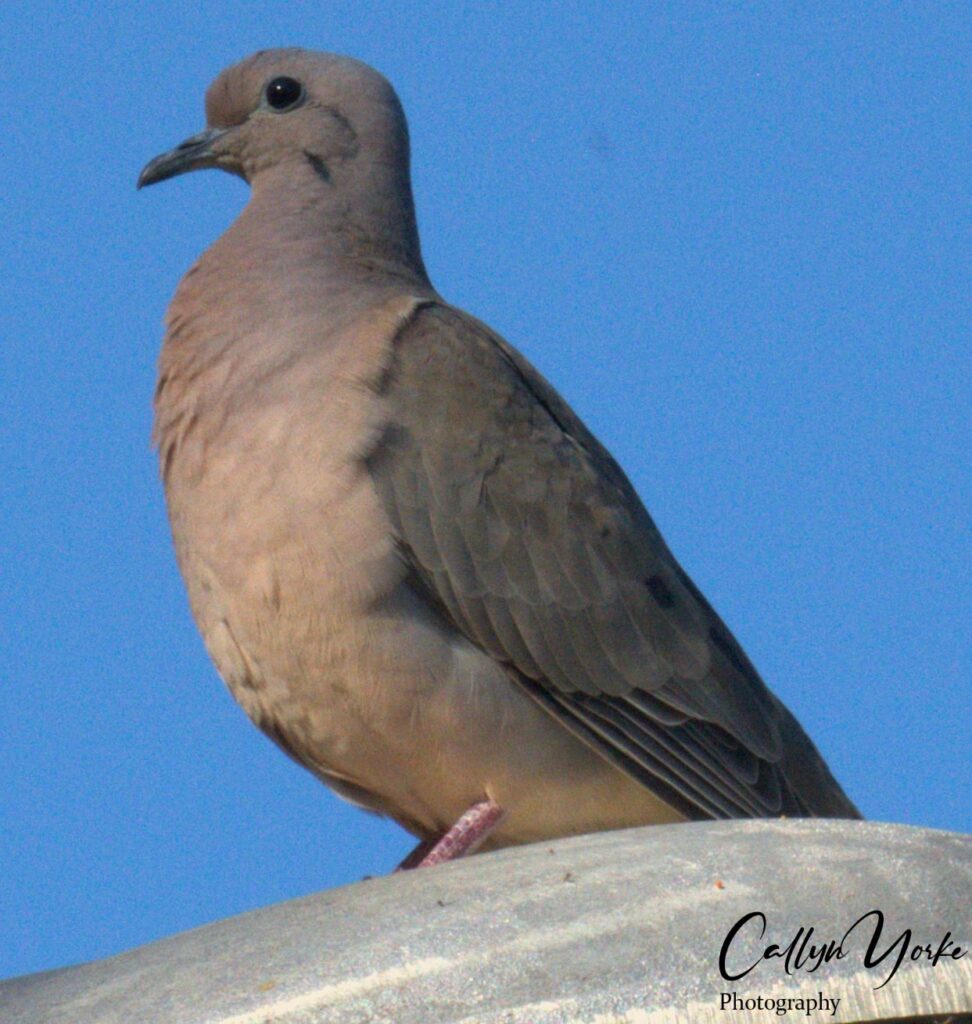
- White-tipped Dove Leptotila verreauxi 1 on driveway, CAF; TA.
- Ruddy Ground Dove Columbina talpacoti 20 greg. often in small flocks on roadside and in ruderal patches, ubiq..
- Picui Ground Dove Columbina picui 4 greg. on roadside utility lines, CAF.
CAPRIMULGIFORMES: Apodidae
- Gray-rumped Swift Chaetura cinereiventris 5 greg. (MR) TA.
- Sick’s Swift Chaetura meridionalis 10 greg. ubiq..
CAPRIMULGIFORMES: Trochilidae
- Black-throated Mango Anthracothorax nigricollis 3 with other hummingbird spp. in Macelo’s back yard with suspended sugar-water feeders, FI (photo).
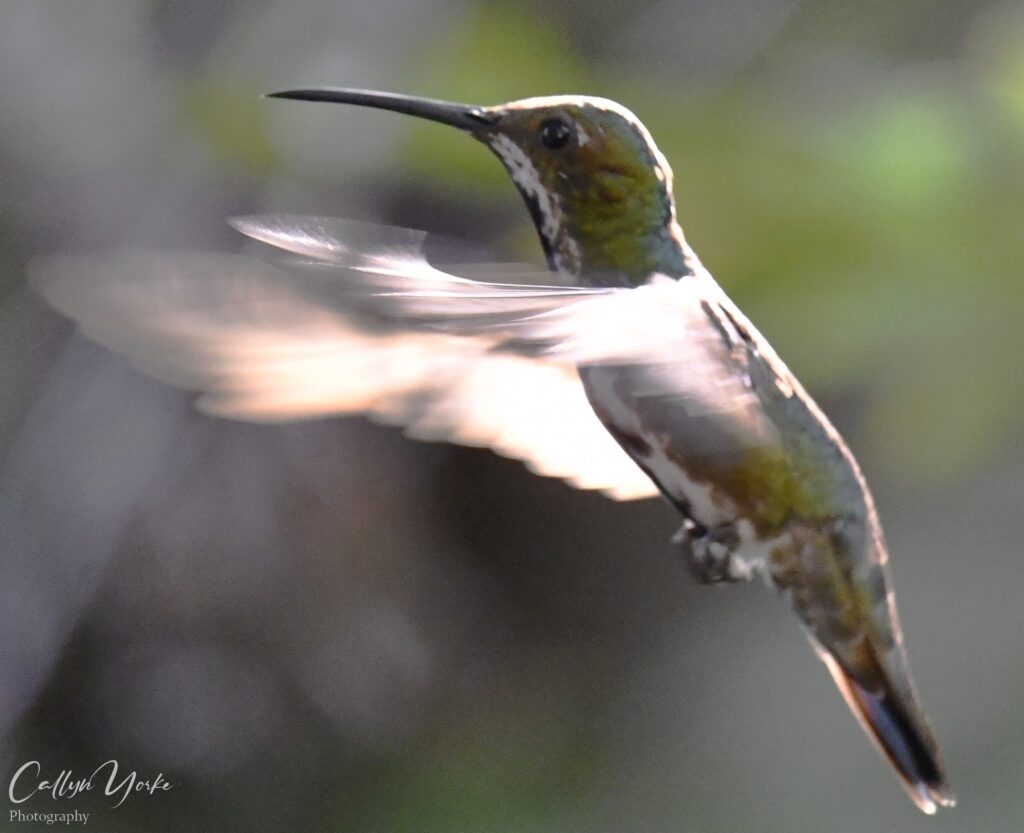
- Versicolored Emerald Amazilla versicolor 1 msf of hummingbirds (see BTMA) at sugar-water feeders, FI; TA.
- Gilded Hummingbird Hylocharis chrysura 1 msf of hummingbirds (see BTMA) at sugar-water feeders, FI
- Scale-throated Hermit Phaethornis eurynome 1 TA.
- Glittering-bellied Emerald Chlorostilbon lucidus 1 msf of hummingbirds (see BTMA) at sugar-water feeders, FI.
- Swallow-tailed Hummingbird Eupetomena macroura 1 msf of hummingbirds (see BTMA) at sugar water feeders, FI.
- Violet-capped Woodnymph Thalurania glaucopis 1 (m) free-ranging in subcanopy at forest edge, PA.
CUCULIFORMES: Cuculidae
- Smooth-billed Ani Crotophaga ani 3 greg. CAF.
- Guira Cuckoo Guira guira 3, greg. FI; 1 ICA; 2 CAF.
- Squirrel Cuckoo Piaya cayana 2 in subcanopy at the forest edge, ICA.
GRUIFORMES: Rallidae
- Rufous-sided Crake Laterallus melanophaius 1 walking at the water’s edge of a small island in a city park lake, FI.
- Common Gallinule Gallinula galeata 2 on the same small island with RSCR, FI.
GRUIFORMES: Aramidae
- Limpkin Aramus guarauna 2 at edge of lake on ground and in a tree, FI.
PELECANIFORMES: Ciconiidae
- Striated Heron Butorides striata 1 (MR) CAF.
- Western Cattle-Egret Ardea ibis 12 greg. around farm pond with SNEG, CAF.
- Great Egret Ardea alba 10 individuals scattered over large areas in wetlands, ubiq..
- Snowy Egret Egretta thula 2 edge of farm pond, CAF.
PELECANIFORMES: Phalacrocoracidae
- Neotropic Cormorant Phalacrocorax brasilianus 30 Iguazu River, TA.
CHARADRIIFORMES: Charadriidae
- Southern Lapwing Vanellus chilensis 50 greg. farm ponds, wetlands and short-grass fields, ubiq..
ACCIPITRIFORMES: Cathartidae
- Turkey Vulture Cathartes aura 5 soaring over open fields and forest, CAF.
- Black Vulture Coragyps atratus 400 greg. perched in trees and on rocks at edge of falls, FC; ubiq..
ACCIPITRIFORMES: Accipitridae
- Roadside Hawk Rupornis magnirostris 1 (imm.) on roadside utility wire, TA.
- Black and White Hawk Eagle Spizaetus melanoleucus 1 in the canopy at the edge of a forest patch and agricultural field, AP.
STRIGIFORMES: Strigidae
- Burrowing Owl Athene cunicularia 1 on utility wire, CAF.
TROGONIFORMES: Trogonidae
- Atlantic Black-throated Trogon Trogon rufus 1 ICA.
PICIFORMES: Picidae
- Ochre-collared Piculet Picumnus temminckii 1 FI; 1 TA.
- Blond-crested Woodpecker Celeus flavescens 1 TA.
- Campo Flicker Colaptes campestris 1 CAF.
PICIFORMES: Ramphastidae
- Toco Toucan Ramphastos toco 1 free-ranging in forest canopy, PA.
- Red-breasted Toucan Ramphastos dicolorus 1 (HO) CAF.
- Chestnut-eared Aracari Pteroglossus castanotis 2 in a residential, street-side tree canopy, FI; ICA (photo).
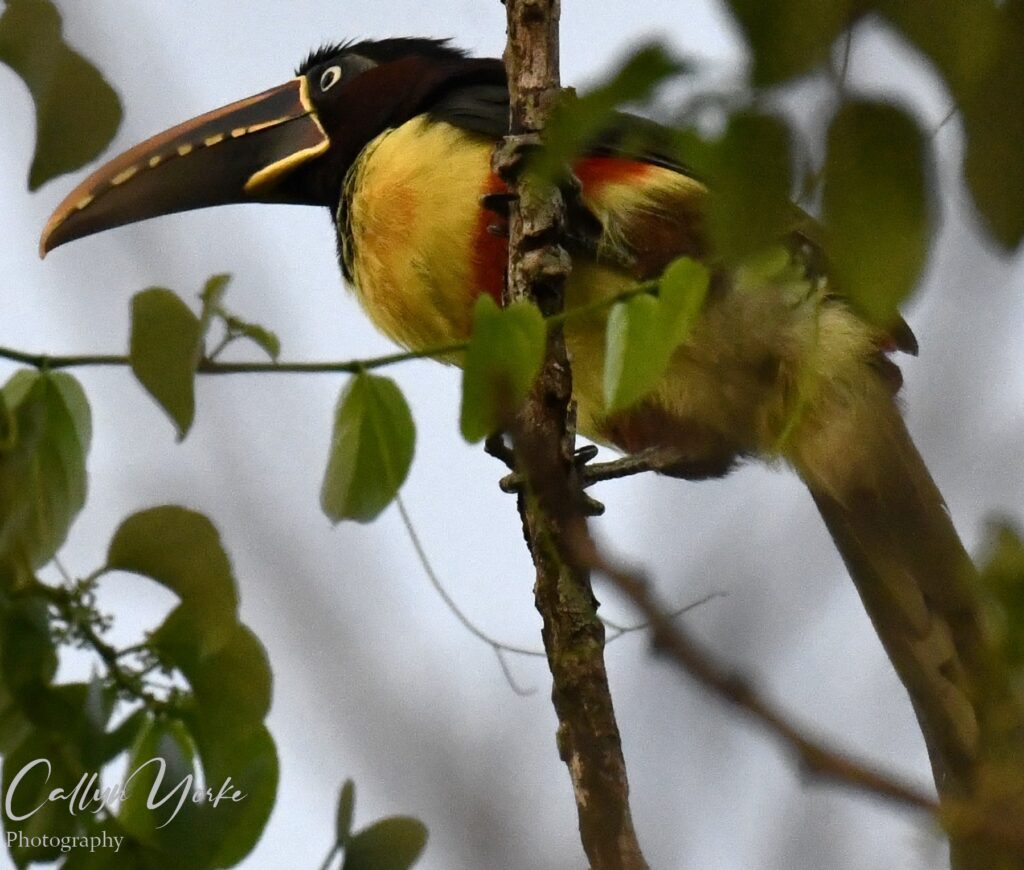
CORACIIFORMES: Alcedinidae
- Ringed Kingfisher Megaceryle torquata 1 perched on limb above lake, FI.
FALCONIFORMES: Falconidae
- Southern (Crested) Caracara Caracara plancus 5 individuals and pairs in low flights over open suburban and rural areas, ubiq..
PSITTACIFORMES: Psittacidae
- Monk Parakeet Myiopsitta monachus 6 greg. a nesting colony in a cell tower, FI.
- Maroon-bellied Parakeet Pyrrhura frontalis 5 greg. in flight, FI; 2 (MR) ICA.
- White-eyed Parakeet Psittacara leucophthalmus 2 greg. flying over the park, FI.
- Yellow-chevroned Parakeet Brotogeris chiriri 4 greg. voc., mostly seen in flight, FI.
PASSERIFORMES: Pipridae
- Band-tailed Manakin Pipra fasciicauda 1 mid-level in forest, TA
- Swallow-tailed Manakin Chiroxiphia caudata 1 (HO – MR) CAF.
PASSERIFORMES: Tityridae
- Greenish Schiffornis Schiffornis virescens 1 ICA.
PASSERIFORMES: Platyrinchidae
- White-throated Spadebill Platyrinchus mystaceus 1 ICA.
PASSERIFORMES: Pipritidae
- Wing-barred Piprites Piprites chloris 1 (MR) ICA.
PASSERIFORMES: Pipromorphidae
- Southern Antpipit Corythopis delandi 2 (HO – MR) TA.
- Sepia-capped Flycatcher Leptopogon amaurocephalus 2 TA.
- Ochre-faced Tody-Flycatcher Poecilotriccus plumbeiceps 1 ICA.
PASSERIFORMES: Tyrannidae
- Large Elaenia Elaenia spectabilis 1 FI.
- Yellow Tyrannulet Capsiempis flaveola 1 (MR) ICA.
- Southern Bristle-Tyrant Pogonotriccus eximus 2 TA.
- White-crested Tyrannulet Serpophaga subcristata 1 (MR) FI.
- Great Kiskadee Pitangus sulphuratus 14 individuals perched in garden trees and at forest edges; a large flock in flight over a cornfield, CAF; ubiq..
- Boat-billed Flycatcher Megarynchus pitangua 1 FI; CAF.
- Social Flycatcher Myiozetetes similis 2 greg. FI.
- Cattle Tyrant Machetornis rixosa 1 gleaning insects from the water surface at the edge of the pool, HC.
- Tropical Kingbird Tyrannus melancholicus 10 voc. individuals and pairs perched in trees and on utility wires, ubiq..
- Sibilant Sirystes Sirystes sibilator 1 (MR) TA.
PASSERIFORMES: Thamnophilidae
- Streak-capped Antwren Terenura maculata 2 (HO- MR) TA; ICA.
- Barred Antshrike Thamnophilus doliatus 2 (m,f) FI.
- Spot-backed Antshrike Hypoedaleus guttatus 1 (HO-MR) TA; ICA.
- Tufted Antshrike Mackenziaena leachii 1 (MR) ICA.
- Variable Antshrike Thamnophilus caerulescens 2 TA.
- Rufous-margined Antwren Herpsilochmus rufimarginatus 2 TA.
- White-shouldered Fire-eye Pyriglena leucoptera 3 TA; ICA.
PASSERIFORMES: Conopophagidae
- Rufous Gnateater Conopophaga lineata 1 (MR) TA.
PASSERIFORMES: Formicariidae
- Short-tailed Anthrush Chamaeza campanisona 1 (HO – MR) TA; ICA.
PASSERIFORMES: Dendrocolaptidae
- Olivaceous Woodcreeper Sittasomus griseicapillus 2 TA.
- Plain-winged Woodcreeper Dendrocincla fuliginosa 2 TA.
PASSERIFORMES: Furnariidae
- Rufous Hornero Furnarius rufus 2 HC; FI (photo).
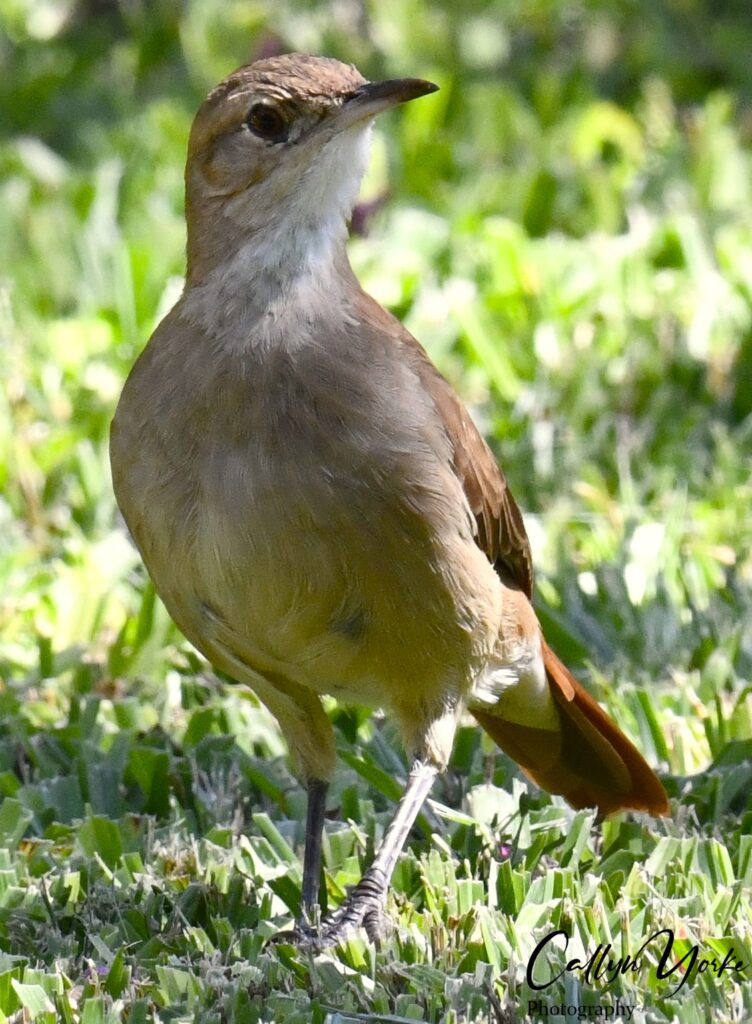
- White-eyed Foliage-gleaner Automolus leucopthalmus 1 ICA
- Ochre-breasted Foliage-gleaner Anabacerthia lichtensteini 2 TA; 1 ICA.
- Rufous-capped Spinetail Synallaxis ruficapilla 1 (MR) ICA.
- Sooty-fronted Spinetail Synallaxis frontalis 1 (MR) ICA.
PASSERIFORMES: Corvidae
- Plush-crested Jay Cyanocorax chrysops 6 greg. voc. primarily arboreal but sometimes foraging on the ground, FC; 1 CAF; 2 free-ranging in trees at entrance, PA.
PASSERIFORMES: Passeridae
- House Sparrow Passer domesticus 5 FI; ubiq..
PASSERIFORMES: Fringillidae
- Blue-naped Chlorophonia Chlorophonia cyanea 1 (MR) ICA.
- Purple-throated Euphonia Euphonia chlorotica 4 (HO – MR) CAF.
- Chestnut-bellied Euphonia Euphonia pectoralis 2 TA.
PASSERIFORMES: Parulidae
- Masked Yellowthroat Geothlpis aequinoctialis 1 voc. ruderal field next to lake, FI.
- Tropical Parula Setophaga pitiayumi 1 (MR) TA.
- White-browed Warbler Myiothlpis leucoblephara 1 pos. resp. to playback rec., ICA.
- Riverbank Warbler Myiothlypis rivularis 1 TA; 1, CAF.
- Golden-crowned Warbler Basileuterus culicivorus 3 active in canopies of a variety of trees, ubiq..
PASSERIFORMES: Icteridae
- Red-rumped Cacique Cacicus haemorrhous 2 FI.
- Variable Oriole Icterus pyrrhopterus 2 in a garden adjacent to city park, FI.
- Chestnut-capped Blackbird Chrysomus ruficapillus 2 in a ruderal field next to lake, FI.
PASSERIFORMES: Cardinalidae
- Red-crowned Ant-Tanager Habia rubica 1 TA.
PASSERIFORMES: Thraupidae
- Chestnut-vented Conebill Conirostrum speciosum 1 ICA.
- Saffron Finch Sicalis flaveola 4 (m,f) greg. in ruderal field, FI.
- Ruby-crowned Tanager Tachyphonus coronatus 1 (HO-MR) ICA.
- Black-goggled Tanager Trichothraupis melanops 1 TA.
- Swallow Tanager Tersina viridis 2 ICA.
- Magpie Tanager Cissopis leverianus 7 greg. interior forest subcanopy, TA; 3, ICA.
- Blue Dacnis Dacnis cayana 2 (MR) TA.
- Double-collared Seedeater Sporophila caerulescens 1 CAF.
- Grayish Saltator Saltator coerulescens 2 FI.
- Green-headed Tanager Tangara seledon 2 (MR) ICA.
- Sayaca Tanager Tangara sayaca 5 voc. greg. ubiq..
- Palm Tanager Tangara palmarum 1 greg. often in msf with SATA, ubiq..
- Chestnut-headed Tanager Pyrrhocoma ruficeps 2 ICA.
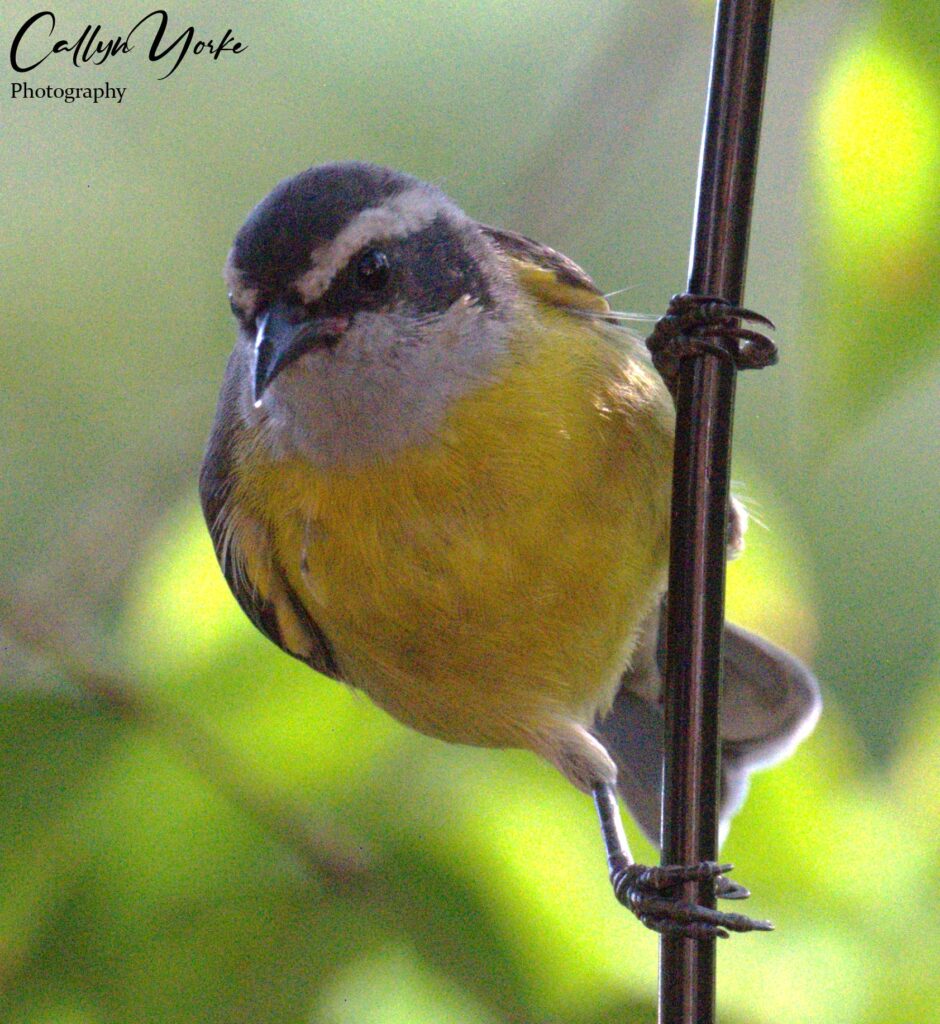
- Bananaquit Coereba flaveola 7 greg. at sugar-water feeders with hummingbirds, FI; ubiq. (photo).
PASSERIFORMES: Troglodytidae
- Southern House Wren Troglodytes musculus 1 FI; 1 CAF.
- Thrush-like Wren Campylorhynchus turdinus 2 greg. a pair moving quickly through garden trees, HC.
PASSERIFORMES: Mimidae
- Chalk-browed Mockingbird Mimus saturninus 2 FI; 2 FC; 1 CAF.
PASSERIFORMES: Turdidae
- Pale-breasted Thrush Turdus leucomelas 4 HC; ubiq.
_____________________________________
REPORT LINKS
______________________________________