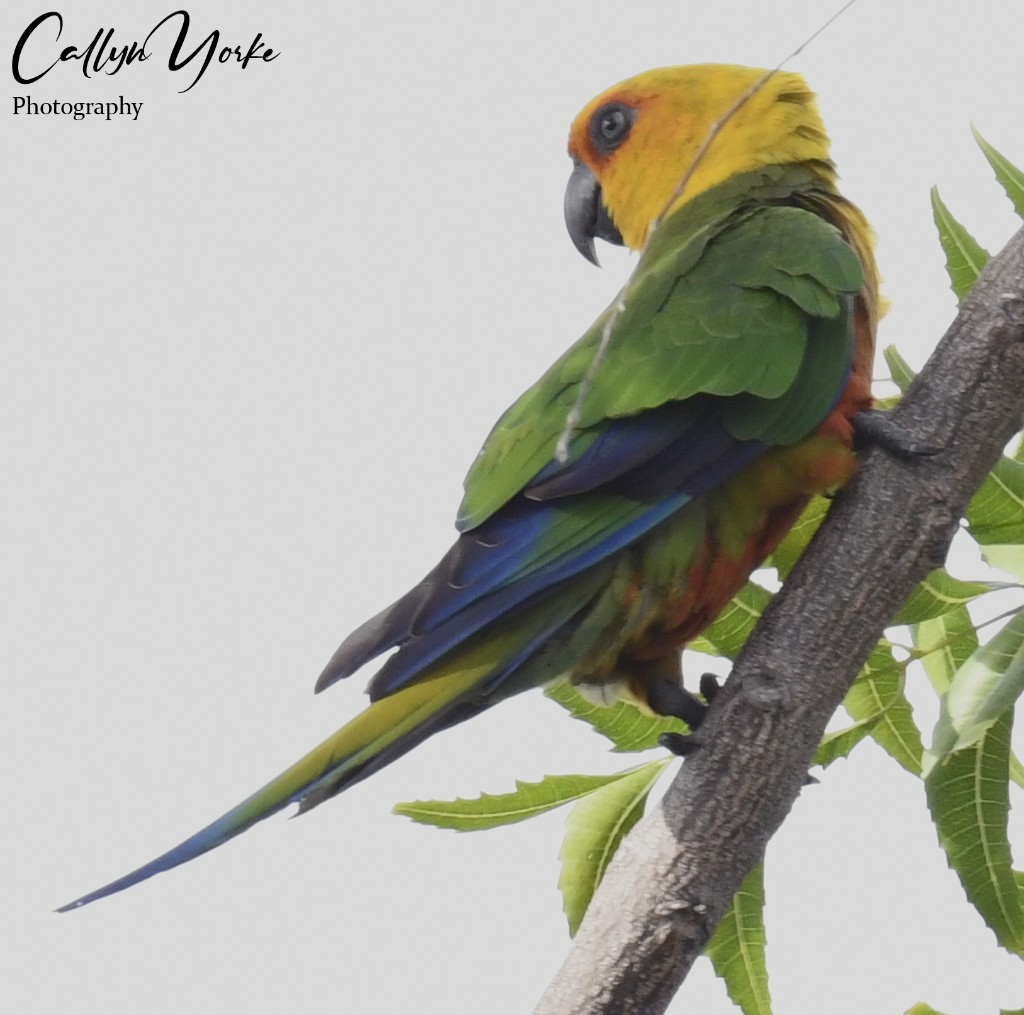
Fortaleza, Ceará Brazil 15-20 March 2025 Callyn Yorke
INTRODUCTION
Brazilians are highly gregarious by nature. For the nearly sixty-thousand subscribers on Wiki Aves, a rigorously scientific platform for birders, virtually anyone with a binocular is part of an extended family, including visitors.
Throughout Brazil, the birding community welcomed me like a distant lost relative. Starting in Rio with Daniel and Gabriel Mello, something equivalent to a chain letter was put into motion. Next, came Mario and Jeanne, who had hosted me at their Jamacá das Araras lodge in Mato Grosso. They personally contacted professional guides in Amazonas and elsewhere in Brazil, who in turn, referred me to birders in Ceará. I enjoyed friendly email exchanges with several of those individuals. One in particular, Dr. Giovanna Rodrigues, was available and willing to guide me while birding in the Fortaleza area.
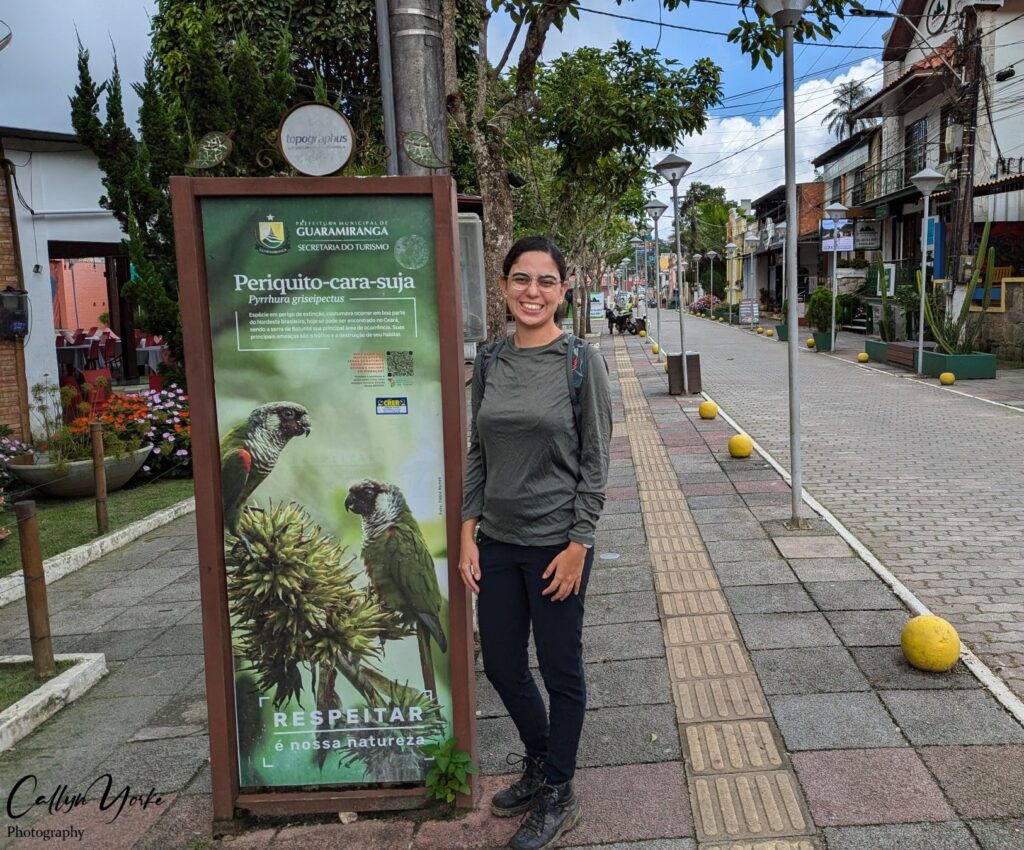
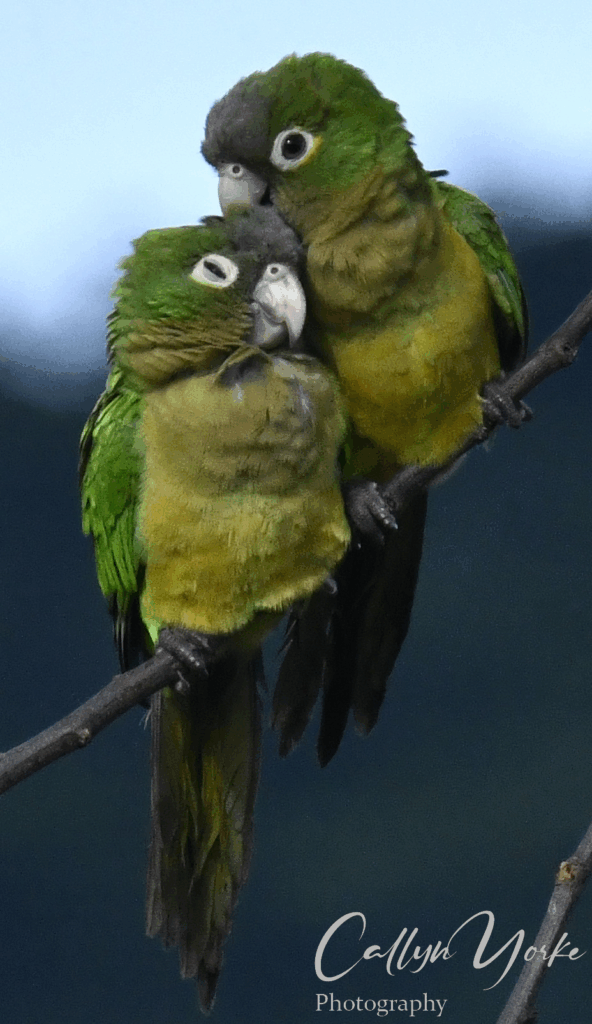
Giovanna had recently completed a Ph.D. dissertation on the endangered Gray-breasted Parakeet (Pyrrhura griseipectus), endemic to northeastern Brazil. I gathered from our conversations, that her work had been generously supported by both private and public conservation organizations. As a result, the Gray-breasted Parakeet had become a poster-item of local interest. The species remains listed as endangered, though now appears to be doing reasonably well within its restricted range. A visit to Giovanna’s study area in Guaramiranga was a high priority on the birding itinerary.
Giovanna grew up in Fortaleza and studied biology at the local universities. She was especially keen on the avifauna of northeastern Brazil. Conversant in Engllsh, Giovanna was happy to field my questions regarding Brazilian natural history. I was most fortunate in that Giovanna could introduce me to some of the best preserved wildlife areas in the state of Ceará. In terms of Brazilian ornithology, without Giovanna’s enthusiastic guidance, I most likely would have missed several of the specialty birds, e.g. the endemic Jandaya Parakeet and Ceará Leaftosser.
Giovanna and I visited three principal birding areas; one in Fortaleza for the Jandaya Parakeet, and the other two, out of town. For the lengthier journeys, we were mobilized by 0430 hrs. When on my own in Fortaleza, I visited the city parks at my leisure, using an Uber phone-app taxi service.
Giovanna, I soon discovered, was a supremely organized individual. She planned for everything in detail – park opening hours, travel time, fuel cost, food (a big part of Brazilian culture) and even the notoriously fickle weather. Prior to my arrival, Giovanna had researched lodging options for me in Fortaleza. She recommended the Fortaleza Hotel (3-star), which was perfect – clean, comfortable, well managed and affordable. Two nearby city parks were easily accessed for birding.
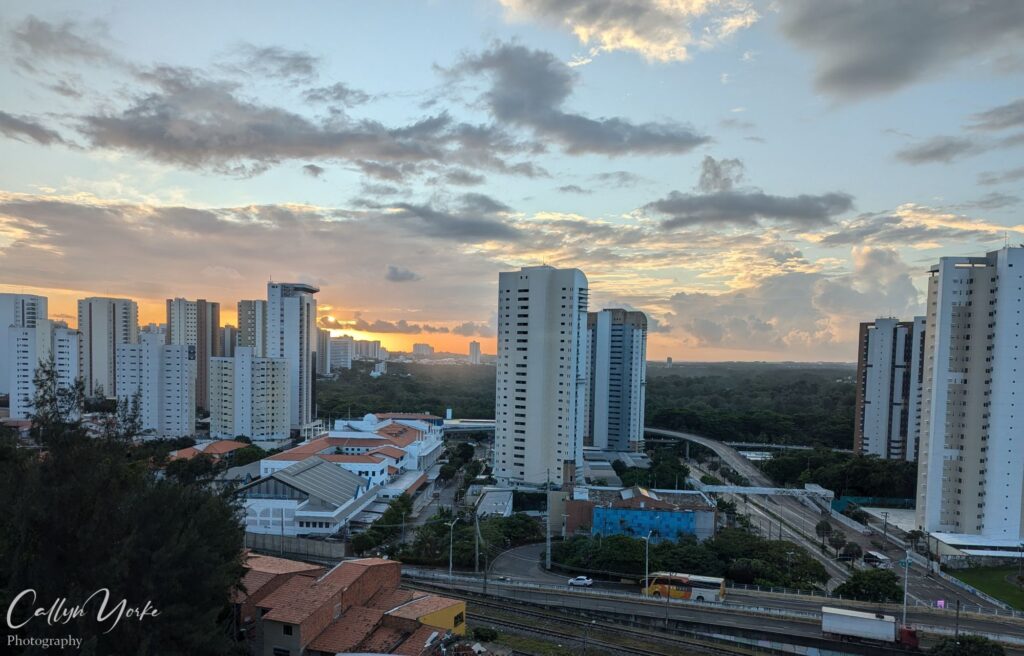
My hotel room (#1104) featured a birds-eye view of the city and incoming weather from the Atlantic Ocean. This was the wet season and mornings were often overcast and humid; heavy rain might occur at any time. A Ceará thunderstorm, like an Uber taxi, could arrive as quickly as a flash of lightning, or be delayed for a few tense moments. Giovanna politely advised me to bring rain gear to our first outing.
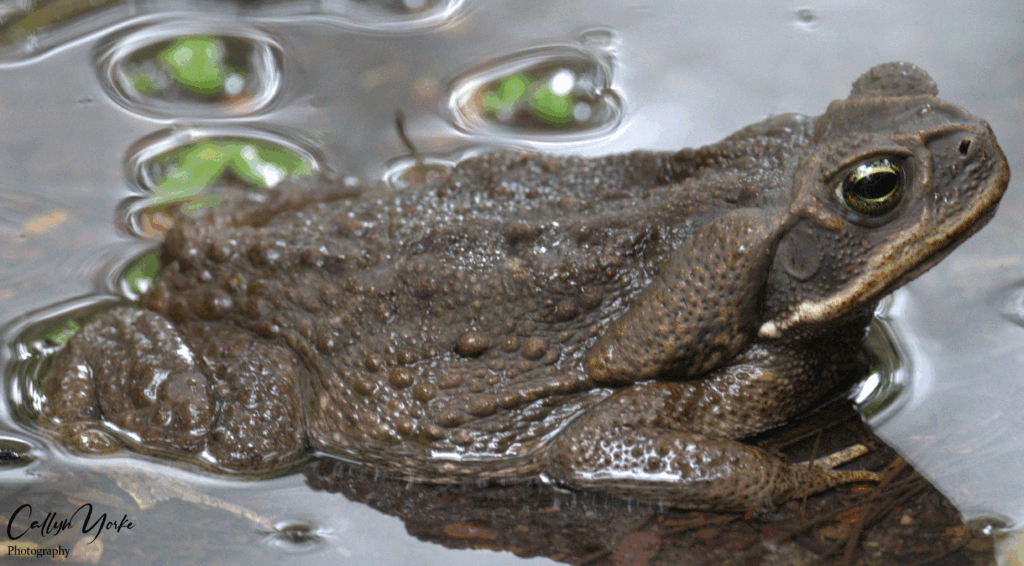
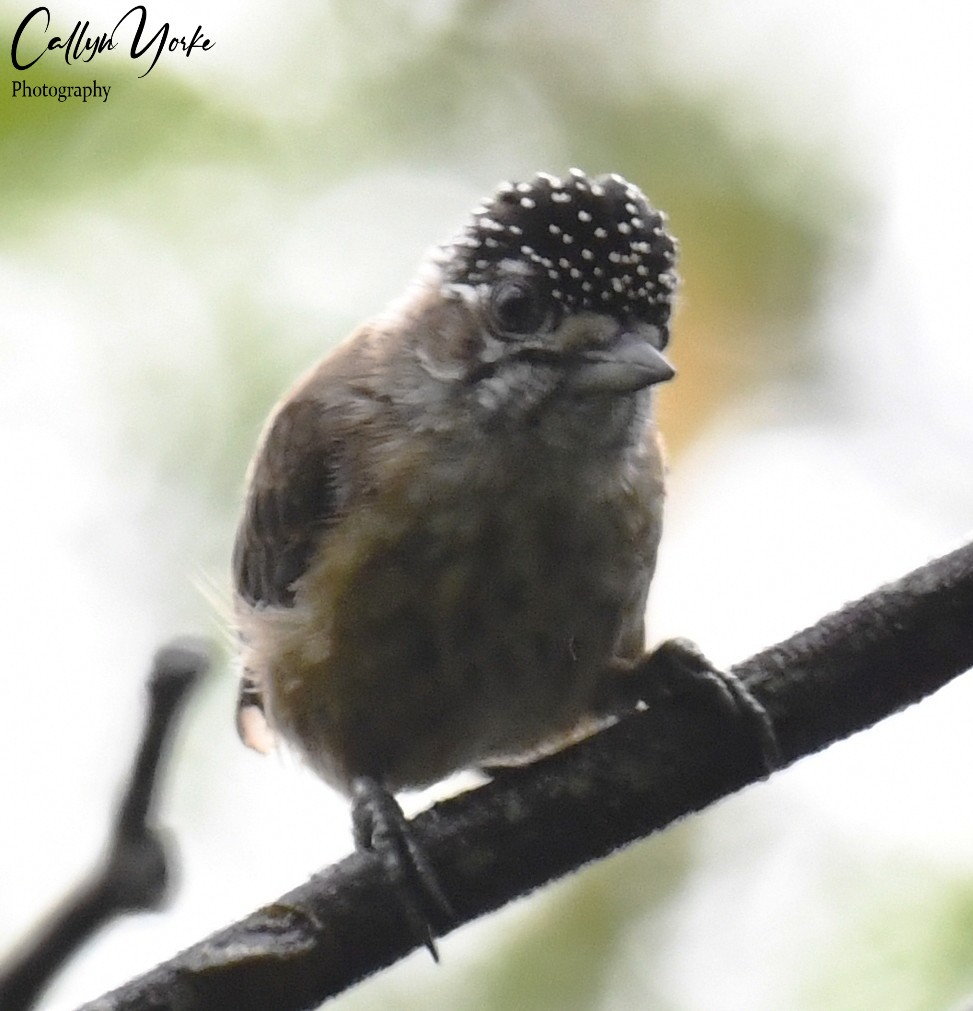
That was uniformly good advice throughout my visit. The following morning, within an hour after our arrival at the State Botanical Gardens in Caucaia (Parque Estadual Botânico do Ceará), we were running for shelter in a heavy downpour. We waited amidst impatient mosquitoes for the rain to diminish, then dashed out again, puddle-jumping with umbrellas and binoculars, having only few minutes to bird between showers. A cane toad amphibious assault unit watched us with interest. Despite the drenched conditions, Giovanna attracted several endemic and near-endemic birds by using playback recordings of their vocalizations. I had fairly clear views and a couple of photo opportunities with some life-birds, e.g. Ochraceous Piculet, Stripe-necked Tody-tyrant and Ochre-lored Flatbill. Giovanna called out the names of a few more birds but I was too busy wiping the water from my camera and binocular to have more than a fleeting glimpse of those birds.
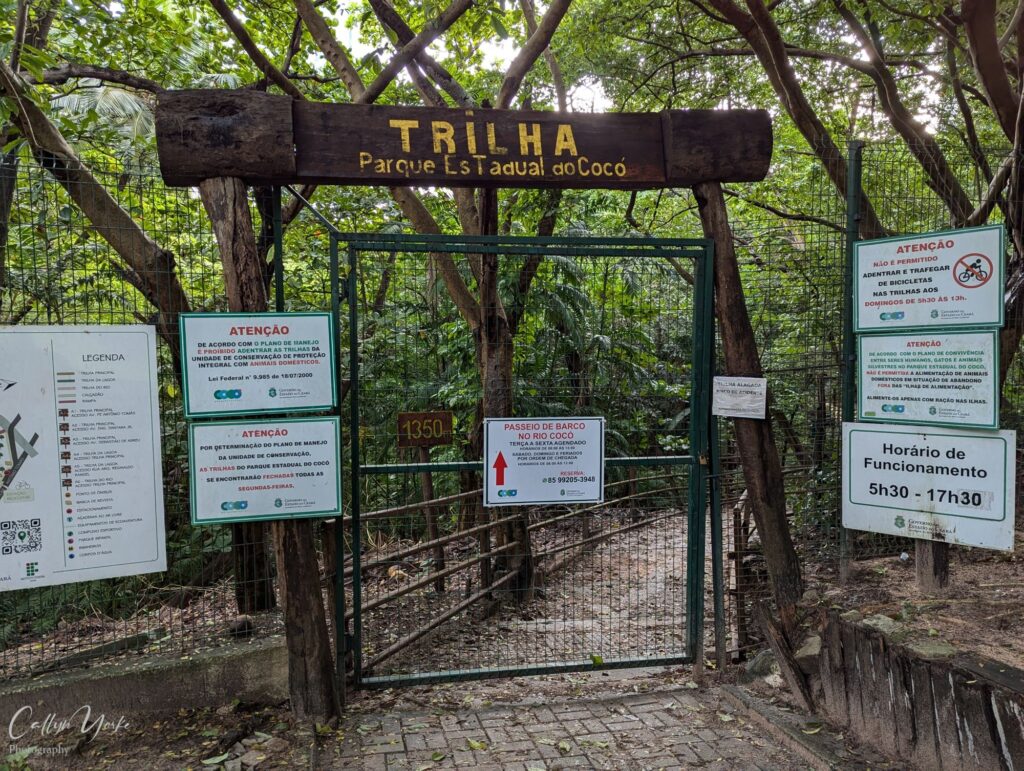
The weather forecast for the next few days would be about the same – variable cloudiness with surprise thundershowers. Giovanna suggested I bird Coco State Park and Adahil Barreto Park in Fortaleza, both just a short taxi ride from the hotel. The parks were in safe neighborhoods and had storm shelter facilities. In the meantime, she would be planning an all-day trip to Guaramiranga, where I would see endemic birds of the ‘Caatinga’, a semi-arid, tropical ecosystem found only in Brazil.
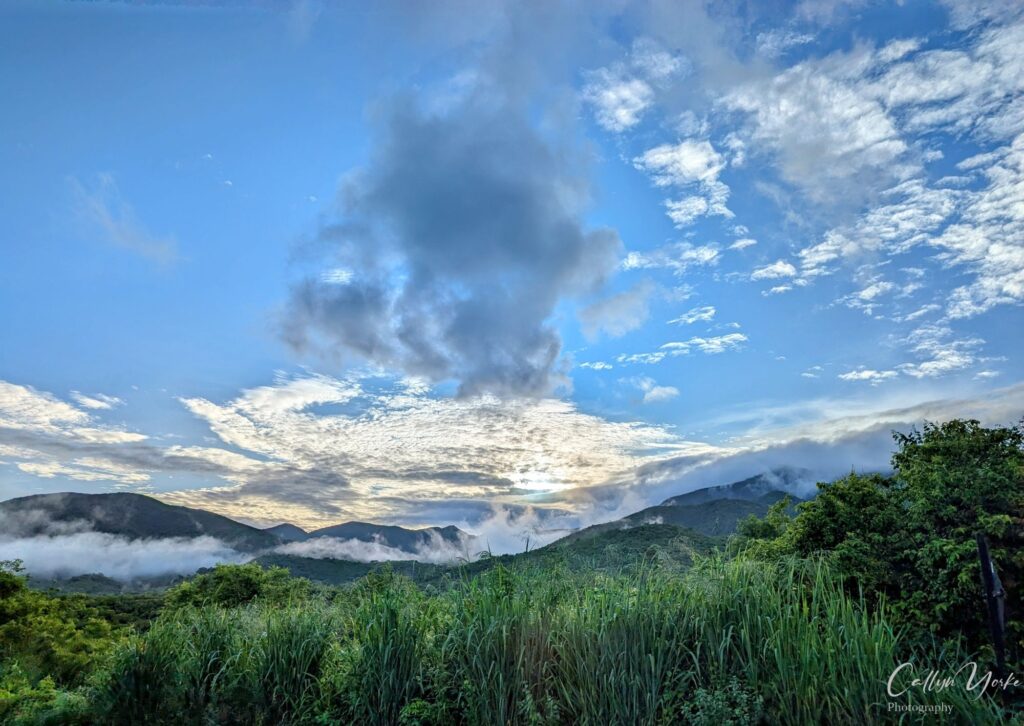
Birding solo in the Fortaleza city parks was okay but would pale in comparison with Guaramiranga. Giovanna had put considerable effort into planning the outing. Everything was set; the weather looked good. She would borrow her father’s Volkswagen sedan for the roundtrip from Fortaleza.
We were on the road an hour before sunrise, proceeding southwestward on the main state highway. By daybreak we were southbound on Route CE 356 and gradually climbing in elevation. The newly paved highway transected a scenic expanse of caatinga – seasonal vegetation, dominated by endemic plants representing multiple families. Giovanna narrated, highlighting key biogeographical features of this peculiar biome. Most of the vegetation was xerophytic, i.e. thorny shrubs, succulents, cacti, and palms. There was a superficial resemblance to the thorn-scrub of northwestern Mexico. But here, with the onset of the rainy season, the vegetation had a tropical luxuriance and was comparatively dense, appearing largely impenetrable. I anticipated a place to pull off the road where we might have a close look at the caatinga and its birdlife. Giovanna seemed to have a particular destination in mind and kept her foot on the accelerator.
This would be a difficult area to bird, even if it was accessible from the road – which it was not. The elevated, two-lane road was continuously curbed on both sides, without shoulders or emergency stopping areas. The land scrolled by at highway speeds. Seeing an interesting bird fly over was frustrating. Changing a tire would be terrifying.
Eventually, we found a gap in the curb next to the remains of an isolated, abandoned homestead. We parked on the roadside and lowered the windows, listening and watching for birds. A diverse avian community was coming to life, as sunlight reached the tops of the tallest shrubs.
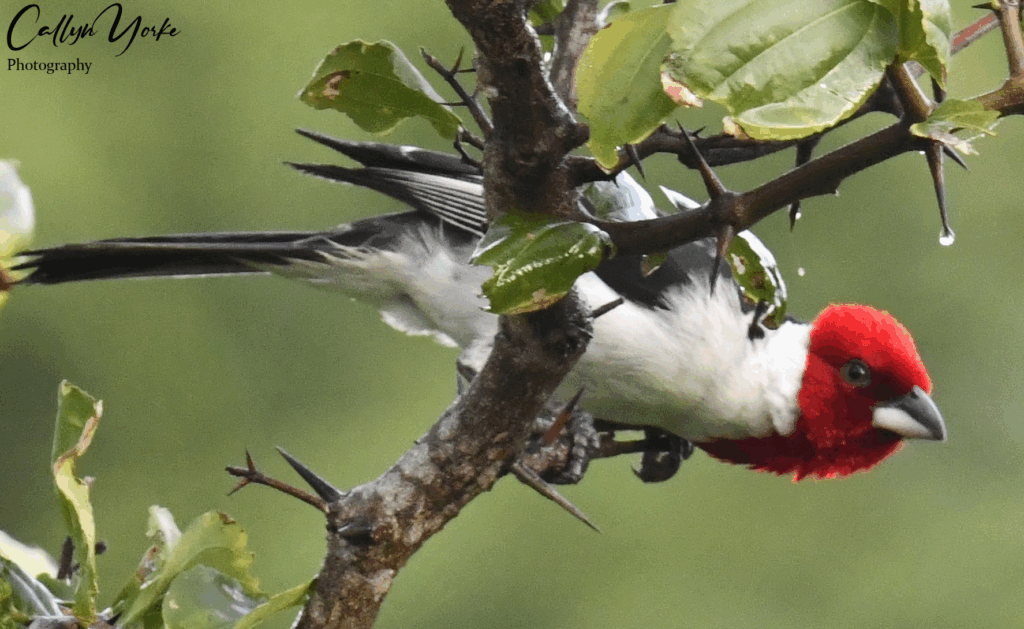
Giovanna bolted out of the car, calling out the names of a half-dozen new bird species. To say that we had good views of an interesting variety of birds, would be a modest appraisal. Included in the feathered pageant were caatinga specialties, e.g. Cactus Parakeet, Red-cowled Cardinal and White-throated Seedeater. Those species and several others were happily added to my life-bird list.
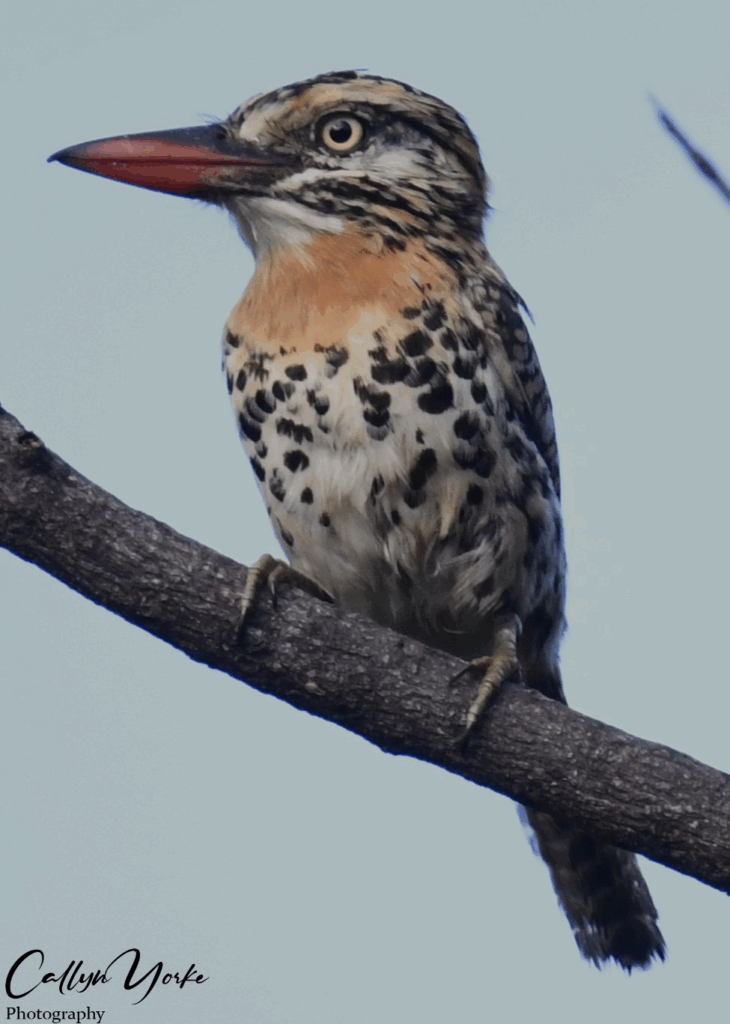
Some of the birds, such as a vocal pair of Spot-backed Puffbird, were so close, I had to step back in order to bring them into focus. We wondered if the previous tenants had been feeding the birds, or simply living in harmony with them. Giovanna took a jovial remark at face value, when I suggested she submit a bid for the property and fix it up for birders as a cafe or bed-and-breakfast lodge.
The abandoned homestead, with the only roadway exit for more than 10 km in either direction, could be a storyteller’s centerpiece and/or a police department’s cold case file. The setting was as photogenic as it was enigmatic. The solitary ruins, evidently favored by a series of graffiti artists, were dead silent. Peering inside, there were no signs of life in the dark, dusty rooms. Initially, I was hoping to flush an owl or nightjar. Failing that, then perhaps a shabbily dressed caretaker would appear. With a backdrop of distant, foggy mountains, I imagined this would be an ideal location for a college film class. What had actually happened here? Did the owners move back to town because of too many stranded motorists asking for help? Too many trespassing birders? Or perhaps because of something unspeakably tragic.
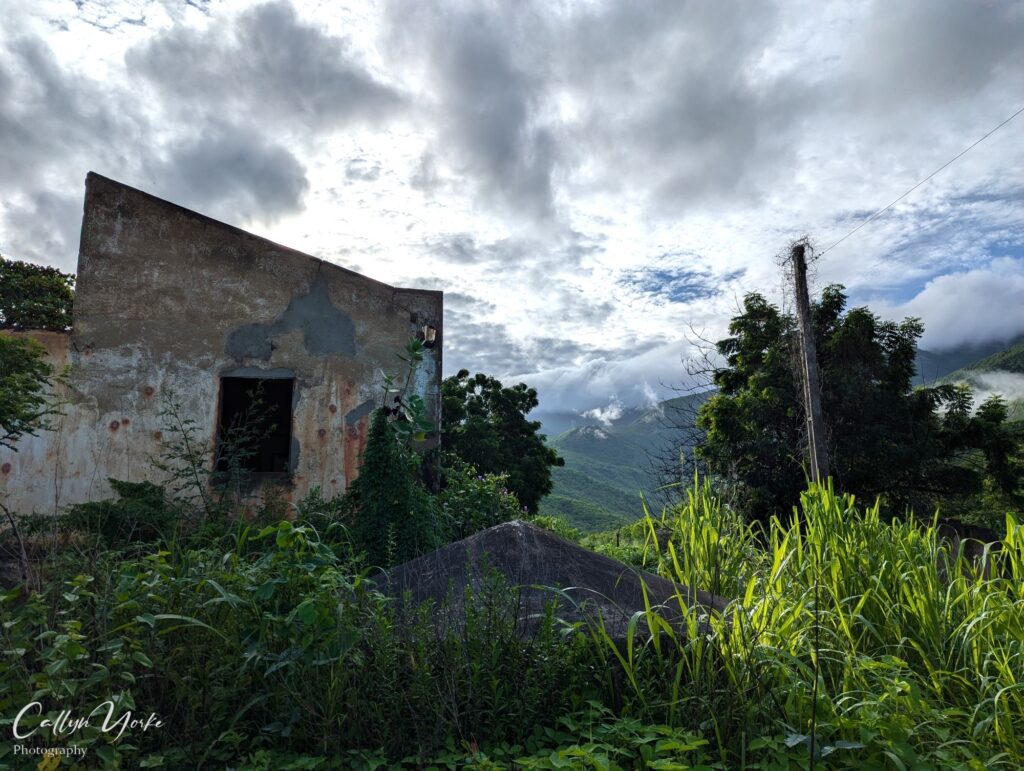
In any case, it was time for us to check out of hotel caatinga-fornia and return to the dark, deserted highway. We were headed for the popular vacation town of Guaramiranga and the lower montane forest, where our next birding excursion was planned.
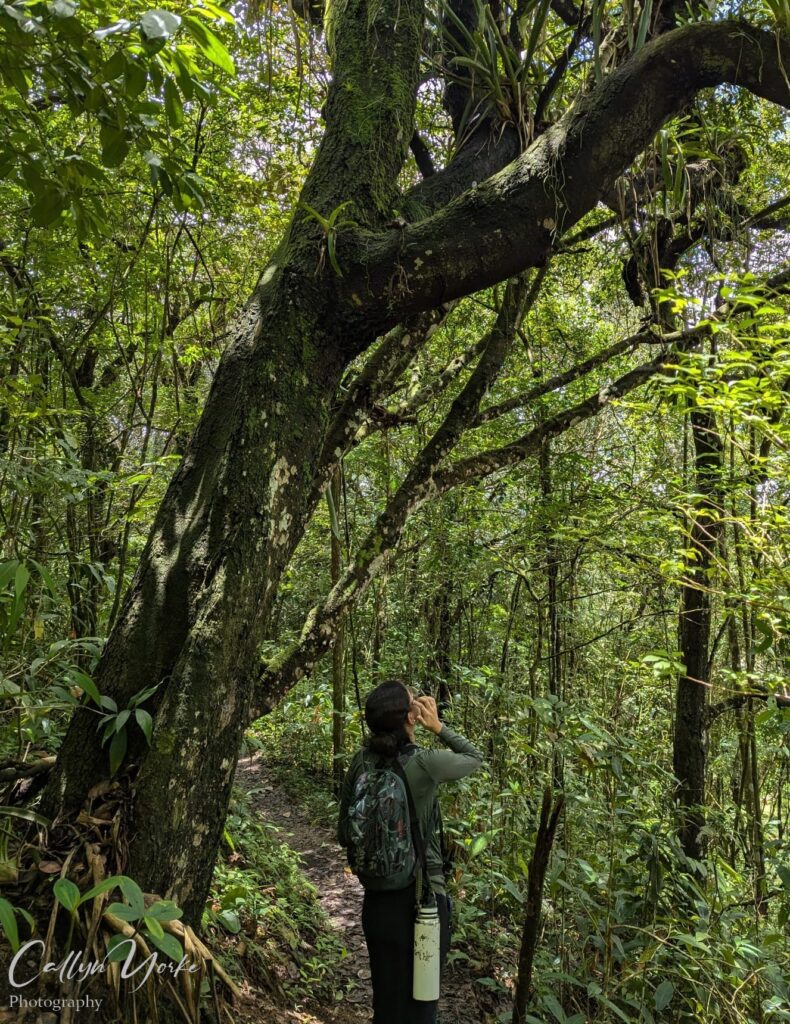
Giovanna had contacts in the Baturité Mountain area and we were granted access to the Forest Trahil Reserve on private property. There, at an average elevation of 840 m asl, we would encounter an ecotonal blend of Atlantic rainforest and caatinga. Accordingly, a mixed community of birds would be notably distinct from that which we encountered in the homogeneous caatinga. Highlights included, Small-billed Tinamou, Band-tailed Manakin, Ceará Leaftosser, Large Elaenia and Flavescent Warbler.
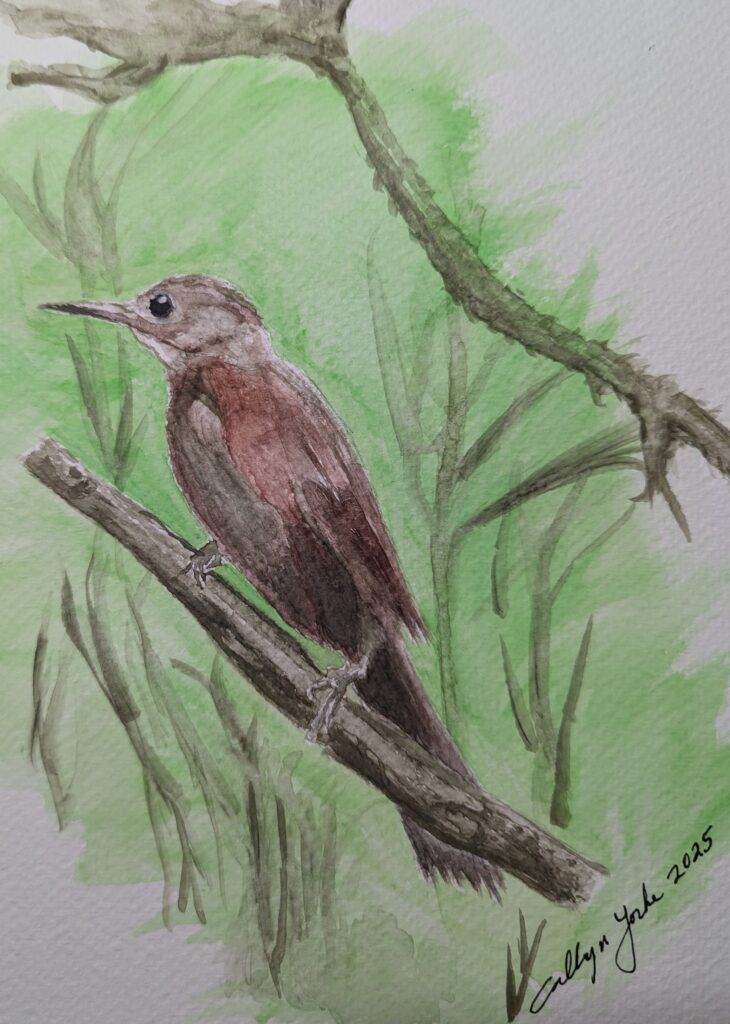
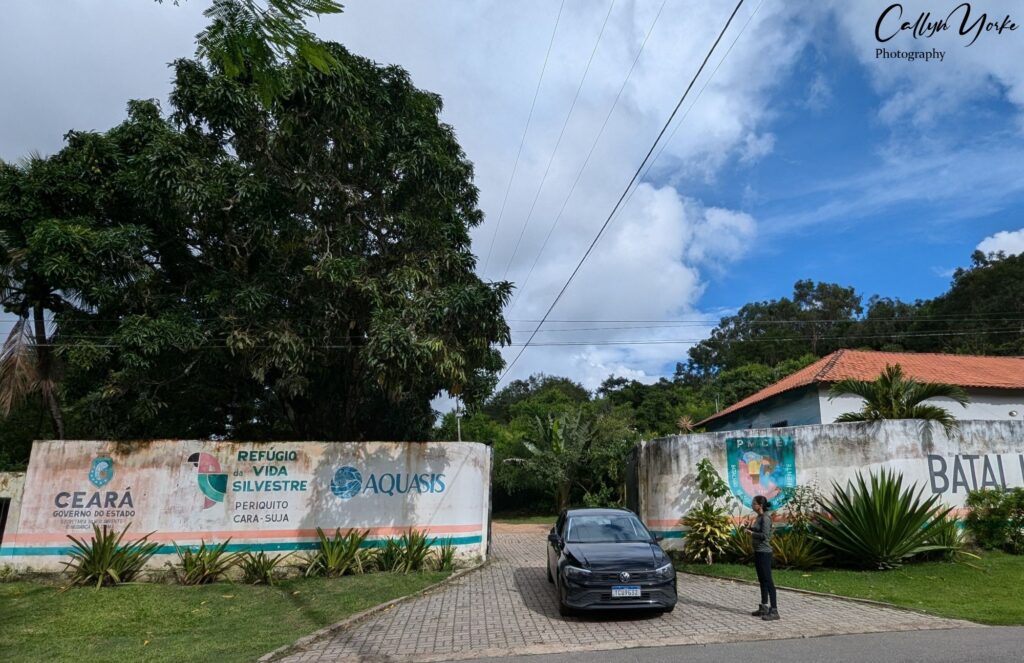
After a gourmet pasta meal and brief stroll on the historic main street of Guaramiranga, we drove to the nearby Refugio do Cara-Suja, where Giovanna had done her thesis fieldwork on the Gray-breasted Parakeet. Giovanna checked in with the caretaker, who informed us that the celebrity parakeets had flown off somewhere. Giovanna indicated that the birds might return at any time. A moment later, she heard a flock of the parakeets in the distance. I was unsure what I had heard. To an untrained ear, the screechy calls of parakeets in the distance, all sound about the same. Fortunately, I had seen another distant flock of Gray-breasted Parakeet in flight at the Forest Trahil Reserve.
Meanwhile, as the weather was holding, we walked around the caretaker’s yard and adjacent secondary forest, looking for whatever else might be of interest. Due to an impending thunderstorm, this would be our last birding location of the day.
Aside from a lone Shiny Cowbird on the front lawn of the parakeet reserve, nothing more was added to the bird trip list. Interestingly, there were familiar sounding frog calls coming from a swampy area next to the caretaker’s house. With multiple calls in syncopation, the frog chorus sounded like an uninspired rooting section for a high school football team: Frog, GO, Go FROG, etc. I asked if Giovanna knew the specific identity. She thought that she recognized the frog but wasn’t sure. So, I coined a name that roughly indicated its sound, ‘barking frog.’ Giovanna smiled and agreed. It was an apt descriptor, though she seemed a bit unsettled by the herpetology pop quiz.
Later, we learned that one of the local Portuguese names for the frog, translated to, of all things, ‘barking frog.’ These were indeed, tiny, well concealed frogs, collectively with a big voice. ‘ The official English name was Cuvier’s Foam Froglet (Lepidodactylidae: Physalaemus cuvieri).
Aside from its distinctively loud voice, there was something else intriguing about the little frogs. As the English common name indicates, they construct foam nests for the protection of their eggs, an uncommon reproductive strategy in the frog world. Coincidentally, that was the subject of my Master’s thesis and a scientific paper I published on another foam-nest-building frog in Malaysia, (Rhacophoridae: Polypedates leucomystax).
Remarkably, the ‘barking’ calls of the two distantly related, foam-nesting frog species, sounded similar. While in Malaysia, a British primatologist, who had been listening to vocalizations of P. leucomystax in his neighborhood, coined the name ‘fart frog,’ or ‘katak ketut’ in Bahasa Malaysia. That specific designation may have been rather impolite, yet was agreeable, in distinguished drinking circles, as an accurate, catchy name. Years later, ‘Common Treefrog’ became the official, politically correct English name for P. leucomystax.
On that flat note, we drove off for one final birding session in an adjacent, semi-rural neighborhood with upscale homes, big trees and a fenced pasture. We walked down the road for a few minutes and noticed some dark-bellied cumulus clouds moving in. Without rain gear we would be soaked in a matter of seconds. With about one hundred-meters between us and the car, the race was on. We arrived only a few minutes before a cracking good thunderstorm unleashed its fury.
This one was intense – a deluge that would instantly and permanently disable $10,000 worth of digital camera equipment. We were in a fifteen-minute Ceará car wash with near-zero visibility. Then, as suddenly as the tempest arrived, it finished with a fine spray and we were safely on our way back to Fortaleza.
The following afternoon, Giovanna drove us to Rua Jequitibá in Fortaleza to look for the endemic Jundaya Parakeet (Aratinga jandaya). The bird’s favorite haunt happened to be an undeveloped parcel of land adjacent to a rough part of town. Giovanna recommended that I conceal my camera in a shoulder bag, so as to attract as little attention as possible. We parked next to an abandoned car on Rua Jequitibá and took cover behind a graffitied block wall.
A pair of Yellow-chinned Spinetail was startled by our sudden appearance. One of them continued gathering nest material. I dropped my shoulder pack and pulled out the camera. Although I had seen this species multiple times in Rio with the Mello brothers, none of those sightings was as clear and close-up as this one.
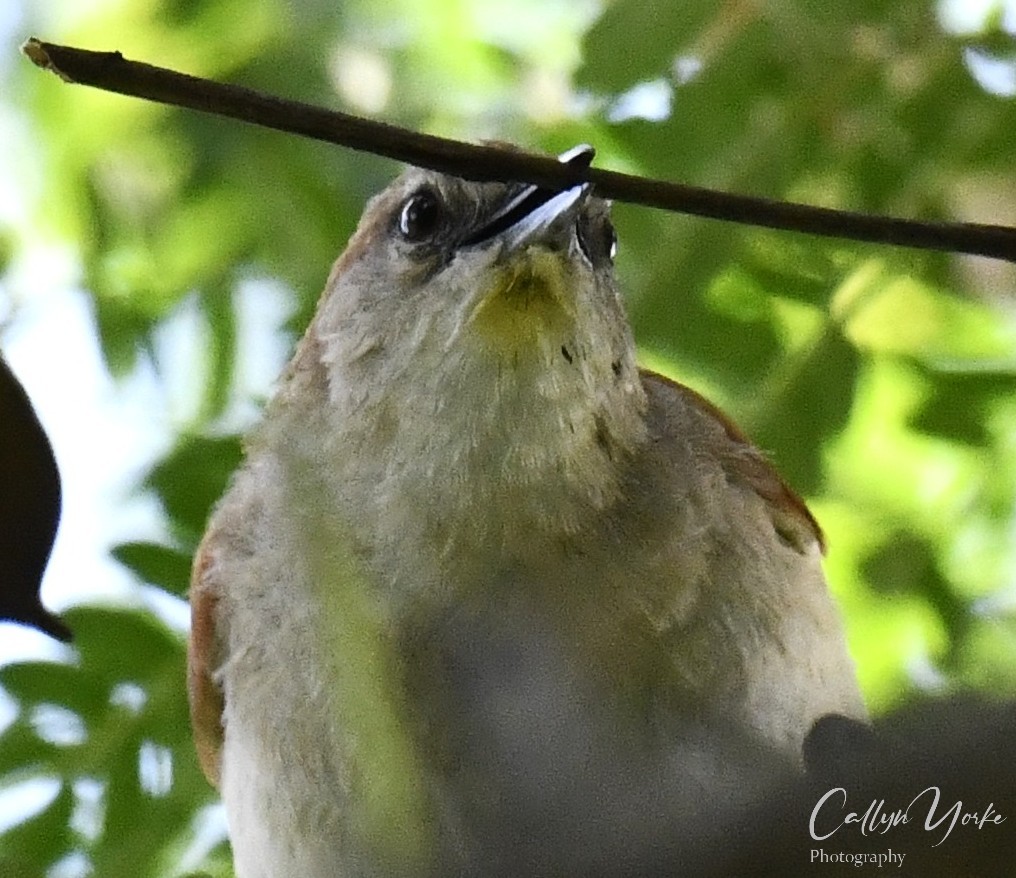
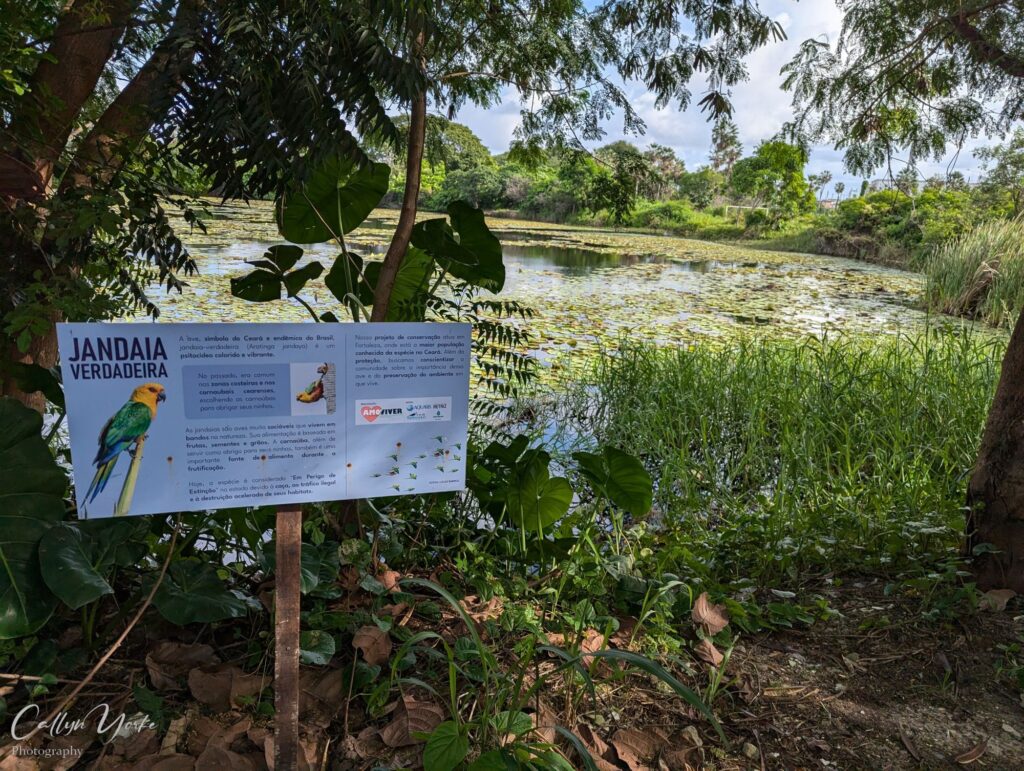
The only access to the parakeet viewing area was along the block wall, forming one side of a tunnel-like trail through a tangle of vines. The trail terminated in a weedy, flooded soccer field. Nearby, a shallow lake and marsh were fringed by palms and deciduous trees. Birdlife was surprisingly varied and abundant.
After a few minutes, we spotted Jandaya Parakeets in a distant cluster of trees. They were far fetched for decent photos, but nonetheless a gratifying find – a much anticipated endemic lifer. We continued walking the perimeter of the soggy field, noting other birds in the area, including a much improved view of White-faced Whistling Duck, compared to a brief, rainy-car-window look at the bird in Mato Grosso. Next, a White Woodpecker flew by, a ‘heard only’ bird in Rio. Pied-billed Grebe was new for my trip list and would be a singular sighting in Brazil.
As we headed back across the field toward the wall trail, a noisy flock of Jandaya Parakeet flew rapidly overhead and alighted in a nearby tree. I was in luck this time. The birds were close and with overcast skies, the late afternoon light had softened to a glow. A reduced skylight glare would improve image clarity and texture.
The birds were vigilant as I approached. Some climbed through the branches slowly and deliberately using their beaks. A pair flew to an adjacent tree. A majority of the flock remained calm and permitted me to maneuver around the tree for photos. It seemed as though they were proudly modeling one of the more colorful of the parrot family’s feathered outfits – orange, red, yellow, green and blue – a memorable display of avian beauty.
Fortaleza had its euphoric birding highs and disappointing lows. When we returned to the car, our tally for the two-hour birding session was thirty-five bird species. The Rua Jequitibá site supported a diverse avian assemblage, all the more remarkable for being adjacent to a gritty neighborhood. This particular birding location had been, by far, the best in Fortaleza. The following morning, on my last day in the State of Ceará, I birded solo in the heavily wooded and relatively remote, Floresta do Curió Park. It was, by contrast, underwhelming. Requiring a lengthy taxi trip across the city, the park produced only eight bird species; none of which was new for my Brazil trip list.
It was time to summarize my Fortaleza trip notes and begin packing for an overnight flight to Iguazu Falls
_______________________________________________________________
ANNOTATED BIRD LIST – CEARÁ BRAZIL March 15-20, 2025 Callyn Yorke
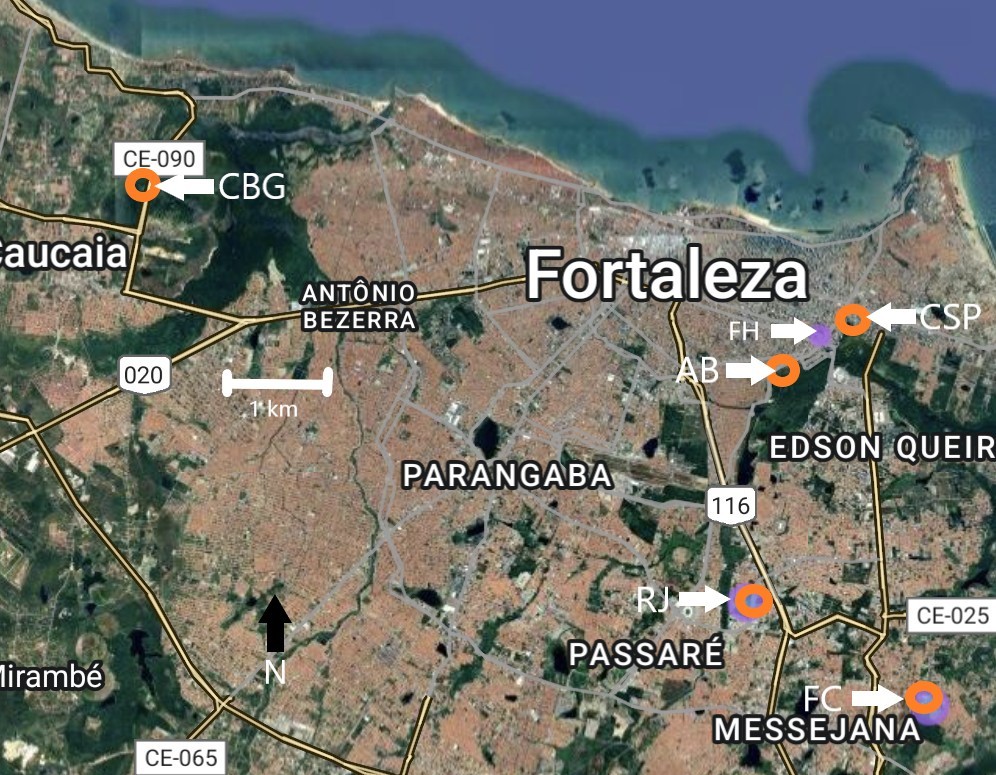
KEY to additional abbreviations and numerical abundance:
HO = heard only and/or seen briefly; identified primarily by specific vocalizations; GR = Giovana Rodrigues; CY = Callyn Yorke; greg. = gregarious; msf = mixed species flock; ubiq. = ubiquitous in appropriate habitat.
Location abbreviations are given in the annotated map above. Additional, unmapped locations are: CAT = Caatinga, principally around an abandoned homestead on Route CE 356; FTR = Forest Trahil Reserve, Baturité Mt., Guaramaringa; RCS = Refúgio de Vida Silvestre Periquito Cara-Suja, Guaramaringa – Gray-breasted Parakeet study area.
Numbers for each species account represent actual counts (1- 20 individuals) or estimates (> 20 individuals); Note: numerical count data are missing for species in some locations.
Species acronyms: The first four letters of common names, e.g. MUDU = Muscovy Duck.
Systematics and taxonomy is an amalgam of AVIBASE Bird Checklist for CEARÁ; IOC, AOS and Birds of the World, Cornell University 2025. Species given in boldface type are Brazilian endemics.
__________________________________________________________
BIRDS
TINAMIFORMES: Tinamidae
- Small-billed Tinamou Crypturellus parvirostris 1 (HO – GR) FTR.
ANSERIFORMES: Anatidae
- Swan Goose Anser cygnoides (exotic) 3 greg. on a pond embankment with MUDU, FTR.
- White-faced Whistling-duck Dendrocygna viduata 4 in flight over the lake, RJ.
- Muscovy Duck Carina moschata 2 greg. a pair on a pond embankment with SWGO, FTR; 1, RJ.
PHOENICOPTERIFORMES: Podicipedidae
- Pied-billed Grebe Podilymbus podiceps 2 RJ.
COLUMBIFORMES: Columbidae
- Feral Rock Pigeon Columba livia 12 greg. towns and city parks, ubiq..
- Gray-fronted Dove Leptotila rufaxilla 4 greg. FTR; RCS.
- Eared Dove Zenaida auriculata 1 (HO – GR) CBG.
- Scaled Dove Columbina squammata 3 voc. greg. on ground, AB; 2, CBG
- Ruddy Ground Dove Columbina talpacoti 20, greg. often seen on the ground in ruderal areas, FTR; CAT; RCS; RJ.
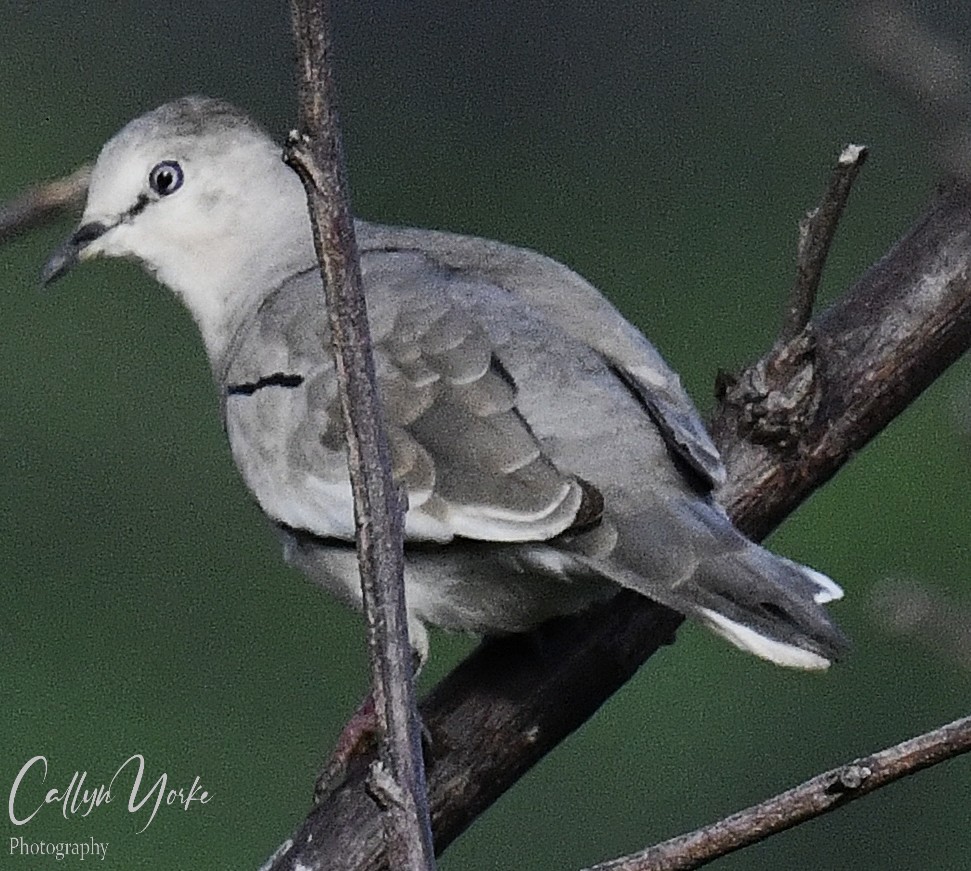
- Picui Ground Dove Columbina picui 2 CAT (photo).
CAPRIMULGIFORMES: Apodidae
- Fork-tailed Palm Swift Tachornis squamata 6 loosely greg. in flight at variable heights – lowest flight, presumably with compression of aerial arthropod column by heavy overcast, 15-80m agl, AB; 2, CSP; RJ.
CAPRIMULGIFORMES: Trochilidae
- Planalto Hermit Phaethornis pretrei 1 (m) moving quickly in flowering hedgerow, Guaramaringa.
- Glittering-bellied Emerald Chlorostilbon lucidus 1 (GR) CBG.
- Swallow-tailed Hummingbird Eupetomena macroura 1 hovering above a tall broadleaved tree canopy, AB.
CUCULIFORMES: Cuculidae
- Smooth-billed Ani Crotophaga ani 10 greg. pairs and trios in open fields, wetlands, pasture, atop shrubs, FTR; RCS; RJ.
- Squirrel Cuckoo Piaya cayana 1 voc. in a closed-canopy forest patch, CBG.
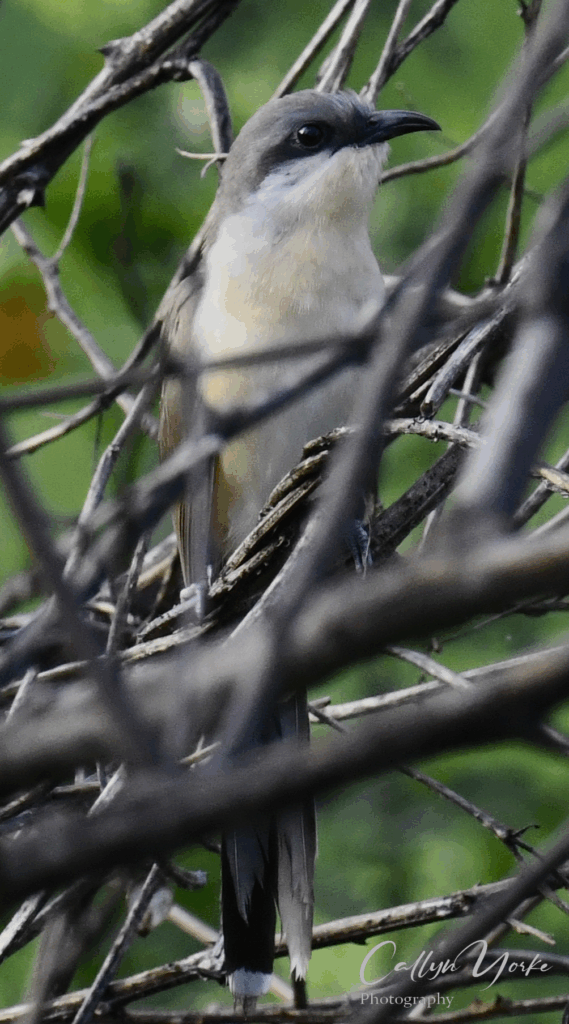
- Dark-billed Cuckoo Coccyzus melacoryphus 1 in low shrubs, pos. resp. to playback rec., CAT (photo).
GRUIFORMES: Rallidae
- Gray-necked Wood-Rail Aramides cajaneus 1 walking at edge of a shady backwater stream, AB.
- Purple Gallinule Porphyrio martinicus 8 loosely greg. in marshy edge of lake, RJ.
- Common Gallinule Gallinula galeata 4 individuals swimming in the lake, RJ.
GRUIFORMES: Aramidae
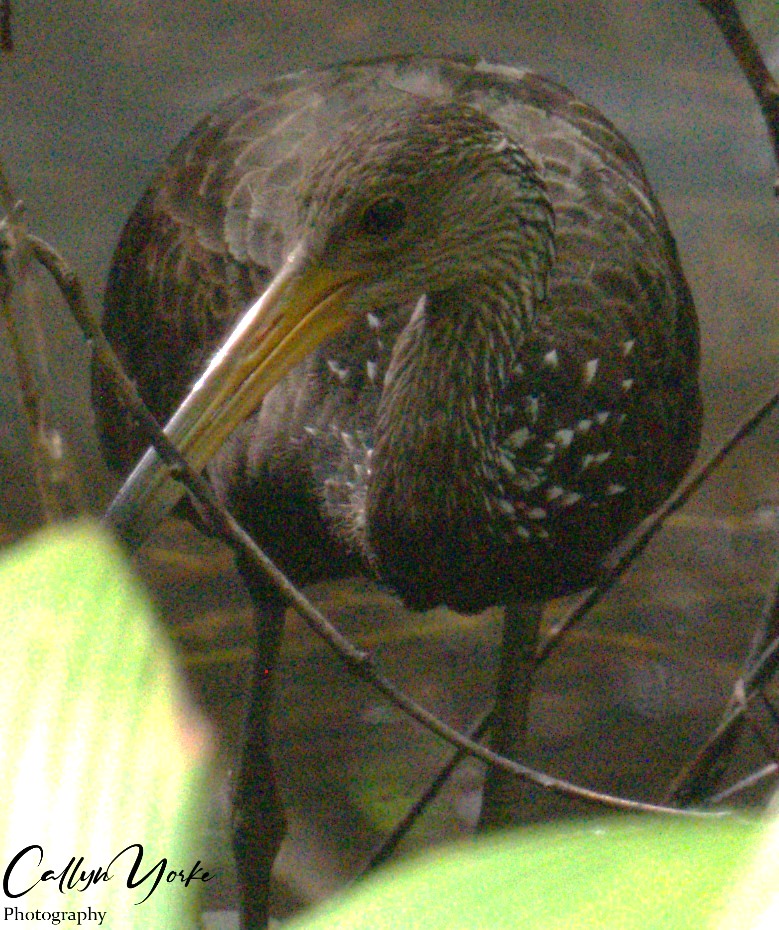
- Limpkin Aramus guarauna 1 walking in shallow, shady backwater, AB (photo).
PELECANIFORMES: Ciconiidae
- Rufescent Tiger-Heron Tigrisoma lineatum 1 perched atop a dead palm trunk, RJ.
- Black-crowned Night-Heron Nycticorax nycticorax 13 individuals and pairs in flight over the wetland, RJ.
- Striated Heron Butorides striata 1 at edge of lake, RJ.
- Western Cattle-Egret Bubulcus ibis 15 individuals and small flocks in flight over the wetland, RJ.
- Great Egret Ardea alba 2 often seen in low flight over wetlands, ubiq..
- Snowy Egret Egretta thula 1 in flight over the wetland, RJ.
PELECANIFORMES: Phalacrocoracidae
- Neotropic Cormorant Phalacrocorax brasilianus 3 in flight over the wetland, RJ.
CHARADRIIFORMES: Charadriidae
- Southern Lapwing Vanellus chilensis 2 greg. a pair in flooded section of the soccer field, RJ.
CHARADRIIFORMES: Jacanidae
- Wattled Jacana Jacana jacana 5 greg. walking in shallows at edge of marsh, RJ.
ACCIPITRIFORMES: Cathartidae
- Turkey Vulture Cathartes aura 1 on a crownless palm; later soaring low over the park, AB (photo).
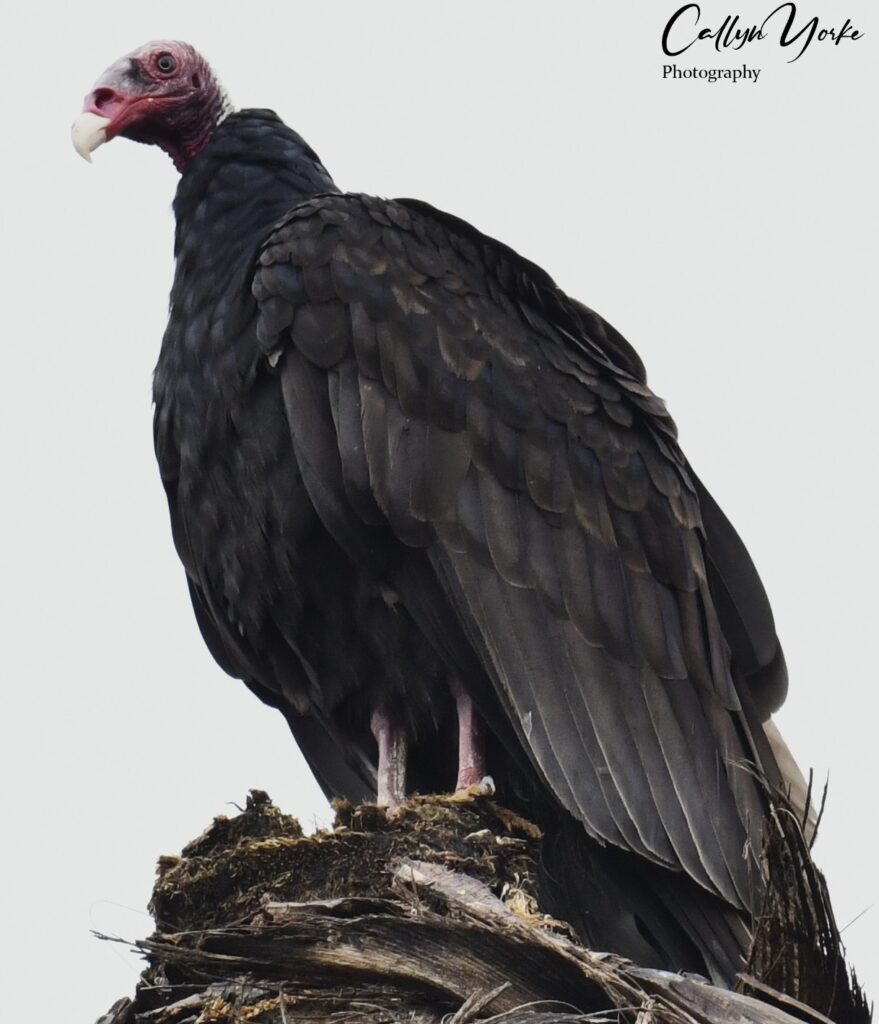
- Lesser Yellow-headed Vulture Cathartes burrovianus 3 in flight, CAT; FTR.
- Black Vulture Coragyps atratus 2 in low flight over the forest, FTR; 4 greg. flushed from subcanopy perch in forest, FC.
ACCIPITRIFORMES: Accipitridae
- Roadside Hawk Rupornis magnirostris 1 in low flight through woodland, AB; 1 voc. (unseen) RJ.
STRIGIFORMES: Strigidae
- Ferruginous Pygmy Owl Glaucidium brasilianum 1 voc. resp. to playback, CBG.
PICIFORMES: Bucconidae
- Spot-backed Puffbird Nystalus maculatus 2 greg. voc. a relatively tame pair on utility wire and adjacent garden tree, CAT.
PICIFORMES: Picidae
- Ochraceous Piculet Picumnus limae 1 active in forest edge subcanopy; pos. resp. to playback rec. CBG.
- Green-barred Woodpecker Colaptes melanochloros 1 preening on an exposed canopy limb, AB.
- Ochre-backed Woodpecker Celeus ochraceus 1 (m) active in subcanopy of trees adjacent to a pond, FTR.
- White Woodpecker Melanerpes candidus 3 in flight, RJ.
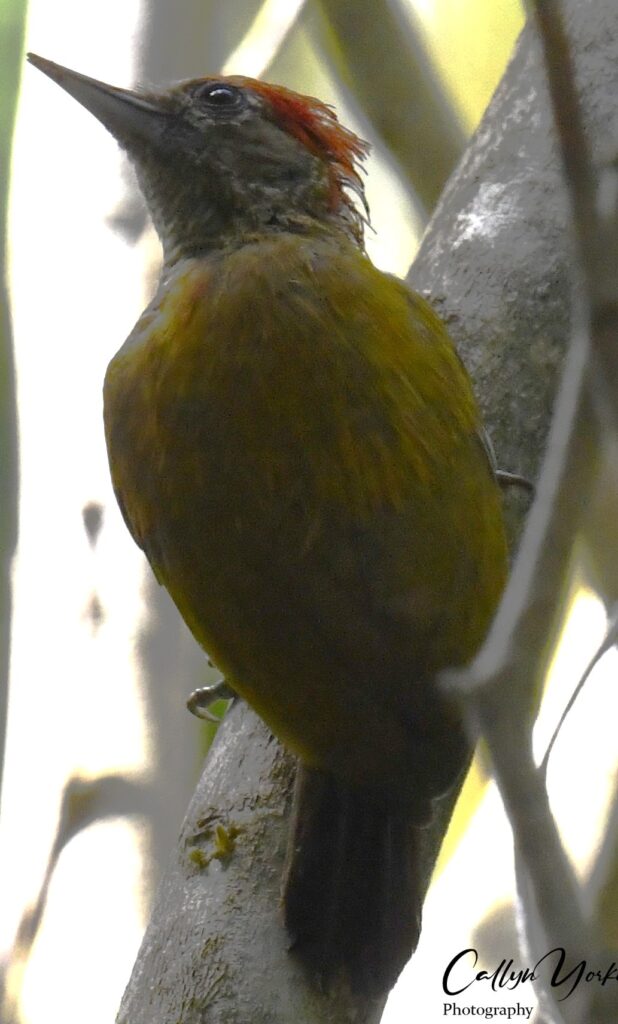
- Little Woodpecker Veniliornis passerinus 2 active in tall shrubs at edge of field; pos. resp. to playback rec. RJ; 1, AB (photo).
CORACIIFORMES: Alcedinidae
- Ringed Kingfisher Megaceryle torquata 1 in flight over the lake, RJ.
FALCONIFORMES: Falconidae
- Southern (Crested) Caracara Caracara plancus 8 individuals in flight over Route CE 356, CAT.
- Yellow-headed Caracara Milvago chimachima 1 in flight, low over the forest canopy, CBG.
PSITTACIFORMES: Psittacidae
- Yellow-chevroned Parakeet Brotogeris chiriri 12 greg. voc. frequenting fruiting palms, CSP;
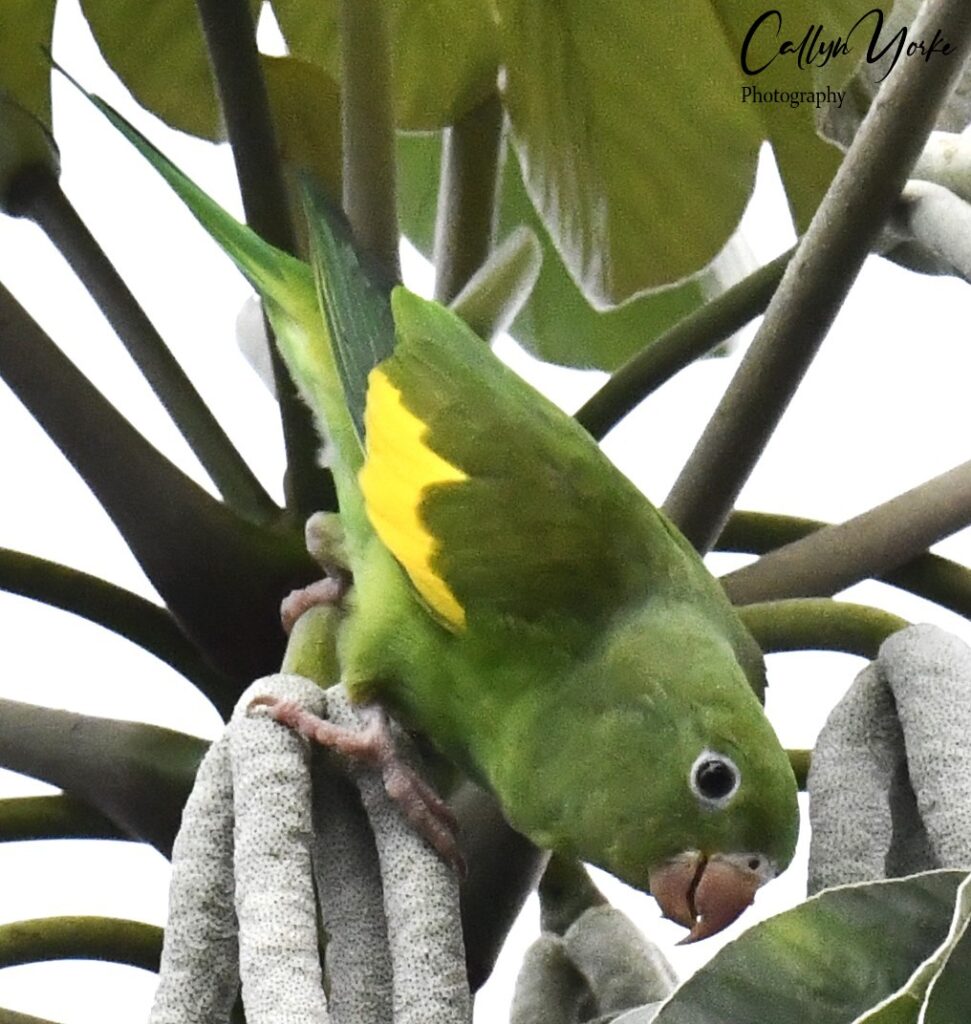
- Blue-winged Parrotlet Forpus xanthopterygius 4 greg. in trees and taking flight at edge of forest, FTR
- Gray-breasted Parakeet Pyrrhura griseipectus 10-15 voc. greg. in distant flight over clearing at the edge of the forest, RCS; FTR.
- Jandaya Parakeet Aratinga jandaya 16 greg. vocal, a cohesive flock in flight and in broad-leaved trees around the area, RJ.
PASSERIFORMES: Pipridae
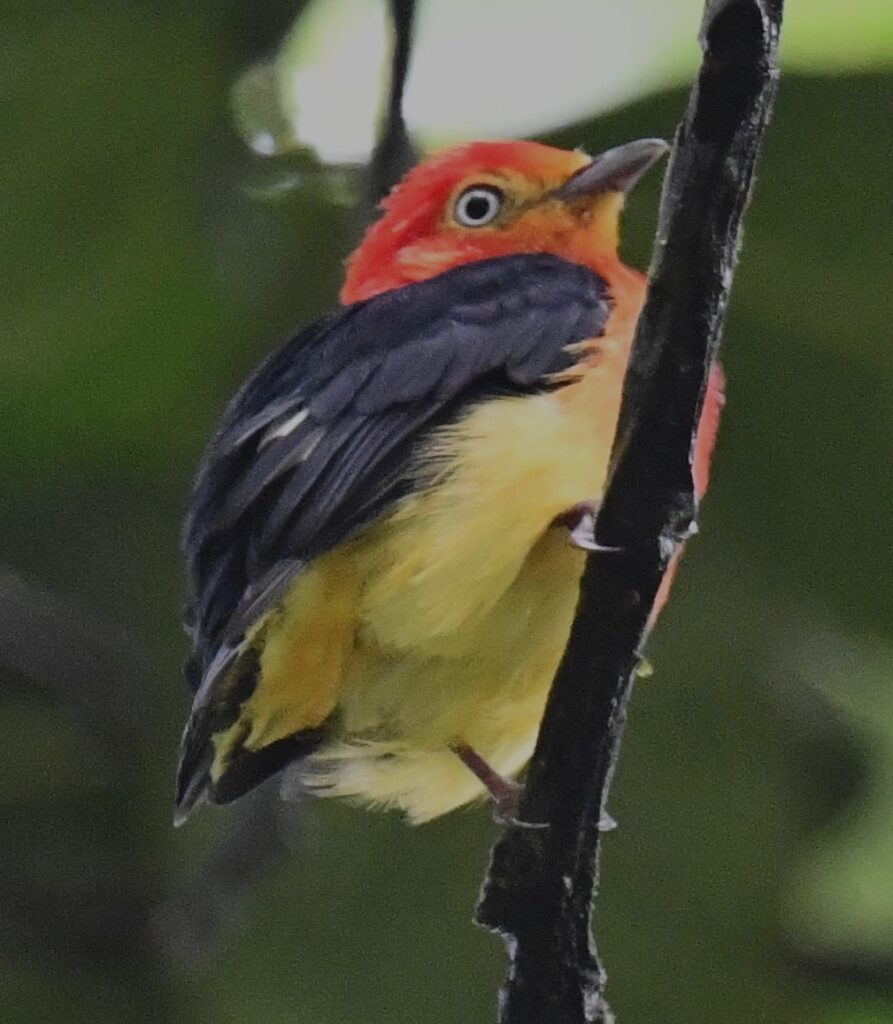
- Band-tailed Manakin Pipra fasciicauda 2 mid to upper middle level of forest, FTR (photo).
PASSERIFORMES: Onychorhynchidae
- Black-tailed Flycatcher Myiobius atricaudus 1 (GR) FTR.
PASSERIFORMES: Tityridae
- Crested Becard Pachyramphus validus 3 pos. resp. to playback; CAT.
PASSERIFORMES: Pipromorphidae
- Ochre-lored Flatbill Tolmomyias flaviventris 1 active in subcanopy, CBG; FTR.
- Common Tody-Flycatcher Todirostrum cinereum 1 pos. resp. to playback, CAT (photo).
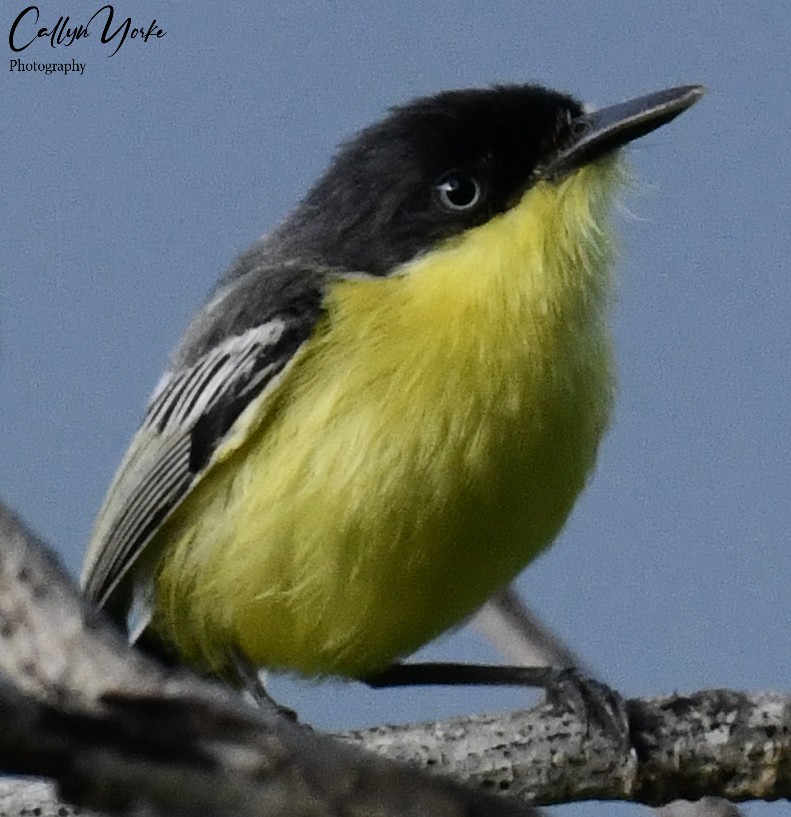
- Stripe-necked Tody Tyrant Hemitriccus striaticollis 1 pos. resp. to playback, sub canopy CBG.
- Buff-breasted Tody Tyrant Hemitriccus mirandae 1 FTR.
PASSERIFORMES: Tyrannidae
- Large Elaenia Elaenia flavogaster 1 subcanopy, forest edge, FTR (photo).
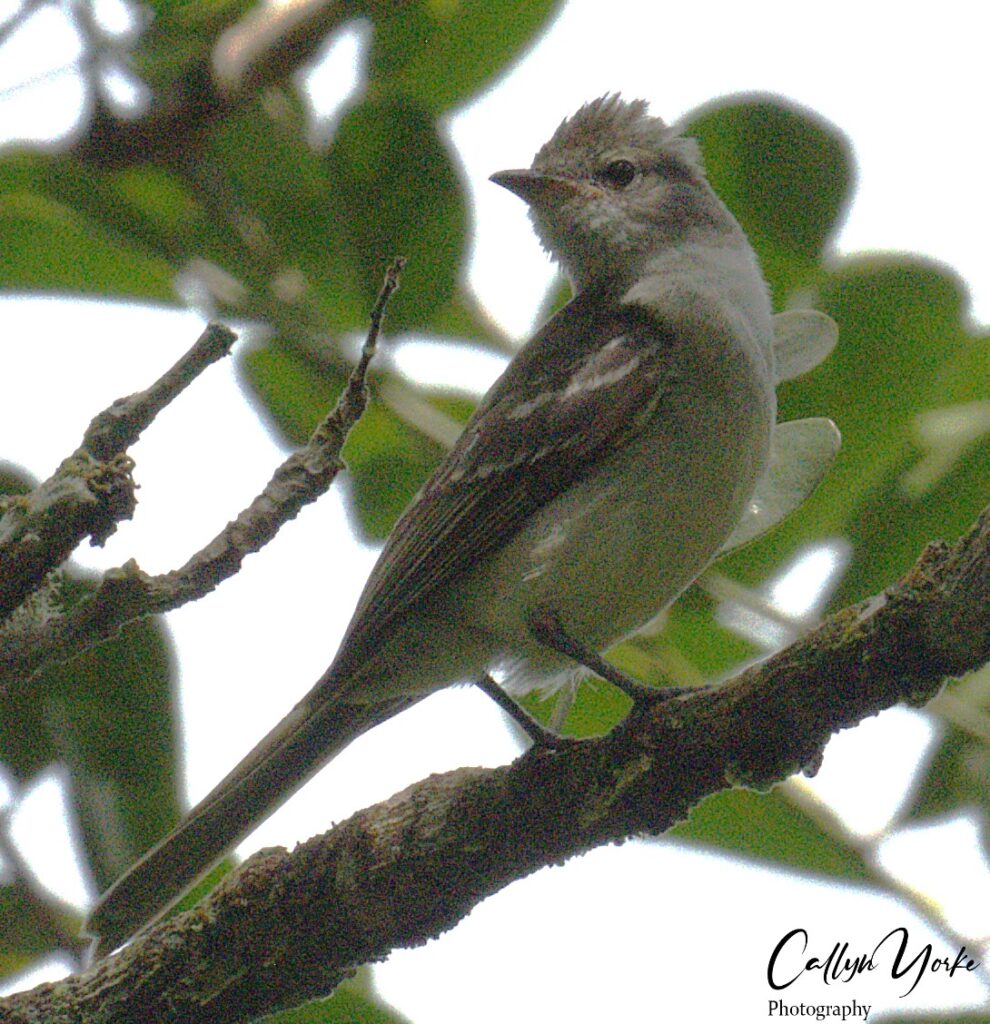
- Guianan Tyrannulet Zimmerius acer 1 (GR) FTR
- White-headed Marsh Tyrant Arundinicola leucocephala 1 at edge of lake, RJ.
- Masked Water Tyrant Fluvicola nengeta 3 FTR; RCS.
- Great Kiskadee Pitangus sulphuratus 4 ubiq.
- Boat-billed Flycatcher Megarynchus pitangua 1 CAT.
- Social Flycatcher Myiozetetes similis 2 CAT; 3 AB.
- Streaked Flycatcher Myiodynastes maculatus 1 CAT (photo).
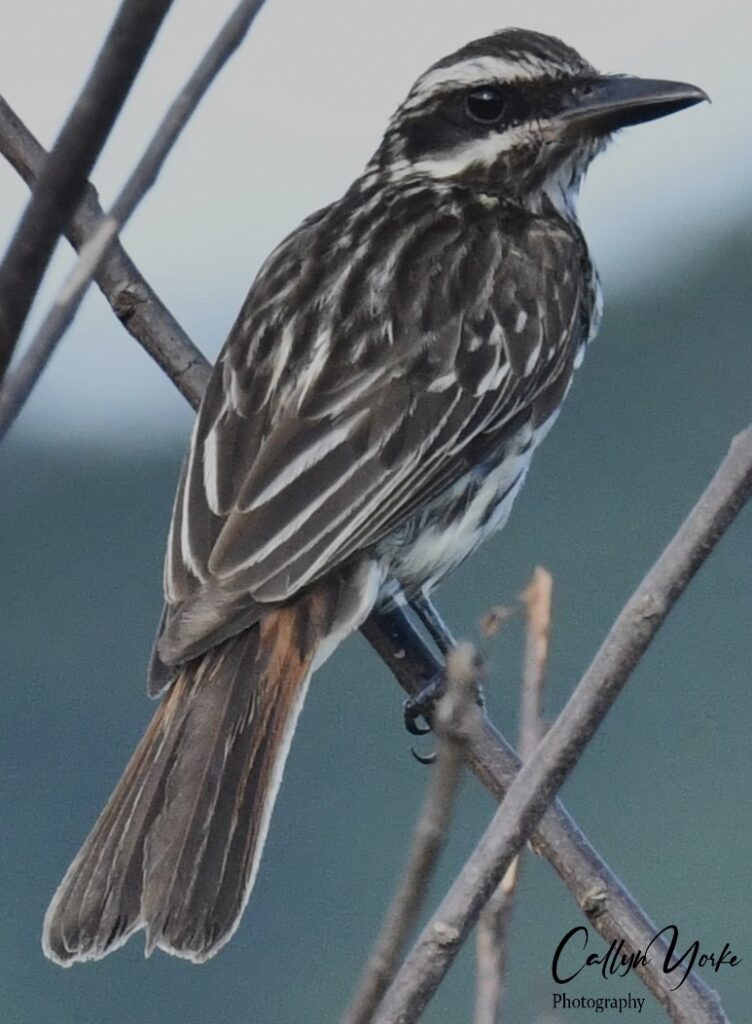
- Bran-colored Flycatcher Myiophobus fasciatus 1 in roadside garden trees, Guaramiranga.
- Variegated Flycatcher Empidonomus varius 2 CAT (photo).
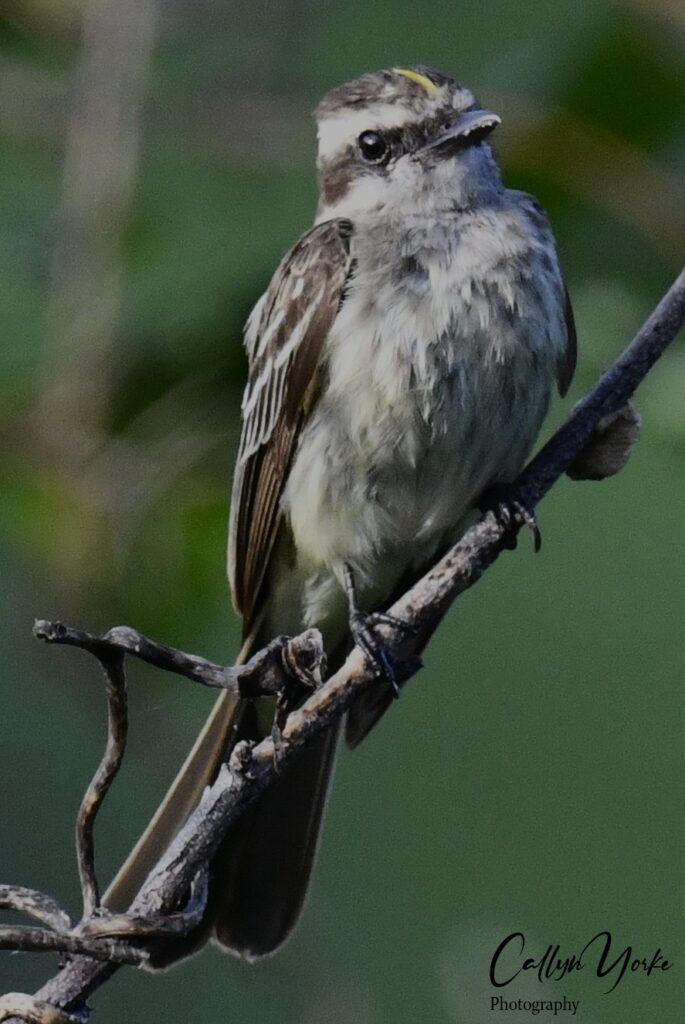
- Fork-tailed Flycatcher Tyrannus savana 18 greg. a large, cohesive, itinerant flock, taking small fruits from a Trewa micranthuria tree, FC
- Cattle Tyrant Machetornis rixosa 1 on soccer field, RJ.
- Tropical Kingbird Tyrannus melancholicus 7 ubiq..
PASSERIFORMES: Thamnophilidae
- White-fringed Antwren Formicivora grisea 1 lower middle of the woods edge, CBG (photo).
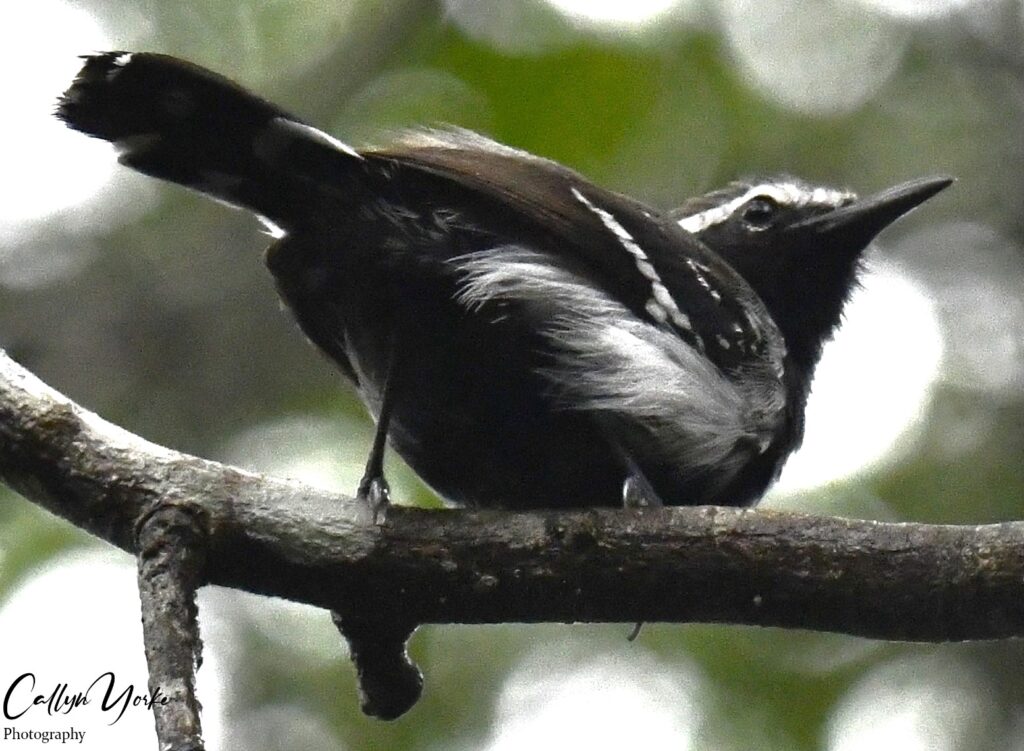
- Great Antshrike Taraba major 1 vine-tangled understory at woodlland/shrubland edge, CAT; AB
- Variable Antshrike Thamnophilus caerulescens 2 (m,f) a pair in the subcanopy, FTR (photo).
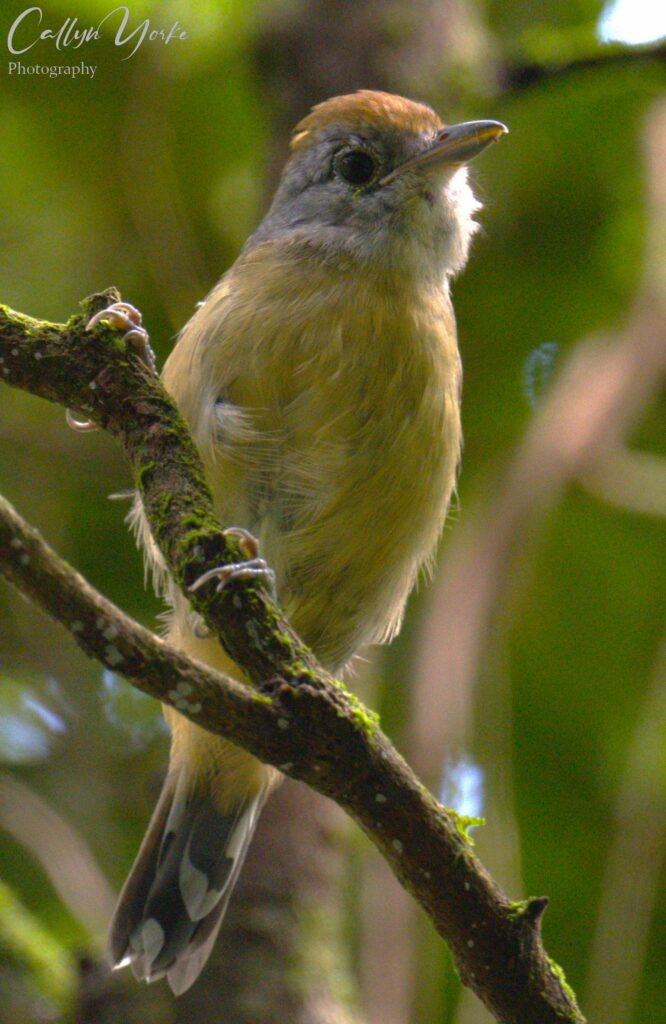
- Black-capped Antwren Herpsilochmus atricapillus 4 FTR.
PASSERFORMES: Scleruridae
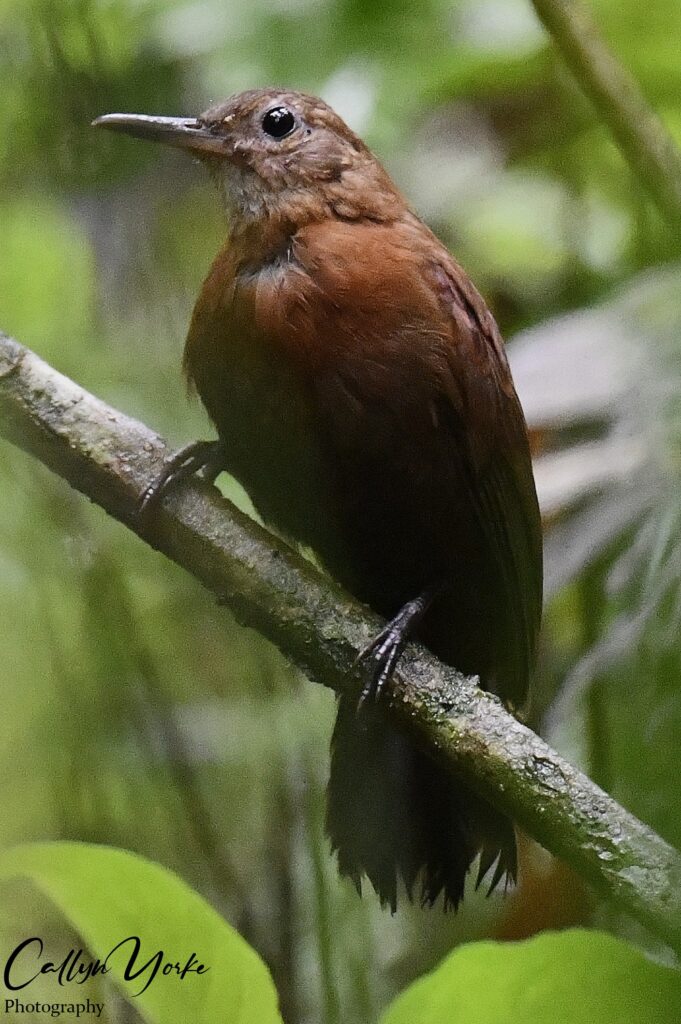
- Ceara Leaftosser Sclerurus cearensis 1 active in the shady understory at forest edge; pos. resp. to playback rec., FTR (photo).
PASSERIFORMES: Dendrocolaptidae
- Buff-throated Woodcreeper Xiphorhynchus guttatus 1 lower-middle level of forest edge, AB
- Ceara Woodcreeper Xiphorhynchus atlanticus 1 FTR.
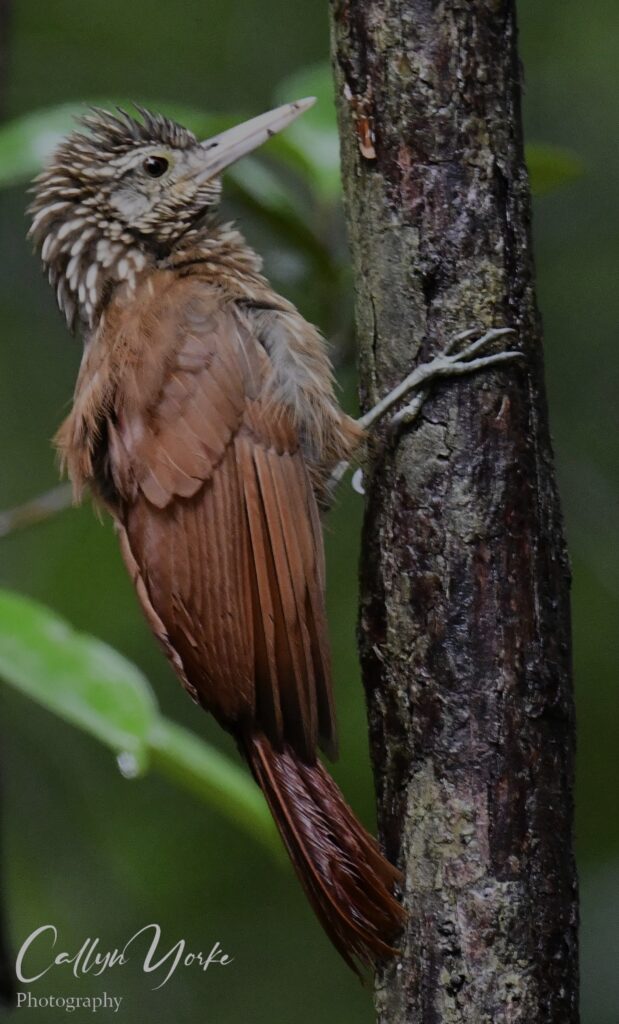
- Straight-billed Woodcreeper Dendroplex picus 2 lower level of woodland; moving rapidly between trees, CBG; AB (photo).
PASSERIFORMES: Furnariidae
- Wing-banded Hornero Furnarius figulus 2 RCS; RJ (photo).
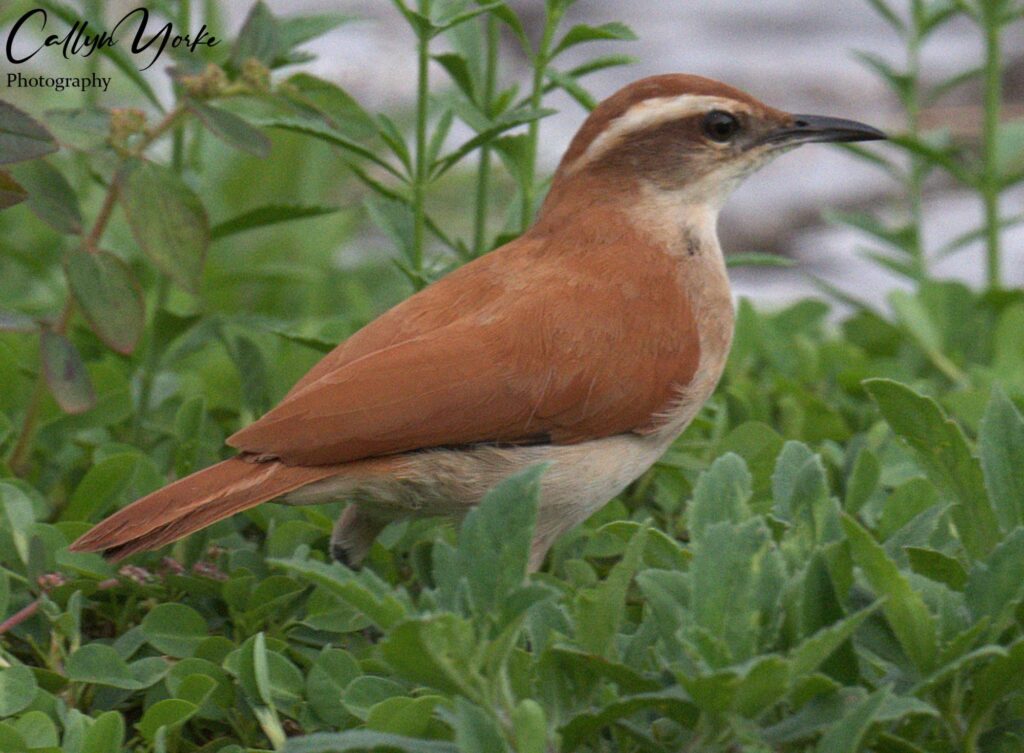
- Sooty-fronted Spinetail Synallaxis frontalis 1 (GR) FTR.
- Yellow-chinned Spinetail Certhiaxis cinnamomeus 2 greg. in dense, shady second-growth; one of the pair with single twig nest material, RJ.
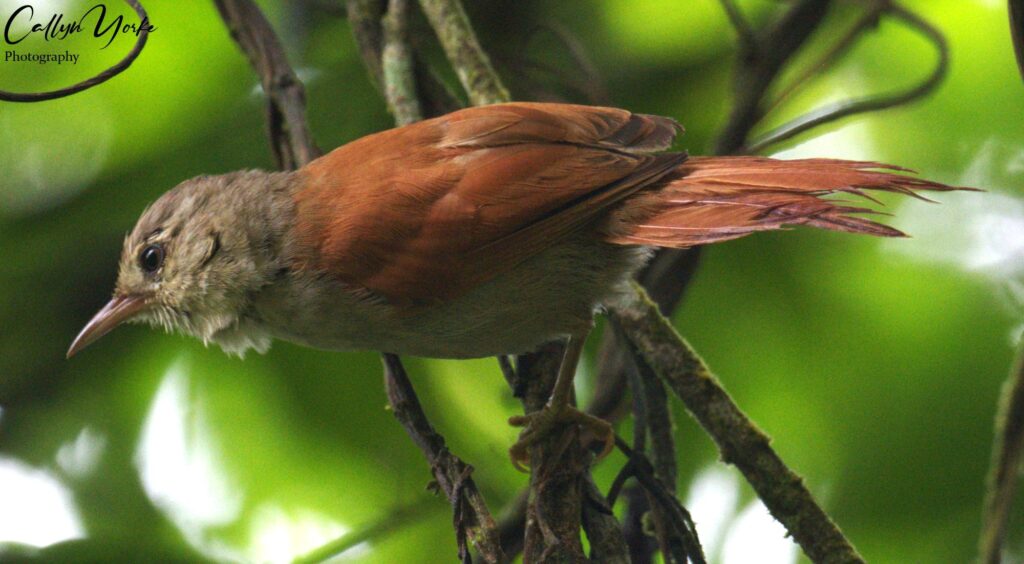
- Gray-headed Spinetail Cranioleuca semicinerea mid-level at forest edge, FTR (photo).
PASSERIFORMES: Vireonidae
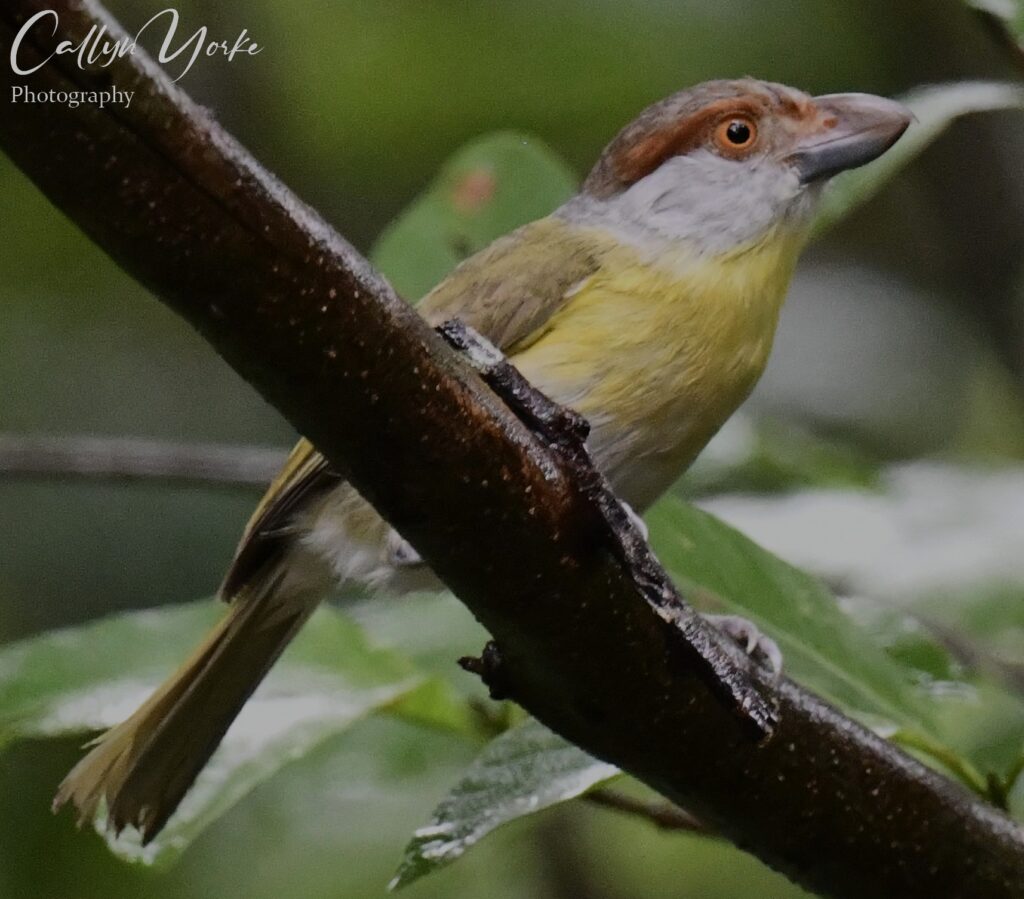
- Rufous-browed Peppershrike Cyclarhis gujanensis 1 low to mid-level of forest edge; pos. resp. to playback, CBG (photo).
- Chivi Vireo Vireo chivi 3 greg. in canopy at forest edge, FTR.
PASSERIFORMES: Estrildidae
- Common Waxbill Estrilda astrild 10 greg. ubiq..
PASSERIFORMES: Passeridae
- House Sparrow Passer domesticus 10 greg. roadsides; towns, ubiq..
PASSERIFORMES: Fringillidae
- Purple-throated Euphonia Euphonia chlorotica 1 FTR.
PASSERIFORMES: Passerellidae
- Pectoral Sparrow Arremon taciturnus 1 (GR – HO) FTR.
PASSERIFORMES: Parulidae
- Flavescent Warbler Myiothlypis flaveola 1 in canopy at forest edge, FTR.
- Golden-crowned Warbler Basileuterus culicivorus 1 (GR – HO) CBG.
PASSERIFORMES: Icteridae
- Variable Oriole Icterus pyrrhopterus 2 CAT.
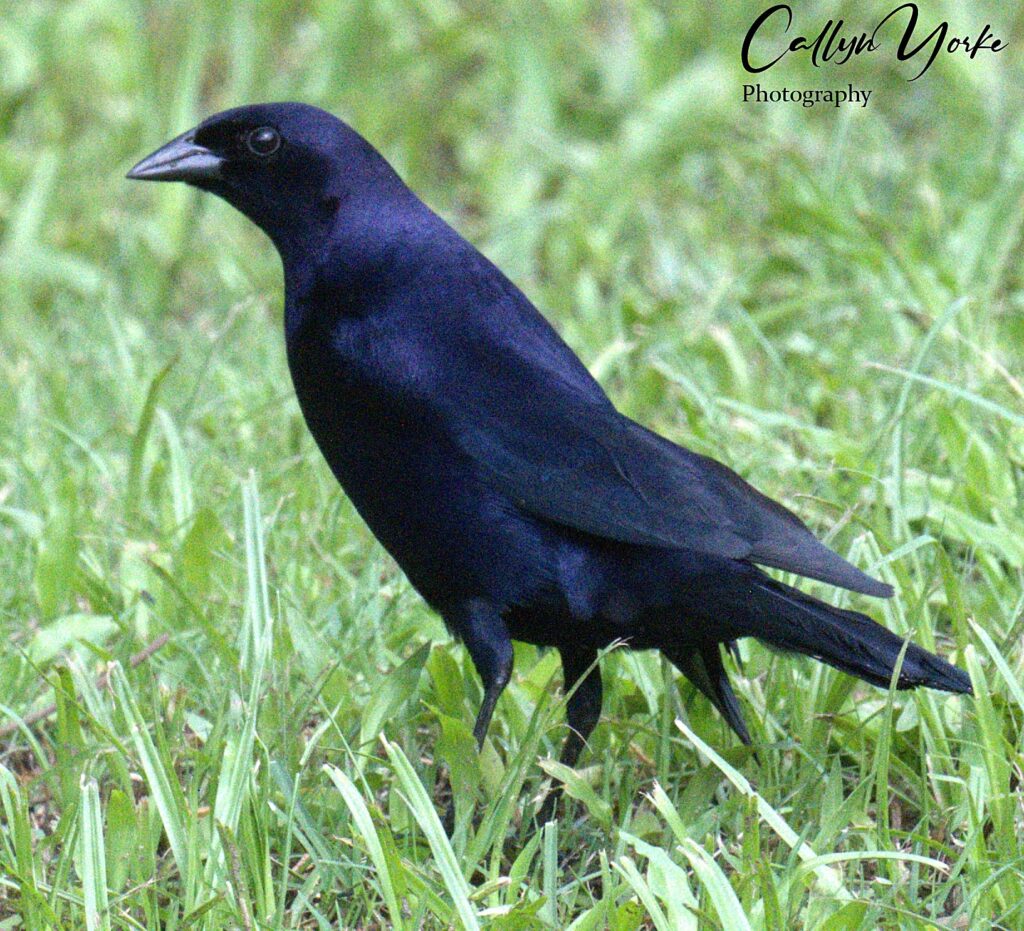
- Shiny Cowbird Molothrus bonariensis 1 (m) on lawn, RCS (photo).
PASSERIFORMES: Thraupidae
- White-throated Seedeater Sporophila albogularis 3 greg. CAT (photo).
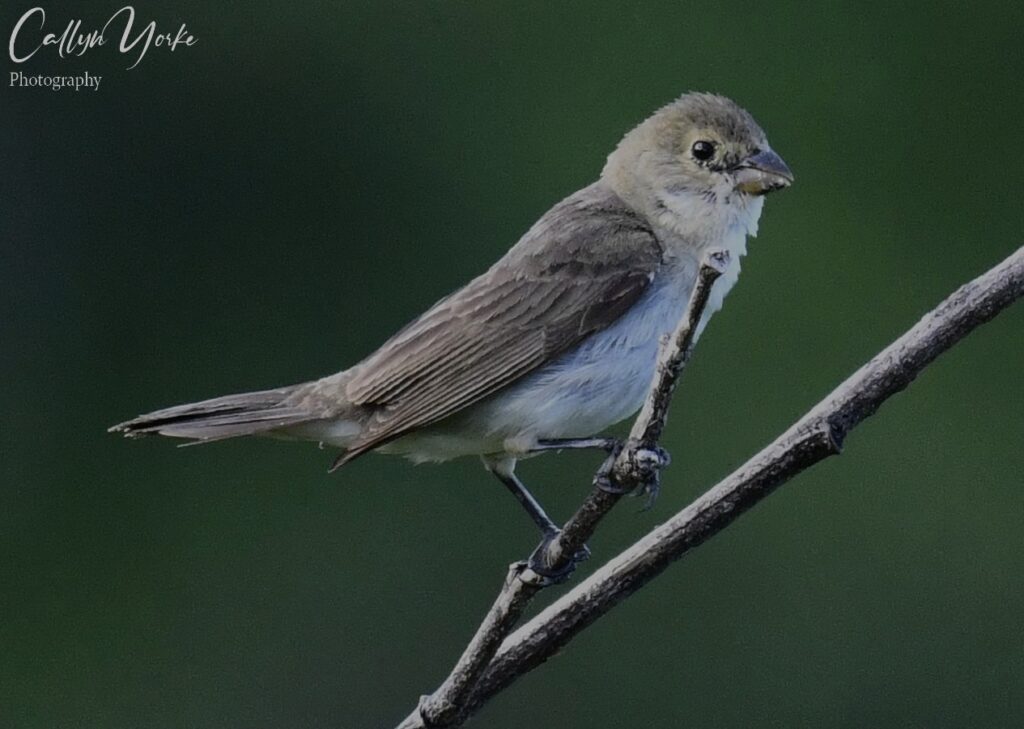
- Pileated Finch Coryphospingus pileatus 3 greg. CAT.
- Blue Dacnis Dacnis cayana 1 msf in tall tree canopy, AB.
- Bananaquit Coereba flaveola 3 ubiq..
- Red-cowled Cardinal Paroaria dominicana 5 greg. CAT.
- Sayaca Tanager Tangara sayaca 14 (ad., imm) greg. msf with PATA ubiq. (photo).
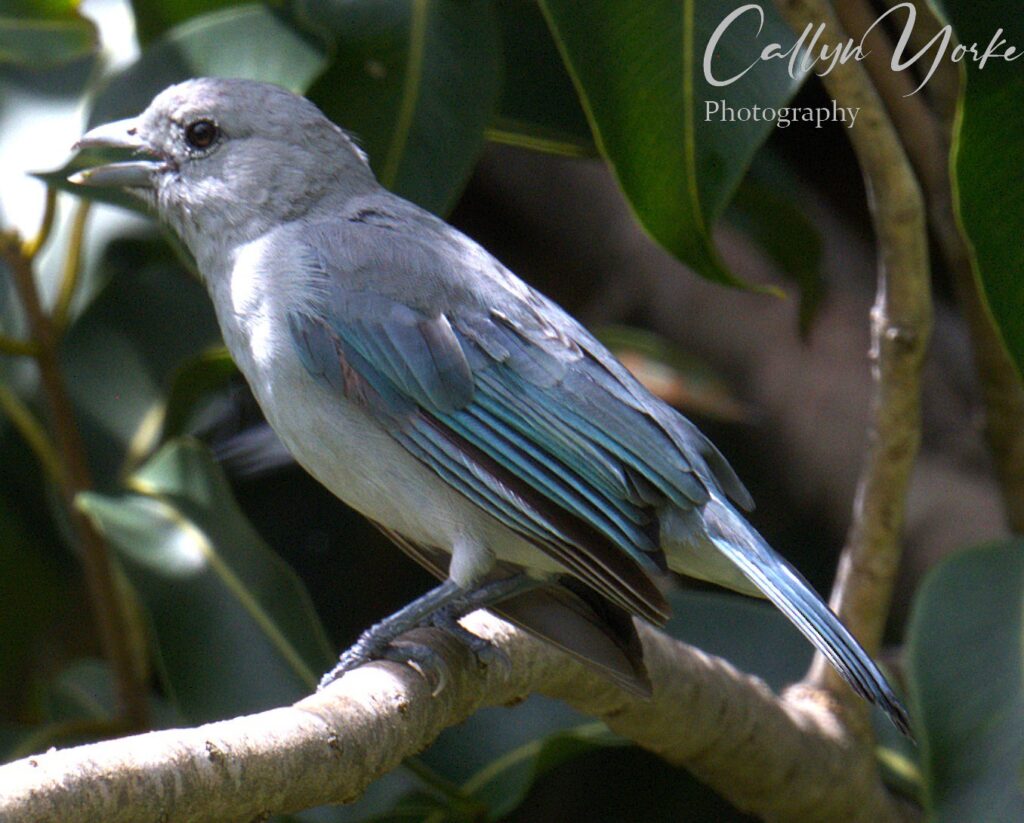
- Palm Tanager Tangara palmarum 4 greg., msf with SATA ubiq..
- Red-necked Tanager Tangara cyanocephala 1 (GR) FTR.
PASSERIFORMES: Hirundinidae
- Gray-breasted Martin Progne chalybea 2 20-40m agl over area, CAT; RJ.
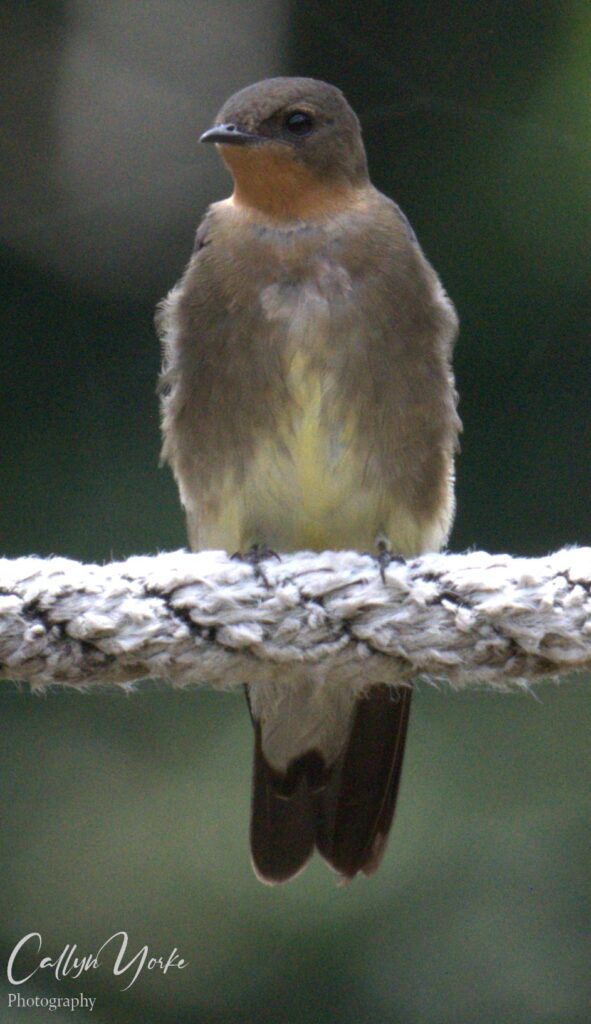
- Southern Rough-winged Swallow Stelgidopteryx ruficollis 2 greg. a pair in flight over forest canopy, FTR (photo).
PASSERIFORMES: Troglodytidae
- Southern House Wren Troglodytes musculus 2 voc. forest/shrubland edge, CBG; RJ.
- Moustached Wren Pheugopedius genibarbis 2 pos. resp. to playback, swampy woodland understory, RCS.
- Long-billed Wren Cantorchilus longirostris 1 (GR – HO) CBG.
PASSERIFORMES: Polioptilidae
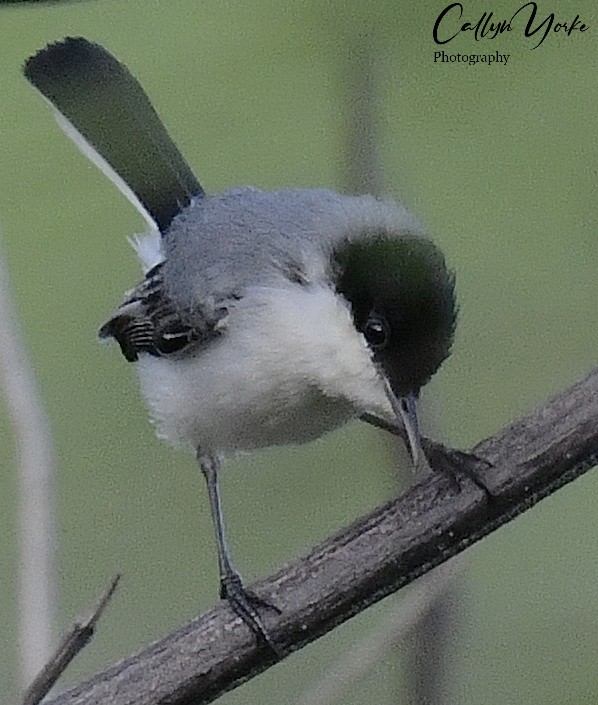
- Tropical Gnatcatcher Polioptila plumbea 1 msf in canopy and subcanopy, ubiq. (photo).
PASSERIFORMES: Turdidae
- Pale-breasted Thrush Turdus leucomelas 4 loosely greg. on ground, CBG.
- Rufous-bellied Thrush Turdus rufiventris 2 FTR.
___________________________________________
REPORT LINKS
___________________________________