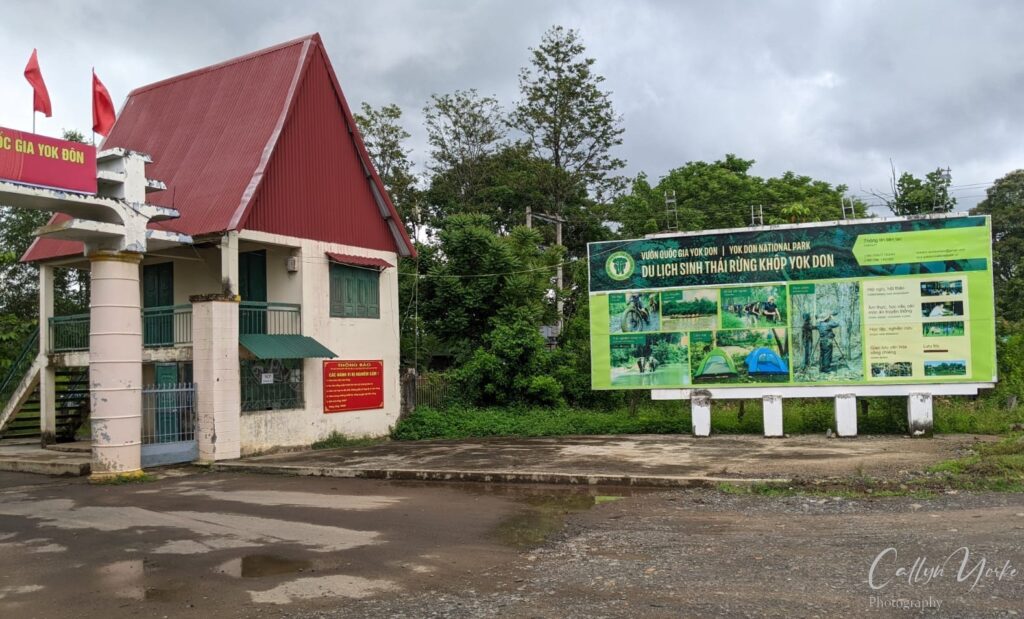
Yok Đôn National Park, Đắk Lắk Việt Nam 10-15 June 2025 Callyn Yorke
INTRODUCTION
Lê Quý Minh was waiting at the airport in Buôu Ma Thộut (BMT) when I arrived from Đà Nẵng. He had made the two-day drive from his home in Huế and was ready for our 1.5 hr. drive from BMT to Yok Đôn National Park.
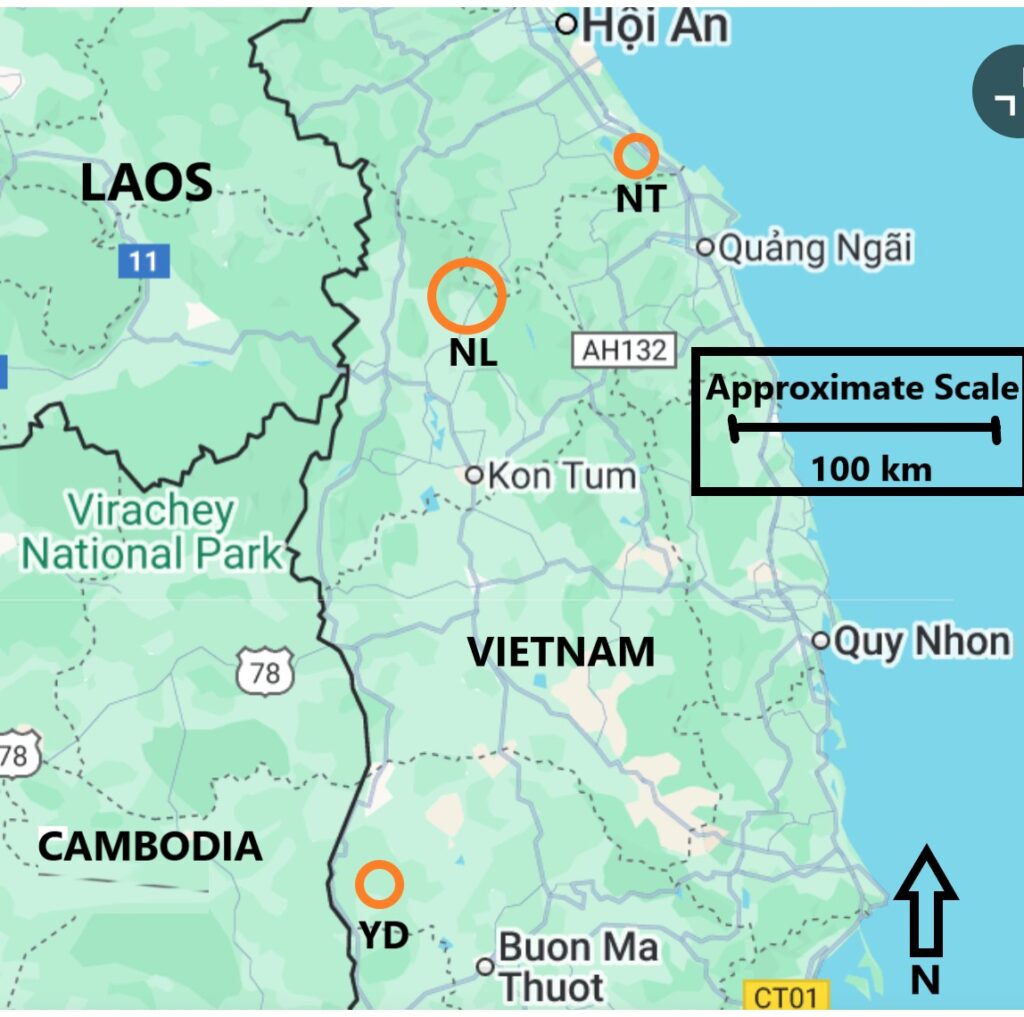
Minh, who’s sister lived in BMT, had been to the park many times over the years and was familiar with the region. Logistics for the week-long journey had been arranged. Yok Đôn would be our first of three principal destinations in Vietnam, which included the central highland province of Kon Tum and coastal province of Quảng Ngãi. However, due to the simultaneous arrival of a typhoon from the northeast, we were initially uncertain of the duration of our stay in Yok Đôn.
Our first two days in Yok Đôn, with cloudy skies and intermittent light to heavy rain, were comparatively cool, calm and pleasant for birding and photography. Meanwhile, central and northern Vietnam were experiencing the full force of an early seasonal typhoon. Minh received updated weather reports from friends and relatives on the coast, where storm impacts were most severe. Massive flooding and landslides were widespread, particularly in the areas we planned to visit after Yok Đôn. Due to continuing rain and flooding in Kon Tum highlands, we decided to postpone the drive northward and stay in Yok Đôn for an additional two nights. That decision was definitely reasonable and ultimately very favorable. Each of our drives in the park produced new birds for the trip list – including a few lifers for me.
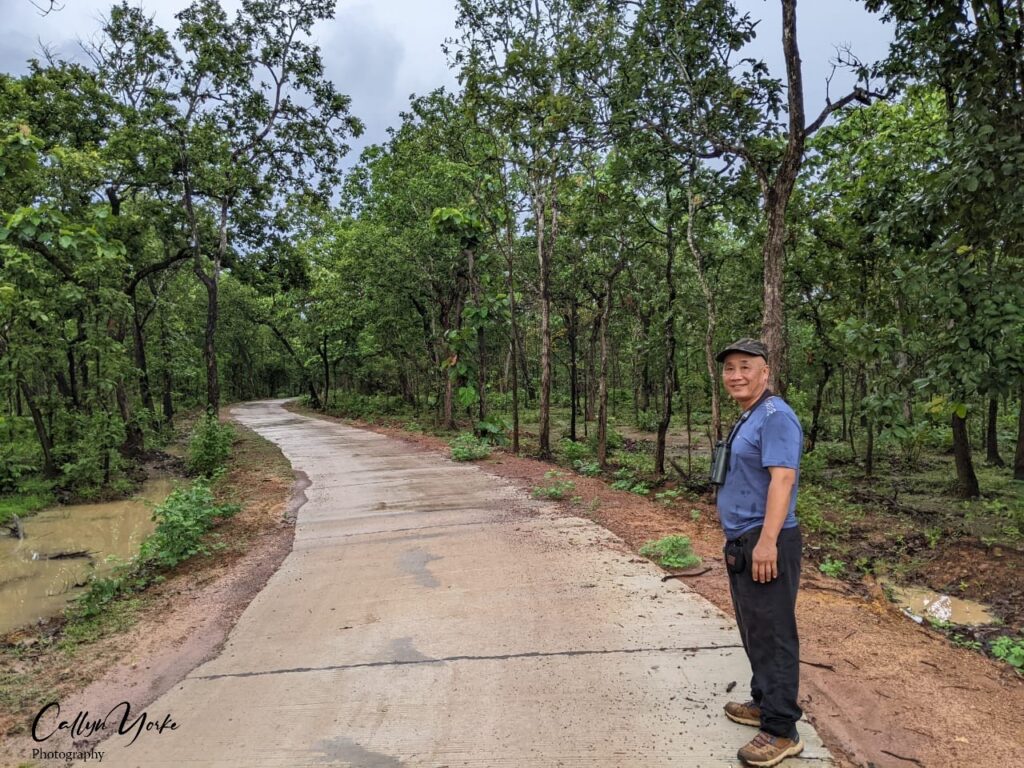
The deciduous dipterocarp woodlands of Yok Đôn, growing on firm, rocky soils and with a sparse understory due to periodic fires, provided easy access on foot. We had only to avoid drainage ditches, swampy ground, buffalo wallows and ponds, when pursuing birds in the forest. Except for a bloody accident I had the first afternoon, when a thorn from an overhanging shrub lodged in my nostril like a fish hook, we seldom had to battle our way through dense vegetation, as would be expected when trekking off-trail in a broadleaved evergreen forest or jungle. If Minh heard a distant bird worth seeing, we simply headed straight for it through the woods, mindful of being snagged by occasional vines and thornbushes..
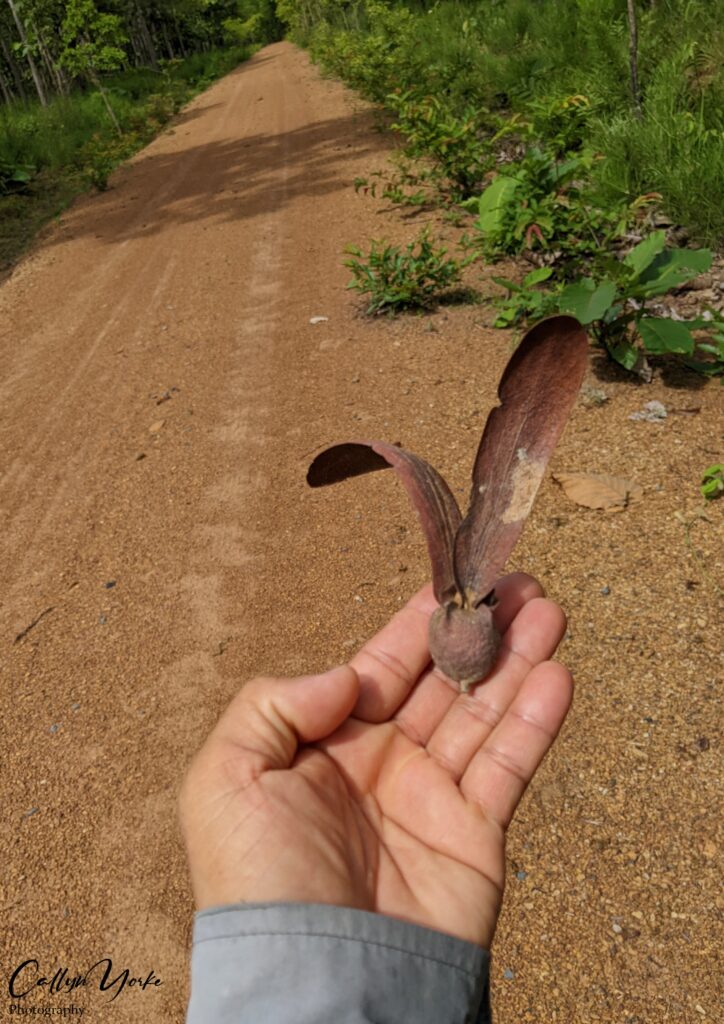
While focused primarily on birds, we often encountered other fascinating organisms in the park, e.g. two species of ground-level ginger with showy, orchid-like purple and white flowers. Some species in this plant family have been used for centuries in traditional herbal medicine. Later, in our search for the Golden-winged Laughingthrush of the Ngoc Linh – Kon Tum highlands, we would be at ‘herbal medicine ground zero’ – the heavily patrolled forests of a Vietnamese ginseng corporation.
There was much more to discover in Yok Đôn than could be found in only a few days. The park was fantastic indeed for birding and would be a vast treasure trove for an entomologist. And everywhere, ornithology, entomology and botany, were connected by Natural Selection – a dynamic, infinitely complex web of ecological threads that could be at once, exquisitely subtle and drop dead gorgeous.
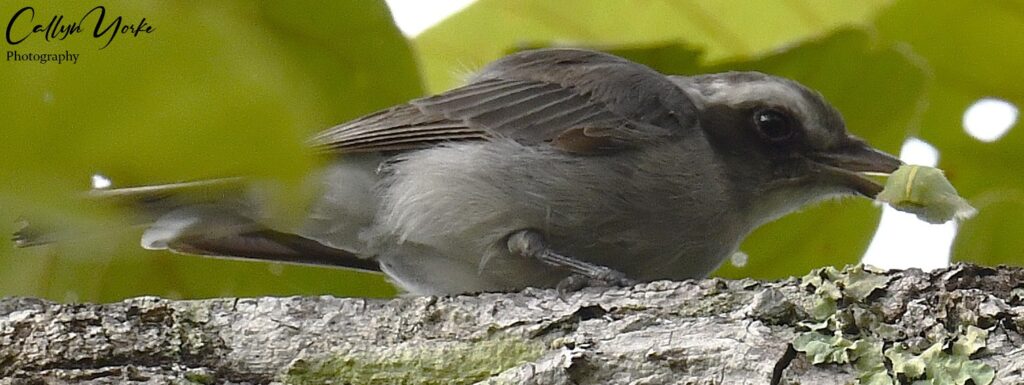
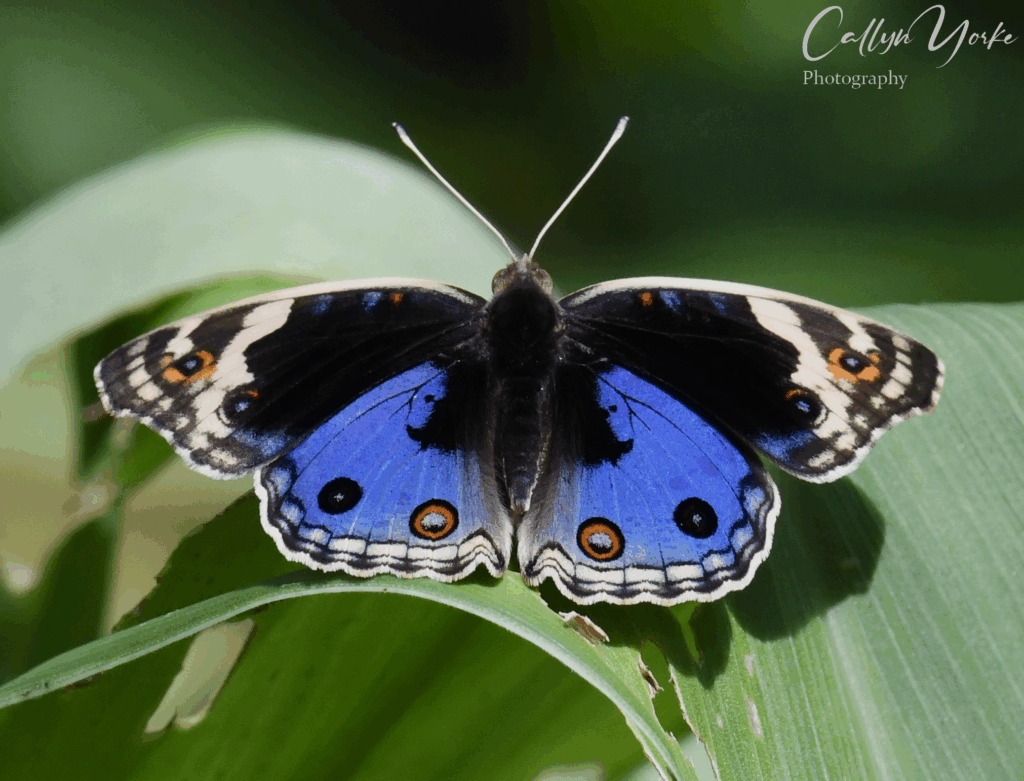
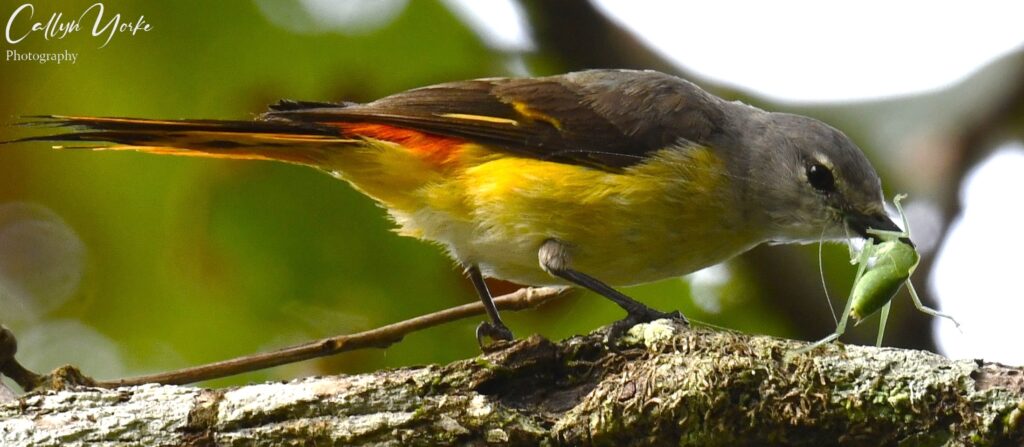
For example, Minh and I observed and photographed numerous incidents of birds taking lepidopteran larvae, highlighting the importance of that varied and seasonally abundant food source (photo). Each day, perhaps as many as twenty species of butterfly were active around flowering herbs and shrubs. One brilliantly marked blue butterfly won our approval for top contender in the lepidopteran beauty pageant (photo). Flowering plants – insects – birds: A myriad of ecological connections and dependencies. Yok Đôn was a showcase of evolutionary splendor on multiple levels.
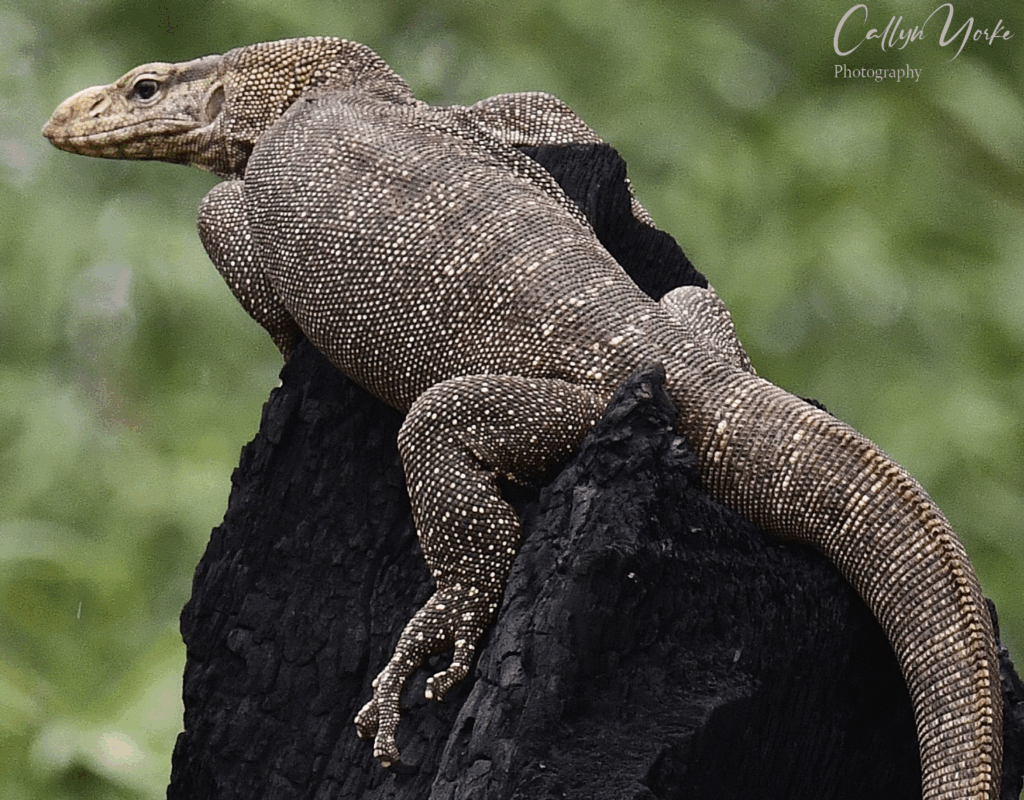
Herpetofauna in the park was dominated by several unidentified species of frog, always well concealed and often intensely vocal during daytime rains and in the late evening. Reptiles, which were probably most active in the dry season, were scarce during our visit. A scorched stump in a large pond by the road was the favorite look-out post of a young Water Monitor lizard that we saw daily when driving by (photo).
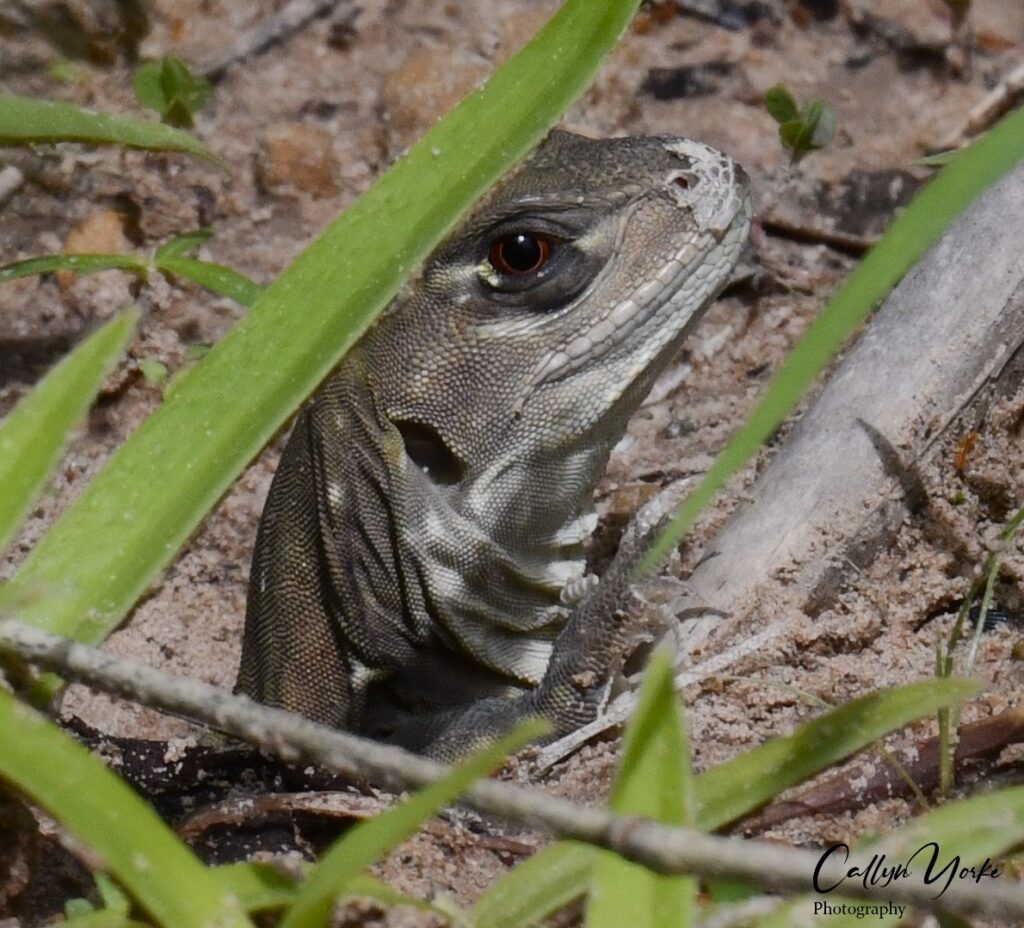
Our penultimate survey day in Yok Đôn was sunny and by mid-morning our clothes were soaked with perspiration. When adjacent to a water reservoir in the northwest section of the park, a fast-moving lizard caught my attention on the side of the roadway. Putting a binocular on it, I recognized the reptile as a species of ‘Butterfly’ lizard (Leiolepis sp.).This interesting group of lizards includes coastal populations consisting solely of females (e.g. Leiolepis ngovantrii). In those unisexual species, offspring are produced parthenogenetically, i.e. by cloning. Butterfly lizards are also unusual in being active on the ground during the hottest time of the day, when most other animals seek shade. This particular individual dove into a small burrow when we approached for photos, poking its head out to keep an eye on us (photo).
Of the very few species of mammal we encountered in the park, arboreal squirrels, e.g. Pallas Squirrel (Callosciurus erythraeus) and a Striped Squirrel (Tamiops sp. c.f. T. maritimus) were abundant and conspicuous. These squirrels were often associated with mixed species flocks of birds in fruiting trees, including insectivorous birds, e.g. Common Woodshrike and Small Minivet. Squirrels and birds moved together very quickly through the tree canopies.
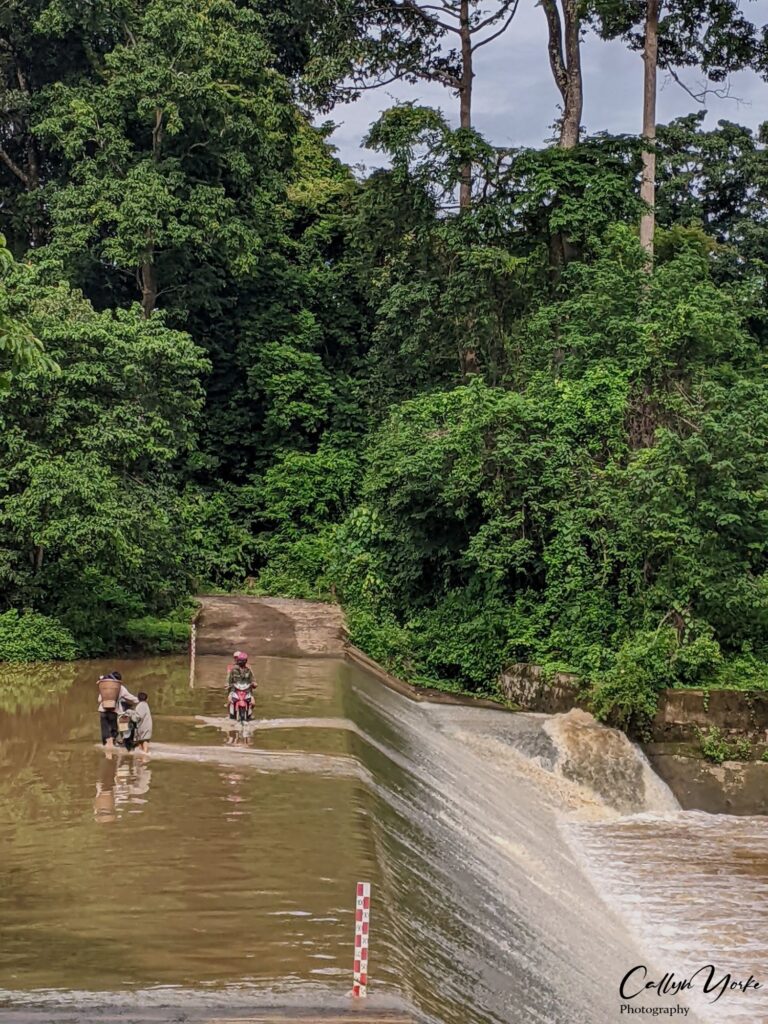
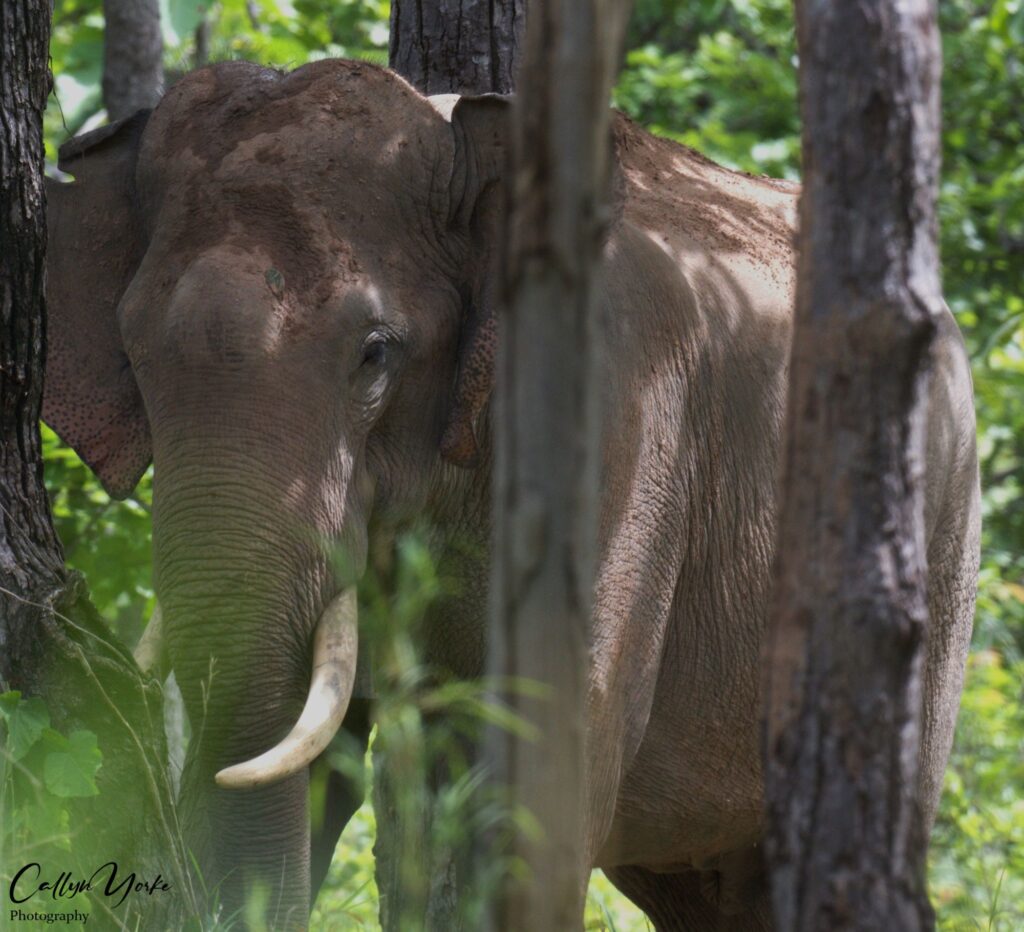
Long-tailed Macaque (Macaca fascicularis), a widespread and often abundant primate in SE Asia, was seen only once near the northwest park roadway. Asian Elephant (Elephas maximus) also occurred sparingly in the park; we found one pile of fresh droppings and a few downed trees, indicating their presence. When the rains subsided near the end of our visit, we were able to cross the dam and enter an ecotone of riverine-deciduous forest in the northwest section of the park. It was near the roadway there, that we encountered our first elephant in Yok Đôn, flapping its ears amongst the trees (photo).
We kept a safe distance from the old tusker, just incase he was grumpy. But the huge beast remained in the shade, appearing unmoved by our presence. I got a few snapshots and calmly retreated to our nearby vehicle. As for the omnipresent herds of domestic cattle, constantly flagging their tails at hordes of biting insects, and water buffalo seeking refuge in mud wallows, the elephants in the park surely had their own issues with ectoparasites and thermoregulation.
As the tail end of the typhoon swung northward, mid-morning temperatures in the park began to peak around 34°C. Bird activity generally decreased by that time. Small flocks of Greater Racquet-tailed Drongo and Indochinese Roller, both common throughout the park, appeared to remain active later than most other birds. Those all-day, aerial acrobats probably found the increasing abundance of flying insects much to their liking.
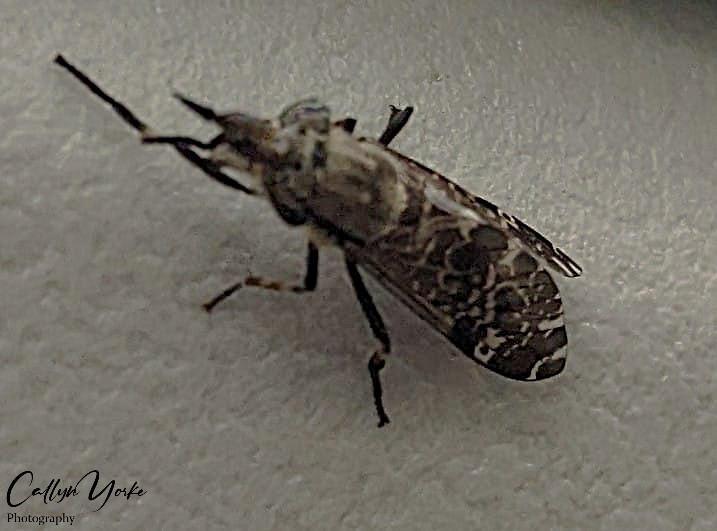
For Minh and I, driving slowly with the windows open could be overwhelmingly unpleasant. Warm spells filled the passenger compartment with at least two kinds of biting insects; the smaller of the two species being the most abundant (photo). These insects seemed to be attracted to the motion of the car and heat from the engine. Often, there were so many accumulating inside the car, we had to close the windows and turn on the AC fan to keep them off of us. Interestingly, we were not bothered by those biting insects when walking the roadways or through the woodlands.
My initial taxonomic assignment of the biting insect belonging to the assassin bug family (Hemiptera: Reduviidae), was evidently incorrect. I sent a rather poor quality photo of a live specimen (shown below) to iNaturalist, a nonprofit, scientific platform that specializes in accurate photo-identifications of plants and animals. Although their report did not include a species assignment, it appears that our ‘car bug’ belongs to an entirely different lineage, called assassin flies (Diptera: Asilidae). In contrast with the medically important Reduviidae, predatory asilid flies are not known to be vectors of disease, which is somewhat of a relief to know, since their representatives were delivering painful bites to us in the car.
However, following the COVID-19 pandemic, there has been heightened global concern about zoonotic disease transmission. Health officials have warned that, due to high population densities of humans and livestock in rural areas of Việt Nam, the risk of disease sharing between animals and humans is increasing.
Fairly recently, a rare, though significant case of trypanosomiasis was medically documented in Vietnam. The incident involved a 35-year-old Vietnamese woman, who in March 2015, was diagnosed with Trypanosoma evansi. Exactly how she contracted this potentially lethal zooflagellate, was undetermined. Curiously, she was an urban dweller who, prior to being admitted to the hospital, had visited relatives somewhere in Đắk Lắk province (Nguyen Van Vinh Chau, et.al. 2016. Clinical Infectious Diseases, 62 (8):1002-1008.).
As a shelter from heavy downpours and rapidly rising air temperatures, lodging at the park visitor’s center was a welcomed relief, even with only a one-star hotel rating. Most evenings we found ourselves the park’s only guests; a multiple room vacancy was the norm. Perhaps only hard-core birders or exhausted, rain-soaked travelers, would find the park accommodations suitable for an overnight stay. Most of the visitors disappeared before the main gate was closed at sunset.
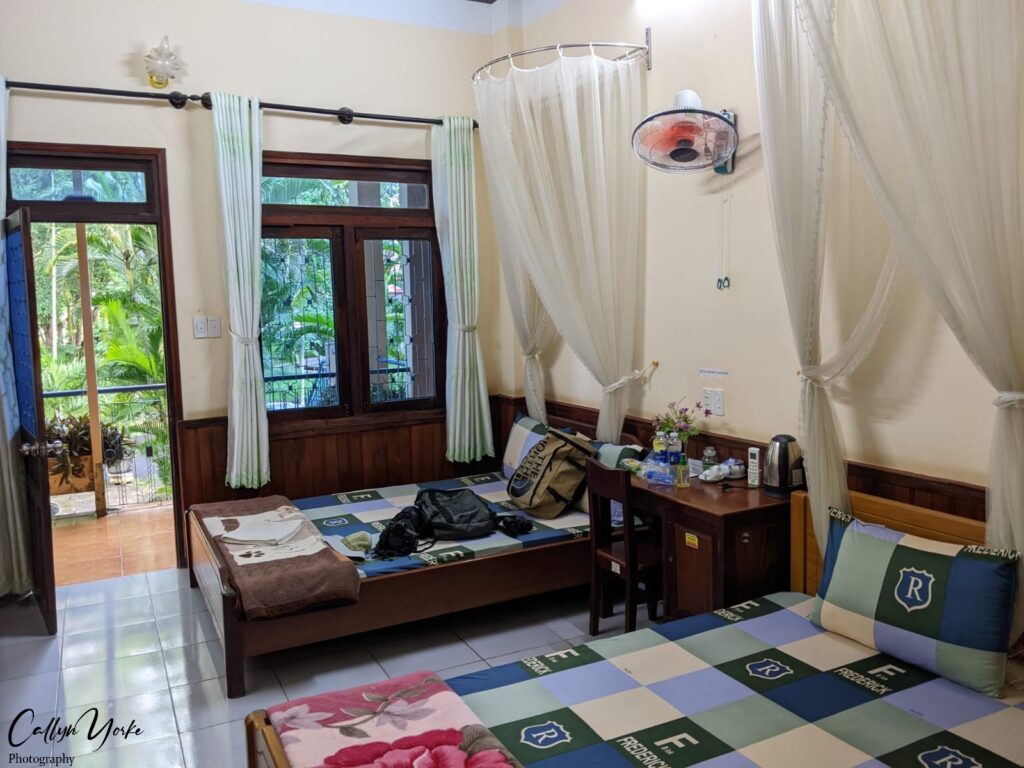
Our two rooms upstairs were spacious and fully furnished. Mattresses and pillows were firm, as in a tablecloth over plywood and sacks of ready-mix cement. An oscillating electric fan on the wall faced a pair of beds with mosquito nettings. A hardwood desk, chair and wardrobe completed the furniture ensemble. Surprisingly, electrical outlets were numerous, well placed and the overhead lighting was bright. The bathroom by contrast, was dismal and in desperate need of renovation – loose plumbing fixtures, stained porcelain and tile flooring, rotting door and window frames and a leaky wall shower in a cramped space between the sink and a western-style toilet, featuring a floppy plastic seat and lid. That would be the short list of necessary repairs.
There were jittery, unregistered guests in the room as well. Among them, several taxonomic groups of insects, including Diptera, Hemiptera, Hymenoptera, Orthoptera, Blattodea and Isoptera – a lively, ad hoc menagerie, particularly when the lights were switched on. The fan drove most of them into the bathroom. Unfortunately, one or two of the slower ones may have been accidentally trampled when I showered.
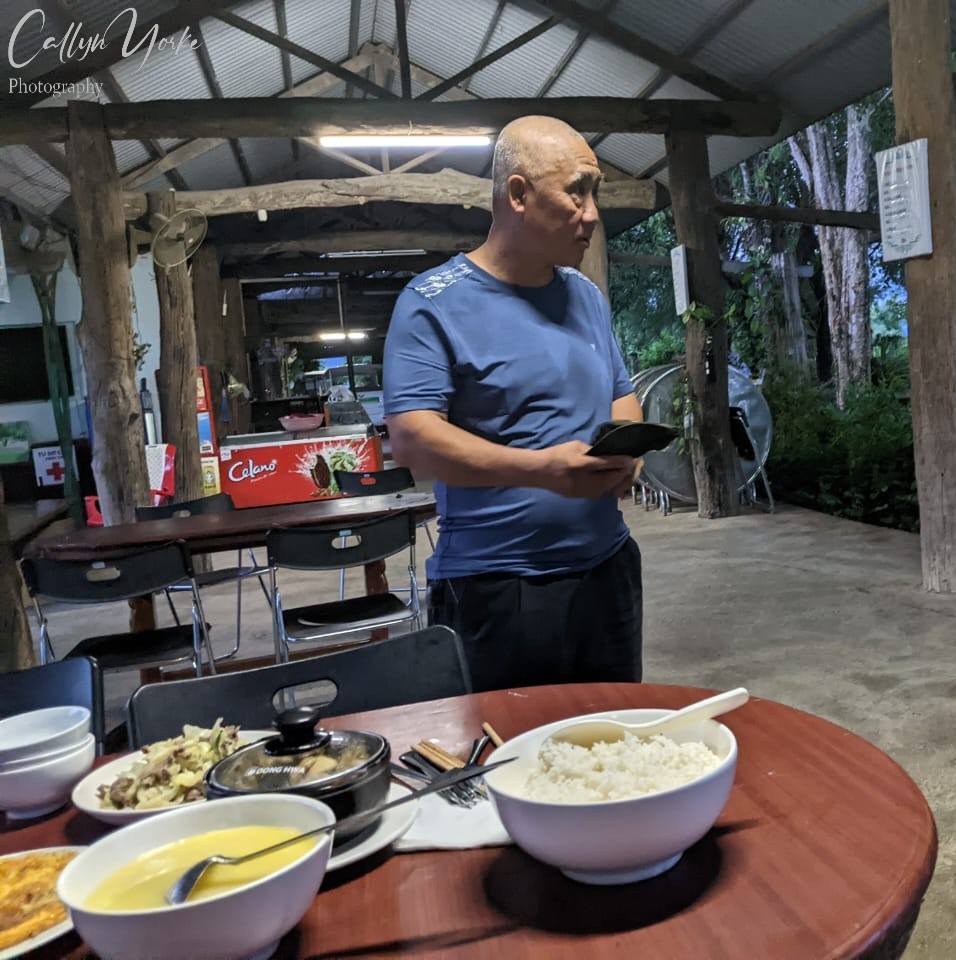
The kitchen and patio dining area were managed by a friendly staff who were attentive to our dietary requests for lunch and dinner. The menu was predominantly Vietnamese, featuring a variety of saucy meats, vegetables and fruit, always accompanied by steamed white rice. Ice cream, the quintessential western dessert item for kids and pre-diabetic adults, was kept outside in a heavy duty freezer. One evening, the freezer sliding top and lock mechanism jammed, inciting panic among the guests (Minh and I). An emergency was declared in Vietnamese and the cook found an electric saw to solve the problem.
Since we usually left early in the morning for birding, when the kitchen was still closed, breakfast for us was akin to camping out. Minh was routinely busy before sunrise, preparing our meal with groceries kept in the car and ice chest. He had stocked the rear vehicle compartment with plenty of mango, avocado, yogurt cups, wrapped cheese, French bread and instant coffee — our daily breakfast buffet served on an elaborately carved and polished table and bench set outside the rooms. There were no other food options near the park. Minh had planned accordingly.
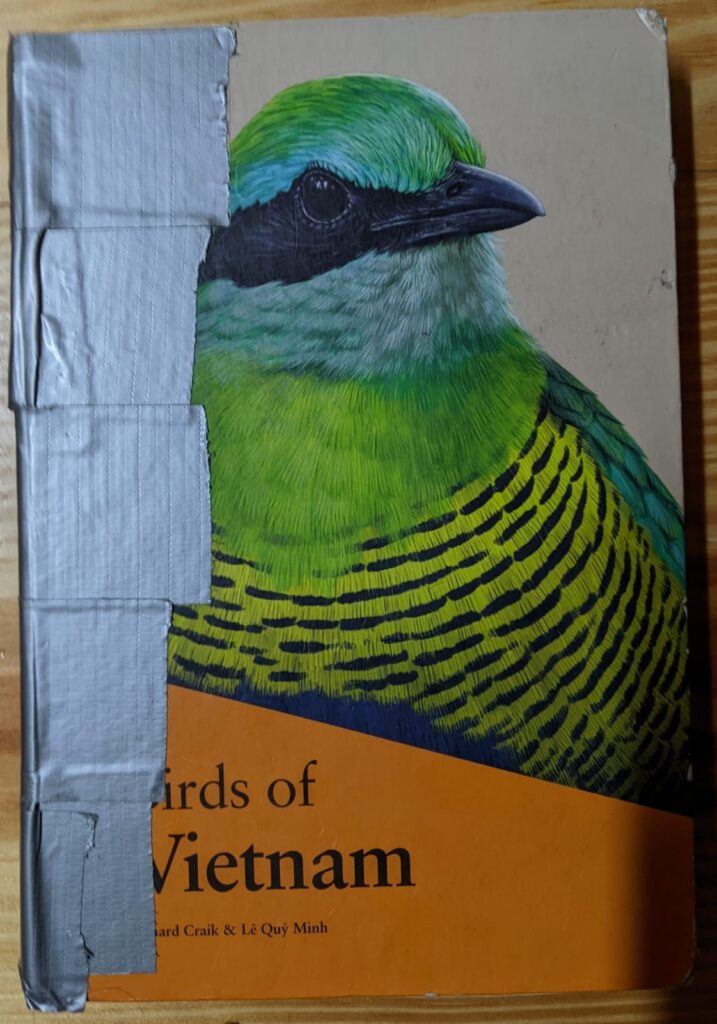
Some days before our trip, I went through my tattered copy of Richard Craik and Lê Quý Minh’s, Birds of Vietnam (2018), listing birds that I had not yet seen in Vietnam and that might be found within the areas we intended to visit. Despite having birded multiple locations in Việt Nam, there remained about 110 bird species I had not encountered in south and central Việt Nam. Some of them would be lifers. I sent an email to Minh with my list of “target birds.” Always a devout realist, Minh advised me at the outset that we would be fortunate to observe only about 30% of those birds on our trip.
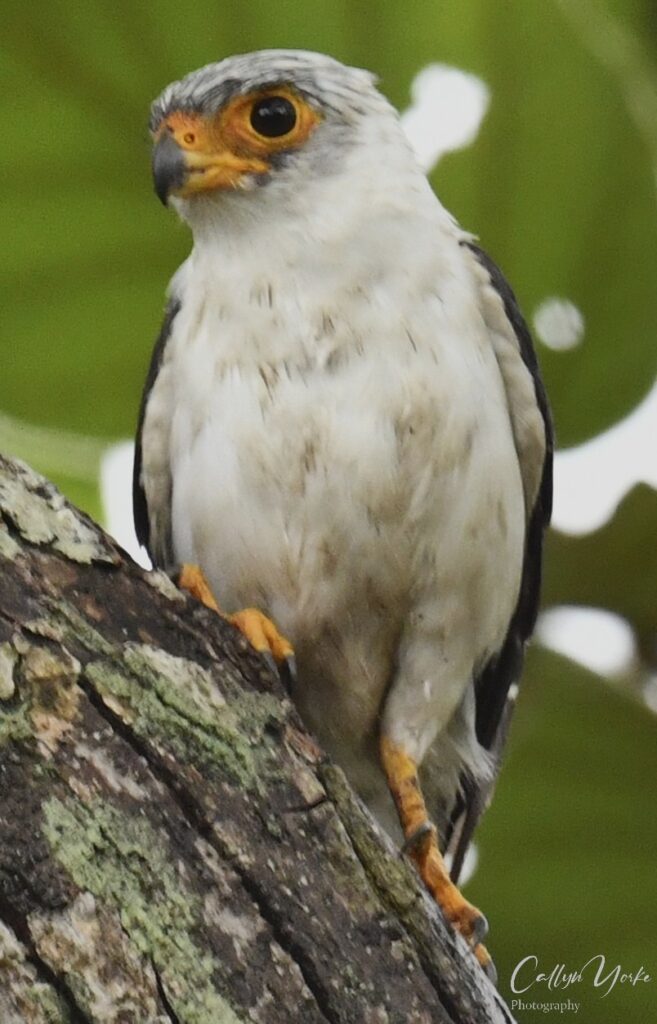
I wasn’t surprised, given that many of the species on my list were uncommon to rare in Việt Nam, e.g. Coral-billed Ground Cuckoo (highly unlikely to be found on this trip) and the enigmatic Mekong Wagtail (Minh had found it once before in Yok Đôn). Minh seemed reasonably certain that our journey through southwestern and central Vietnam, though outside the optimal birding period (i.e. winter/spring), would produce a fair number of bird species, perhaps including some specialties that were relatively common within their restricted ranges in Việt Nam, e.g. White-rumped Falconet, Small Minivet, White-browed Fantail, Annam Prinia and Burmese Nuthatch – all residents of Yok Đôn National Park.
Further north, deep within the pristine rainforests of the Ngọc Linh – Kon Tum highlands, lived the stunning Red-tailed Minla and shy Black-crowned Barwing, together with one of the most sought after endemics of Việt nam – Golden-winged Laughingthrush. Those three species were possible to see and would be very exciting life-birds for me. Based on our previous birding trips together, I was confident with Minh’s superior auditory and visual identification skills. I knew that if the birds were anywhere in the vicinity, Minh would probably find them.
Materials and Methods
Our bird surveys were conducted daily, while driving slowly on roadways through appropriate habitat, listening and watching for birds. Usually, Minh was first to hear a new bird and abruptly stopped the car. Then, sounding something like Arnold Schwarzenegger in a Terminator film, advised me to,” Get out.” I usually took my binocular and camera whenever exiting the the vehicle. No telling what amazing new bird might be nearby. In fact, Minh found quite a few cool birds that way in Yok Đôn, e.g. Black Baza, Red-bellied Parakeet, Collared Falconet and Rufous Treepie.
Minh and I used binoculars (Swarowski 8 x 42 and Zeiss 10 x 42, respectively) and Nikon DSLR cameras (D500 and D850, respectively), each fitted with a Nikon IF VR 500mm Pf prime lens. Minh also carried a hand-held blue-tooth, audio recording device, along with a remote speaker, both paired with his cell phone. My Google Pixel 3 cell phone included a useful Vietnam Birding App., featuring the alphabetically listed avifauna, including species-specific vocalizations. Minh and I used our cell phones for general photography, e.g. documenting locations. My Google cell phone camera included GPS metadata that was reviewed to pinpoint our positions in the field. Those data have been incorporated in the annotated Google maps presented in this report.
I used a pocket notebook for documenting our bird sightings, dates, times, locations and relevant ecological details. That information was recopied each evening into a loose-leaf, hand-written journal, as a permanent record. Taken together, my field notes and digital images formed the basis for this report.
__________________________________________________
ANNOTATED BIRD LIST – Yok Đôn National Park, Đắk Lắk Việt Nam 10-15 June 2025 Callyn Yorke
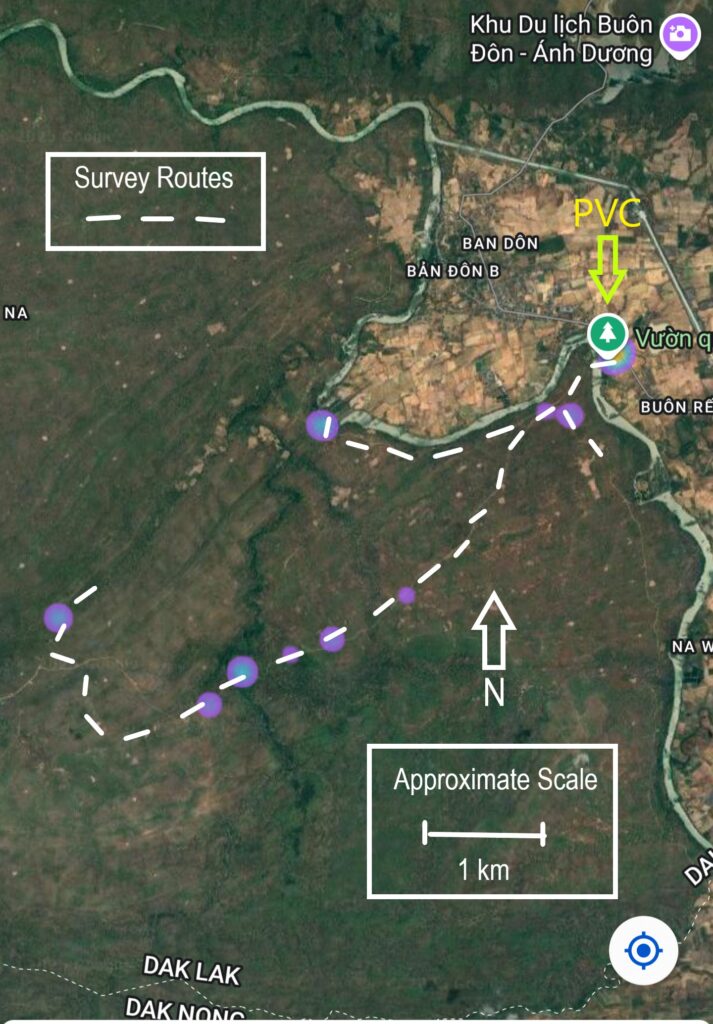
KEY TO ANNOTATIONS
Observer noted when only one of us encountered the bird: Lê Quý Minh (LQM); Callyn Yorke (CY)
Bird Behavior: greg. = gregarious; msf = mixed species flock; agl = estimated height above ground level (m); voc. = vocalizations, i.e. calls and/or song; HO = heard only.
Numerical abundance, frequency and distribution: Highest number of individuals found and counted when a species was observed at multiple locations and/or days. C = Common, seen or heard during the majority of surveys; UC = Uncommon, seen or heard during no more than half of the surveys; R = Rare – seen or heard during only one or two surveys. ubiq. = ubiquitous in appropriate habitat(s).
Acronym abbreviations for bird species: For example, using the first two letters of the English common name, Chestnut-tailed Starling = CTST; Common Iora = COIO; Red-breasted Parakeet = RBPA, etc.
SYSTEMATICS and TAXONOMY is an amalgam of the most recent (2025) online lists by Birdlife International, AVIBASE and International Ornithological Congress (IOC).
BIRDS
PHEASANTS AND PARTRIDGES Phasianidae
- Chinese Francolin Francolinus pintadeanus 4 repeated vocalizations over periods of several minutes; weakly to unresponsive to playback recordings. Always vocalizing from well concealed locations in either the woodland understory or low tree limbs; once seen briefly running on the ground through dense vegetation; localized in woodland interior with adjacent clearings; UC.
- Red Junglefowl Gallus gallus 3 (m,f) greg. vocal (often unseen); once seen running across roadway into semi open bamboo scrub; domestic junglefowl common around human habitations, UC.
PIGEONS AND DOVES Columbidae
- Eastern Spotted Dove Spilopelia chinensis 5 vocal while perched 3-5m agl in trees; pairs in flight; C; ubiq..
- Zebra Dove Geopelia striata 2 individuals on ground or in flight; clearings near the roadway; UC.
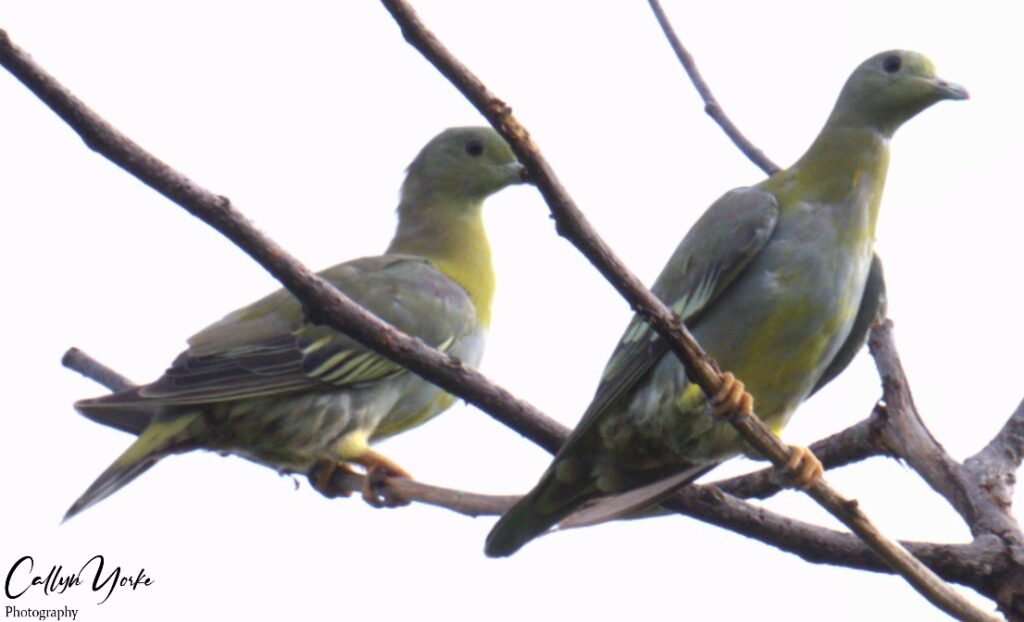
- Yellow-footed Green Pigeon Treron phoenicopterus 6 greg. in flight over woodland; sometimes alighting in leafless canopy of tall trees; fruiting tree(s) usually in the immediate vicinity; C (photo).
TREESWIFTS Hemiprocnidae
- Crested Treeswift Hemiprocne coronata 1 circling 40m agl over woodland; seen only once; R.
SWIFTS Apodidae
- Germain’s Swiftlet Aerodramus germani 15 loosely greg., flying lower with heavy overcast, 10 -50m agl. C; ubiq.
- Asian Palm Swift Cypsiurus balasiensis 1 in flight over the PVC pond in late afternoon with GESW, R.
- House Swift Apus nipalensis 5 greg. flying 10-15m agl over riverbank near PVC bridge, UC.
CUCKOOS Cuculidae
- Greater Coucal Centropus sinensis 5 vocal (often unseen), C; ubiq.
- Green-billed Malkoha Phaenicophaeus tristis 1 in subcanopy of mature trees with vines, UC.
- Chestnut-winged Cuckoo Clamator coromandus 1 active in roadside woodland understory, R.
- Western Koel Eudaynamys scolopaceus 1 well concealed in tree canopy next to the PVC bridge, R.
- Plaintive Cuckoo Cacomantis merulinus 1 repeatedly vocal (unseen) forest at edge of large water retention pond near the north park boundary, R.
STORKS Ciconiidae
- Asian Openbill Anastomus oscitans 2, greg. partly concealed in a clump of trees at the edge of a swampy clearing, SE ranger station access rd., R.
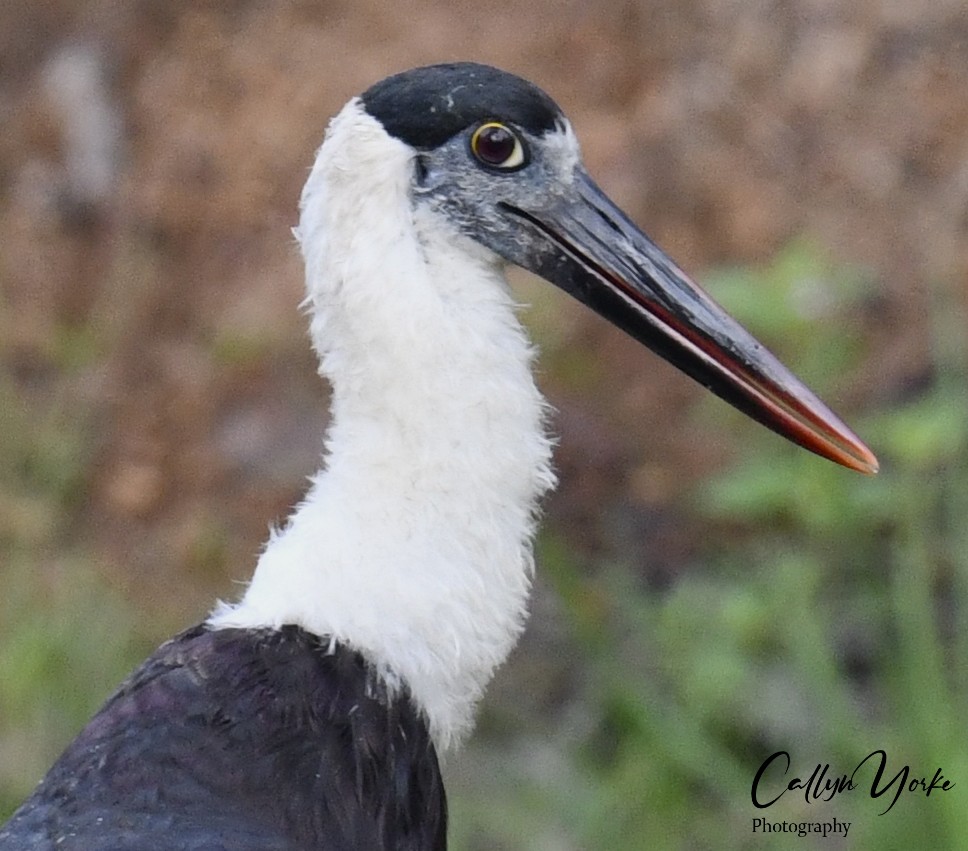
- Asian Woollyneck Ciconia episcopus 2 greg. an individual in a swampy roadside clearing (photo); another on the muddy banks of an active buffalo wallow; a pair flushed from the same area two days later, UC.
CORMORANTS Phalacrocoracidae
- Little Cormorant Microcarbo niger 1 in low flight over the river near the PVC, R.
PLOVERS Charadriidae
- Black-necked Lapwing Vanellus atronuchalis 5 greg. in paddyfields and wet, swampy grassland near standing water, C.
TYPICAL OWLS Strigidae
- Asian Barred Owlet Glaucidium cuculoides 1 roadside trees and woodland edge; vocal (unseen); UC; ubiq.
- Collared Scops Owl Otus lettia 1 (HO – LQM) early evening around PVC, R.
HAWKS AND EAGLES Accipitridae
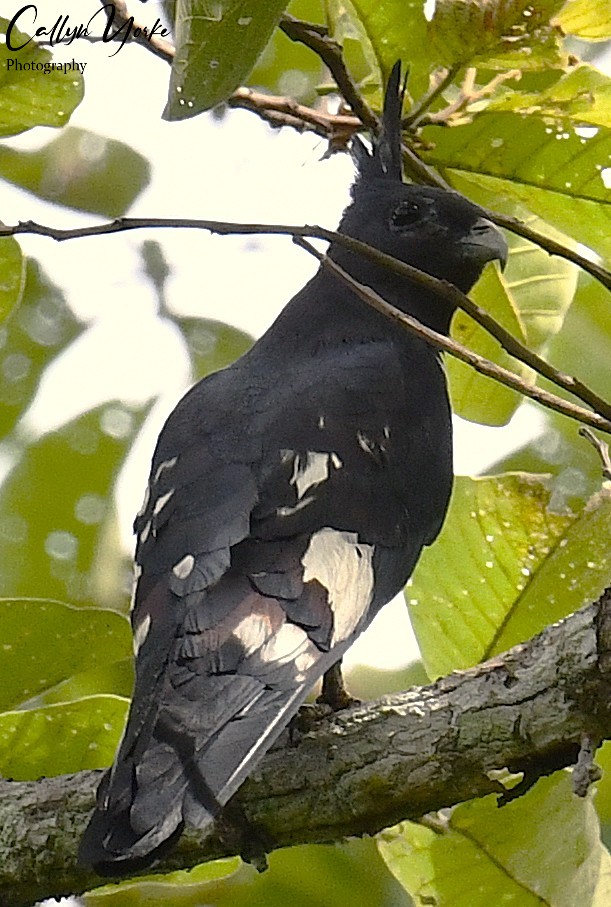
- Black Baza Aviceda leuphotes 1 alighted in the subcanopy of a mature dipterocarp near a vocal msf of insectivorous passerines, R (photo).
- Crested Goshawk Accipiter trivirgatus 1 flying low over the woodland, R.
- Shikra Accipiter badius 2 one perched in leafless trees near the roadway; one in low flight through the woods, UC (photo).
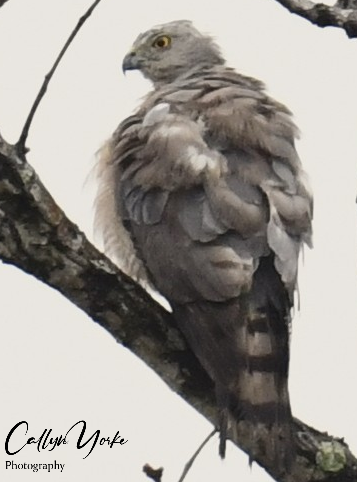
- Chinese Sparrowhawk Accipiter soloensis 1 flying through and alighting in the woodland subcanopy, R.
HOOPOES Upupidae
- Eurasian Hoopoe Upupa epops 4 greg. individuals, pairs and small flocks often seen on the ground in woodland clearings, C.
BEE-EATERS Meropidae
- Chestnut-headed Bee-eater Merops leschenaulti 2 greg. in a leafless tree at the edge of a woodland clearing and water catchment basin, R.
ROLLERS Coraciidae
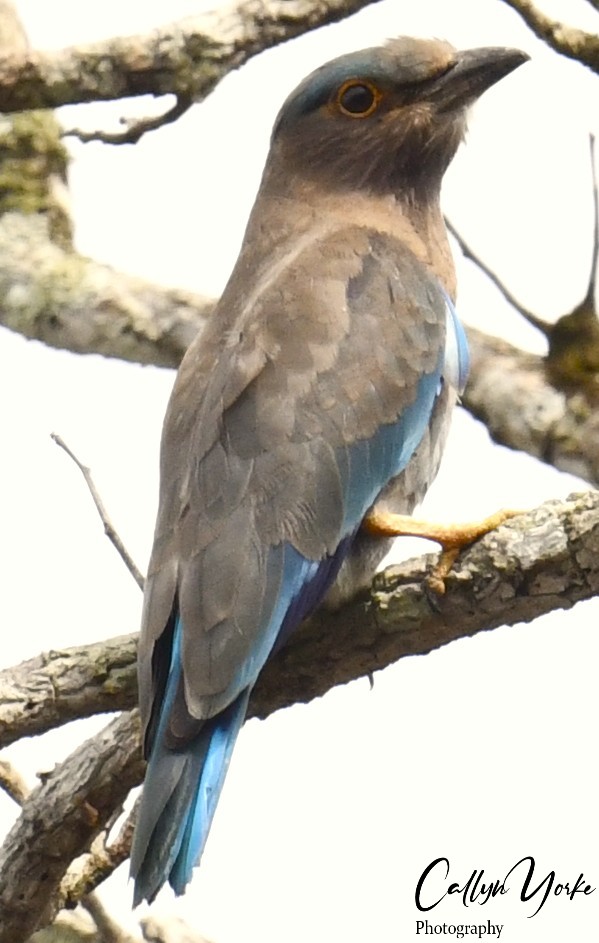
- Indochinese Roller Coracias affinis 6-8 loosely greg. active most of the day, even in very warm weather; individuals perched on low tree limbs; in low flights through the woods and above the tree canopy, C, ubiq. (photo).
KINGFISHERS Alcedinidae
- Stork-billed Kingfisher Pelargopsis capensis 1 (LQM) flew across the roadway and into the woodland, R
- White-breasted Kingfisher Halcyon smyrnensis 4 voc. more often heard than seen; woodland and wetlands throughout, C.
- Common Kingfisher Alcedo atthis 2 (LQM) voc. roadside woodland, R.
ASIAN BARBETS Megalaimidae
- Coppersmith Barbet Psilopogon haemacephalus 2 voc. in upper limbs of mature trees, UC.
- Green-eared Barbet Psilopogon faiostrictus 2 voc. flying low through woodland subcanopies, UC.
- Lineated Barbet Psilopogon lineatus 3 voc. active in woodlands throughout, C.
WOODPECKERS Picidae
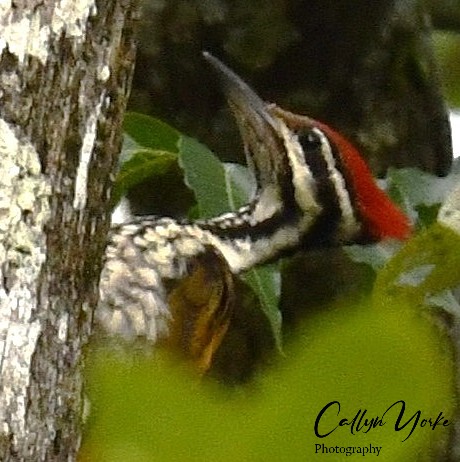
- Greater Flameback Chrysocolaptes guttacristatus 1 (m) moving up the trunk of a large tree in moist riverine forest, R (photo).
- Common Flameback Dinopium javanense 2 greg. accompanying msf in woodlands, UC.
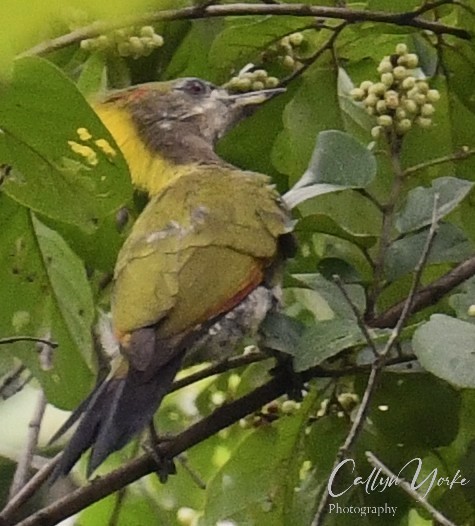
- Greater Yellownape Chrysophlegma flavinucha 1 in lower to mid-level on broad-leaved trees; wholesale consumption small green fruits – a somewhat unusual food item for a woodpecker, C (photo).
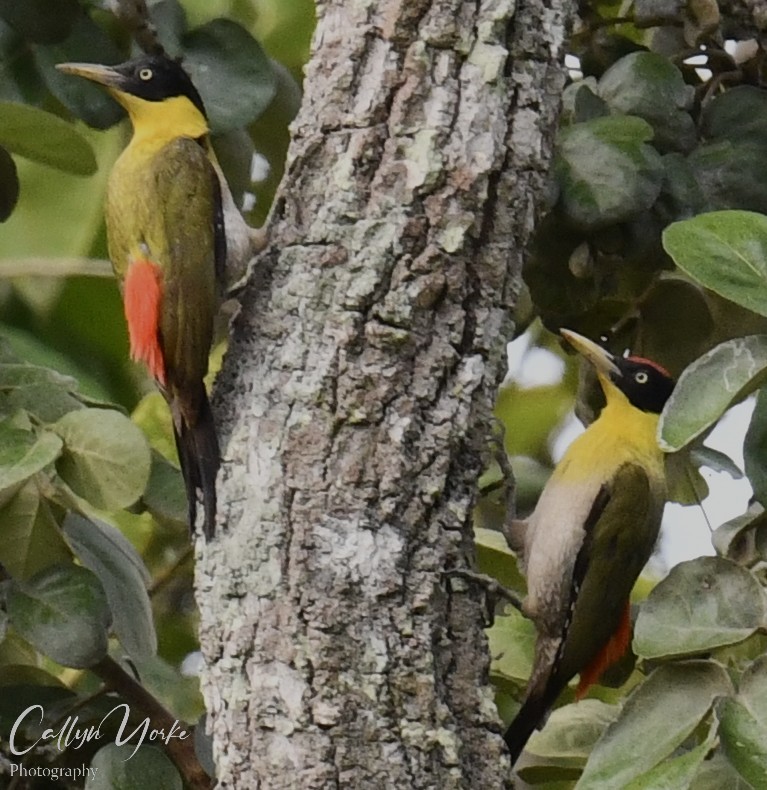
- Black-headed Woodpecker Picus erythropygius 10 (ad., imm) vocal, greg. in pairs and small flocks, affecting trees, large and small; often associated with msf of insectivorous passerines, C.
- Gray-headed (Black-naped) Woodpecker Picus guerini 1 active in distant tree subcanopy, R.
- Great Slaty Woodpecker Mulleripicus pulverulentus 5 greg. ad., imm. voc. in small (family) flocks, in leafless/dead trees, UC (photo).
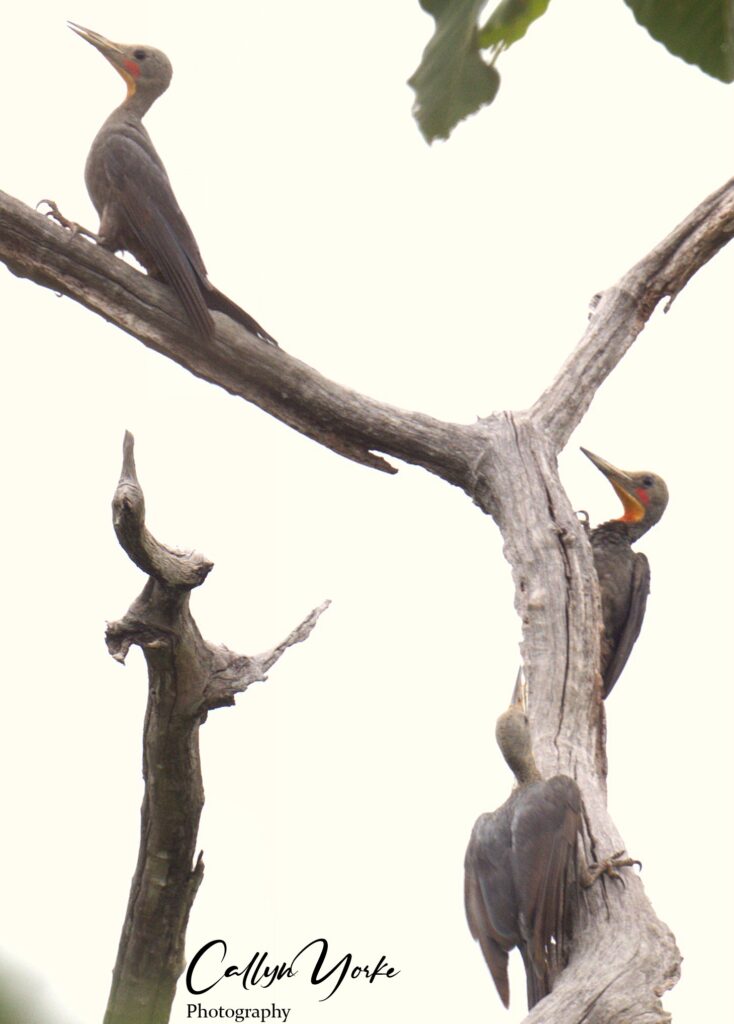
- White-bellied Woodpecker Dryocopus javensis 1 voc (LQM) seen briefly, moving through the middle to upper levels of the woodland, R.
- Gray-capped Woodpecker Picoides canicappilus 2 (m,f) often associated with msf with insectivorous passerines in middle to upper levels of the woodlands, C.
- Yellow-crowned Woodpecker Leiopicus mahrattensis 1 voc (LQM) seen briefly from 70-80m away, in a msf of passerines, moving quickly through the middle to upper levels of the woodland, R.
FALCONS Falconidae
- Collared Falconet Microhierax caerulescens 2 individuals alighted in the subcanopy of a roadside tree, UC (photo).
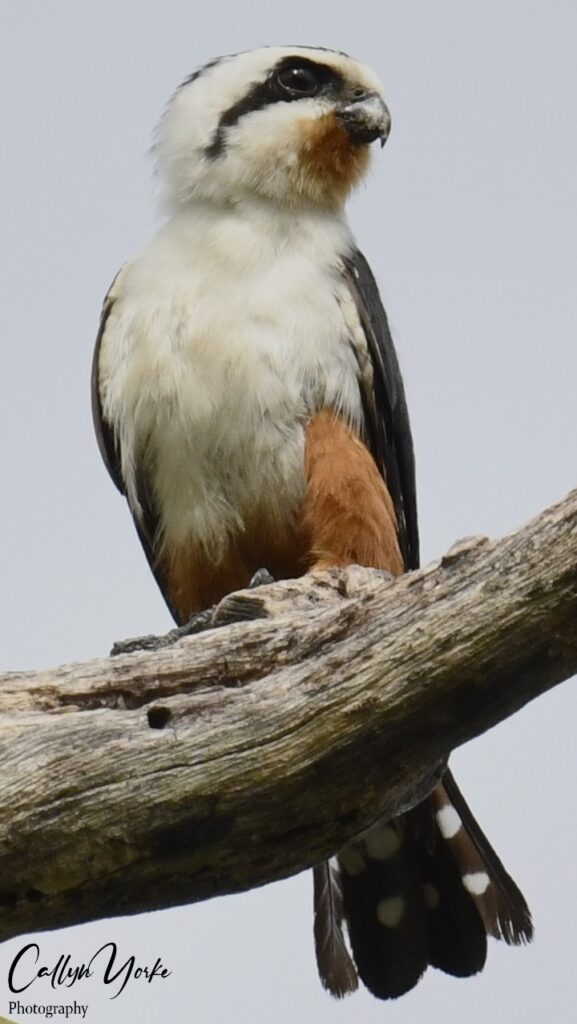
- White-rumped Falconet Polihierax insignis 1 approachable and seemingly tolerant of humans ,while perched in subcanopy of woodland near clearings and habitations, UC.
PARROTS Psittacidae
- Vernal Hanging- parrot Loriculus vernalis 2 greg. on outer limbs of a distant, leafless tree at the woodland edge, near a water catchment basin, R.
- Blossom-headed Parakeet Psittacula roseata 12 greg. in roadside fruiting trees; wary and readily flushed; identification often problematic due to brief, unclear views and similar congeners in the area, UC.
- Red-breasted Parakeet Psittacula alexandri 8 greg. wary and flighty; visiting fruiting tree canopies; identification issues as noted above for BHPA, UC.
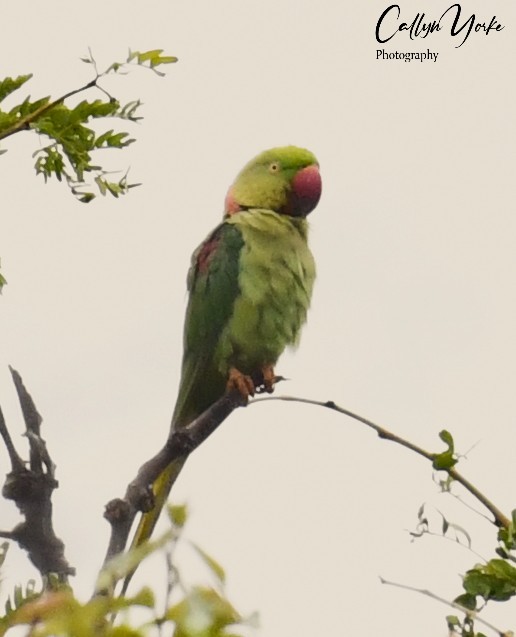
- Alexandrine Parakeet Psittacula eupatria 1 (LQM) with flock of RBPA in a roadside fruiting tree; R (photo).
PITTAS Pittidae
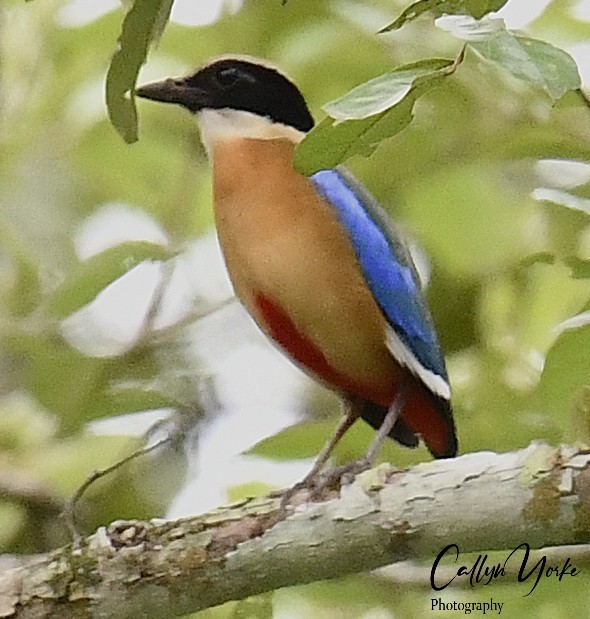
- Blue-winged Pitta mollucensis 4 voc (more often heard than seen) males, spaced about 20-50m apart, vocalizing repeatedly in subcanopy of mature trees in both open woodland and closed-canopy riverine forest; at least one bird relocated in an apparent response to playback recordings, C (photo).
OLD WORLD ORIOLES Oriolidae
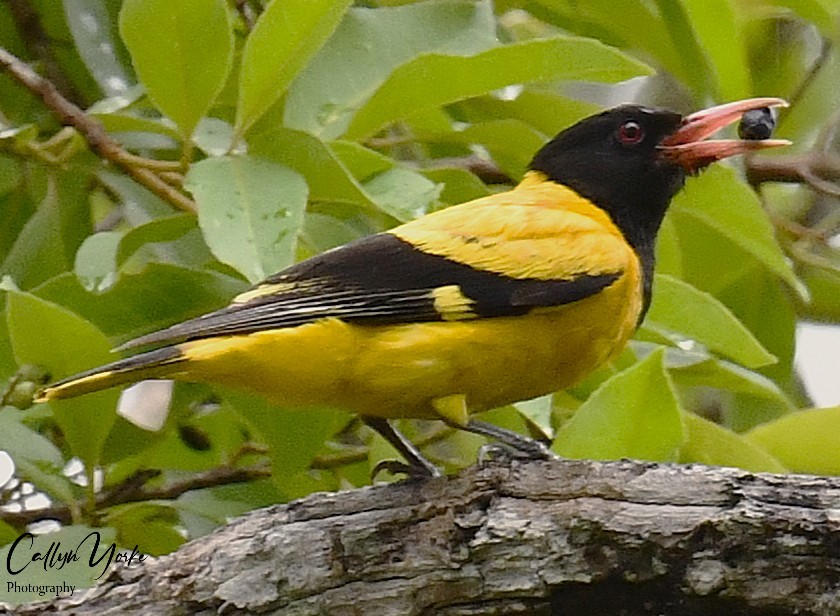
- Black-hooded Oriole Oriolus xanthornis 4 vocal (more often heard than seen), canopy and subcanopy of woodlands, C (photo).
CUCKOOSHRIKES Campephagidae
- Scarlet Minivet Pericrocotus speciosus 2 (m,f) in msf with COWO; R
- Small Minivet Pericrocotus cinnamomeus 12 (m,f) often in fast-moving msf with COWO, frequenting tree subcanopies in search of insects, C (photo).
- Large Cuckooshrike Coracina nipalensis 2 msf with other insectivorous passerines, e.g. SMMI, COWO, UC.
- Black-winged Cuckooshrike Lalage melaschistos 1 (ID – LQM) in msf with SMMI and COWO, UC. Note: BWCU was previously unlisted in YDNP (see the 2018 Birdlife International Vietnam Checklist). Indochinese Cuckooshrike (Lalage polioptera) would be the expected species in YDNP
WOODSWALLOWS Artamidae
- Ashy Woodswallow Artamus fuscus 1 circling at 20-30m agl over the VCP pond and adjacent trees in the late afternoons, C.
VANGAS AND ALLIES Vangidae
- Bar-winged Flycatcher-shrike Hemipus picatus 2 in msf with COIO and ORSU, canopy and subcanopy of riverine second-growth, C.
- Large Woodshrike Tephrodornis virgatus 1 in msf with COWO and SMMI, woodland subcanopies, C.
- Common Woodshrike Tephrodornis pondicerianus 8 greg. usually moving quickly in msf, most commonly with SMMI; affecting insects in woodland subcanopies; birds frequently taking lepidopteran larvae, C.
IORAS Aegithinidae
- Common Iora Aegithina tiphia 5 vocal, often in msf with other insectivorous passerines, C, ubiq.
- Great Iora Aegihina lafresnayei 1 voc (HO – LQM) R.
FANTAILS Rhipiduridae
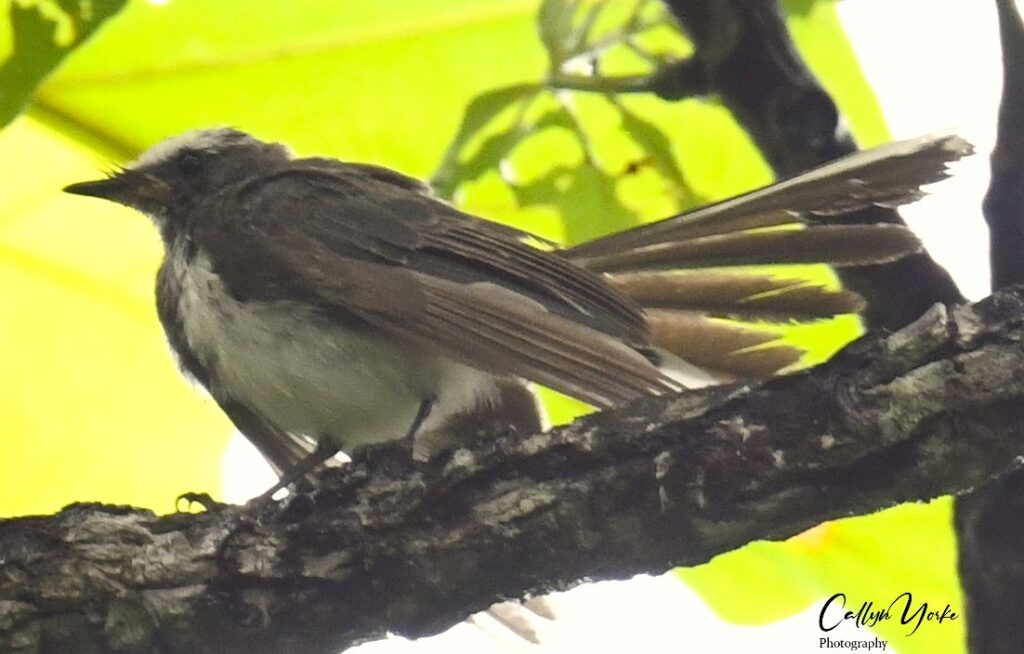
- White-browed Fantail Rhipidura aureola 3 voc. a frequent member of msf, including a wide variety of insectivorous birds in the canopy and subcanopy of woodland and second-growth, C (photo).
DRONGOS Dicruridae
- Sooty Drongo Dicrurus leucophaeus 3 greg. often in msf with BRDR, GRTD and a variety of other insectivorous birds; woodland canopy and subcanopy, C.
- Bronzed Drongo Dicrurus aeneus 4 greg. pairs; msf in woodland canopy and subcanopy; C (photo).
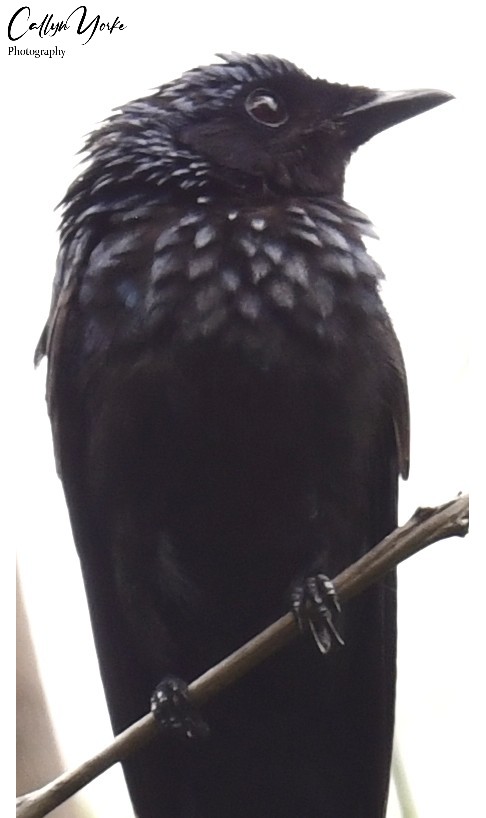
- Hair-crested Drongo Dicrurus hottentottus 2 pairs flying over woodland; perched in canopy, UC.
- Greater Racquet-tailed Drongo Dicrurus paradiseus 8 greg. pairs and trios in msf with other insectivorous passerines, C, ubiq..
MONARCH-FLYCATCHERS Monarchidae
- Black-naped Monarch Hypothymis azurea 1 (LQM) woodland, R.
CROWS AND JAYS Corvidae
- Racquet-tailed Treepie Crypsirina temia 5 greg. msf with other insectivorous birds, woodland subcanopy, UC.
- Rufous Treepie Dendrocitta vagabunda 6 voc., greg., shy and retiring, woodland subcanopy, C.
- Red-billed Blue Magpie Urocissa erythroryncha 4 voc. greg. shy and retiring, woodland middle-canopy, UC
- Eastern Jungle Crow Corvus levaillantii 1 one bird, seen twice in flight @ 20m agl, R.
TITS Paridae
- Cinereous Tit Parus cinereus 1, voc. mid-level woodland, R.
CISTICOLAS AND ALLIES Cisticolidae
- Rufescent Prinia Prinia rufescens 3 voc. woodland clearings with variably dense second-growth, C.
- Annam Prinia Prinia rocki 3 voc. responding by approaching playback recordings in woodland edge and clearings with variably dense second-growth, C (photo).
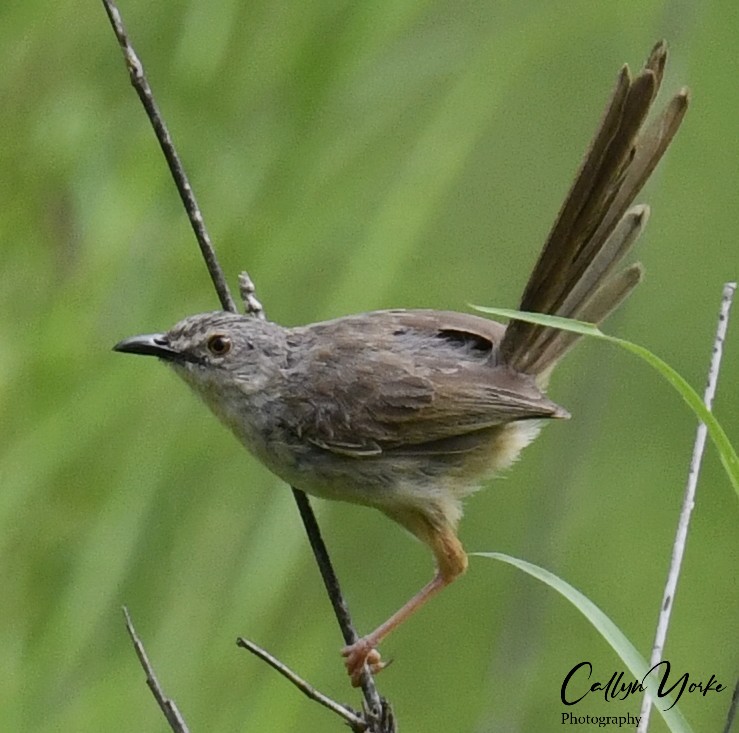
- Common Tailorbird Orthotomus sutorius 10 voc. woodland clearings and gardens with second-growth, C, ubiq..
SWALLOWS AND MARTINS Hirundinidae
- Eastern Red-rumped Swallow Cecropis daurica 2 (LQM) on PVC bridge utility wire, R.
BULBULS Pycnonotidae
- Black-crested Bulbul Pycnonotus flaviventris 2 voc. roadside second-growth and woodland, UC.
- Southern Sooty-headed Bulbul Pycnonotus aurigaster 10 greg., voc. C, ubiq..
- Stripe-throated Bulbul Pycnonotus finlaysoni 2 voc., greg. in riverine second-growth and woodland edge, C.
- Streak-eared Bulbul Pycnonotus conradi 5 voc., greg. pairs in second-growth and woodland edge, C.
SCIMITAR-BABBLERS AND ALLIES Timaliidae
- Chestnut-capped Babbler Timalia pileata 1 voc. responded to playback recordings; in roadside second-growth, clearing at the woodland edge, R (photo).
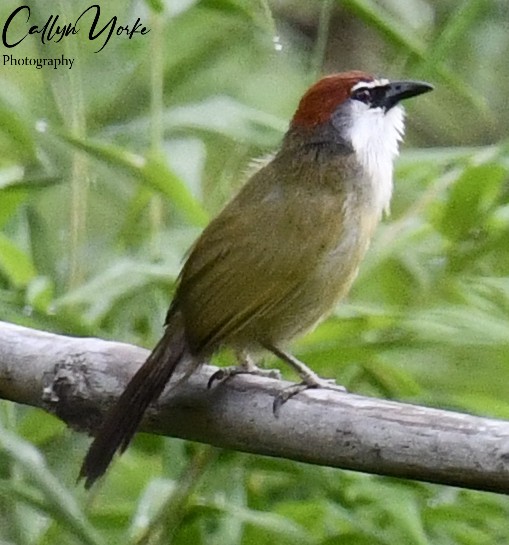
- Pin-striped Tit-babbler Mixornis gularis 1 voc. (HO) roadside second-growth and woodland edge, UC.
LAUGHINGTHRUSHES AND ALLIES Leiothrichidae
- Lesser Necklaced Laughingthrush Garrulax monileger 5 greg. low in second-growth, roadside edge of woodland, UC.
- Eastern White-crested Laughingthrush Garrulax diardi 3 greg. in second-growth and woodland edge; with LNLT, UC.
NUTHATCHES Sittidae
- Burmese Nuthatch Sitta neglecta 2 voc. usually in msf with a variety of insectivorous birds, mid-upper limbs in mature trees, C (photo).
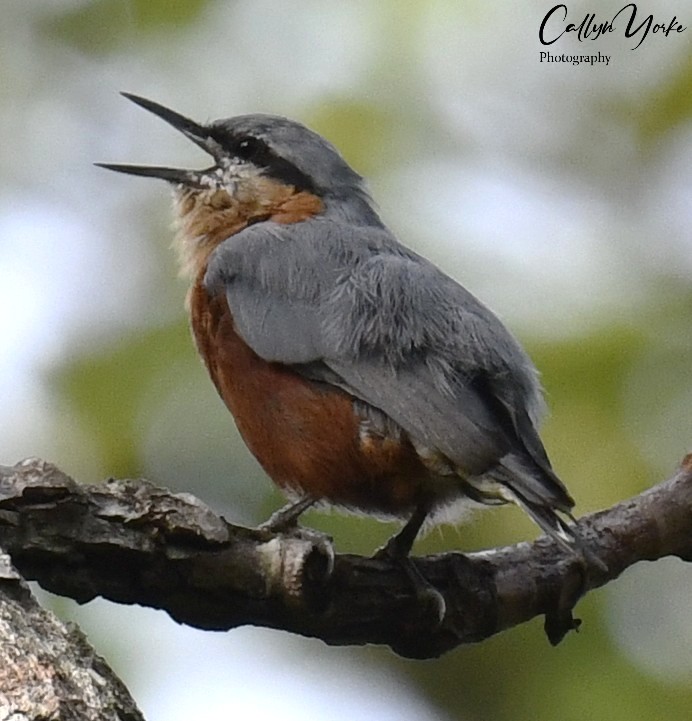
- Velvet-fronted Nuthatch Sitta frontalis 1 msf with insectivorous passerines, upper limbs of mature trees, UC.
STARLINGS Sturnidae
- White-shouldered Starling Sturnia sinensis 1 with CTST on outer canopy limb, R.
- Chestnut-tailed Starling Sturnia malabarica 8 greg. on outer canopy limbs of a leafless tree, UC.
- Vinous-breasted Myna Acridotheres leucocephalus 3 greg. canopy perch, roadside woodland edge, R.
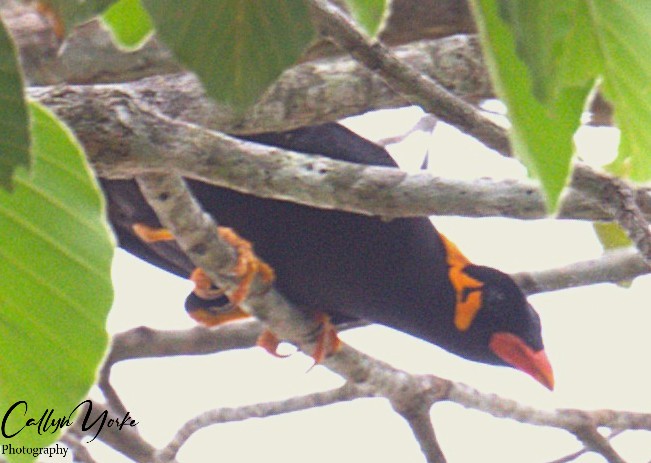
- Hill Myna Gracula religiosa 2 greg. a pair flying around and alighting in tree canopies by the river rapids, R (photo).
OLD WORLD FLYCATCHERS AND CHATS Muscicapidae
- Oriental Magpie-robin Copsychus saularis 2 voc. in second-growth at edge of woodland and clearings, C.
- White-rumped Shama Kittacincla malabarica 2 voc. in second-growth of clearings and woodland edge, UC.
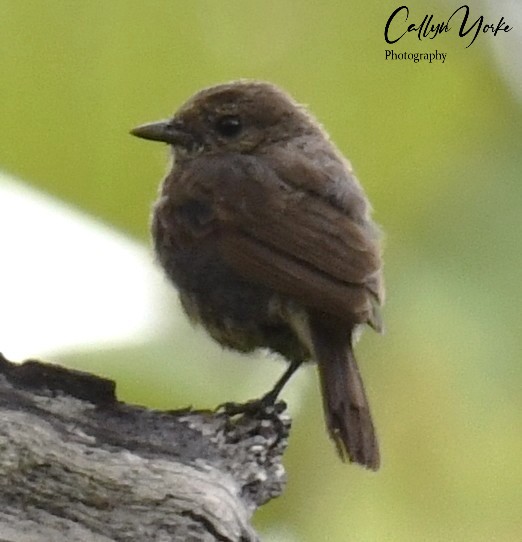
- Dark-sided Flycatcher Muscicapa ferruginea 1 in trees at edge of clearing, R (photo).
LEAFBIRDS Chloropseidae
- Golden-fronted Leafbird Chloropsis aurifrons 3 often in msf with a variety of frugivorous and insectivorous birds in tree canopies; preference for fruiting trees, C.
FLOWERPECKERS Dicaeidae
- Modest Flowerpecker Dicaeum obsoletum 2 (m,f) active in mature tree canopies, UC.
- Scarlet-backed Flowerpecker Dicaeum cruentatum 3 (m,f) voc. active at all vegetation height levels, C.
SUNBIRDS Nectariniidae
- Streaked Spiderhunter Arachnothera magna 1 voc. msf, fast moving through woodland canopies, UC.
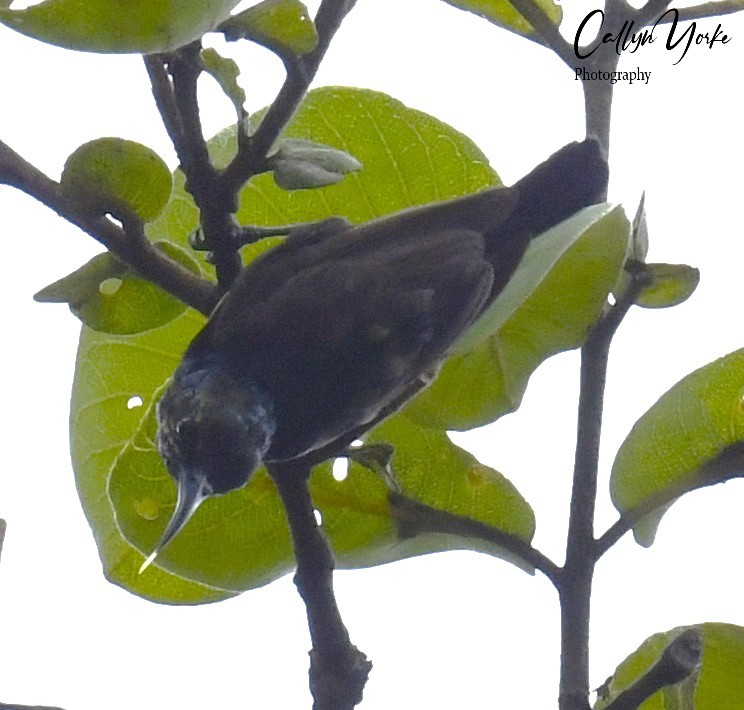
- Purple Sunbird Cinnyris asiaticus 1 (m) active in tree canopies, woodland edge, UC (photo).
- Ornate Sunbird Cinnyris ornatus 2 voc. active at all vegetation heights, C.
- Greater Crimson Sunbird Aethopyga seheriae 1 (LQM) woodland edge, R.
___________________________________________________
LINKS TO REPORTS
___________________________________________________