Rio De Janeiro, February 13-20; April 14-15, 2025 Callyn Yorke
Overview
Rio De Janeiro would be an introduction to Brazil on multiple levels. A prior online booking with a local bird tour company, owned and operated by Gabriel and Daniel Mello, allowed me a day to decompress following a flight from Los Angeles, CA, to Miami with a connecting flight to Rio. Lodging and transportation in Rio had been arranged, so I could relax the first day in the Linx Hotel next to the Rio International Airport. Linx wasn’t the thriftiest three-star hotel in the area ($US 100/day), but it was clean, well run and featured 24-hr. check-in, free airport shuttle and a bountiful breakfast buffet served at 5 am. The Mello brothers selected it primarily because it was a convenient location for them to pick me up the following day. As a bonus, a casual afternoon stroll around the hotel and along the adjacent airport boulevard, produced a respectable list of birds, including Fork-tailed Flycatcher, a new bird for my South American list. I was off to a promising start on a two-month journey through Brazil.
February 14, 2025: 0600-1400 hrs. Guanabara Bay Wetlands with Gabriel Mello
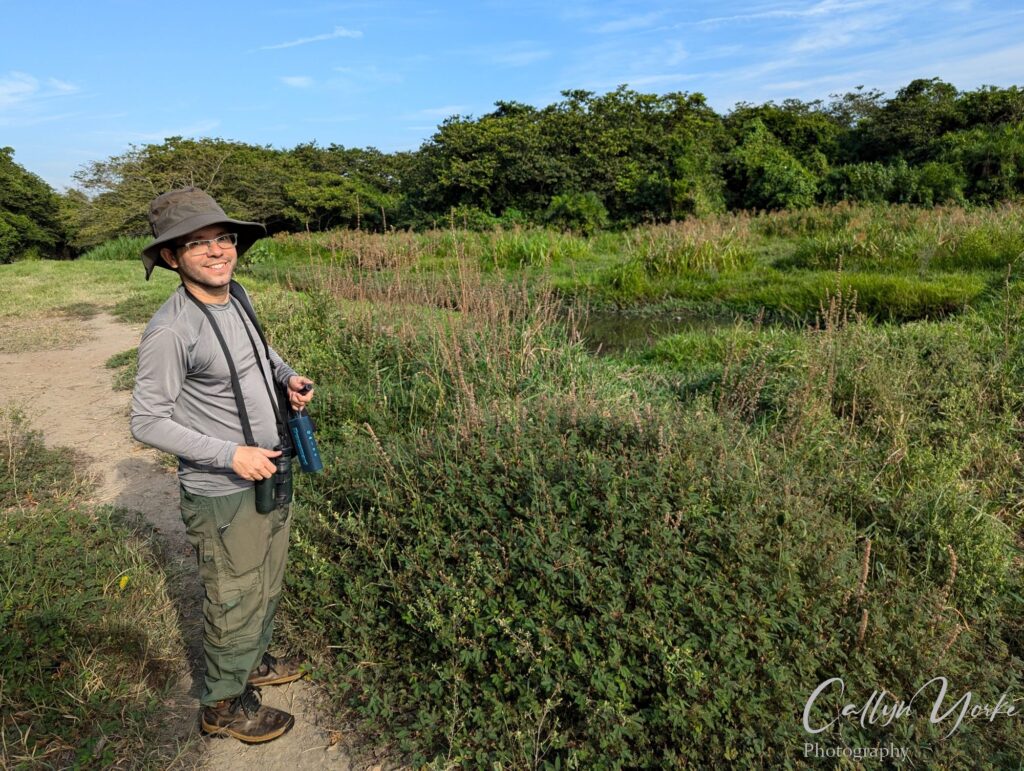
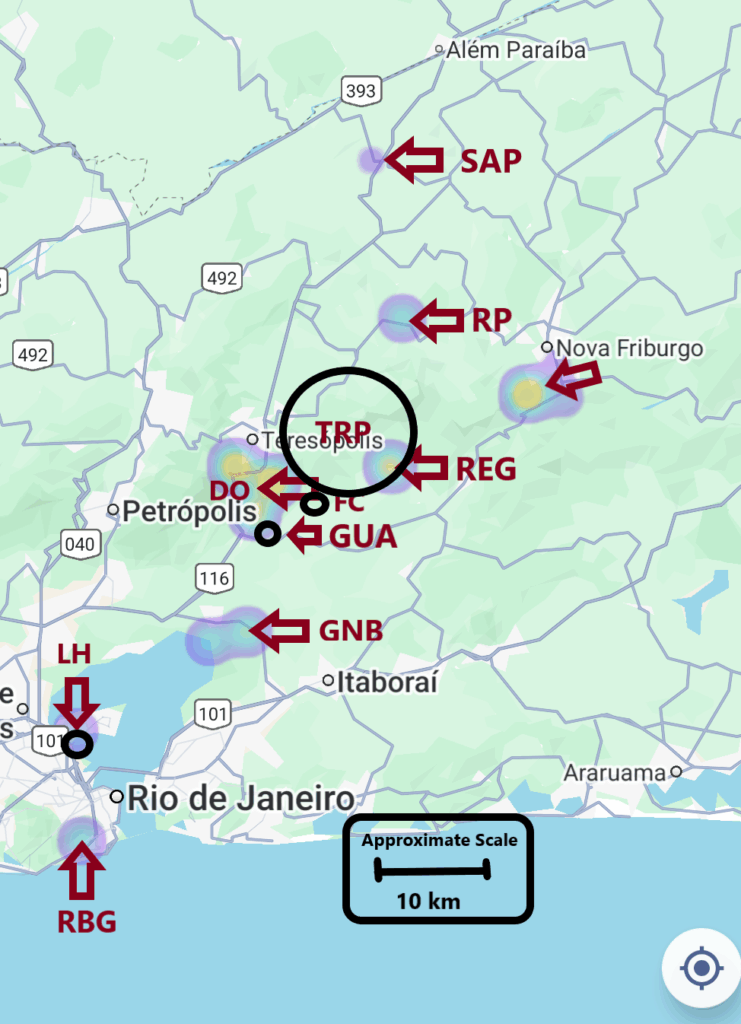
The following morning on Valentine’s Day (upstaged by Carnaval and uncelebrated in Brazil), Gabriel Mello met me at the Linx Hotel and we made the one-hour drive north and east of Rio, to a private ranch in the Guanabara Bay Wetlands (GB). We walked levees bordered by a mosaic of flooded pasture and coastal scrub for about 3.5 hrs. (0700-1030 hrs.). Next, we took a motorboat ride on the adjacent Macacu River to the inner bay. By 1200 hrs. we had tallied seventy-three bird species, including multiple lifers for me, e.g. Swallow-tailed Hummingbird, Peach-fronted Parakeet, Black-capped Donicobius, Unicolored Blackbird, Brazilian and Orange-headed Tanagers, Bicolored Conebill and Rusty-collared Seedeater. The river boat trip through the mangrove added a number of waterbird species to the trip list. All but one, Yellow-crowned Night Heron, would be seen again during my travels in Brazil. Although the ambient temperature and humidity at this coastal lowland location began to approach sweat drenching conditions, it was a fabulous introduction to the birds of Brazil.
February 15, 2025 (0630-1200 hrs.) Fazenda Colomi with Daniel Mello
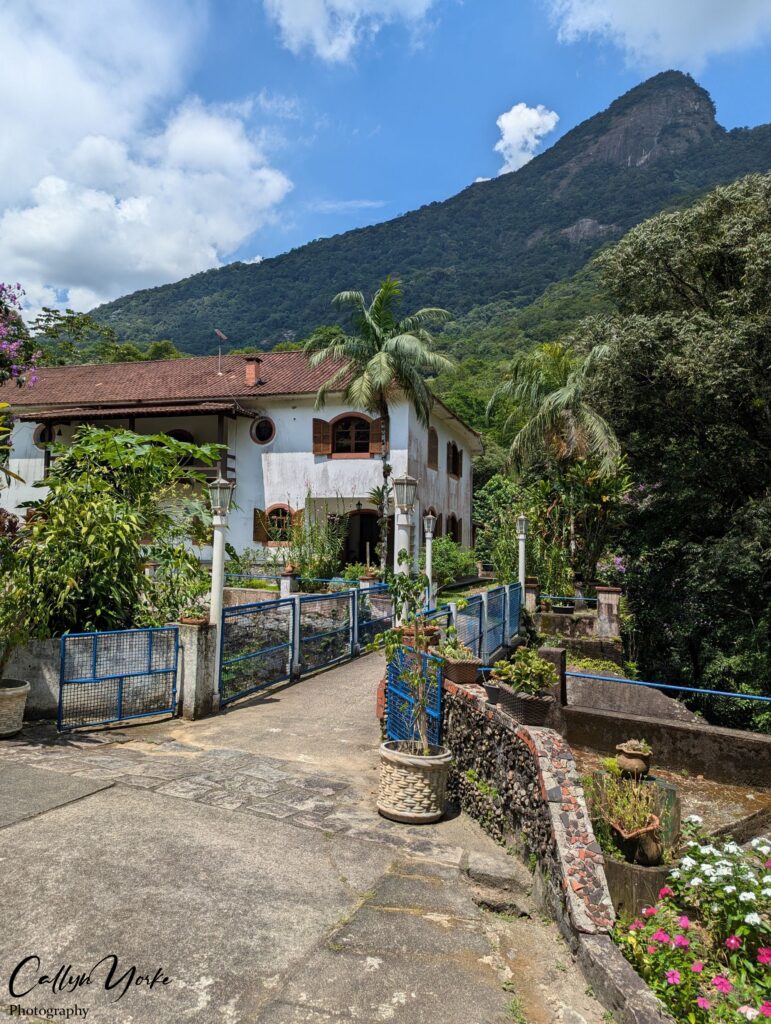
After the bird trip to Guanabara Bay, I relocated to Fazenda Colomi (FC), a hacienda in the foothills bordering the suburban community of Guapimirim. The Mello brothers recommended this lodge primarily because the ranch property included about one-hundred hectares of nearly pristine Atlantic Rainforest with Brazilian endemics, as well as a fast flowing stream, gardens and a bird feeding station in front of the patio dining area. Daniel Mello, who lived nearby, would be my guide the first morning there.
Looking back, Fazenda Colomi was one of my favorite lodging places in Brazil. Accommodations were attractive, clean, comfortable, reasonably priced and very convenient for birding. Home cooked meals and exceptionally friendly service made my stay all the more delightful. I would definitely schedule an extended visit there, should the opportunity arise for a future trip to Brazil.
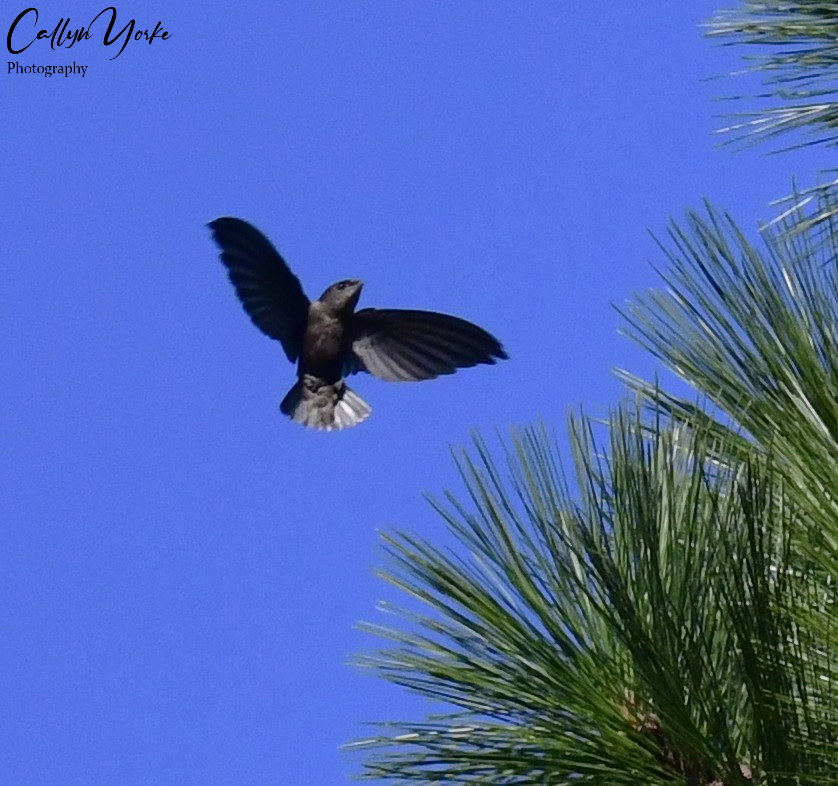
Daniel arrived at FC just as I was finishing breakfast. From the front steps of the lodge entrance, he glanced upward and pointed out two species of swift circling 20-50 m above us; the lower flying of those two species, Sick’s Swift (Chaetura meridionalis), was new to me. This species was engaged in a behavior I had not seen in any other swifts before — hovering like a swallow, alighting briefly in the canopy of a pine, evidently snatch-gleaning tiny insects from the foliage (photo).
We walked a short distance from the lodge, uphill and into a clearing with a small banana tree garden bordered by a very quiet, canyon rainforest. Daniel began with a series of playback recordings in an attempt to bring birdlife into view. He selected bird recordings of species that he was hearing in the distance but had remained mostly invisible to us. Overall, I judged that about 25% of the bird species that Daniel attempted to attract with sound recordings, responded by approaching close enough for clear views. Daniel attributed the largely unresponsive behavior of birds to the current season, autumn — i.e. post-breeding. In some cases, birds surprised us by approaching several minutes after the playback recordings had stopped, e.g. Gray-hooded Attila – a Brazilian endemic, and another lifer for me (see Introduction).
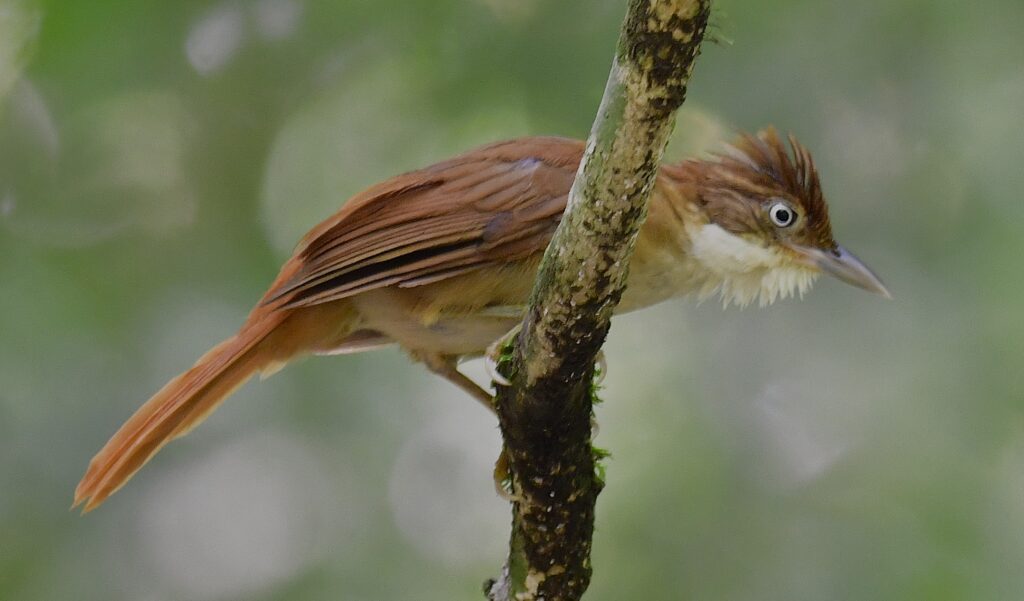
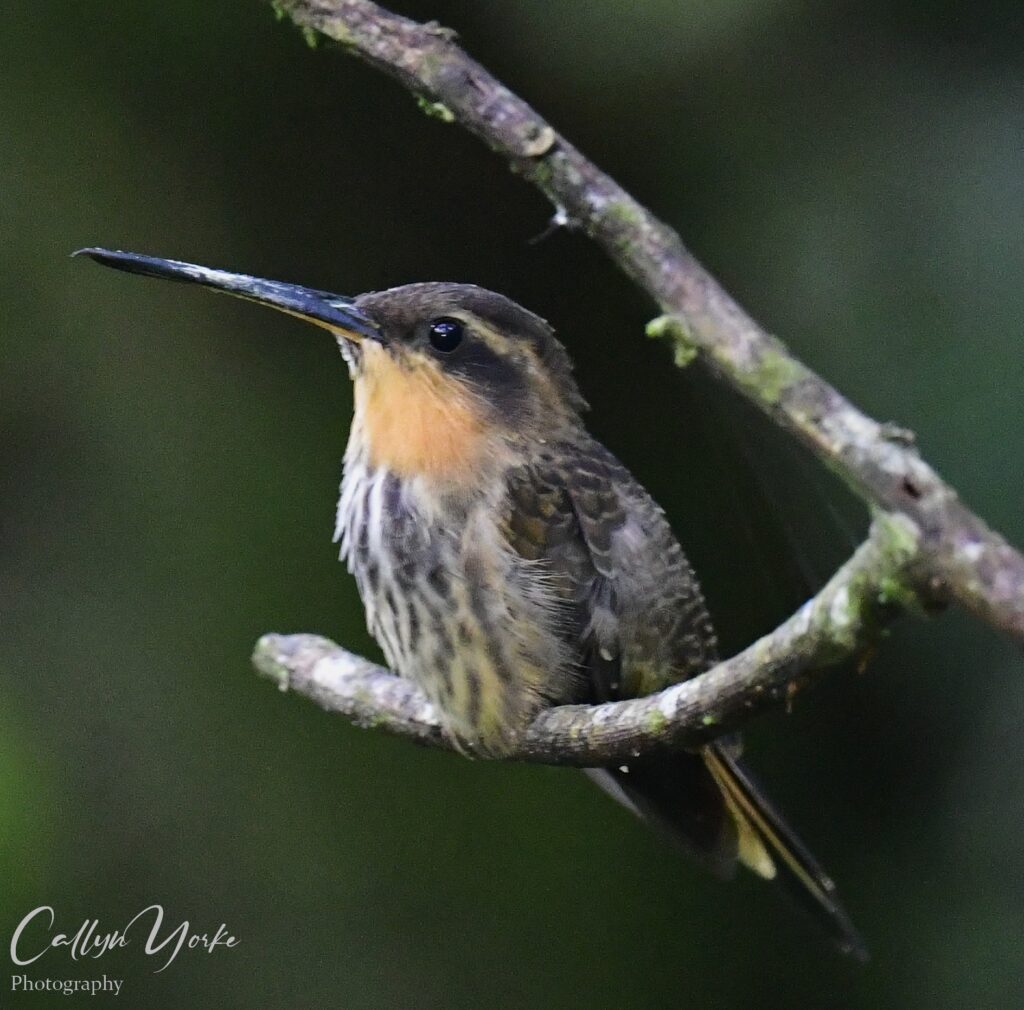
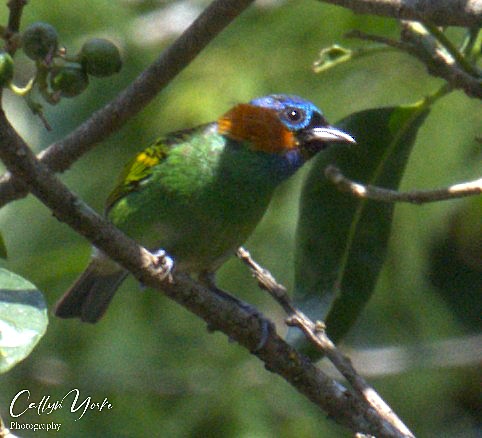
Daniel’s persistent efforts using playback recordings allowed me to obtain decent photos of a few regional specialties, e.g. Saw-billed Hermit, Crescent-chested Puffbird, Black-cheeked Gnateater and White-eyed Foliage-gleaner. By the end of our five-hour survey, the tally was sixty-three bird species. Later that day, while relaxing on the FC dining room balcony, I spotted an endemic lifer in fruiting trees across the stream, Red-necked Tanager, which would be a singular sighting of that species in Brazil.
February 16, 2025 (0700-1145 hrs.) Parque Nacional Serra dos Órgãos (DO) – Teresopolis with Daniel Mello
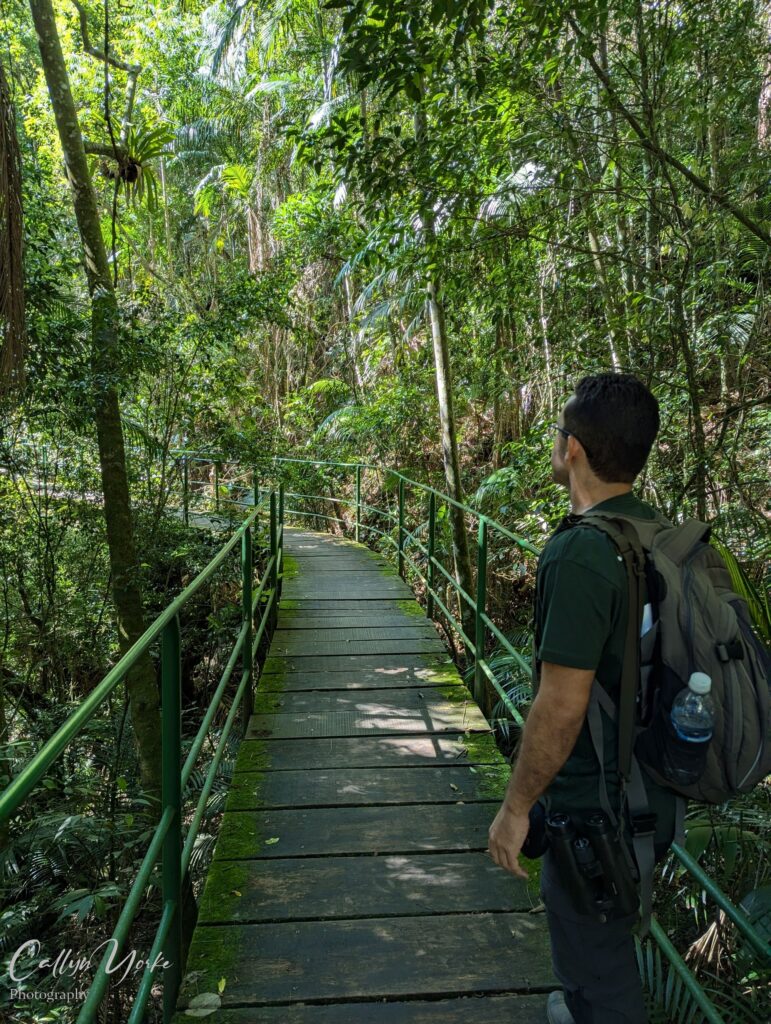
Upon arrival, we weren’t sure if many birds would be found in Dos Órgãos. it was a clear Sunday morning in this popular national park. Dozens of visitors were cycling, walking, jogging, and socializing. We often had to step aside to let them pass. Distractions aside, it was soon apparent that this place would be a veritable bonanza for life birds — one after another — and often at close range. Among the birds that Daniel coaxed into view using playback recordings, were two drop-dead-gorgeous toucans, Eastern Channel-billed Toucan and Spot-billed Toucanet. Trying different angles and keeping as low a profile as possible, I found that photographing these vigilant, shade-loving birds, was more challenging than expected. Hopping from limb to limb, the birds seemed to enjoy a little game of ‘Now you see me, now you don’t’.
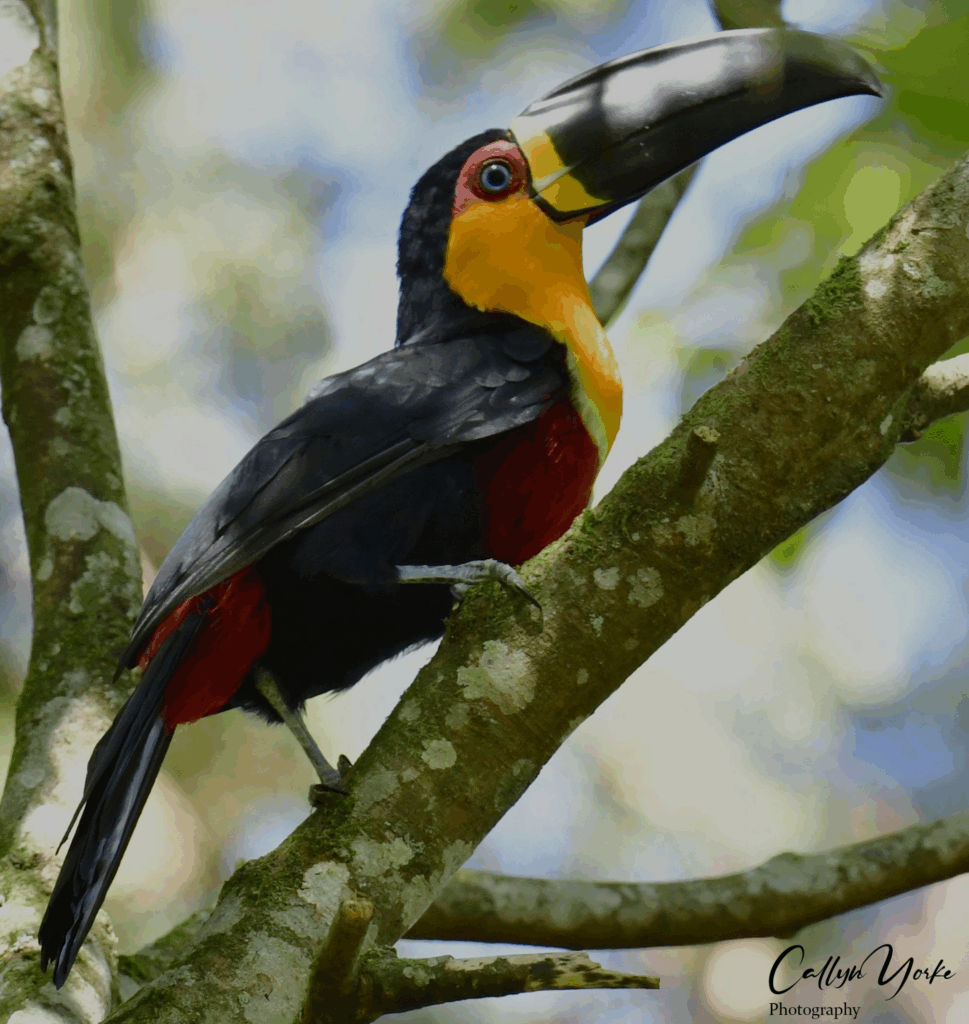
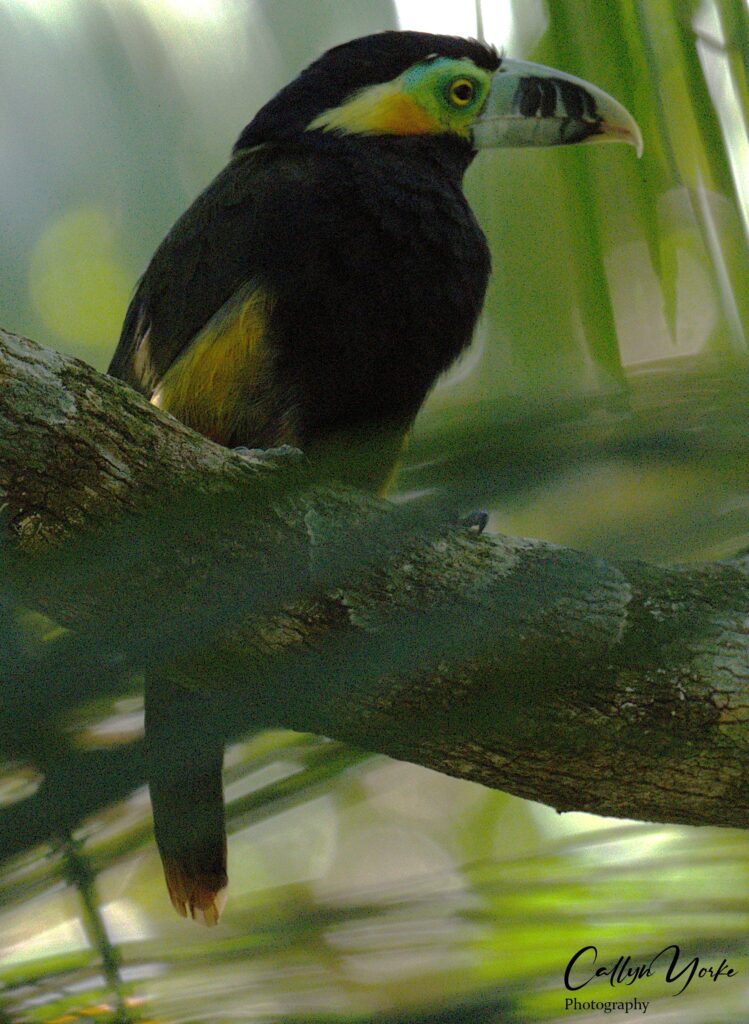
Daniel was particularly excited to show me an extremely range-restricted Atlantic Rainforest endemic, Yellow-eared Woodpecker, a species largely confined to the Dos Órgaos -Tres Picos regional parks. Perhaps most surprisingly, it is a fairly common bird. As I was fumbling with my notebook, Daniel spotted two more endemics in the subcanopy – both well named, Brassy-breasted Tanager and Brown Tanager.
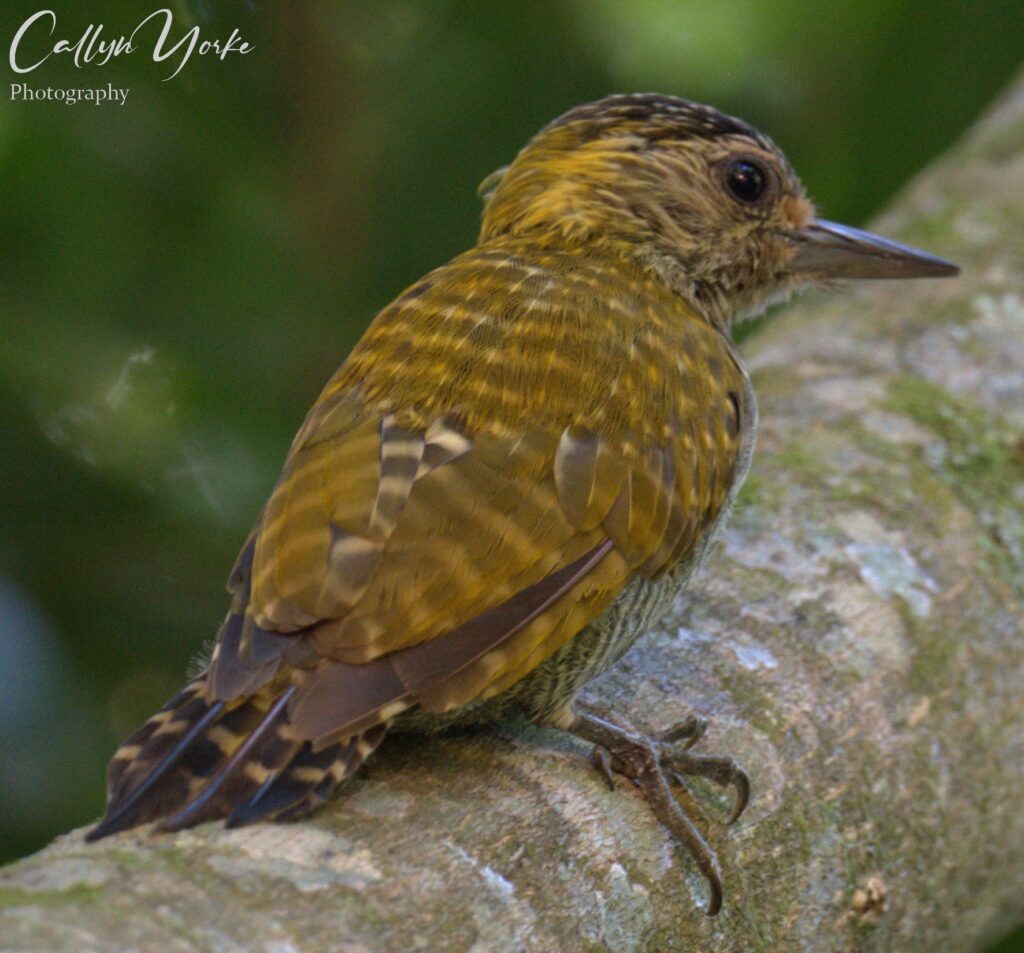
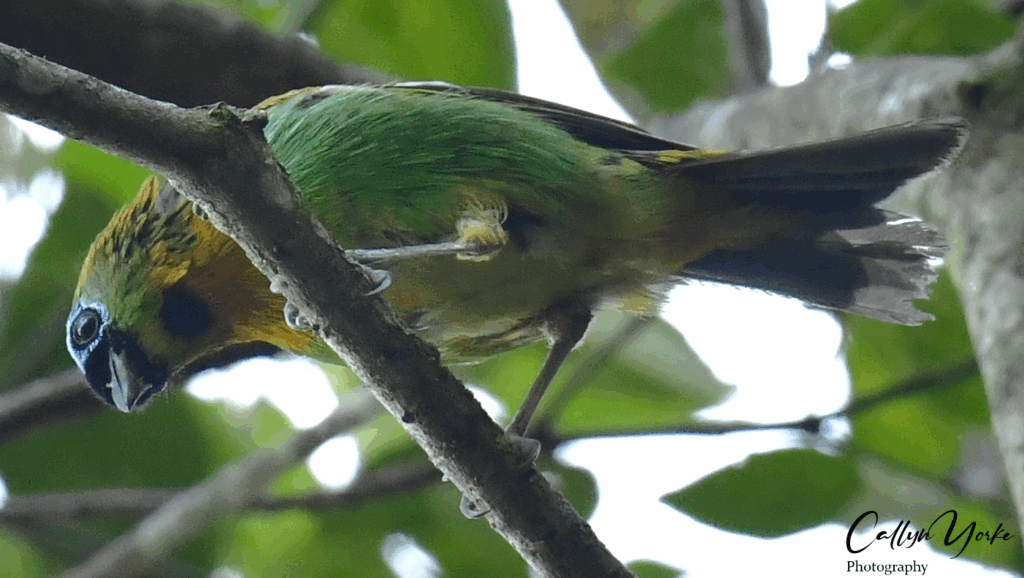
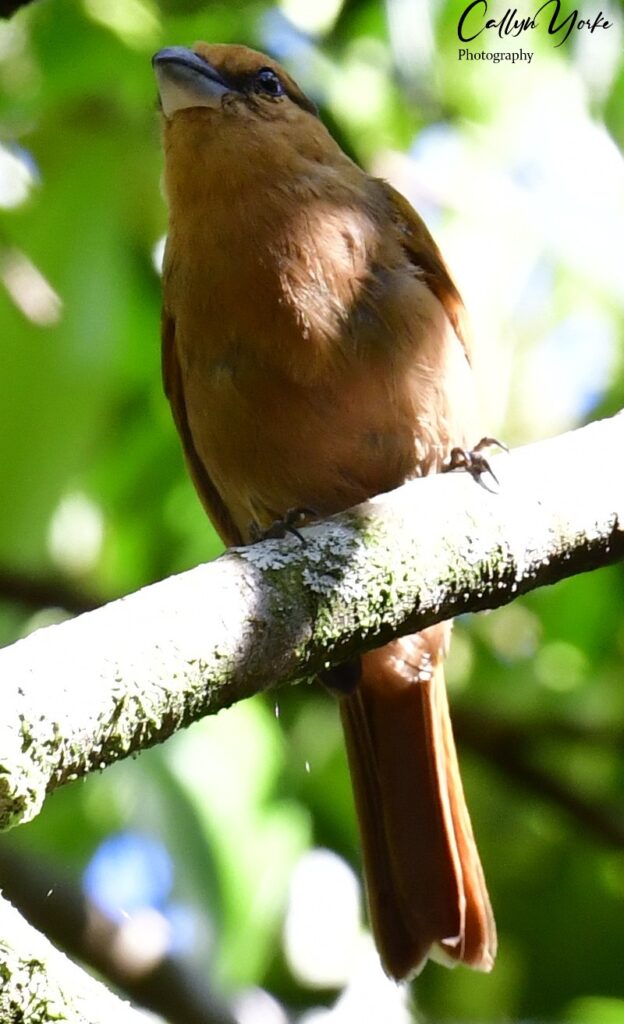
By 1145 hours we had probably seen or heard (mostly by Daniel) the majority of birds around the visitor center and elevated boardwalk. The final tally was forty-seven bird species and notably, seventeen lifers for me. Dos Órgãos National Park, a comparatively short drive from the township of Guapimirim, was one of the best Atlantic Forest birding locations that I visited in Brazil.
17 February, 2025 (0717-1130 hrs.). Tres Picos State Park (TRP) with Daniel Mello
Tres Picos State Park covers a vast watershed of montane and submontane forest in the RDJ state. There are numerous roadway access points and trailheads leading into a mosaic of habitats, including mature secondary rainforest, riparian forest, seasonal deciduous forest, shrub and grassland. The topographical and botanical diversity within this ecologically protected area supports a wildly diverse avifauna.
We began our bird survey just below what looked like a tool shed (ranger station) at the entrance to a comparatively unpopular section of TRP, at an elevation of 950 m asl.. This was essentially a recovering, submontane, seasonal forest, partially cleared decades ago and currently in the process of ecological succession. A small stream connecting a series of ponds and seeps paralleled the dirt track we were using for the survey. We walked downhill slowly, mindful of loose stones in the road, listening and watching for birds. Daniel called out the names of vocalizing birds he recognized — Plumbeous Pigeon, Suruca Trogon, Maroon-bellied Parakeet, Giant Antshrike, White-bibbed Antbird, Black-tailed Flycatcher — none of which I could see and most outside my hearing bandwidth. I was feeling a mixture of admiration for Daniel’s auditory acumen and frustration with my inability to connect with so many new bird species. Nevertheless, I kept quiet and patiently waited for something to appear at least close enough and briefly enough for a positive visual identification.
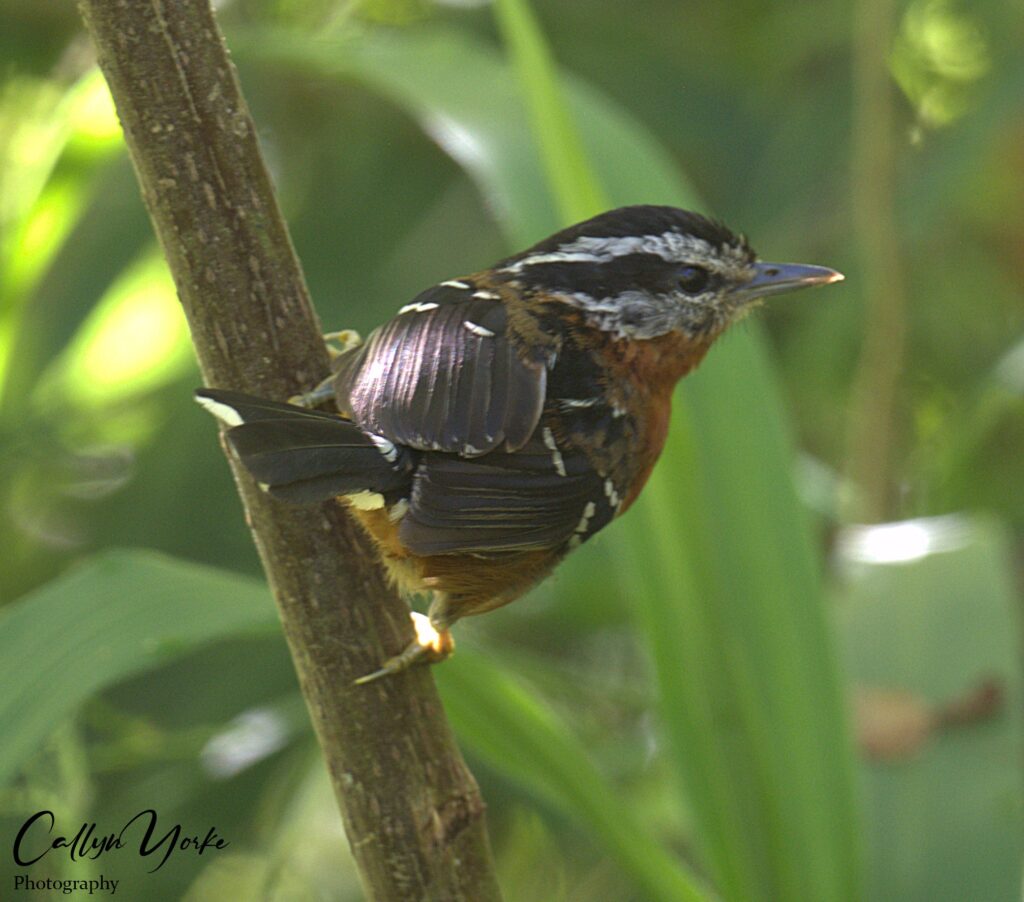
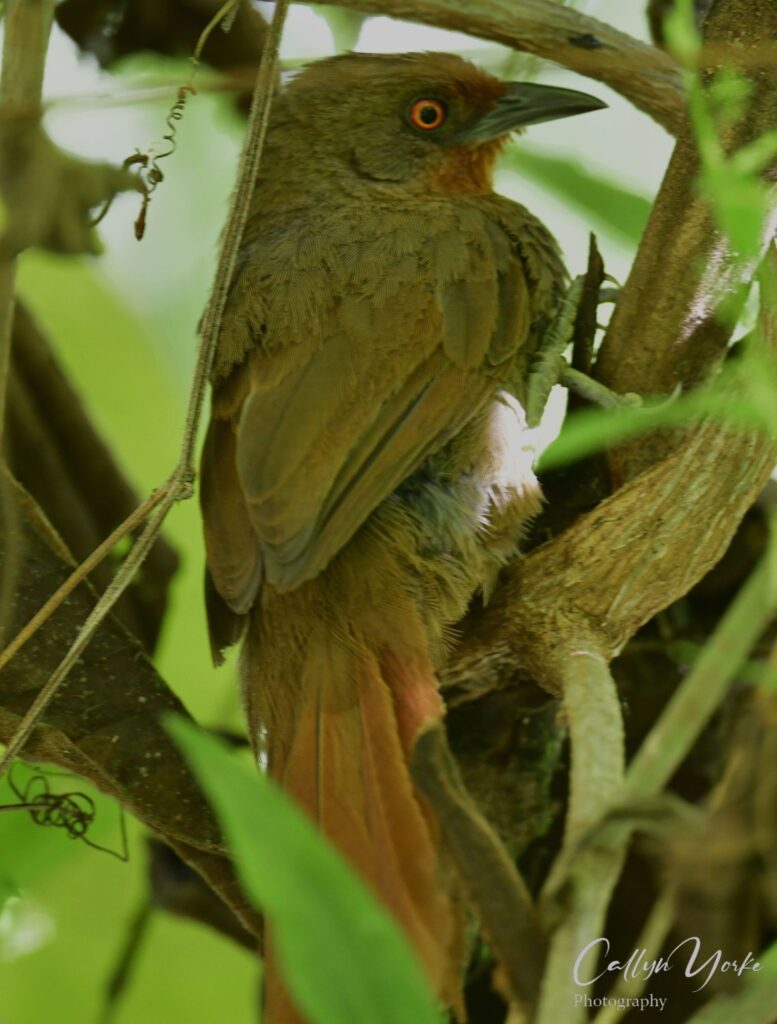
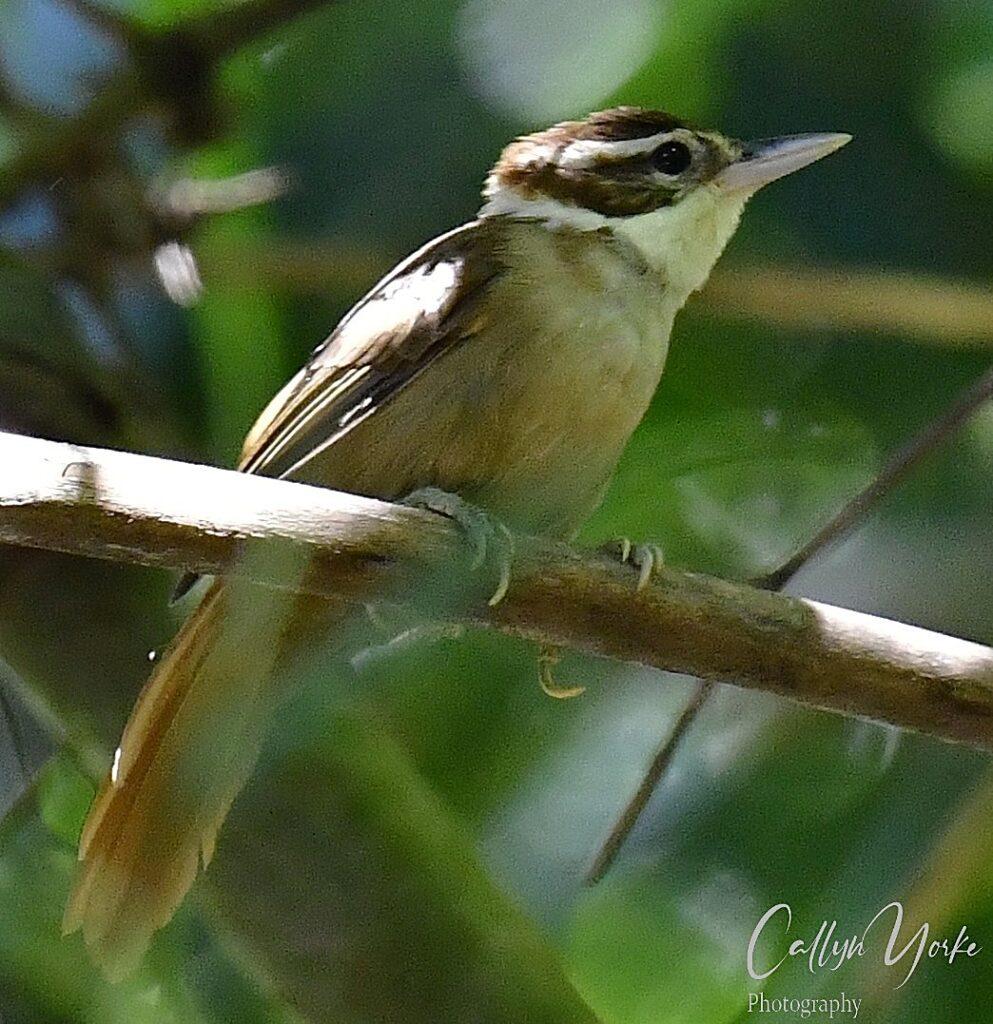
Daniel seemed to pick up on my bewilderment and began using his playback devices (pocket recorder connected with a blue-tooth portable speaker) to see if any of the vocalizing birds might come in to discover what all the unseasonal chatter was about. A few of them did. I managed to obtain brief but identifiable digital images of several new birds for my trip and life bird list, including three Atlantic Rainforest endemics – Ferruginous Antwren, Orange-eyed Thornbird and White-collared Foliage-gleaner.
When we had completed the morning survey, there was a bit of an uphill push back to the car. The effort was easily dismissed as I reflected on our successful birding results. Daniel may have actually been a little surprised that we had obtained so many close-up views of relatively secretive species.
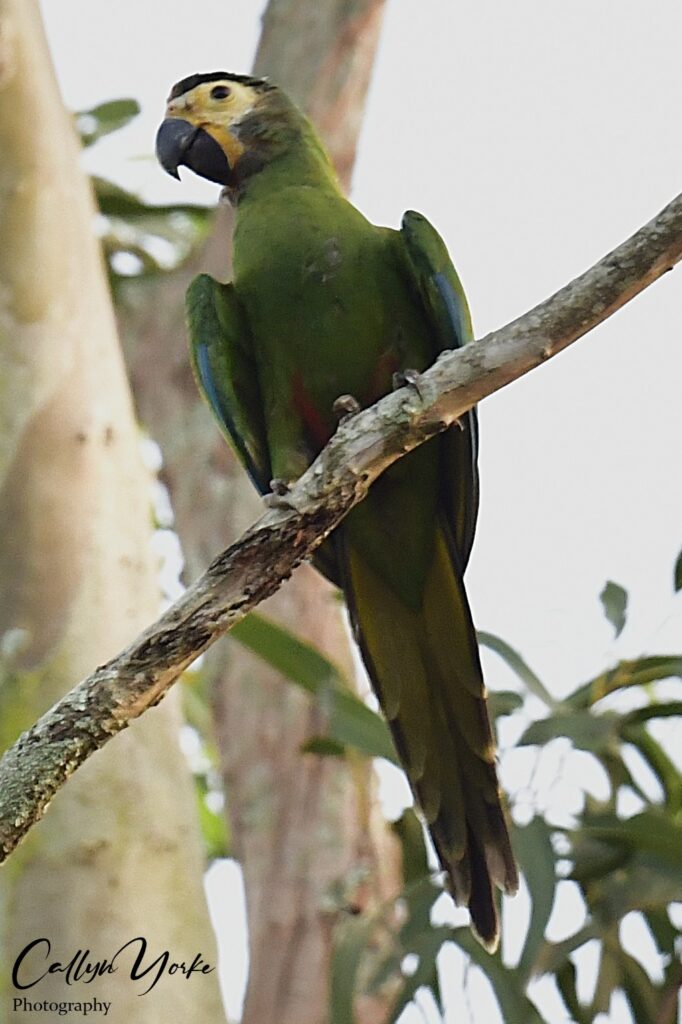
About an hour before sunset, following a transfer to a new lodging location in Guapimirim (Pousada Sohoh Verde), I made a walking survey of the neighborhood. On the outskirts of town, I found at least eight pair of Blue-winged Amazon. Daniel had mentioned that these threatened, near-endemic birds, had been favoring the neighborhood for some time. At dusk, pairs began arriving and alighting on the alternate limbs of a single, mature Eucalyptus tree – all safely perched more than 15m from the ground, though reachable with my 500mm lens and high ISO exposure setting. This was another prized specialty among Brazil’s diverse array of parrot species – and one of my most memorable lifers.
18 February 2025 (0800-1210 hrs.) Reserva Ecologica de Guapiacu (REGUA), RDJ with Gabriel Mello
I was very much looking forward to the next segment of our bird tour itinerary. REGUA, located at the the base of Serra dos Orgaos, is an outstanding example of a privately owned ranch that has achieved remarkable success with habitat restoration and wildlife conservation. As described in their informative website, “REGUA is now one of the largest restorers of forest ecosystems in the state of Rio de Janeiro.” Some 470 hectares, including 700,000 planted seedlings, representing five-hundred species, have been restored to natural conditions. Multiple conservation projects involving international organizations, e.g. WWF, are ongoing, in addition to educational programs and scientific research conducted by a number of universities. REGUA also provides lodging and hosts tour groups from around the world. This is definitely a high priority location for birders and naturalists visiting the Rio area.
Gabriel and I began at the visitor’s center, taking a series of easy-walking trails transecting a wetland, grassland, shrubby second-growth, and mature Atlantic Rainforest. Ambient air temperature quickly rose to the high 80’s, and yet there was plenty of birdlife to be observed. By the time we stopped for a buffet-style lunch at the REGUA visitor’s pavillon, we had tallied eighty-seven bird species – nearly half of those new for my Brazil trip list.
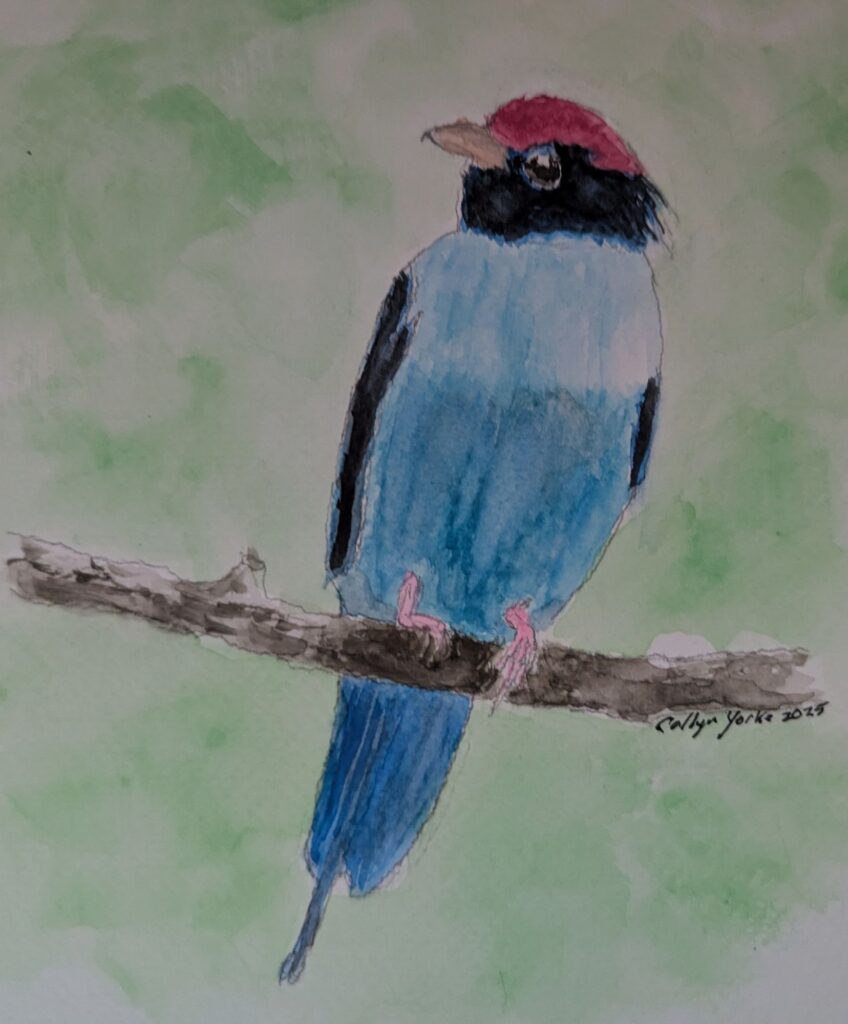
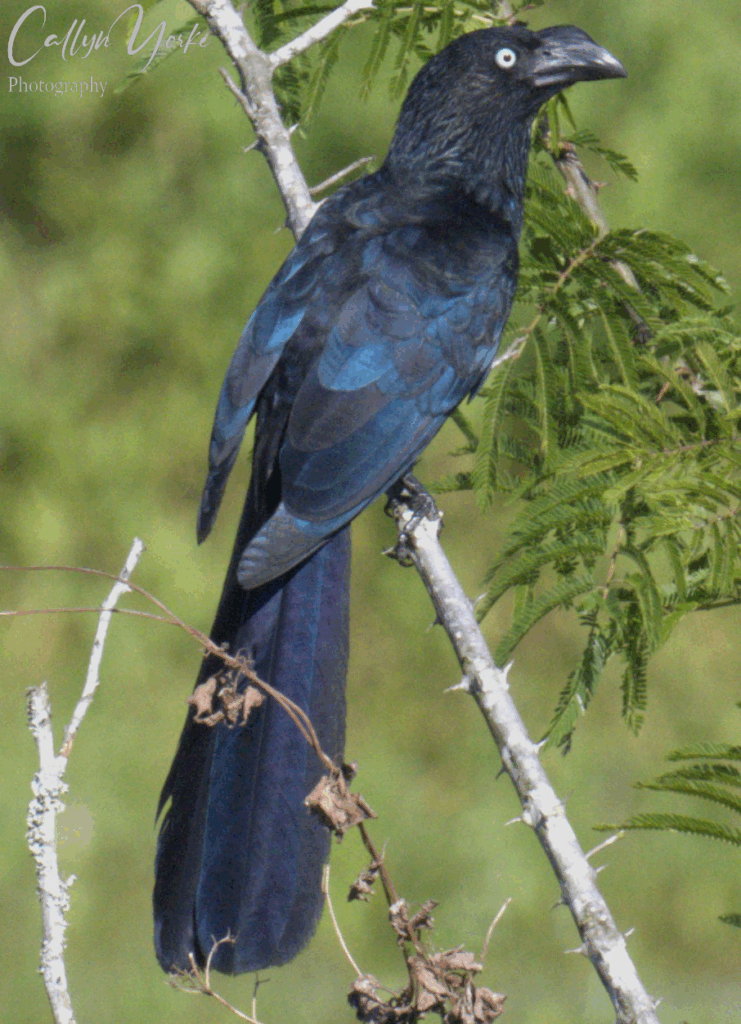
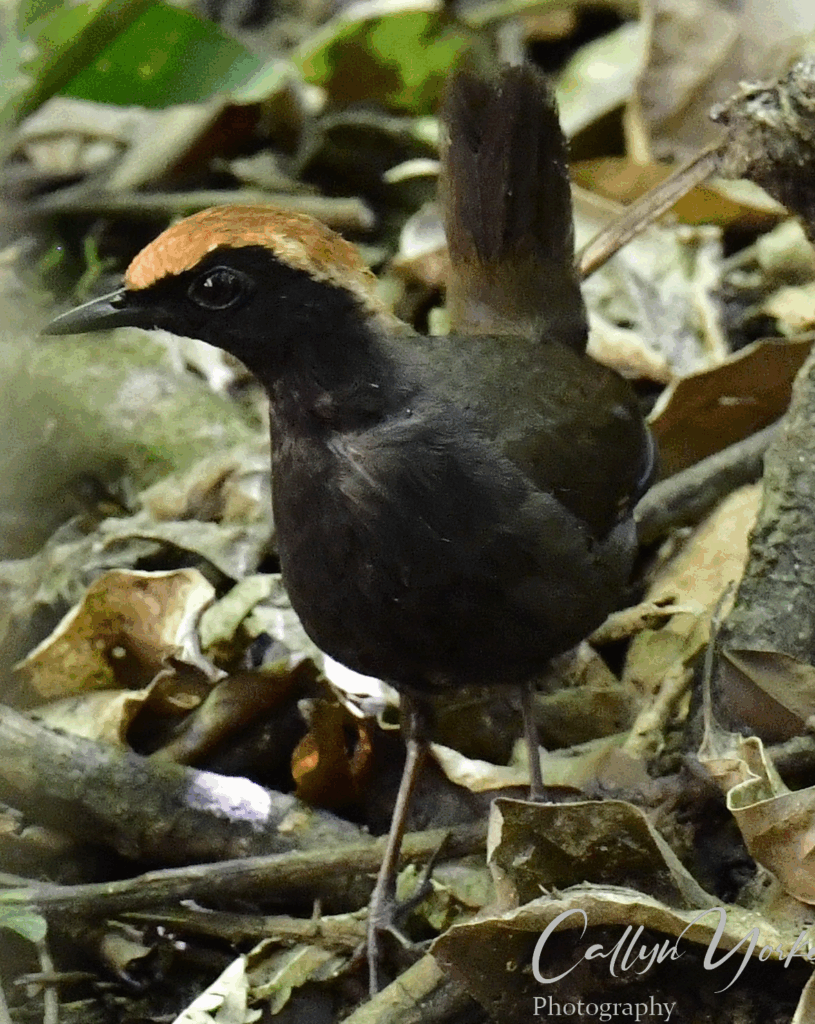
Highlights included excellent views of a colony of Greater Ani, quite mobile around the central pond- marsh and in the adjacent woodland. There were also close encounters of the feathered kind with Swallow-tailed Manakin and a confiding Rufous-capped Ant-thrush.
At the conclusion of our survey we chatted with Nicholas Locke, great-grandson of the of the original ranch owner, who together with his wife Raquel, own and manage REGUA. Nicholas mentioned that the REGUA conservation concept originated as a result of contact with well known tropical biologists, e.g. Dr. Dan Janzen in Costa Rica. Clearly, REGUA’s forest recovery and stewardship strategies have a solid scientific basis and are famously successful. Furthermore, REGUA supports environmental education and public awareness programs emphasizing the need for conserving biodiversity in the Atlantic Forests of Brazil. From what I could see during a brief visit, focused primarily on birds, REGUA is very much at the forefront of Brazilian wildlife conservation and serves as an excellent model for the nation.
19 February 2025 (0730-1630 hrs.) Sumidouro and Sapucaia, RDJ with Gabriel Mello
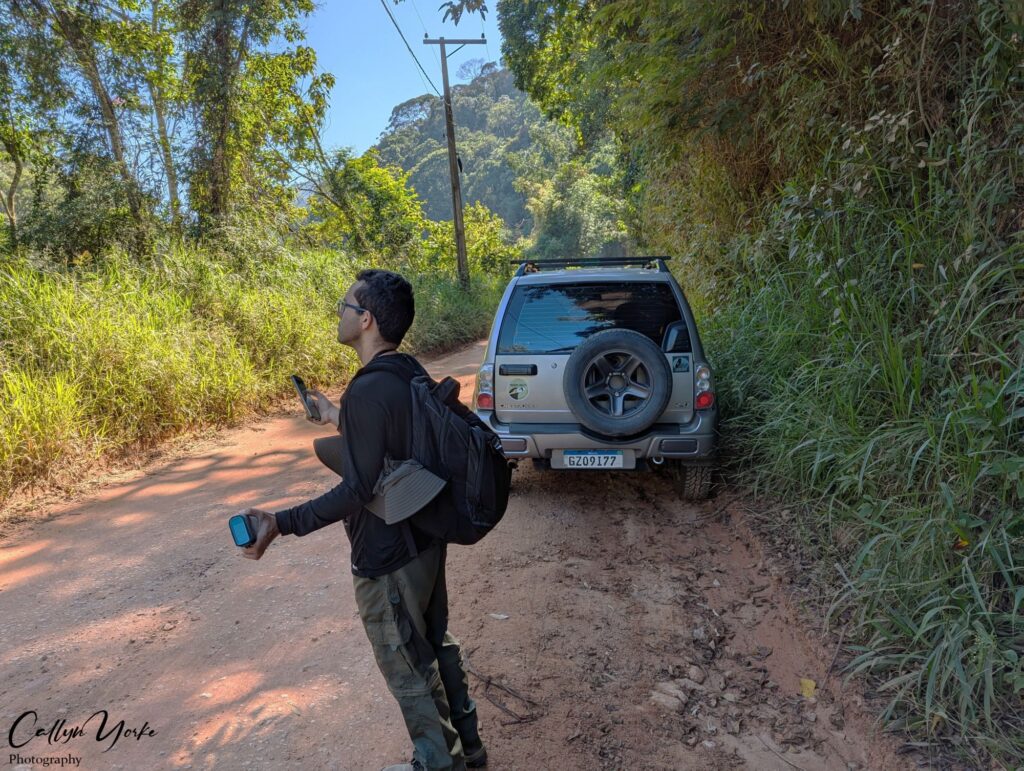
Two adjacent submontane areas, with an average elevation of about 950 m asl, included farmland, hillside pasture, savanna, wetland, and woodland edge. We had essentially a full day of roadside birding — one of our busiest days, punctuated by frequent stops and short walks from the car. Although the habitats were heavily modified and historically disturbed by human activities, a remarkable diversity of birdlife was found. Our final tally, one-hundred twenty species.
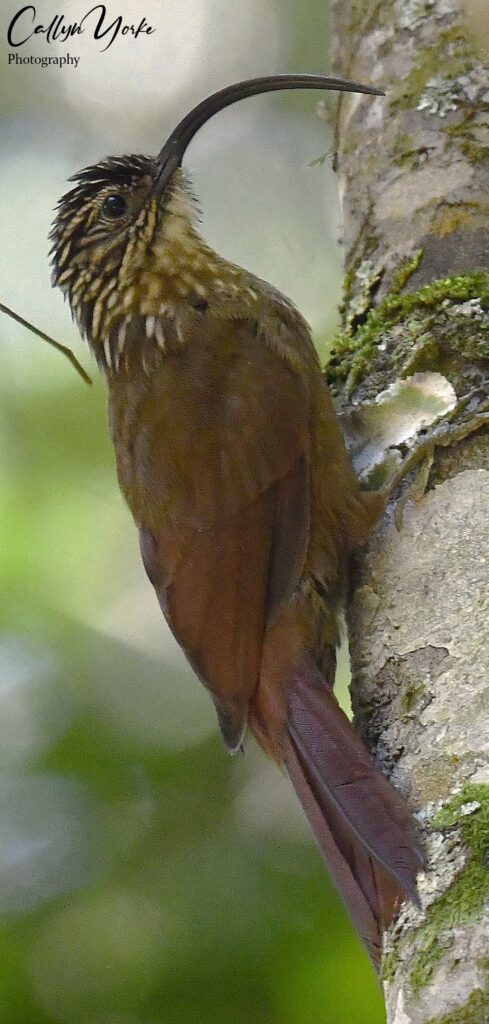
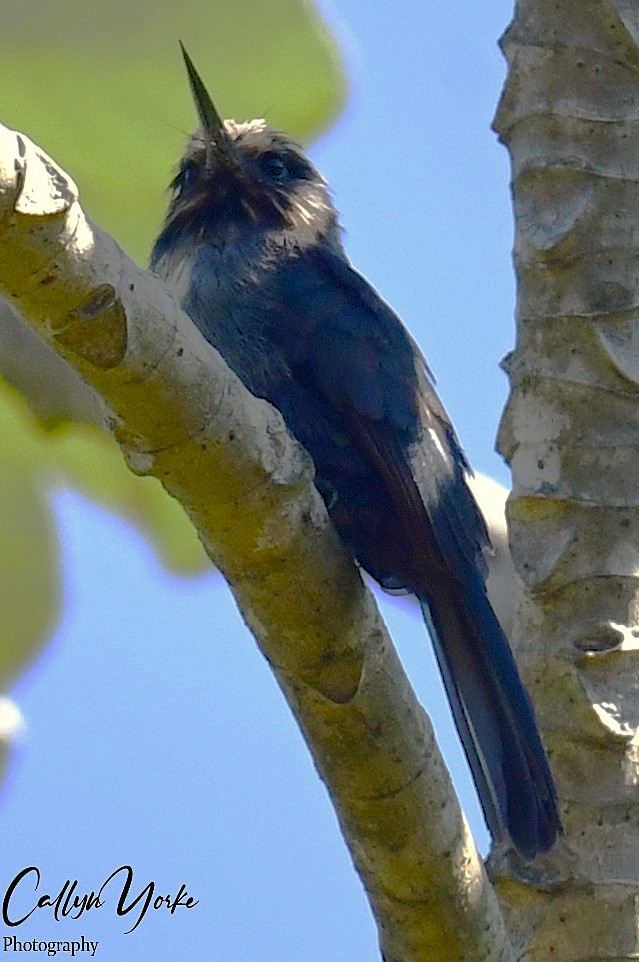
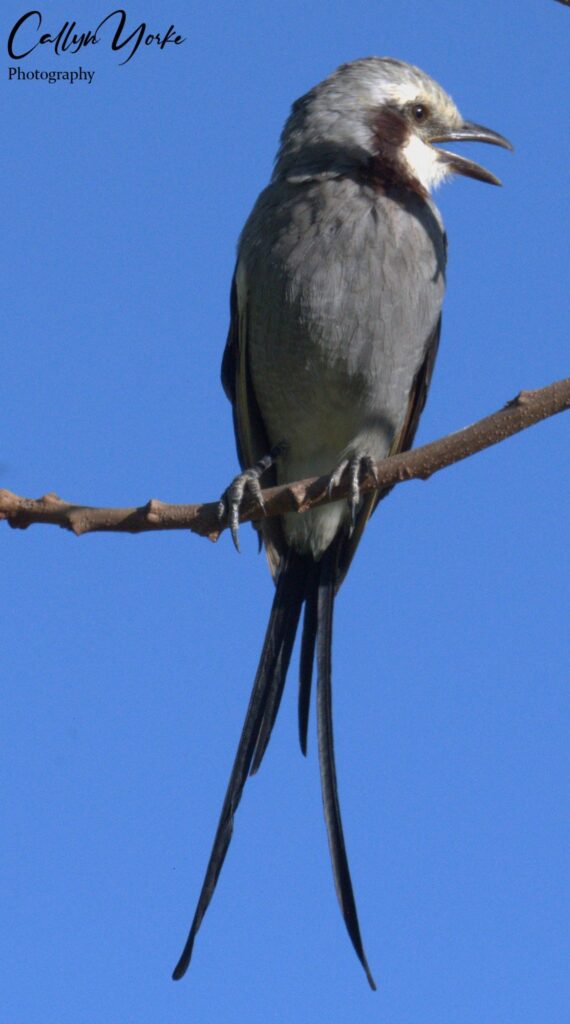
Highlights were numerous and included Three-toed Jacamar, Black-billed Scythebill, Scaled Woodcreeper, Rufous-fronted Thornbird, Gray-bellied Spinetail, Spix’s Spinetail, Serra do Mar Tyrant-Manakin, Crested Becard, White-crested Tyrannulet, Streamer-tailed Tyrant, White-rumped Monjita, Yellow-rumped Marshbird, Grassland Sparrow, Sooty Grassquit, Pileated Finch, Lined Seedeater and Golden-chevroned Tanager. Roadside birding could scarcely have been better anywhere else in South America.
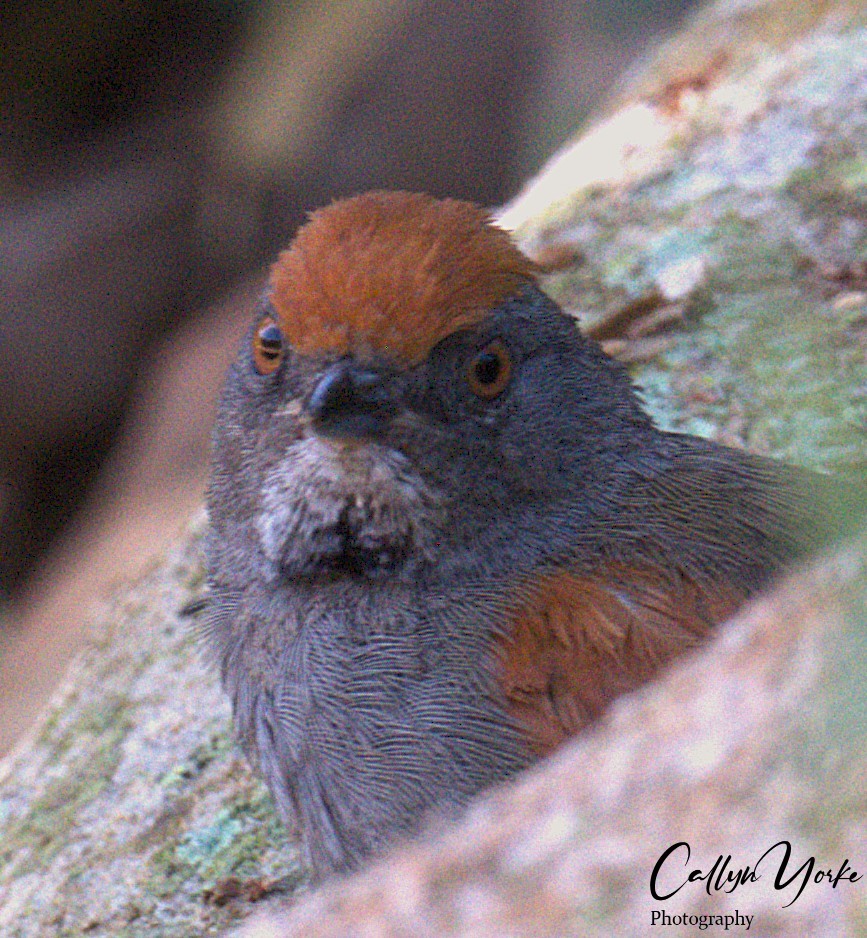
20 February 2025 (0750-1630 hrs.) Nova Friburgo, Tres Picos State Park, RDJ with Daniel Mello
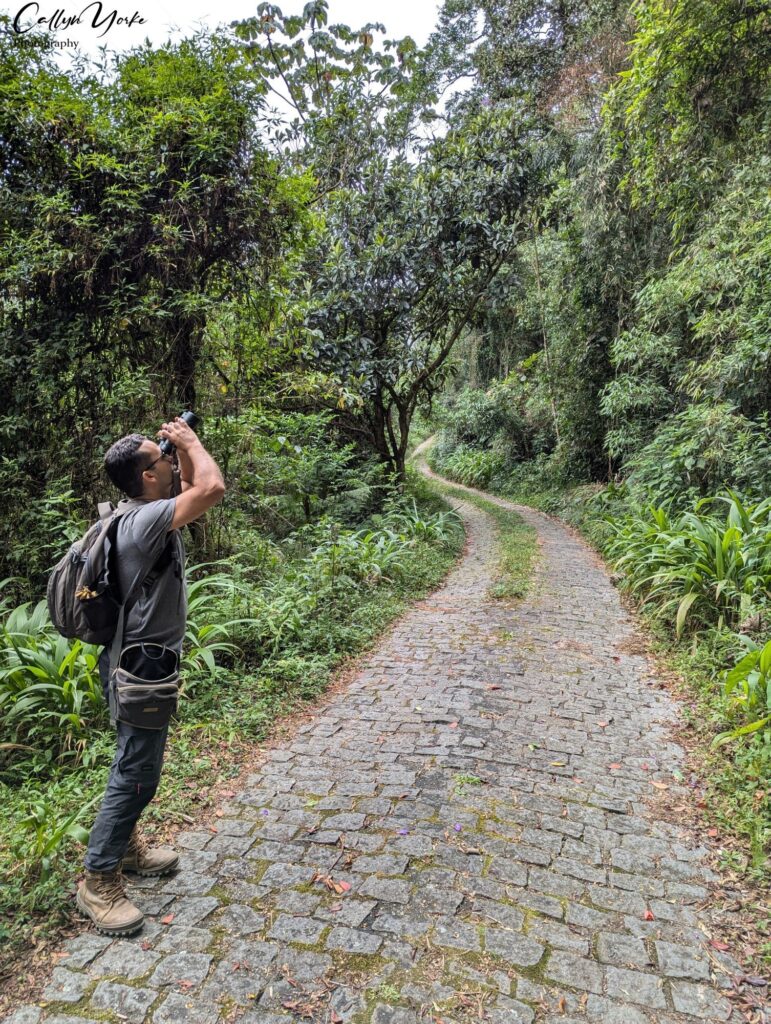
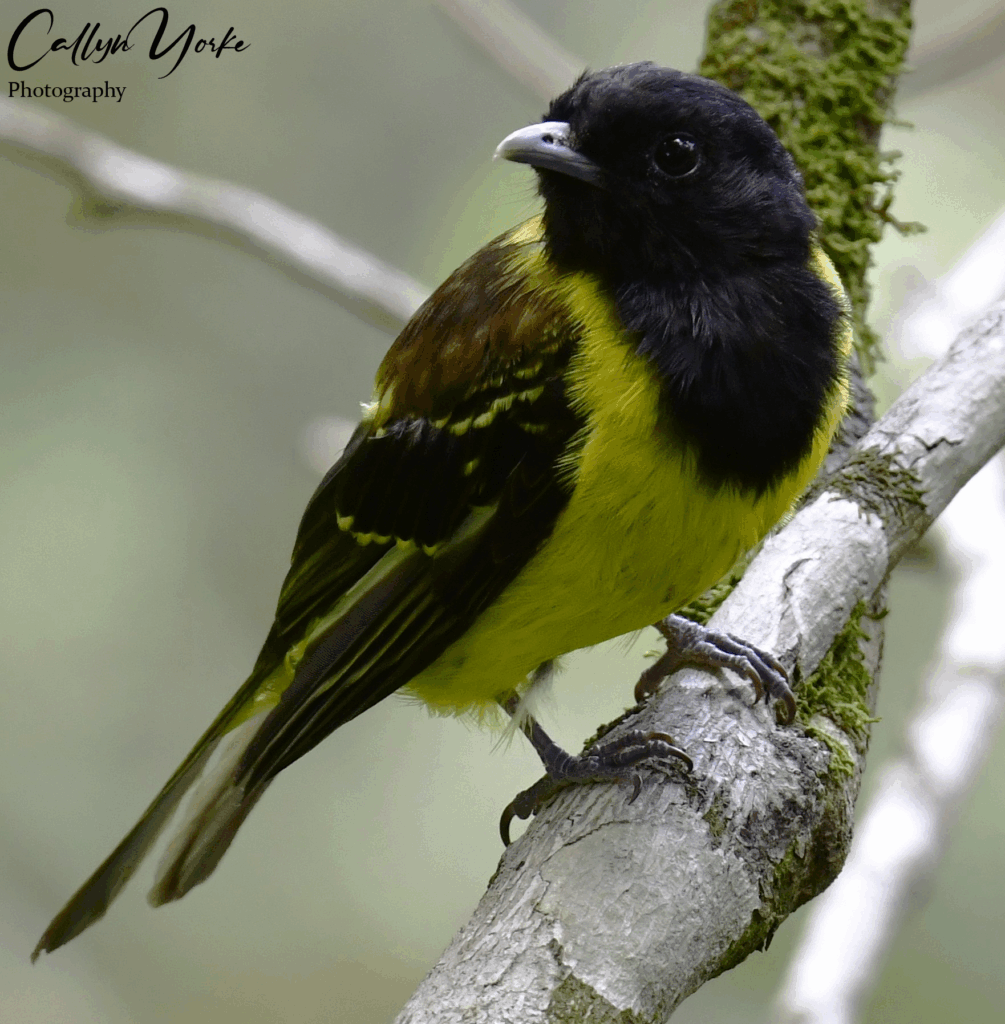
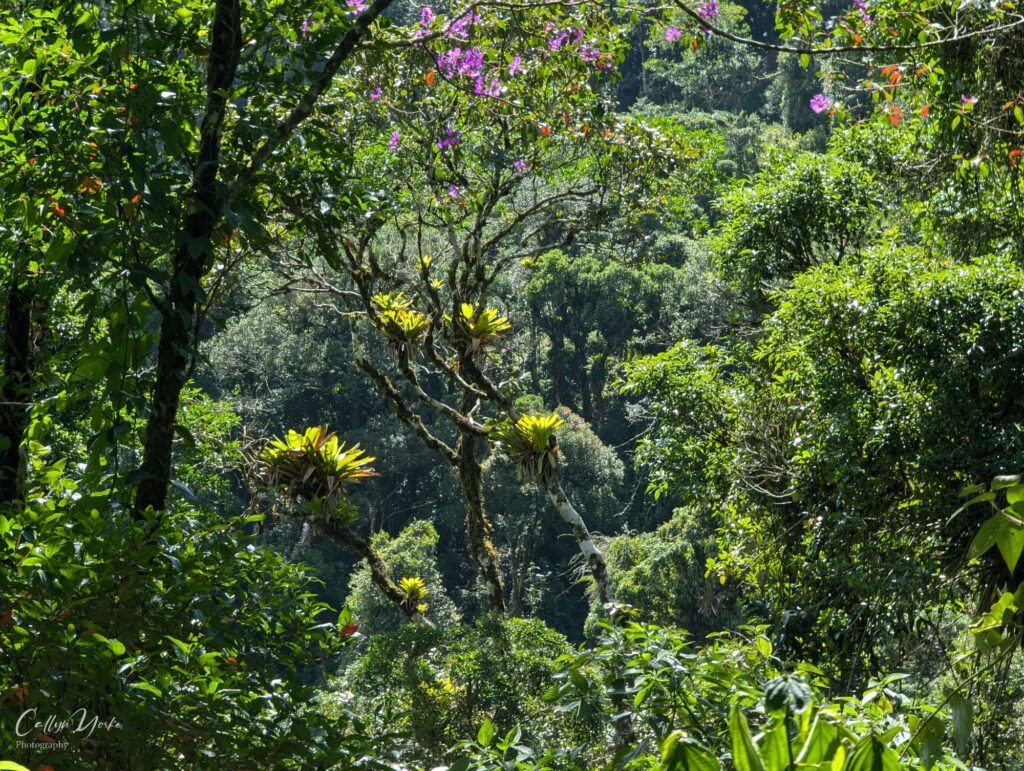
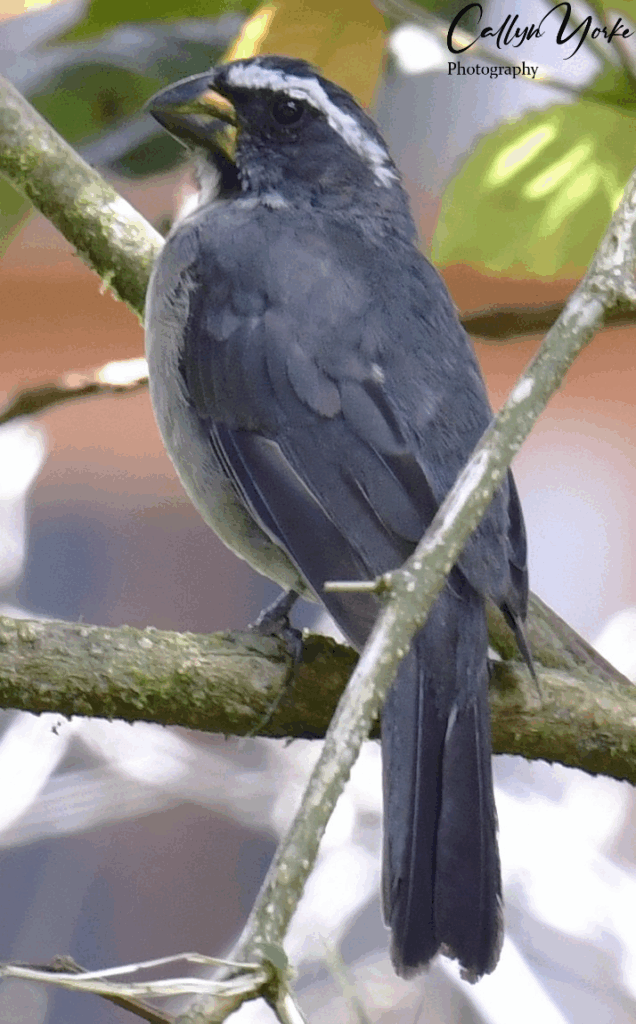
Most of our final day of the Rio bird tour would be spent at relatively high elevations (1,270 – 1,500 m) in portions of Tres Picos State Park and Nova Friburgo. Our first location involved a steady climb on a cobblestone track through a pristine montane cloud forest. Just below the summit, we met Marcos, the radio tower caretaker. He was kind enough to open the gate and allow us to explore the summit trails. There was a magnificent view of the forested canyon below and montane bird species we would not encounter at lower elevations, e.g. Hooded Berryeater and Thick-billed Saltator.
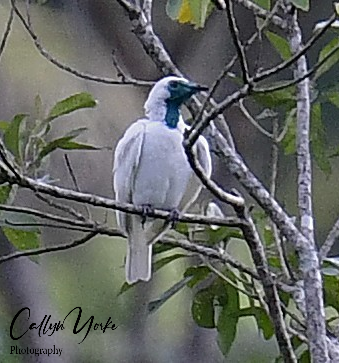
After a meaty, Brazilian-style buffet lunch at a comparatively upscale restaurant, we continued to another high elevation area on some rough dirt tracks, stopping a few times to listen for birds. One bird of special interest was calling monotonously in the distance, “BOINK…BOINK…BOINK” – a Bare-throated Bellbird. Despite the far-carrying, metallic vocalizations, we could not locate the broadcaster. Gabriel and I had heard this species in REGUA but had failed to make visual contact with it. Daniel was determined to locate the bird and have a look at it. After several attempts scanning the adjacent ridge from different vantage points, we finally got a fairly clear view of a male vocalizing about 1 km away in the canopy of an isolated, emergent tree. Yes! High fives on that one.
By the end of the day we had tallied seventy-six bird species, including eighteen species entirely new to me and the Brazil trip list. This had been a remarkable week of birding with the Mello Brothers; I would be birding with Gabriel once more in Rio, two months later, the day of my departure to the States.
15 April 2025 (0830-1115 hrs.) Rio de Janeiro Botanical Gardens with Gabriel Mello
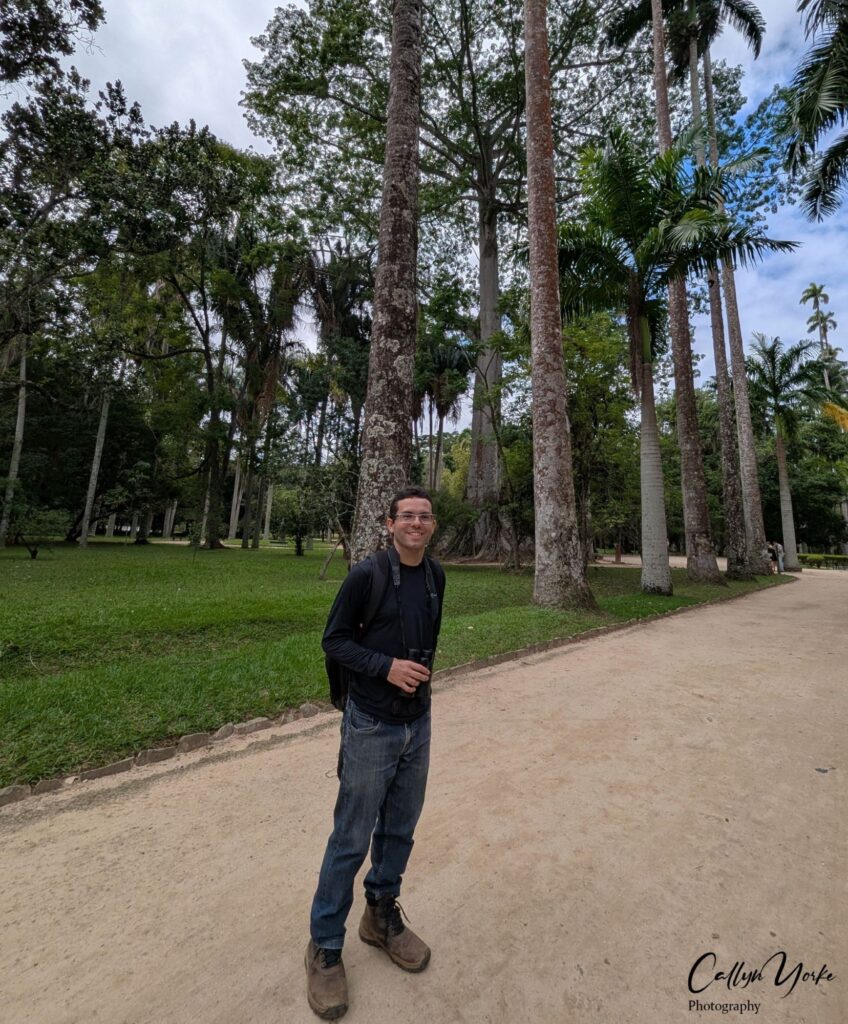
Gabriel met me at 7:30 am in front of the Linx Airport Hotel. It was good to see him again. Naturally, he wanted to know about my Brazilian birding trip. Where to begin? Incidentally, we would have plenty of time for socializing enroute because we were promptly gridlocked in weekday commute traffic, averaging about 5 km/hr.
This was my second foray into downtown Rio and it became sort of a slow motion, drive-by tour, annotated by Gabriel. He kept an eye on the road and occasionally glanced at birds circling high above the city. Suddenly, Gabriel swerved and exclaimed, “What is that! … A Harris Hawk!” Oh, I thought, just a Harris Hawk, a wide-ranging, highly social raptor that occurs fairly commonly in the southwestern US. But in Rio it was a rarity with only a handful of previous records. This was a significant sighting. Though I was equally alert to the fact that Gabriel’s attention to the sudden stops by the vehicle in front of us, was apparently of secondary importance. I kept a firm grip on the door armrest, struggling to repress my backseat driver advisories. Rio traffic was an ordinary event for Gabriel and In a few more minutes we arrived safely at the entrance to the botanical garden.
Our destination, the internationally acclaimed Rio Botanical Garden, was located adjacent to one of the wealthiest Rio neighborhoods and the largest tract of urban rainforest in southeastern Brazil. Highlighting that, the famous Cristo Redentor statue graced the mountaintop. According to Gabriel’s plan, we arrived just as the gardens were opening at 8:30 am.
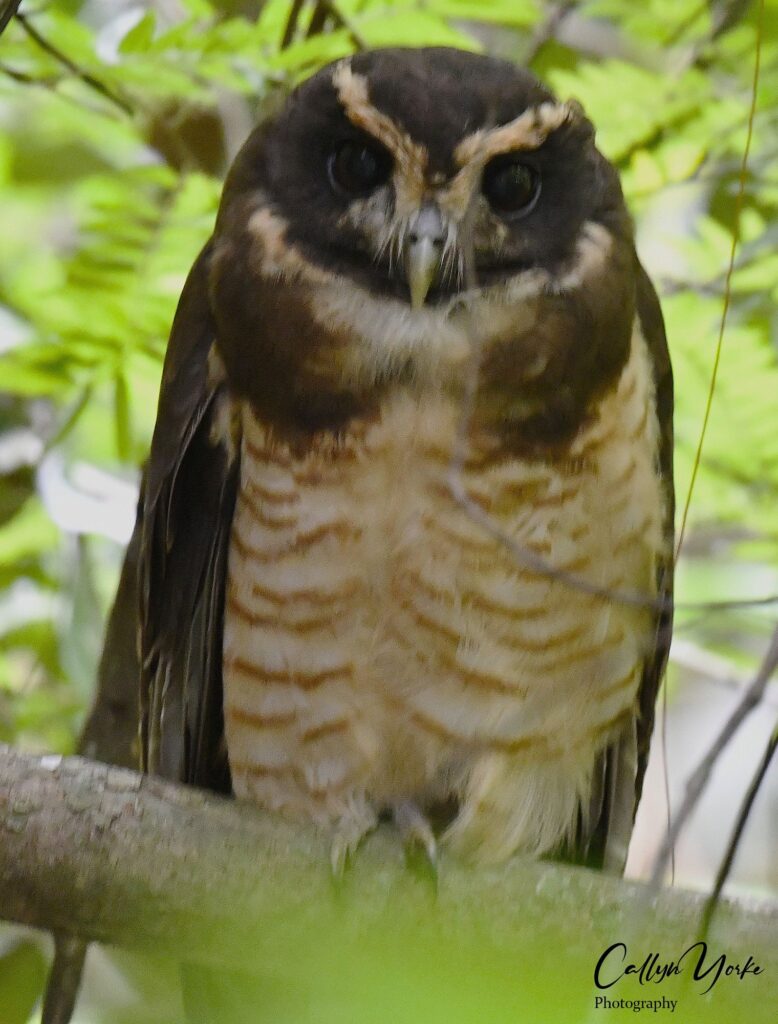
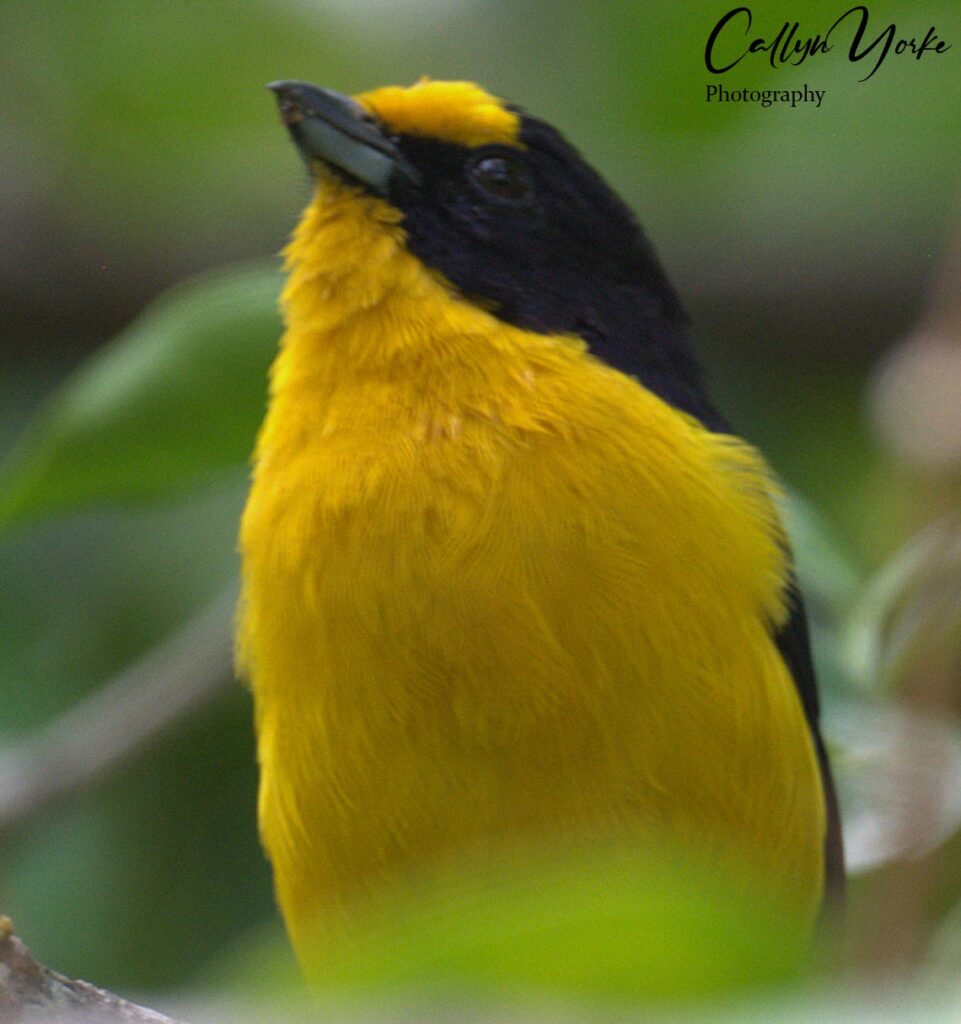
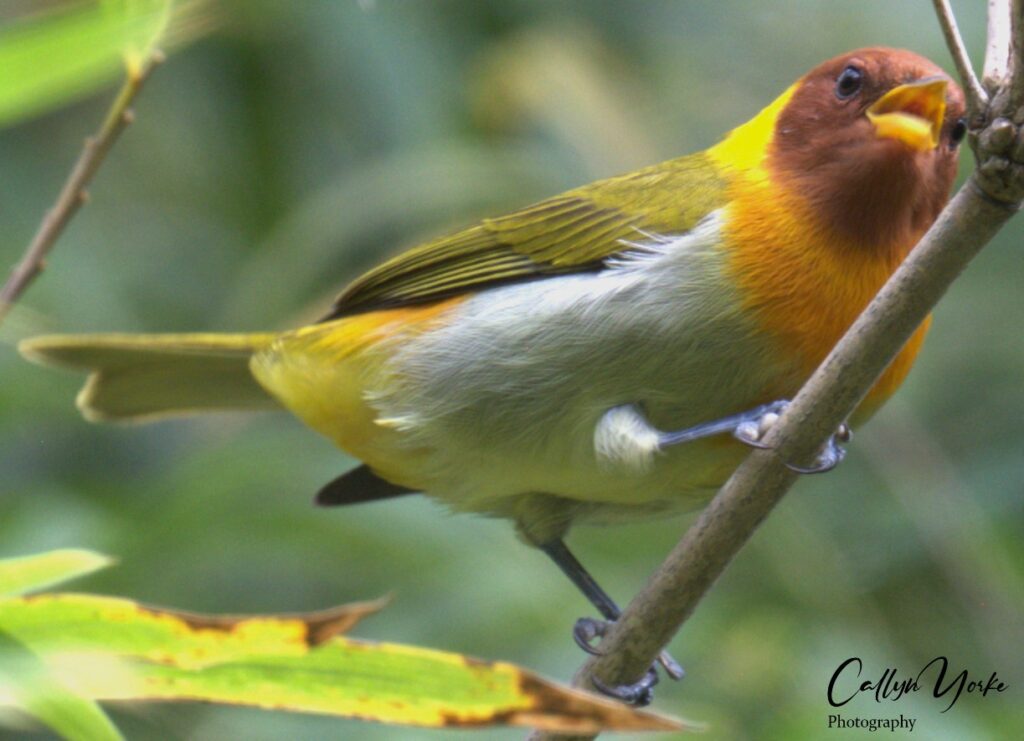
By this time in my Brazil journey, I had come up with an American’s ‘most wanted’ list — bird species that I had encountered in Brazil but were too fleeting for a photo, or birds I had missed entirely. Gabriel was on it. He said we had a chance to find several of those birds in the botanical gardens. He was correct. We had excellent views and some good close-up photos of specialties, e.g. Tawny-browed Owl,, Violaceous Euphonia, and Rufous-headed Tanager.
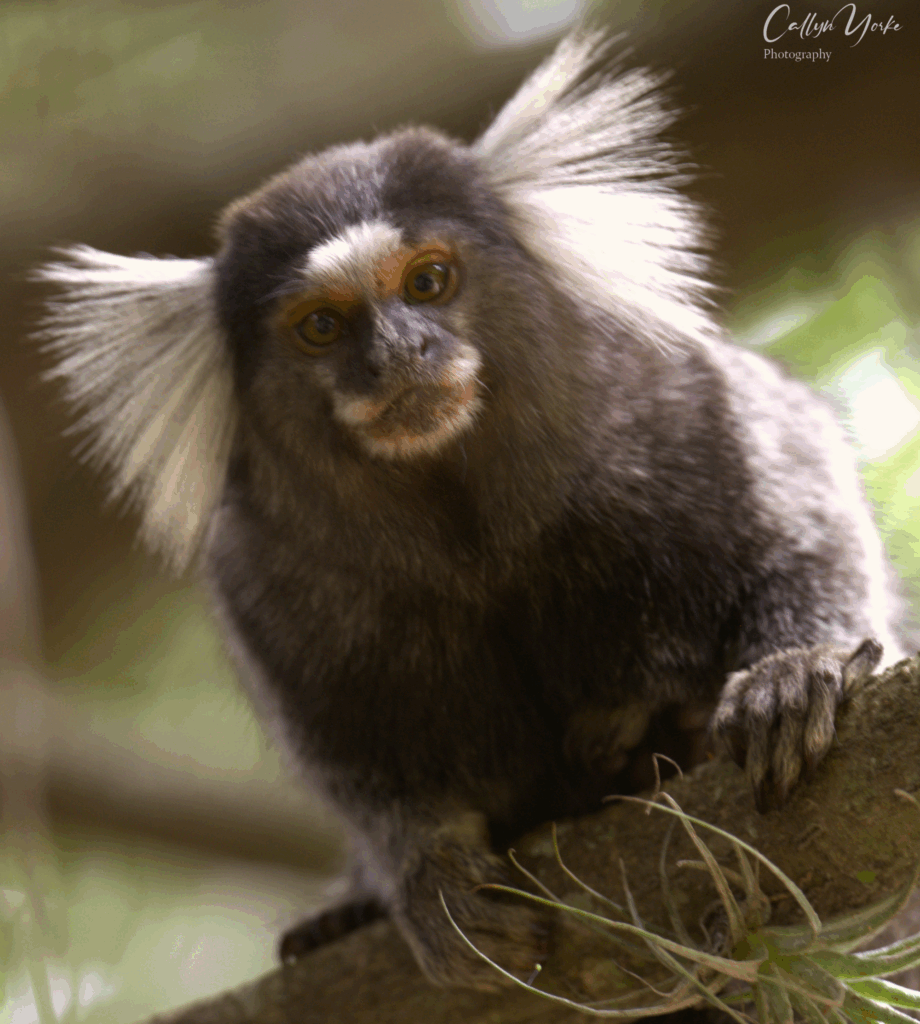
Dramatizing a behavioral ecology lesson, a couple of lively troupes of White-tufted Marmoset (Callithrix jacchus) posed for portraits. Gabriel explained that this is an invasive, introduced species native to northeastern Brazil. There is concern about interbreeding with the native Buffy-tufted Marmoset (Callithrix aurita), an endangered, extremely range-limited species. Adding injury to insult, White-tufted Marmoset is a notorious predator on bird eggs and nestlings. The spunky little primate is a highly adaptable species that has been expanding its range in Brazil since the 1920’s.
A student from the local Catholic University in Rio happened to be conducting a behavioral field study on the marmosets as I was obtaining photos. She mentioned that the aggression we were observing between individuals of the two troupes of the White-tufted Marmoset was likely due to a territorial dispute. This behavior appeared to be a textbook example of competition resulting from overpopulation — which is predictably, much more intense and frequent among individuals with similar resource requirements (intraspecific) than between members of two closely related species (interspecific). Furthermore, when two similar species are living in the same habitat (sympatric), interspecific competition is usually resolved over time by natural selection favoring subtle but significant differences in resource utilization, e.g. food preferences, foraging technique, location and timing, etc.. If there is no significant difference in the two species’ resource requirements, one may eventually replace the other. Or, perhaps in the present case of the White-tufted and Buffy-tufted Marmoset, interbreeding could result (rarely) in ‘genetic corruption’ of the less numerous or less viable species, something akin to mixed varieties of waterfowl in a city park.
____________________________________________________
RIO DE JANEIRO ANNOTATED BIRD LIST
___________________________________________________